Kirjojen hintavertailu. Mukana 12 016 292 kirjaa ja 12 kauppaa.

Kirjahaku

Etsi kirjoja tekijän nimen, kirjan nimen tai ISBN:n perusteella.

1000 tulosta hakusanalla Flora

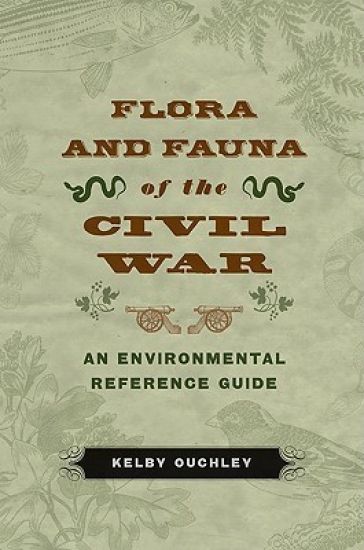
Flora and Fauna of the Civil War

Flora and Fauna of the Civil War

Kelby Ouchley

Louisiana State University Press
2010
sidottu
During the Civil War, humans impacted plants and animals on an unprecedented scale as soldiers on both sides waged the most environmentally destructive war ever on American soil. Refugees and armies alike tramped across the landscape foraging for food, shelter, and fuel. Wild plants and animals formed barriers for armies and carried disease, yet also provided medicine and raw materials necessary to implement war, greatly influencing the day-to-day life of soldiers and civilians. Of the thousands of books written about the Civil War, few mention the environment, and none address the topic as a principal theme. In Flora and Fauna of the Civil War, Kelby Ouchley blends traditional and natural history to create a unique text that explores both the impact of the Civil War on the surrounding environment and the reciprocal influence of plants and animals on the war effort. The war generated an abundance of letters, diaries, and journals in which soldiers and civilians penned descriptions of plants and animals, sometimes as a brief comment in passing and other times as part of a noteworthy event in their lives. Ouchley collects and organizes these first-person accounts of the Civil War environment, adding expert analysis and commentary in order to offer an array of fascinating insights on the natural history of the era. After discussing the physical setting of the war and exploring humans' attitudes toward nature during the Civil War period, Ouchley presents the flora and fauna by individual species or closely related group in the words of the participants themselves. From ash trees to willows, from alligators to white-tailed deer, the excerpts provide glimpses of personal encounters with the natural world during the war, revealing how soldiers and civilians thought about and interacted with wild flora and fauna in a time of epic historical events. Collectively, no better sources exist to reveal human attitudes toward the environment in the Civil War era. This one-of-a-kind reference book will spark widespread interest among Civil War scholars, writers, and enthusiasts, as well as environmental historians.
Flora and Fauna of the Civil War

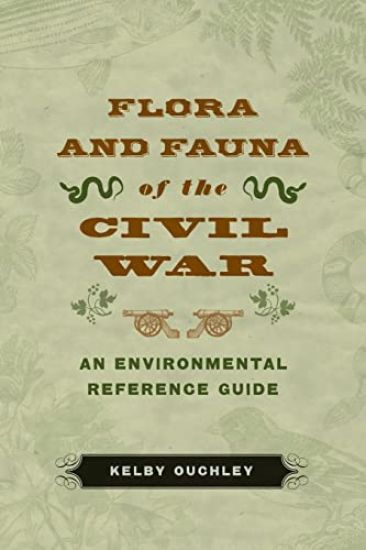
Flora and Fauna of the Civil War

Kelby Ouchley

LOUISIANA STATE UNIVERSITY PRESS
2023
pokkari
During the Civil War, humans impacted plants and animals on an unprecedented scale as soldiers on both sides waged the most environmentally destructive war ever on American soil. Refugees and armies alike tramped across the landscape foraging for food, shelter, and fuel. Wild plants and animals formed barriers for armies and carried disease, yet also provided medicine and raw materials necessary to implement war, greatly influencing the day-to-day life of soldiers and civilians. Of the thousands of books written about the Civil War, few mention the environment, and none address the topic as a principal theme. In Flora and Fauna of the Civil War, Kelby Ouchley blends traditional and natural history to create a unique text that explores both the impact of the Civil War on the surrounding environment and the reciprocal influence of plants and animals on the war effort.The war generated an abundance of letters, diaries, and journals in which soldiers and civilians penned descriptions of plants and animals, sometimes as a brief comment in passing and other times as part of a noteworthy event in their lives. Ouchley collects and organizes these first-person accounts of the Civil War environment, adding expert analysis and commentary in order to offer an array of fascinating insights on the natural history of the era.After discussing the physical setting of the war and exploring humans' attitudes toward nature during the Civil War period, Ouchley presents the flora and fauna by individual species or closely related group in the words of the participants themselves. From ash trees to willows, from alligators to white-tailed deer, the excerpts provide glimpses of personal encounters with the natural world during the war, revealing how soldiers and civilians thought about and interacted with wild flora and fauna in a time of epic historical events.Collectively, no better sources exist to reveal human attitudes toward the environment in the Civil War era. This one-of-a-kind reference book will spark widespread interest among Civil War scholars, writers, and enthusiasts, as well as environmental historians.

Flora's Empire

Flora's Empire

Eugenia W. Herbert

University of Pennsylvania Press
2011
sidottu
Like their penchant for clubs, cricket, and hunting, the planting of English gardens by the British in India reflected an understandable need on the part of expatriates to replicate home as much as possible in an alien environment. In Flora's Empire, Eugenia W. Herbert argues that more than simple nostalgia or homesickness lay at the root of this "garden imperialism," however. Drawing on a wealth of period illustrations and personal accounts, many of them little known, she traces the significance of gardens in the long history of British relations with the subcontinent. To British eyes, she demonstrates, India was an untamed land that needed the visible stamp of civilization that gardens in their many guises could convey. Colonial gardens changed over time, from the "garden houses" of eighteenth-century nabobs modeled on English country estates to the herbaceous borders, gravel walks, and well-trimmed lawns of Victorian civil servants. As the British extended their rule, they found that hill stations like Simla offered an ideal retreat from the unbearable heat of the plains and a place to coax English flowers into bloom. Furthermore, India was part of the global network of botanical exploration and collecting that gathered up the world's plants for transport to great imperial centers such as Kew. And it is through colonial gardens that one may track the evolution of imperial ideas of governance. Every Government House and Residency was carefully landscaped to reflect current ideals of an ordered society. At Independence in 1947 the British left behind a lasting legacy in their gardens, one still reflected in the design of parks and information technology campuses and in the horticultural practices of home gardeners who continue to send away to England for seeds.
Flora of Florida, Volume VI

Flora of Florida, Volume VI

Richard P. Wunderlin

University Press of Florida
2019
sidottu
This sixth volume of the Flora of Florida collection continues the definitive and comprehensive identification manual to the Sunshine State’s 4,000 kinds of native and non-native ferns and fern allies, nonflowering seed plants, and flowering seed plants. Volume VI contains the taxonomic treatments of 19 families of Florida’s dicotyledons.Florida has the third most diverse vascular plant flora of any state in the United States, and the Flora of Florida volumes include all indigenous and naturalized taxa currently known to occur within its borders. With keys to family, genus, and species, and with genera and species within each family arranged alphabetically for easy reference, these volumes are the standard reference for botanists, researchers, consultants, and students alike.
Flora of Florida, Volume V

Flora of Florida, Volume V

Richard P. Wunderlin; Bruce F. Hansen; Alan R. Franck

University Press of Florida
2018
sidottu
This fifth volume of the Flora of Florida collection continues the definitive and comprehensive identification manual to the Sunshine State’s 4,000 kinds of native and non-native ferns and fern allies, nonflowering seed plants, and flowering seed plants. Volume V contains the taxonomic treatments of 34 families of Florida’s dicotyledons.Florida has the third most diverse vascular plant flora of any state in the United States, and the Flora of Florida volumes include all indigenous and naturalized taxa currently known to occur within its borders. With keys to family, genus, and species, and with families arranged alphabetically for easy reference, these volumes are the standard reference for botanists, researchers, consultants, and students alike.
Flora of Florida, Volume II

Flora of Florida, Volume II

Richard P. Wunderlin; Bruce F. Hansen

University Press of Florida
2015
sidottu
With more than 4,000 kinds of native and non-native ferns and fern allies, nonflowering seed plants, and flowering seed plants, Florida has the third largest plant diversity of any state in the nation. Due to Florida's mild climate, many non-native species - including major pest species - readily become naturalized, contributing nearly one-third of the species of known flora. Some of the plant species found in Florida, many of which are endangered, exist nowhere else in the world.Richard Wunderlin and Bruce Hansen provide a means to identify this vast array of plants with the only comprehensive identification manual and definitive guide to Florida's flora. These second and third volumes include taxonomic keys to family, genus, and species, with families arranged alphabetically for easy reference. Entries include the current accepted scientific name of each species, the major nomenclatural synonyms, many common names, general habitat preferences, and, for plants not native to Florida, the place of origin. The complete Flora of Florida volumes will be the standard reference for years to come.
Flora of Florida, Volume III

Flora of Florida, Volume III

Richard P. Wunderlin; Bruce F. Hansen

University Press of Florida
2016
sidottu
With more than 4,000 kinds of native and non-native ferns and fern allies, nonflowering seed plants, and flowering seed plants, Florida has the third largest plant diversity of any state in the nation. Due to Florida's mild climate, many non-native species - including major pest species - readily become naturalized, contributing nearly one-third of the species of known flora. Some of the plant species found in Florida, many of which are endangered, exist nowhere else in the world.Richard Wunderlin and Bruce Hansen provide a means to identify this vast array of plants with the only comprehensive identification manual and definitive guide to Florida's flora. These second and third volumes include taxonomic keys to family, genus, and species, with families arranged alphabetically for easy reference. Entries include the current accepted scientific name of each species, the major nomenclatural synonyms, many common names, general habitat preferences, and, for plants not native to Florida, the place of origin. The complete Flora of Florida volumes will be the standard reference for years to come.
Flora of Florida, Volume IV

Flora of Florida, Volume IV

Richard P. Wunderlin; Bruce F. Hansen; Alan R. Franck

University Press of Florida
2017
sidottu
This fourth volume of the Flora of Florida collection continues the definitive and comprehensive identification manual to the Sunshine State’s 4,000 kinds of native and non-native ferns and fern allies, nonflowering seed plants, and flowering seed plants. Volume IV contains the taxonomic treatments of 31 families of Florida’s dicotyledons. With keys to family, genus, and species, and with families arranged alphabetically for easy reference, the Flora of Florida volumes are the standard reference for botanists, researchers, consultants, and students alike.
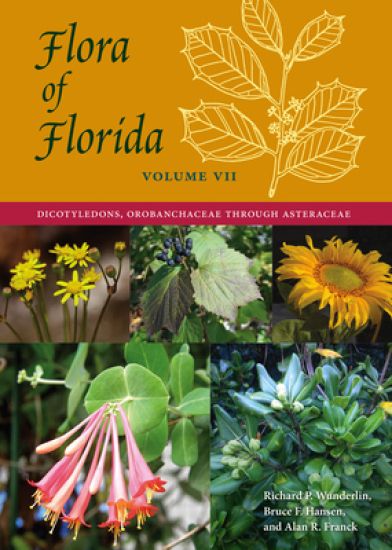
Flora of Florida, Volume VII

Flora of Florida, Volume VII

Richard P. Wunderlin; Bruce F. Hansen; Alan R. Franck

University Press of Florida
2020
sidottu
This seventh volume of the Flora of Florida collection continues the definitive and comprehensive identification manual to the Sunshine State's 4,400 kinds of native and non-native ferns and fern allies, nonflowering seed plants, and flowering seed plants. Volume VII concludes the taxonomic treatments of Florida's dicotyledons. Florida has the third most diverse vascular plant flora of any state in the United States, and the Flora of Florida volumes include all indigenous and naturalized taxa currently known to occur within its borders. With keys to family, genus, and species, and with genera and species within each family arranged alphabetically for easy reference, these volumes are the standard reference for botanists, researchers, consultants, and students alike.
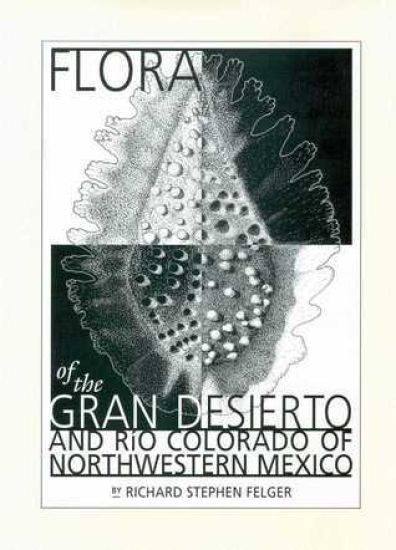
FLORA OF THE GRAN DESIERTO AND RÍO COLORADO DELTA

FLORA OF THE GRAN DESIERTO AND RÍO COLORADO DELTA

The University of Arizona Press

University of Arizona Press
2001
sidottu
From the Pinacate lava fields and expansive dunes to the shores of the Gulf of California, the Gran Desierto is one of the hottest and driest places in the Western Hemisphere. Yet this region in the state of Sonora in northwestern Mexico embraces a remarkable number of habitats with a fascinating and surprisingly rich flora. This is the heart of the Sonoran Desert, still in a largely primordial state, in juxtaposition with the ravished wetlands of the once great Rio Colorado. Flora of the Gran Desierto is the culmination of more than twenty-five years of research in this magnificent desert and delta by botanist Richard Felger. This comprehensive floristic study of more than 565 species of vascular plants features original diagnostic descriptions and innovative identification keys to the families, genera, and species. Particular attention has been devoted to taxa that are poorly known. Even weeds and their histories are treated in detail. Hundreds of illustrations by such eminent botanical artists as Lucretia Brezeale Hamilton, Matt Johnson, and Bobbi Angell will aid in the identification of plants. Common names of plants are given in English, Spanish, and O'odham. While emphasizing scientific accuracy, the book is written in an accessible style. Felger's observations and knowledge of plant ecology, geographic distribution, evolution, ethnobotany, plant variation and special adaptations, and the history of the region provides botanists, naturalists, ecologists, conservationists, and anyone else celebrating the desert with readable, interesting, and important information. With two of Mexico's newest biosphere reserves the Pinacate and the Upper Gulf of California this region is a keystone for desert conservation efforts. Its location linking vast preserves to the north makes this book especially useful for anyone interested in borderland studies and the Sonoran Desert. Flora of the Gran Desierto represents a most creative, definitive, and enthusiastic treatment of Sonoran Desert plant life and is highly relevant to ecological restoration in deserts and wetlands in arid places worldwide.
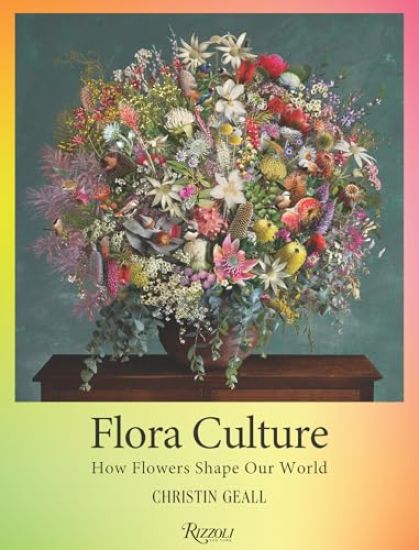
Flora Culture

Flora Culture

Christin Geall

RIZZOLI INTERNATIONAL PUBLICATIONS
2026
sidottu
As ever more types of flowers reach new popularity for their extraordinary beauty and exotic allure, they can also reach ever-broader markets. Many flower lovers are keen to learn more about them: what arrangements can you make with them, where do they come from, what is their cultural significance, and more. These plants must often be sourced from distant parts of the globe and flown great distances at great cost, however, generating large carbon footprints and sparking ethical concerns about the treatment of workers involved in growing them, supply chains, and questions about how to balance our ever-growing obsession for these flowers with fair practices for obtaining them. Here the floral designer extraordinaire focuses on her own and others work across the globe, reflecting new trends in floral design and exploring historical precedents and influences. Inspirational, visually compelling imagery helps the author address the many issues resulting from the continued expansion of the world s sources and growing zones for floral and botanical material. She aims to teach as well as delight in a seemingly simple yet profound A to Z format for wide-ranging entries on diverse topics including aesthetics, appropriation, colonialism, fair trade, floriculture, globalization, indigeneity, microplastics, seasonality, sustainability, and tokenism to name only a few. By using the species featured as springboards for discussion, Geall gets the reader truly thinking about what a bouquet of exotic flowers represents while also encouraging us to admire them as decadent examples of beauty for beauty s sake.