Kirjojen hintavertailu. Mukana 11 342 296 kirjaa ja 12 kauppaa.

Kirjahaku

Etsi kirjoja tekijän nimen, kirjan nimen tai ISBN:n perusteella.

1000 tulosta hakusanalla Frederick C. Beiser

Politics and Purges in China

Politics and Purges in China

Frederick C Teiwes

M.E. Sharpe
1993
nidottu
Drawing upon released documents, memoirs and party-history works, the process and impact of the political campaigns in China between 1950 and 1965 is documented. Complete with extensive interviews with Chinese scholars and former officials, the book reviews the findings of the first edition.
Polio

Polio

Frederick C. Robbins

University of Rochester Press
1999
pokkari
Polio infantile paralysis was until recently a greatly feared disease, but is now preventable by a vaccine, which has largely eradicated it from the Western hemisphere; a global eradication campaign is underway. This book tells of the story of polio in fascinating and personal detail, through a series of essays written by those who experienced the disease: its victims, those who cared for them and those who worked to eliminate it altogether.The opening chapter recounts the history of polio from its earliest depiction in Egyptian art to the present day; it is followed by three personal descriptions of the experiences of patients who were paralysed in youth by polio, but went on tobuild successful lives. The challenges of caring for polio sufferers are described by two physicians who worked on polio wards at the height of the epidemic. The story of the cultivation of poliovirus and the testing of the vaccines is related by two research scientists who devoted much of their careers to the laboratories where the breakthroughs were achieved. The final essays describe the public health vaccination campaigns which successfully eradicated polio from the Americas, as experienced by those who directed them.Dr THOMAS M. DANIEL is Professor Emeritus of Medicine and International Health and Director of the Center for International Health at Case Western Reserve University; Dr FREDERICK C. ROBBINS is University Professor and Dean Emeritus of the School of Medicine at Case Western Reserve University.Contributors:THOMAS M. DANIEL, FREDERICK C. ROBBINS, MICHAEL W.R. DAVIS, ANN L. MCLAUGHLIN, RUTHE. FRISCHER, ROBERT M. EIBEN, MARTHA LIPSON LEPOW, JOAO BAPTISTA RISI, JR., CIRO A. DE QUADROS
The Birth of the Texas Medical Center

The Birth of the Texas Medical Center

Frederick C. Elliott; Richard E. Wainerdi

Texas A M University Press
2004
sidottu
Before World War II, Houston was home to many outstanding individual doctors, but no comprehensive, synergistic system existed to focus their collective efforts. Today, the world-renowned Texas Medical Center sprawls across more than 740 acres and receives more than five million patients each year. Its forty member institutions include two medical schools, four schools of nursing, and thirteen hospitals. The determination of a few hardworking individuals such as dentist Frederick C. Elliott breathed life into the dream of a multi-specialty, multi-institutional medical complex. His autobiography, edited by William Henry Kellar, presents an eyewitness account of the founding of the Texas Medical Center. He details the political struggles of finding funding and property for the building of the center as well as conflicts that arose regarding innovative treatments and procedures for inter-institutional cooperation. Elliott provides realistic portraits of the medical men, educators, and businessmen who worked together - and sometimes quarreled - to bring the Medical Center into being. Through the time and vision Elliott and others put into building the Texas Medical Center, doctors found a forum in which to learn from one another and to exchange ideas and techniques that would change the way the art of medicine was taught and practiced. Elliott's story reveals the human side of a huge and dynamic institution.
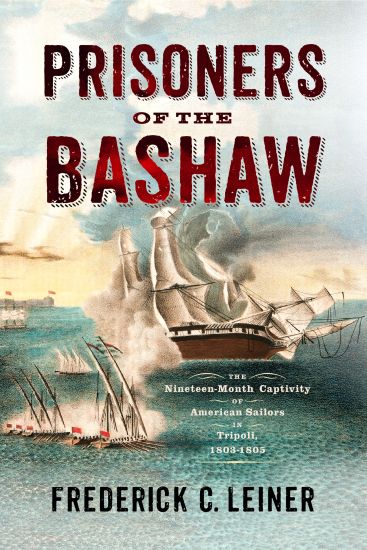
Prisoners of the Bashaw: The Nineteen-Month Captivity of American Sailors in Tripoli, 1803-1805
FINALIST FOR THE GILDER LEHRMAN MILITARY HISTORY PRIZE America's first crisis with the Islamic world: the diplomatic and military mission to free more than three hundred enslaved sailors On October 31, 1803, the frigate USS Philadelphia ran aground on a reef a few miles outside the harbor of Tripoli. Since April 1801, the United States had been at war with Tripoli, one of the Barbary "pirate" regimes, over the payment of annual tribute--bribes so that American merchant ships would not be seized and their crews held hostage. After hours under fire, the Philadelphia, aground and defenseless, surrendered, and 307 American sailors and marines were captured. Manhandled and stripped of their clothes and personal belongings, the men of the Philadelphia were paraded before the Bashaw of Tripoli, Yusuf Karamanali. The bashaw ordered the crew moved into an old warehouse, and the officers were eventually moved to a dungeon beneath the Bashaw's castle. While the officers were treated as "gentlemen," although imprisoned, the sailors worked as enslaved laborers. Regularly beaten and given a meager diet, several died in captivity; escape attempts failed, while a few ended up converting to Islam and joined their captors. President Thomas Jefferson, Congress, U.S. diplomats, and Commodore Edward Preble, commander of the naval squadron off Tripoli, grappled with how to safely free the American captives. The crew of the Philadelphia remained prisoners for nineteen months, until the Tripolitan War ended in June 1805. The Philadelphia captives became the key to negotiations to end the war; the possibility existed that if threatened too much, the Bashaw would kill the captives. Ultimately, the United States paid $60,000 to get them back--about $200 per man--a sum less than the Bashaw's initial demands for compensation. In June 1805, the Americans began their journey home. Combining stirring naval warfare, intricate diplomatic negotiations, the saga of surviving imprisonment, and based on extensive primary source research, Prisoners of the Bashaw: The Nineteen-Month Captivity of American Sailors in Tripoli, 1803-1805 by Frederick C. Leiner tells the complete story of America's first great hostage crisis.
Prisoners of the Bashaw: The Nineteen-Month Captivity of American Sailors in Tripoli, 1803-1805
FINALIST FOR THE GILDER LEHRMAN MILITARY HISTORY PRIZE America's first crisis with the Islamic world: the diplomatic and military mission to free more than three hundred enslaved sailors On October 31, 1803, the frigate USS Philadelphia ran aground on a reef a few miles outside the harbor of Tripoli. Since April 1801, the United States had been at war with Tripoli, one of the Barbary "pirate" regimes, over the payment of annual tribute--bribes so that American merchant ships would not be seized and their crews held hostage. After hours under fire, the Philadelphia, aground and defenseless, surrendered, and 307 American sailors and marines were captured. Manhandled and stripped of their clothes and personal belongings, the men of the Philadelphia were paraded before the Bashaw of Tripoli, Yusuf Karamanali. The bashaw ordered the crew moved into an old warehouse, and the officers were eventually moved to a dungeon beneath the Bashaw's castle. While the officers were treated as "gentlemen," although imprisoned, the sailors worked as enslaved laborers. Regularly beaten and given a meager diet, several died in captivity; escape attempts failed, while a few ended up converting to Islam and joined their captors. President Thomas Jefferson, Congress, U.S. diplomats, and Commodore Edward Preble, commander of the naval squadron off Tripoli, grappled with how to safely free the American captives. The crew of the Philadelphia remained prisoners for nineteen months, until the Tripolitan War ended in June 1805. The Philadelphia captives became the key to negotiations to end the war; the possibility existed that if threatened too much, the Bashaw would kill the captives. Ultimately, the United States paid $60,000 to get them back--about $200 per man--a sum less than the Bashaw's initial demands for compensation. In June 1805, the Americans began their journey home. Combining stirring naval warfare, intricate diplomatic negotiations, the saga of surviving imprisonment, and based on extensive primary source research, Prisoners of the Bashaw: The Nineteen-Month Captivity of American Sailors in Tripoli, 1803-1805 by Frederick C. Leiner tells the complete story of America's first great hostage crisis.
Napoleonic Wars

Napoleonic Wars

Frederick C. Schneid

Potomac Books Inc
2012
pokkari
It is only in the past two decades that English-speaking scholars have fully breached European language barriers, permitting a comprehensive reexamination of the Napoleonic Wars beyond the limitations of English-, French-, and German-dependent works. This new volume in the Essential Bibliography Series examines the changing nature of Napoleonic historiography and provides the student and scholar an invaluable guide to those changes.
No Fear In My Classroom

No Fear In My Classroom

Frederick C Wootan

Adams Media Corporation
2009
pokkari
Teachers have a lot to worry about—from classroom management to school violence to job security to national mandates. Lucky for them, this book helps relieve those fears and allows them to focus on what they’re supposed to be doing—teaching. With a friendly, accessible format, teacher-turned-author Frederick Wootan supplies solutions to his fellow educators’ fears, like:Are their students actually listening to them?Are they being fair about grading?What can they do about overly aggressive parents?How are budget cuts going to affect their classroom?What’s to stop them from being laid off?With this book, teachers will build their confidence, take back their classrooms, and put the emphasis back on education.
Trotsky's Challenge

Trotsky's Challenge

Frederick C. Corney

Haymarket Books
2017
nidottu
Trotsky's analysis in Lessons of October ran counter to the efforts of the Bolshevik leaders to depict October as a foundational event in which the Bolshevik Party, and its clear-sighted leader Lenin, played the major role in bringing about the revolution in Russia.
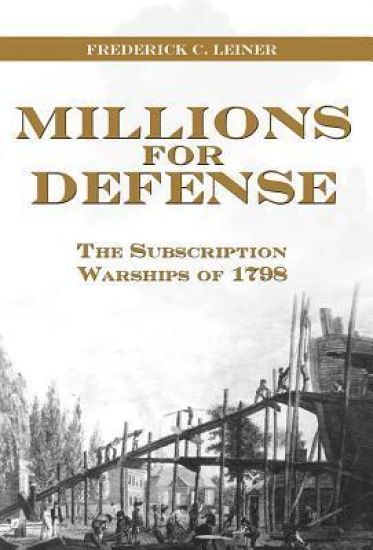
Millions for Defense

Millions for Defense

Frederick C. Leiner

Naval Institute Press
2014
nidottu
The title of this book comes from a toast popular with Americans in the late 1790s—“millions for defense, not a cent for tribute.” Americans were incensed by demands for bribes from French diplomats and by France’s galling seizures of U.S. merchant ships, and as they teetered toward open war, were disturbed by their country’s lack of warships. Provoked to action, private U.S. citizens decided to help build a navy. Merchants from Newburyport, Massachusetts, took the lead by opening a subscription to fund a 20-gun warship to be built in ninety days, and they persuaded Congress to pass a statute that gave them government “stock” bearing 6 percent interest in exchange for their money.Their example set off a chain reaction down the coast. More than a thousand subscribers in the port towns pledged money and began to build nine warships with little government oversight. Among the subscription ships were the Philadelphia, later lost on the rocks at Tripoli; Essex, the first American warship to round the Cape of Good Hope; and Boston, which captured the French corvette Le Berceau.This book is the first to explore in depth the subject of subscribing for warships. Frederick Leiner explains how the idea materialized, who the subscribers and shipbuilders were, how the ships were built, and what contributions these ships made to the Quasi-War against France. Along the way, he also offers significant insights into the politics of what is arguably the most critical period in American history.
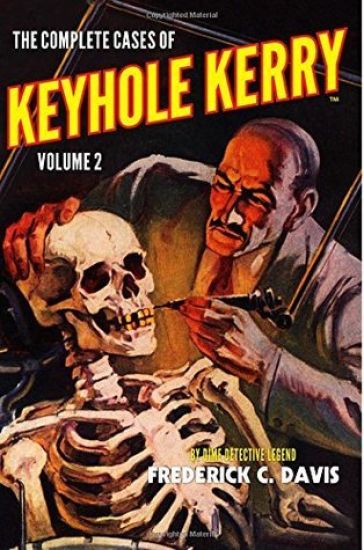
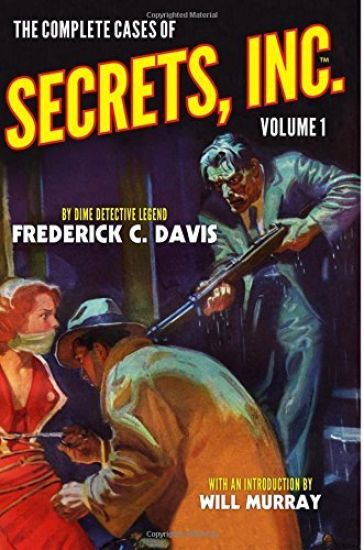
The Complete Cases of Keyhole Kerry, Volume 2
The series concludes here Big-city residents on both sides of the law regard him with equal measures of fear and reticence. They know that whatever they're doing, right or wrong, will sooner or later come to the attention of Guy "Keyhole" Kerry, a wise-cracking, hard-charging journalist who knows all and tells most of it. Kerry's profession brings him into contact with all kinds of people, and the law of averages guarantees that some of them are better left alone. But Keyhole Kerry will risk anything for a scoop, even if it means becoming embroiled in murder mysteries and making himself a target.This relatively brief series (eight late Thirties entries) was written for Dime Detective by Frederick C. Davis, a tireless pulp scribe who sold more yarns to the magazine-73 in all-than any other contributor save T.T. Flynn. With a half-dozen recurring characters in this one rough-paper periodical, Davis was one of the many talented contributors who made Dime Detective a prestigious crime pulp second only to the legendary Black Mask in its impact on the genre.