Kirjojen hintavertailu. Mukana 11 342 296 kirjaa ja 12 kauppaa.

Kirjahaku

Etsi kirjoja tekijän nimen, kirjan nimen tai ISBN:n perusteella.

1000 tulosta hakusanalla Frederick Newmeyer

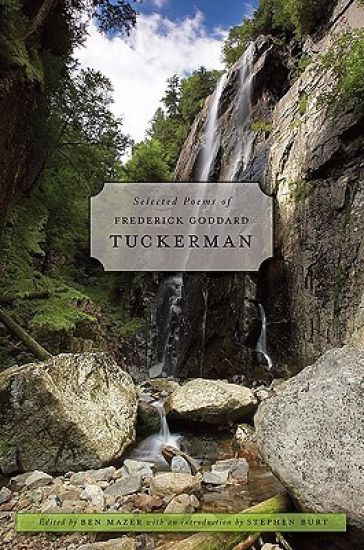
Selected Poems of Frederick Goddard Tuckerman

Selected Poems of Frederick Goddard Tuckerman

Frederick Goddard Tuckerman

The Belknap Press
2010
sidottu
Unlike Whitman, Dickinson, or Wordsworth, Frederick Goddard Tuckerman (1821–1873) never wanted to start a revolution in poetry. Nor did he—like Longfellow or his friend Tennyson—capture or ever try to represent the spirit of his age. Yet he remains one of America’s most passionate, moving, and technically accomplished poets of the nineteenth century: a New Englander through and through, a poet of the outdoors, wandering fields and wooded hillsides by himself, driven to poetry and the solitude of nature by the loss of his beloved wife. This is the persona we encounter again and again in Tuckerman’s sonnets and stanzaic lyric poetry.Correcting numerous errors in previous editions, this is the first reliable reading edition of Tuckerman’s poetry. Ben Mazer has painstakingly re-edited the poems in this selection from manuscripts at the Houghton Library. Included in this generous selection are several important poems omitted in The Complete Poems of Frederick Goddard Tuckerman. In her introduction to the volume, Stephanie Burt celebrates an extraordinary poet of mourning and nature—an anti-Transcendental—who in many ways seems closer to writers of our own century than to, say, Emerson or even Thoreau. Readers who enjoy the verse of Richard Wilbur, Anthony Hecht, or Mary Oliver will find much to admire in Tuckerman’s poetry.
Frederick Law Olmsted and the Boston Park System

Frederick Law Olmsted and the Boston Park System

Zaitzevsky Cynthia

HARVARD UNIVERSITY PRESS
1982
sidottu
Whether flying a kite in Franklin Park, gardening in the Fens, or jogging along the Riverway, today’s Bostonians are greatly indebted to the legacy of Frederick Law Olmsted. The man who dreamed of an “emerald necklace” of parks for Boston completed his plans in 1895, yet his invigorating influence shapes the city to this day, despite the encroachment of highways and urban sprawl. Cynthia Zaitzevsky’s book is the first fully illustrated account of Olmsted’s work: the process of “getting the plan” of a park, supervising its construction, adding the necessary “furniture” of bridges and other structures, and selecting plants, shrubs, and trees.Frederick Law Olmsted’s stellar career in landscape architecture began with his design for Central Park in New York City. Public concern for open spaces led Boston to commission Olmsted to design peaceful “country parks” for the mental and physical refreshment of those who lived in the expanding city. He planned the system of five parks and connecting parkways extending out from the original Boston Common and Public Garden, as well as harbor and riverfront improvements—a vast set of projects involving 2,000 acres of open land. He and his firm also designed many smaller parks, playgrounds, and suburban subdivisions.This book will be invaluable to anyone interested in landscape architecture, city planning, the history of Boston, or the nineteenth-century urban park movement and its current revival.
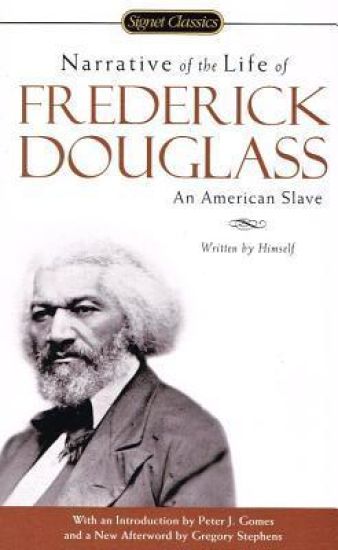
Narrative of the Life of Frederick Douglass, an American Slave & Incidents in the Life of a Slave Girl
This Modern Library Paperback Classics edition combines the two most important African American slave narratives into one volume.Frederick Douglass's Narrative, first published in 1845, is an enlightening and incendiary text. Born into slavery, Douglass became the preeminent spokesman for his people during his life; his narrative is an unparalleled account of the dehumanizing effects of slavery and Douglass's own triumph over it. Like Douglass, Harriet Jacobs was born into slavery, and in 1861 she published Incidents in the Life of a Slave Girl, now recognized as the most comprehensive antebellum slave narrative written by a woman. Jacobs's account broke the silence on the exploitation of African American female slaves, and it remains crucial reading. These narratives illuminate and inform each other. This edition includes an incisive Introduction by Kwame Anthony Appiah and extensive annotations.
Frederick the Great's Philosophical Writings

Frederick the Great's Philosophical Writings

Frederick II

PRINCETON UNIVERSITY PRESS
2020
sidottu
The first modern English edition of diverse Enlightenment-era writings by Prussian monarch Frederick the GreatFrederick II of Prussia (1712–1786), best known as Frederick the Great, was a prolific writer of philosophical discourses, poems, epics, satires, and more, while maintaining extensive correspondence with prominent intellectuals, Voltaire among them. This edition of selected writings, the first to make a wide range of Frederick’s most important ideas available to a modern English readership, moves beyond traditional attempts to see his work only in light of his political aims. In these pages, we can finally appreciate Frederick’s influential contributions to the European Enlightenment—and his unusual role as a monarch who was also a published author.In addition to Frederick’s major opus, the Anti-Machiavel, the works presented here include essays, prefaces, reviews, and dialogues. The subjects discussed run the gamut from ethics to religion to political theory. Accompanied by critical annotations, the texts show that we can understand Frederick’s views of kingship and the state only if we engage with a broad spectrum of his thought, including his attitudes toward morality and self-love. By contextualizing his arguments and impact on Enlightenment beliefs, this volume considers how we can reconcile Frederick’s innovative public musings with his absolutist rule. Avi Lifschitz provides a robust and detailed introduction that discusses Frederick’s life and work against the backdrop of eighteenth-century history and politics.With its unparalleled scope and cross-disciplinary appeal, Frederick the Great’s Philosophical Writings firmly establishes one monarch’s multifaceted relevance for generations of readers and scholars to come.
Frederick the Great's Philosophical Writings

Frederick the Great's Philosophical Writings

Frederick II

PRINCETON UNIVERSITY PRESS
2024
pokkari
The first modern English edition of diverse Enlightenment-era writings by Prussian monarch Frederick the GreatFrederick II of Prussia (1712–1786), best known as Frederick the Great, was a prolific writer of philosophical discourses, poems, epics, satires, and more, while maintaining extensive correspondence with prominent intellectuals, Voltaire among them. This edition of selected writings, the first to make a wide range of Frederick’s most important ideas available to a modern English readership, moves beyond traditional attempts to see his work only in light of his political aims. In these pages, we can finally appreciate Frederick’s influential contributions to the European Enlightenment—and his unusual role as a monarch who was also a published author.In addition to Frederick’s major opus, the Anti-Machiavel, the works presented here include essays, prefaces, reviews, and dialogues. The subjects discussed run the gamut from ethics to religion to political theory. Accompanied by critical annotations, the texts show that we can understand Frederick’s views of kingship and the state only if we engage with a broad spectrum of his thought, including his attitudes toward morality and self-love. By contextualizing his arguments and impact on Enlightenment beliefs, this volume considers how we can reconcile Frederick’s innovative public musings with his absolutist rule. Avi Lifschitz provides a robust and detailed introduction that discusses Frederick’s life and work against the backdrop of eighteenth-century history and politics.With its unparalleled scope and cross-disciplinary appeal, Frederick the Great’s Philosophical Writings firmly establishes one monarch’s multifaceted relevance for generations of readers and scholars to come.
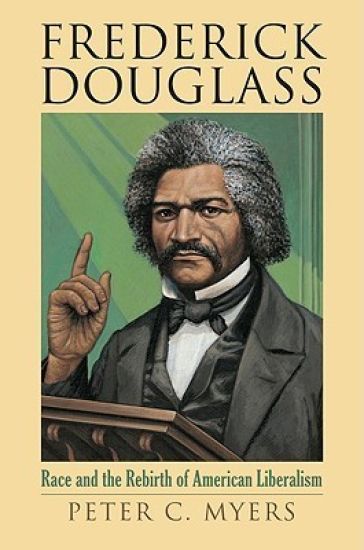
Frederick Douglass

Frederick Douglass

Peter C. Myers

University Press of Kansas
2008
sidottu
For Frederick Douglass, the iconic nineteenth-century slave and abolitionist, the foundations for his arguments in support of racial equality rested on natural rights and natural law - and the bold proclamation of the Declaration of Independence that all men are created equal. But because many Americans never observed this principle - and in Douglass' day even renounced it - he made it his life's work to move the nation toward this vision of a more noble liberalism. Peter Myers now considers that effort and the natural rights arguments by which Douglass confronted race in America.Myers examines the philosophic core of Douglass' political thought, offering a greater understanding of its depth and coherence. He depicts Douglass as the leading thinker to apply the Founders' doctrine of natural rights to the plight of African Americans - an activist who grounded his arguments on the rights guaranteed by the Constitution and the inherent injustice not only of slavery but of any form of racial superiority.Myers first reconsiders Douglass' descriptive analysis of slavery, developing his arguments for its natural wrongness and for its natural weakness in conjunction with the right of resistance. He then examines Douglass' understandings of civil government in general and of the U.S. constitutional order in particular, exploring his argument on the Constitution's relation to slavery and his thoughts on the powers and duties of the federal and state governments in the matter of postslavery race relations - including new insight into Douglass' controversial ""do nothing"" doctrine.Myers argues that Douglass' political thought at its core is both more coherent and more defensible in substance than his critics acknowledge. He maintains that Douglass was right in finding the natural rights principles of the Declaration a sufficient theoretical basis for addressing the nation's racial problems and contends that his hopefulness for the demise of slavery and white supremacy was marked by moderation and realism.Myers finds in Douglass' political thought the foundations of a revitalized argument for the mainstream civil rights, integrationist tradition of African American political thought. His analysis offers a new way of looking at an important thinker, as well as a compelling case for hoping that race relations in America will improve over time.
Frederick Douglass

Frederick Douglass

Peter C. Myers

UNIVERSITY PRESS OF KANSAS
2023
nidottu
For Frederick Douglass, the iconic nineteenth-century slave and abolitionist, the foundations for his arguments in support of racial equality rested on natural rights and natural law-and the bold proclamation of the Declaration of Independence that all men are created equal. But because many Americans never observed this principle—and in Douglass’s day even renounced it—he made it his life’s work to move the nation toward this vision of a more noble liberalism. Peter Myers now considers that effort and the natural rights arguments by which Douglass confronted race in America.Myers examines the philosophic core of Douglass’s political thought, offering a greater understanding of its depth and coherence. He depicts Douglass as the leading thinker to apply the Founders’ doctrine of natural rights to the plight of African Americans—an activist who grounded his arguments on the rights guaranteed by the Constitution and the inherent injustice not only of slavery but of any form of racial superiority.Myers first reconsiders Douglass’s descriptive analysis of slavery, developing his arguments for its natural wrongness and for its natural weakness in conjunction with the right of resistance. He then examines Douglass’s understandings of civil government in general and of the U.S. constitutional order in particular, exploring his argument on the Constitution’s relation to slavery and his thoughts on the powers and duties of the federal and state governments in the matter of postslavery race relations—including new insight into Douglass’s controversial “do nothing” doctrine.Myers argues that Douglass’s political thought at its core is both more coherent and more defensible in substance than his critics acknowledge. He maintains that Douglass was right in finding the natural rights principles of the Declaration a sufficient theoretical basis for addressing the nation’s racial problems and contends that his hopefulness for the demise of slavery and white supremacy was marked by moderation and realism.Myers finds in Douglass’s political thought the foundations of a revitalized argument for the mainstream civil rights, integrationist tradition of African American political thought. His analysis offers a new way of looking at an important thinker, as well as a compelling case for hoping that race relations in America will improve over time.
The Live and Writings of Frederick Douglass, Volume 3

The Live and Writings of Frederick Douglass, Volume 3

Frederick Douglass

International Publishers
2020
pokkari
The second volume of The Life and Writings of Frederick Douglass traced the career of this outstanding leader of the Negro people during the crucial decade, 1850-1860. In that volume was presented Douglass' incisive analysis of the strategy and tactics of the Abolitionist movement, the Negro Convention movement, woman's rights, the Kansas-Nebraska Act, the life and death of John Brown, the foundation of the Republican Party, and the elections of 1852, 1856, and 1860 . In volume 3, this astute analysis by one of the most brilliant minds of the nineteenth century relates to a decisive era in world history, the Civil War in the United States, which began on April 12, 1861 with the firing on Fort Sumter and ended at the Appomattox Court House on April 9, 1865.
The Life and Writings of Frederick Douglass, Volume 4

The Life and Writings of Frederick Douglass, Volume 4

Frederick Douglass

International Publishers
2020
pokkari
"Reconstruction and After," the fourth volume of the collected works of Frederick Douglass, brings together for the first time his writings and speeches during the crucial period, 1865-1895. These years are also covered in the section of Dr. Foner's full-scale biography of Douglass which appears in this volume. The present volume brings out Douglass' fight to give meaning to the Union victory in the Civil War by guaranteeing economic, political, and civil freedom to the Negro people. He was an outstanding leader in the campaign for the fourteenth and fifteenth amendments and, when they were ratified, continued to battle to make these laws effective. His writings have a contemporary ring.
The Life and Writings of Frederick Douglass Volume 5

The Life and Writings of Frederick Douglass Volume 5

Frederick Douglass

International Publishers
2020
pokkari
The original four volumes of the collected works of Frederick Douglass included a substantial number of his writings and speeches but far from all of them. At the time the first volumes of Douglass' writings and speeches were published (1950-1955), the possibilities of incorporating the other unpublished material were remote. Subsequently this became possible and the present, Supplementary Volume covering the writings of Douglass over the important period from 1844 to 1860 was produced. These pages will furnish the reader with an excellent picture of the Black communities of Cleveland, Cincinnati, Philadelphia, Chicago, Detroit and other northern cities which Douglass visited and from which he sent penetrating dispatches to his paper. They also contain considerable evidence of the ideological debates, sometimes quite bitter, which were part of the life of these Black communities in the ante-bellum years, especially over such issues as emigration. Here, as in the previous four volumes, all of Douglass' writings and speeches are reproduced with no substantial change whatsoever; misspellings and grammatical errors have been corrected if they appeared in the printed sources and clearly were typographical mistakes. A few passages have been omitted from several of the selections to avoid repetition, but these have been properly indicated. In a few cases the only account of a Douglass speech was in the form of a digest by the reporter, and where these have been included, this has been clearly indicated.
Frederick Douglass and the Philosophy of Religion

Frederick Douglass and the Philosophy of Religion

Timothy J. Golden

BLOOMSBURY PUBLISHING PLC
2021
sidottu
Frederick Douglass and the Philosophy of Religion: An Interpretation of Narrative, Art, and Politics addresses Douglass's narrative method and the reformed epistemology of analytic theism within the context of incarnational theology. Timothy J. Golden argues that in this context, Douglass's use of narrative maintains a robust moral, social, and political engagement—and thus a closer connection to an authentic Christian theology—in a way that analytic theism does not. To show this contrast, Golden presents existential and phenomenological interpretations of Douglass, reading him with Kierkegaard, Kafka, and Levinas. Golden also interprets Douglass's use of moral suasion with Kant's moments of aesthetic judgment and his account of judgment as a mediating faculty between the understanding and reason. Golden concludes the book with reflection on how Douglass’s incarnational theology connects to his future philosophical and theological work, work that understands consciousness (subjectivity) as saturated in time understood as history. The resulting understanding of consciousness provides tools to overcome abstraction not only in social and political philosophy, Christianity, and philosophical theology, but also in gender studies.
Narrative of the Life of Frederick Douglass: An American Slave, Written by Himself
Enriched Classics offer readers accessible editions of great works of literature enhanced by helpful notes and commentary. Each book includes educational tools alongside the text, enabling students and readers alike to gain a deeper and more developed understanding of the writer and their work. Frederick Douglass's powerful autobiographical account of life in bondage, his triumphant escape to freedom, and his analysis of slavery as a condition. Enriched Classics enhance your engagement by introducing and explaining the historical and cultural significance of the work, the author's personal history, and what impact this book had on subsequent scholarship. Each book includes discussion questions that help clarify and reinforce major themes and reading recommendations for further research. Read with confidence.
Frederick the Great and his Musicians: The Viola da Gamba Music of the Berlin School
After decades of stagnation during the reign of his father, the 'Barracks King', the performing arts began to flourish in Berlin under Frederick the Great. Even before his coronation in 1740, the crown prince commenced recruitment of a group of musician-composers who were to form the basis of a brilliant court ensemble. Several composers, including C.P.E. Bach and the Graun brothers, wrote music for the viola da gamba, an instrument which was already becoming obsolete elsewhere. They were encouraged in this endeavour by the presence in the orchestra from 1741 of Ludwig Christian Hesse, one of the last gamba virtuosi, who was described in 1766 as 'unquestionably the finest gambist in Europe'. This study shows how the unique situation in Berlin produced the last major corpus of music written for the viola da gamba, and how the more virtuosic works were probably the result of close collaboration between Hesse and the Berlin School composers. The reader is also introduced to the more approachable pieces which were written and arranged for amateur viol players, including the king's nephew and ultimate successor, Frederick William II. O'Loghlin argues that the aesthetic circumstances which prevailed in Berlin brought forth a specific style that is reflected not only in the music for viola da gamba. Characteristics of this Berlin style are identified with reference to a broad selection of original written sources, many of which are hardly accessible to English-speaking readers. There is also a discussion of the rather contradictory reception history of the Berlin School and some of its composers. The book concludes with a complete thematic catalogue of the Berlin gamba music, with a listing of original manuscript sources and modern publications. The book will appeal to professional and amateur viola da gamba players as well as to scholars of eighteenth-century German music.
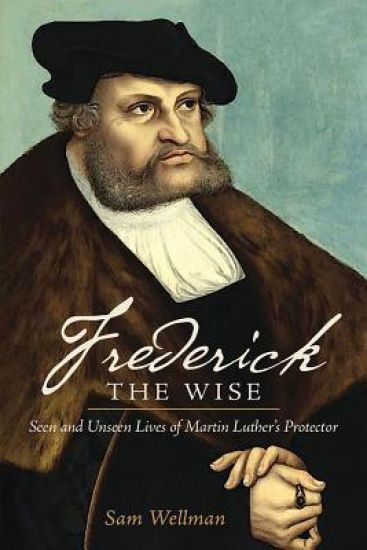
Frederick the Wise

Frederick the Wise

Sam Wellman

CONCORDIA PUBLISHING HOUSE LTD
2015
pokkari
Frederick the Wise unlocks German research to make available in English, for the first time, a full-length story of Frederick III of Saxony. The fascinating biographical journey reveals why this noteworthy elector risked his realm of Saxony to protect the fiery monk Martin Luther and the developing reforms of the Church. As one of the most powerful territorial princes of the Holy Roman Empire of his time, Frederick's "humanity and integrity were rare for someone of his elite status", notes Dr. Paul M. Bacon. "Elector Frederick the Wise of Saxony was much more than simply Martin Luther's noble protector."A valuable resource for students of German history and the Reformation period.Features: Discusses how Frederick dominated other princes of the Holy Roman Empire for nearly 40 yearsTells why Frederick's only "wife"-but not their children-had to be kept "secret"Chronology of events relevant to Frederick the WiseIndex of persons and places
Frederick Starr

Frederick Starr

Donald McVicker

AltaMira Press,U.S.
2012
sidottu
This definitive, detail-packed biography is the first of Frederick Starr (1856-1933), a founding father of American anthropology at the University of Chicago. It presents a major reevaluation of Starr’s place as the missionizer of anthropology, illuminates the consequences of the professionalization of anthropology, and yields a greater understanding of the United States as it moved into a position of global power. Donald McVicker considers Frederick Starr’s colorful life in the context of the times. In many respects Starr’s early career paralleled that of Franz Boas, “the architect of American anthropology.” Nonetheless, as Boas led professional anthropology into the twentieth century in the United States, Starr, the popularizer, increasingly fell behind. Today, if Starr is remembered at all, he is usually described in terms of his intellectual, professional, and ethical failings. Yet his collections, publications, and photographic and paper archives provide a rich set of resources for archaeologists, ethnologists, folklorists, and historians. McVicker argues that Starr’s mission to bring anthropology to the public and enlighten them was as valid a goal during his career as was Boas’s goal to professionalize the field.