

Kirjahaku
Etsi kirjoja tekijän nimen, kirjan nimen tai ISBN:n perusteella.
1000 tulosta hakusanalla Friedman Lester D.
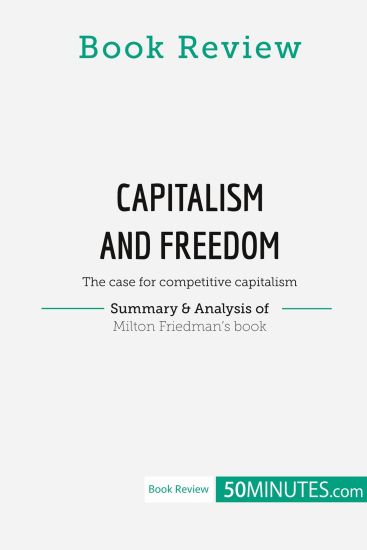
Book Review: Capitalism and Freedom by Milton Friedman: The case for competitive capitalism
50minutes
50Minutes.com
2019
nidottu
It can be hard for busy professionals to find the time to read the latest books. Stay up to date in a fraction of the time with this concise guide. Capitalism and Freedom outlines the Nobel Prize-winning economist Milton Friedman's views on the relationship between economics and politics. Specifically, he believes that economic freedom is necessary both in and of itself, and because it is inextricably linked to political freedom. He applies this insight to a host of contemporary problems to argue that the situation could be improved by what he refers to as "competitive capitalism". Capitalism and Freedom has sold hundreds of thousands of copies since it was first published in 1962, and was described by The Times Literary Supplement as "one of the most influential books published since the war". Friedman himself was one of the most influential economists of the 20th century, and his ideas have been adopted by governments around the world. This book review and analysis is perfect for: - Students of economics and politics- Anyone with an interest in the history of economic thought- Anyone looking to understand the role of the government in the economy About 50MINUTES.COM BOOK REVIEWThe Book Review series from the 50Minutes collection is aimed at anyone who is looking to learn from experts in their field without spending hours reading endless pages of information. Our reviews present a concise summary of the main points of each book, as well as providing context, different perspectives and concrete examples to illustrate the key concepts.

Analyse des Skandals um Michel Friedman im Rahmen der Skandaluhr nach Burkhardt
Milan Viktorias
GRIN Verlag
2019
nidottu

Friedrich August von Hayek und Milton Friedman als Protagonisten des marktradikalen Neo-Liberalismus
Anonymous
GRIN Verlag
2019
nidottu
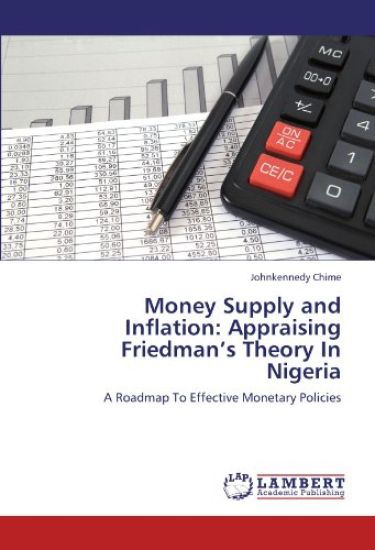
Money Supply and Inflation: Appraising Friedman¿s Theory In Nigeria
Johnkennedy Chime
Lap Lambert Academic Publishing
2011
nidottu

The Woman All Spies Fear: Code Breaker Elizebeth Smith Friedman and Her Hidden Life
Amy Butler Greenfield
Random House Studio
2021
sidottu
An inspiring true story, perfect for fans of Hidden Figures, about an American woman who pioneered codebreaking in WWI and WWII but was only recently recognized for her extraordinary contributions. A YALSA EXCELLENCE IN NONFICTION FINALIST - A KIRKUS REVIEWS BEST BOOK OF THE YEAR Elizebeth Smith Friedman had a rare talent for spotting patterns and solving puzzles. These skills led her to become one of the top cryptanalysts in America during both World War I and World War II. She originally came to code breaking through her love for Shakespeare when she was hired by an eccentric millionaire to prove that Shakespeare's plays had secret messages in them. Within a year, she had learned so much about code breaking that she was a star in the making. She went on to play a major role decoding messages during WWI and WWII and also for the Coast Guard's war against smugglers. Elizebeth and her husband, William, became the top code-breaking team in the US, and she did it all at a time when most women weren't welcome in the workforce. Amy Butler Greenfield is an award-winning historian and novelist who aims to shed light on this female pioneer of the STEM community.
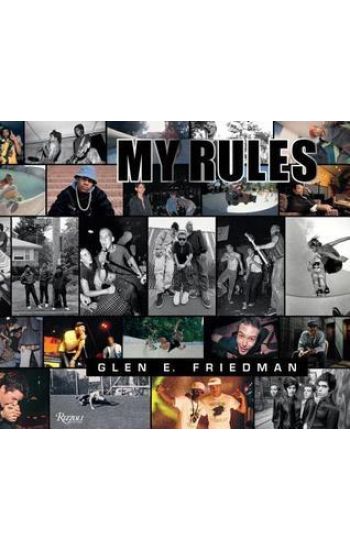
Glen E. Friedman
Rizzoli International Publications
2014
sidottu
The definitive monograph of Glen E. Friedman, a pioneer of skate, punk, and hip-hop photography, including much never-before-published work. Glen E. Friedman is best known for his work capturing and promoting rebellion in his portraits of artists such as Fugazi, Black Flag, Ice-T, Dead Kennedys, Minor Threat, The Misfits, Bad Brains, Beastie Boys, Run-D.M.C., and Public Enemy, as well as classic skateboarding originators such as Tony Alva, Jay Adams, Alan Ollie Gelfand, Duane Peters, and Stacy Peralta, and a very young Tony Hawk. Designed in association with celebrated street and graphic artist Shepard Fairey, this monograph captures the most important and influential underground heroes of skateboarding, punk, and hip-hop cultures. My Rules is an unprecedented window into the three most significant countercultures of the last quarter of the twentieth century, and Friedman's photographs define those important movements that he helped shape. A remarkable chronicle and a primer about the origins of radical street cultures, My Rules is also a statement of artistic inspiration for those influenced by these countercultures.

These two volumes present essays on the subdiscipline of Chicago Monetarism in economics. Some of the issues under dispute can be regarded as resolved, while others are still being debated. The contibutors include Friedman, Patinkin, Harry Johnson and James Tobin.

These two volumes present essays on the subdiscipline of Chicago Monetarism in economics. Some of the issues under dispute can be regarded as resolved, while others are still being debated. The contibutors include Friedman, Patinkin, Harry Johnson and James Tobin.
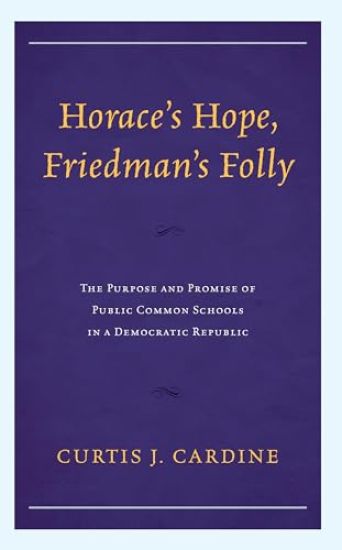
Horace's Hope, Friedman's Folly explains the forces behind the current efforts to privatize education. It also works to debunk the idea that public education should be based on a capitalistic model of action that places education of our youth into the hands of corporations. It does this by presenting the original 6 principles of public education as espoused by Horace Mann, which is the basis of most state legislation concerning the creation of public schools. Citizens may not obtain both ignorance and freedom.The public should pay for, control, and maintain education.Children of different financial ladders should get the same education.The education that is taught must be nonsectarian (nonreligious).The education taught must use tenets of a free society.This education should be taught by professionally trained teachers.These principles are contrasted with the economic model of education promoted and theorized by economist Milton Friedman. A model that is re-segregating our children by race and creed rather than preparing them for life as a member of our democratic republic.
Horace's Hope, Friedman's Folly explains the forces behind the current efforts to privatize education. It also works to debunk the idea that public education should be based on a capitalistic model of action that places education of our youth into the hands of corporations. It does this by presenting the original 6 principles of public education as espoused by Horace Mann, which is the basis of most state legislation concerning the creation of public schools. Citizens may not obtain both ignorance and freedom.The public should pay for, control, and maintain education.Children of different financial ladders should get the same education.The education that is taught must be nonsectarian (nonreligious).The education taught must use tenets of a free society.This education should be taught by professionally trained teachers.These principles are contrasted with the economic model of education promoted and theorized by economist Milton Friedman. A model that is re-segregating our children by race and creed rather than preparing them for life as a member of our democratic republic.
The Libertarian Reader: Classic & Contemporary Writings from Lao-Tzu to Milton Friedman
SIMON SCHUSTER
2015
nidottu
"The most magnificent collection of libertarian writings ever published" (Laissez Faire Books). An important collection of seminal writings on a movement that is rapidly changing the face of American politics, The Libertarian Reader links some of the most fertile minds of our time to a centuries-old commitment to freedom, self-determination, and opposition to intrusive government. This is the first comprehensive anthology of libertarian thought--from the Bible and Lao-Tzu to Hayek and Milton Friedman--to be published in one volume. The 68 selections from great libertarian writers are an intellectual feast, covering such key libertarian themes as skepticism about power, individual rights, spontaneous order, free markets, and peace. For all independent thinkers, this unique sourcebook will stand as a classic reference for years to come, and a reminder that libertarianism is one of our oldest and most venerable American traditions.
Summary: The World Is Flat: Review and Analysis of Friedman's Book
Businessnews Publishing
Business Book Summaries
2016
nidottu

Summary: The Lexus and the Olive Tree: Review and Analysis of Friedman's Book
Businessnews Publishing
Business Book Summaries
2016
nidottu
The must-read summary of Thomas Friedman's book: "The Lexus and the Olive Tree: Understanding Globalization". This complete summary of the ideas from Thomas Friedman's book "The Lexus and the Olive" shows that globalisation is a fundamentally new and better way to do business. As such, a new and brighter era of globalisation is just in the process of beginning as all the major marketplaces evolve towards becoming global markets. Thomas Friedman uses a metaphor to explain the challenges in this upcoming era of globalisation: the human drive for enrichment and the best products (represented by the Lexus) will sometimes conflict with the natural desire to hold on to what has traditionally mattered in creating a sense of national and personal identity (represented by the Olive Tree). The challenge for individuals and nations will be to find and maintain a healthy balance between those two perspectives. This summary highlights that globalisation creates the opportunity to sell into vast markets but pure commercial success will only be meaningful if it can be accomplished using means that reflect the individuality and cultural values of the people involved. Added-value of this summary: - Save time- Understand the key concepts - Increase your knowledge To learn more, read "The Lexus and the Olive" and discover a challenging and provocative book for all who care about how the world really works.
Welche Konsequenzen muss Downs aus Sicht des Erklarungsinstrumentalismus nach Friedman aus dem Wahlparadoxon ziehen?
Fabian Koba
Grin Publishing
2009
nidottu
Welche Konsequenzen muss Downs aus Sicht des Erklarungsinstrumentalismus nach Friedman aus dem Wahlparadoxon ziehen?
Maxim Kimerling
Grin Publishing
2009
nidottu

Nyliberal politisk filosofi : En kritisk analys av Milton Friedman, Robert Nozick och F.A. Hayek
Anna Maria Blomgren
Bokförlaget Nya Doxa
1997
nidottu
I boken ifrågasätts bilden av en samlad och systematiskt uppbyggd nyliberal politisk filosofi. De stora namnens teorier analyseras ur ett idéhistoriskt perspektiv.
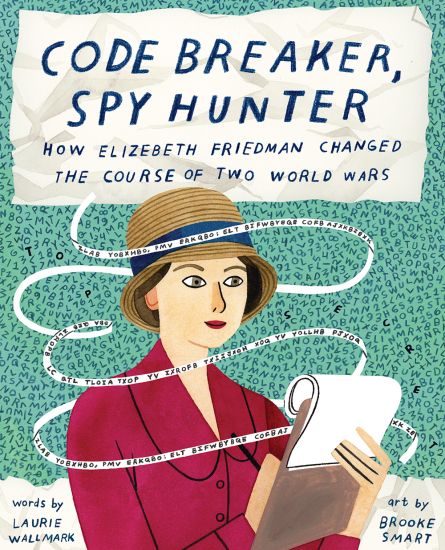
Code Breaker, Spy Hunter: How Elizebeth Friedman Changed the Course of Two World Wars
Laurie Wallmark
Abrams Books for Young Readers
2021
sidottu
Decode the story of Elizebeth Friedman, the cryptologist who took down gangsters and Nazi spies In this picture book biography, young readers will learn all about Elizebeth Friedman (1892–1980), a brilliant American code breaker who smashed Nazi spy rings, took down gangsters, and created the CIA's first cryptology unit. Her story came to light when her secret papers were finally declassified in 2015. From thwarting notorious rumrunners with only paper and pencil to “counter-spying into the minds and activities of” Nazis, Elizebeth held a pivotal role in the early days of US cryptology. No code was too challenging for her to crack, and Elizebeth’s work undoubtedly saved thousands of lives. Extensive back matter includes explanations of codes and ciphers, further information on cryptology, a bibliography, a timeline of Elizebeth’s life, plus secret messages for young readers to decode.

Architecture, Not Architecture: The Designed Spaces of John Friedman Alice Kimm Architects
Joseph Giovannini; David Ulin; Eui-Sung Yi
ACTAR
2026
sidottu
This book showcases the work of John Friedman Alice Kimm Architects (JFAK), a Los Angeles-based architecture practice recognized for its creation of iconic, experiential environments that are reflective of culture and context and expressive of inclusivity and identity. Founded by John Friedman and Alice Kimm, JFAK is an American architecture firm in Los Angeles, California, USA that serves clients ranging from small nightclub operators and homeowners to developers, universities, and cities. JFAK's distinct formal landscapes are the result of an inquisitive design process that mines the possibilities and complexities of our contemporary, heterogeneous society. As such, the firm's wide-ranging body of work rejects adherence to diagram, at once represents and redefines the City of Los Angeles, and through its integration of technology and narrative captures a global zeitgeist.This book illustrates, through drawings, photos, and narratives not only of the work but of outside inspirations, the influences that form and define the underlying design logic of JFAK's projects.
