Kirjojen hintavertailu. Mukana 11 342 296 kirjaa ja 12 kauppaa.

Kirjahaku

Etsi kirjoja tekijän nimen, kirjan nimen tai ISBN:n perusteella.

1000 tulosta hakusanalla G. Addison Powell

G.H. Mead

G.H. Mead

G. H. Mead

Routledge
2012
nidottu
This book introduces social scientists to the ideas of George Herbert Mead (1863-1931) - one of the most original yet neglected thinkers of early twentieth century sociology.Mead is an exceptional case amongst sociological classics in that, until now, there has been no comprehensive reader of his work. As the first one-volume, comprehensive edited collection of Mead’s published and unpublished writing, this book fills this gap. It is the first to critically assess all of Mead's writings and draw out the aspects that are central to his system of thought. The book is divided into three parts (social psychology, science and epistemology, and democratic politics), comprising a total of 30 chapters - a third of which are published here for the first time.G.H. Mead: A Reader provides a unique and timely contribution to the understanding of this key theorist. It is essential reading for both undergraduate and postgraduate students in the fields of sociology, social psychology, philosophy of social science, social and cultural anthropology, and social and political theory.
G E Moore

G E Moore

Routledge
2013
nidottu
This is Volume III of twenty-two volumes on 20th Century Philosophy. Originally published in 1970, this is a collection of essays of George Edward Moore (1873-1958) who was one of the most influential philosophers of the twentieth century, and the outcome of the changes he introduced into our ways of thinking in philosophy cannot yet be foreseen.
G.E. Moore

G.E. Moore

G.E. Moore

Routledge
2013
nidottu
G.E. Moore, more than either Bertrand Russell or Ludwig Wittgenstein, was chiefly responsible for the rise of the analytic method in twentieth-century philosophy. This selection of his writings shows Moore at his very best.The classic essays are crucial to major philosophical debates that still resonate today. Amongst those included are:* A Defense of Common Sense* Certainty* Sense-Data* External and Internal Relations* Hume's Theory Explained* Is Existence a Predicate?* Proof of an External WorldIn addition, this collection also contains the key early papers in which Moore signals his break with idealism, and three important previously unpublished papers from his later work which illustrate his relationship with Wittgenstein.
G. F. Handel

G. F. Handel

Mary Ann Parker

Routledge
2005
sidottu
Baroque composer George Frideric Handel easily ranks among the world's greatest composers. The first edition of this research guide on Handel appeared in 1988; since that time a great deal of scholarly work has been published on Handel and related areas, including the discovery of a hitherto unknown work. New general resources such as the New Grove Dictionary of Opera (1992), electronic resources such as the RISM libretto catalogue online, and the study of Handel's continuing popularity as evidenced by the new Handel House Museum in London and Handel practice around the world (e.g., Messiah and millennium celebrations in Tonga, singalong Messiahs etc.) are incorporated into this revised edition of the Handel guide.
G Protein-coupled Receptors

G Protein-coupled Receptors

Georges Vauquelin; Bengt von Mentzer

John Wiley Sons Inc
2007
sidottu
G protein-coupled receptors (GPCRs) are membrane proteins that transduce a vast array of extracellular signals into intracellular reactions ranging from cell-cell communication processes to physiological responses. They play an important role in a variety of diseases from cancer and diabetes, to neurodegenerative, inflammatory and respiratory disorders. GPCRs are therefore of utmost interest in drug development: over half of all prescription drugs currently on the market act by targeting these receptors directly or indirectly. G Protein-coupled Receptors: Molecular Pharmacology provides a clear summary of the current knowledge in this fast-evolving field. The book sets out with an introduction to signalling molecules and their receptors, and an overview of the technical approaches used to investigate these interactions. Structural, functional and especially pharmacological aspects of GPCRs are then discussed in more detail and much attention is devoted to the analysis and interpretation of experimental data. The now widespread use of recombinant cell lies, receptor mutants and related artifices in drug research is critically evaluated. Special attention is also devoted to topical but often poorly understood concepts, such as insurmountable antagonism, inverse agonism and allosteric interactions. By combining general information with the major state-of-the-art concepts in GPCR-research, this outstanding book equips the reader with the necessary background for understanding and critically evaluating the current literature. Written by two experts from academia and industry, G Protein-coupled Receptors: Molecular Pharmacology offers a unique view of academic and applied approaches aiming to reveal new ideas in pharmaceutical research. The book is of interest to anyone involved in drug development and preclinical research and those who need to function within multi-disciplinary teams in the pharmaceutical industry: from investigators to product managers or clinicians who seek to have a broad mechanistic understanding of drug-receptor interactions. It is also an invaluable resource for final year undergraduate and postgraduate students in pharmacology and cell and molecular biology.
G Protein-Coupled Receptors

G Protein-Coupled Receptors

John Wiley Sons Inc
2010
sidottu
G-Protein Coupled Receptors (GPCRs) are not only the largest protein family in the human genome but are also the single biggest target for therapeutic agents. Research into GPCRs is therefore growing at a fast pace and the range of techniques that can be applied to GPCRs is vast and continues to grow. This book provides an invaluable bench-side guide into the best and most up-to-date techniques for current and future research on GPCRs. With contributions from leading international authorities, this book equips readers with clear and detailed protocols for both well-known and up-and-coming techniques along with hints and tips for success. All the methods have been tried and tested by leading international research labs and are presented in easy-to-follow stages along with a useful overview of each technique. This book is an essential resource for all researchers in molecular biology, biochemistry, pharmacology and for graduate students.
G Protein-Coupled Receptor--Protein Interactions

G Protein-Coupled Receptor--Protein Interactions

David R. Sibley

John Wiley Sons Inc
2005
sidottu
This exciting volume elucidates how GPCRs organize signal transduction and control intracellular activities. Chapters written by the recognized expert in each respective topic offer state-of-the-art updates on the principles and technology, as well as stepwise protocols for methods currently applied to the analysis of protein-receptor interactions.
G?n?ro. Lost in the Swamp

G?n?ro. Lost in the Swamp

A J N Gallagher

A.J.N. Gallagher
2021
pokkari
It's been a thousand years since the fall.A thousand years since a three-day war left the world cut off from the stars.A thousand years since the war created the 'Null Field' that drained all high-tech devices like a leach.A thousand years to forget the prophecy that a great evil will return from the shadows.A prophecy that is all but forgotten....but not by all. Taren Fairwater's life hangs in the balance after the compass on his restored Waterhog is damaged while traversing the oldest part of the great swamp. A storm bearing down on him, night fast approaching and no land in sight, Taren must find shelter from the treacherous creatures that lurk beneath the mirror-black waters if he is to survive the night.His journey of survival will lead him to discover a secret that has lain dormant since before the Fall, and the letter left to whomsoever finds it.
The Soul of Wit: G.K. Chesterton on William Shakespeare

The Soul of Wit: G.K. Chesterton on William Shakespeare

G K Chesterton

Dover Publications Inc.
2013
nidottu
"The sane man who is sane enough to see that Shakespeare wrote Shakespeare is sane enough not to worry whether he did or not," quipped G. K. Chesterton. The prolific author -- whose works include journalism, poetry, plays, history, biography, apologetics, and detective fiction -- took a keen interest in the English literary tradition, particularly in the plays of its greatest dramatist. This original compilation by Chesterton expert Dale Ahlquist introduces the best of the noted critic's short reviews and essays on The Bard.
G. E. Moore's Ethical Theory

G. E. Moore's Ethical Theory

Hutchinson Brian

Cambridge University Press
2007
pokkari
This 2001 book is a comprehensive study of the ethics of G. E. Moore, the most important English-speaking ethicist of the twentieth century. Moore's ethical project, set out in his seminal text Principia Ethica, is to preserve common moral insight from scepticism and, in effect, persuade his readers to accept the objective character of goodness. Brian Hutchinson explores Moore's arguments in detail and in the process relates the ethical thought to Moore's anti-sceptical epistemology. Moore was, without perhaps fully realizing it, sceptical about the very enterprise of philosophy itself, and in this regard, as Brian Hutchinson reveals, was much closer in his thinking to Wittgenstein than has been previously realized. This book shows Moore's ethical work to be much richer and more sophisticated than his critics have acknowledged.
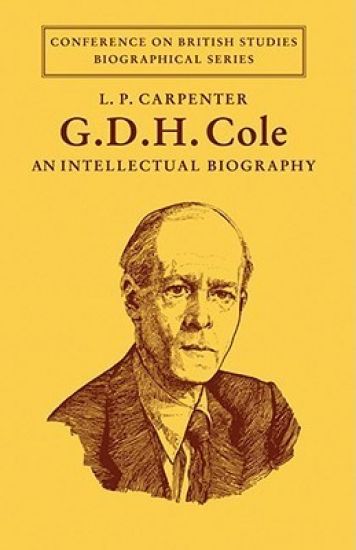
G. D. H. Cole

G. D. H. Cole

L. P. Carpenter

Cambridge University Press
2008
pokkari
A sensitive analysis of the thought and intellectual development of G. D. H. Cole (1889–1959) the distinguished Labour historian. Cole's career is traced from his earliest days in the Labour movement to his final years as Chichele Professor of Social and Political Thought at Oxford. Professor Carpenter examines Cole's role in the creation of Guild Socialism; his work in the early 1920s when after the decline of Guild Socialism, he turned towards the analysis of policies, research through the New Statesman and the New Fabian Research Bureau and teaching at Oxford; his attempts to provide a policy for the Left in the 1930s, the idea of economic planning and the Popular Front; his activities during the Second World War; and his place in the debates over the Labour movement's cause after the 1945 government. Finally Professor Carpenter discusses Cole's courageous recognition, towards the end of his life, that Socialism had not come and his attempts to start a new cycle of research in one of the first efforts to create a New Left.
G Protein-Coupled Receptors

G Protein-Coupled Receptors

Cambridge University Press
2010
sidottu
Provides a comprehensive overview of recent discoveries and current understandings of G protein-coupled receptors (GPCRs). Recent advances include the first mammalian non-rhodopsin GPCR structures and reconstitution of purified GPCRs into membrane discs for defined studies, novel signaling features including oligomerization, and advances in understanding the complex ligand pharmacology and physiology of GPCRs, in new assay technologies and drug targeting. The authors take time to detail the importance of the pathophysiological function and drug targeting of GPCRs, specifically ß-adrenoceptors in cardiovascular and respiratory diseases, metabotropic glutamate receptors in CNS disorders, S1P receptors in the immune system, and Wnt/Frizzled receptors in osteoporosis. This book will be invaluable to researchers and graduate students in academia and industry who are interested in the GPCR field.
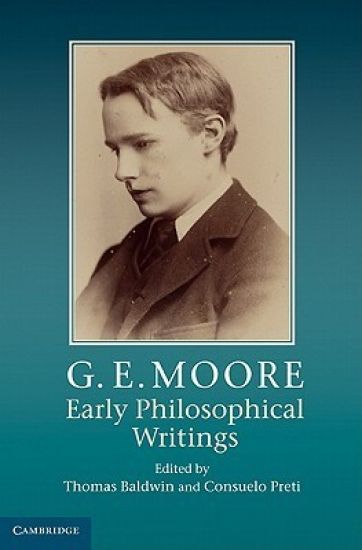
G. E. Moore: Early Philosophical Writings
G. E. Moore's fame as a philosopher rests on his ethics of love and beauty, which inspired Bloomsbury, and on his 'common sense' certainties which challenge abstract philosophical theory. Behind this lies his critical engagement with Kant's idealist philosophy, which is published here for the first time. These early writings, Moore's fellowship dissertations of 1897 and 1898, show how he initiated his influential break with idealism. In 1897 his main target was Kant's ethics, but by 1898 it was the whole Kantian project of transcendental philosophy that he rejected, and the theory which he developed to replace it gave rise to the new project of philosophy as logical analysis. This edition includes comments by Moore's examiners Henry Sidgwick, Edward Caird and Bernard Bosanquet, and in a substantial introduction the editors explore the crucial importance of the dissertations to the history of twentieth-century philosophical thought.
The Life and Legacy of G. I. Taylor

The Life and Legacy of G. I. Taylor

G. K. Batchelor

Cambridge University Press
1996
sidottu
G. I. Taylor was one of the most distinguished physical scientists of the last century, using his deep insight and originality and mathematical skill to increase greatly our understanding of phenomena such as the turbulent flow of fluids. His interest in the science of fluid flow was not confined to theory; he was one of the early pioneers of aeronautics, and designed a new type of anchor, now widely used in small boats throughout the world, that came about through his passion for sailing. Taylor spent most of his working life in the Cavendish Laboratory in Cambridge, where he investigated the mechanics of fluid and solid materials; his discoveries and ideas have had application throughout mechanical, civil and chemical engineering, meteorology, oceanography and material science. He was also a noted research leader, and his group in Cambridge became one of the most productive centres for the study of fluid mechanics. How was Taylor able to be innovative in so many different ways? This interesting and unusual mix of science and biography, first published in 1996, helps us to answer that question.
G. E. Moore's Ethical Theory

G. E. Moore's Ethical Theory

Brian Hutchinson

Cambridge University Press
2001
sidottu
This 2001 book is a comprehensive study of the ethics of G. E. Moore, the most important English-speaking ethicist of the twentieth century. Moore's ethical project, set out in his seminal text Principia Ethica, is to preserve common moral insight from scepticism and, in effect, persuade his readers to accept the objective character of goodness. Brian Hutchinson explores Moore's arguments in detail and in the process relates the ethical thought to Moore's anti-sceptical epistemology. Moore was, without perhaps fully realizing it, sceptical about the very enterprise of philosophy itself, and in this regard, as Brian Hutchinson reveals, was much closer in his thinking to Wittgenstein than has been previously realized. This book shows Moore's ethical work to be much richer and more sophisticated than his critics have acknowledged.