
Kirjahaku
Etsi kirjoja tekijän nimen, kirjan nimen tai ISBN:n perusteella.
243 tulosta hakusanalla GERAINT JONES
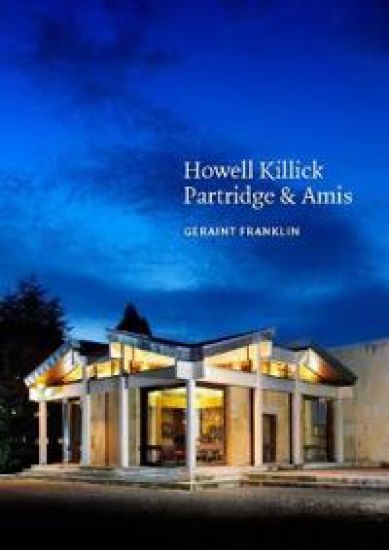
The Roehampton Lane (Alton West) estate is widely acclaimed as one of the seminal works of the Modern Movement in Britain. Less well known is the identity of its designers, four ambitious young architects in the employ of the London County Council: Bill Howell, John Killick, John Partridge and Stan Amis. Launched into practice with a maverick design for Churchill College, Cambridge, their output ranged from additions to Oxford and Cambridge colleges to theatres, houses and government buildings.Deriving a distinctive design language from revealed structure and highly modelled surfaces, HKPA developed a rich, allusive and extrovert architecture. Although a mastery of pre-cast concrete and a preference for raw finishes earned them an early reputation as Brutalists, their sensitivity to context, refined sense of light and materials and eye for the qualities of historic buildings transcends any single style. Geraint Franklin has combined interviews with archival research to tell the story of the individuals, collaborations and aspirations behind the built and unrealised projects. Lavishly illustrated with new photography by James O. Davies and images from the practice archive, this book is a must for architects, students and enthusiasts wanting to discover this key practice in British post-war architecture.
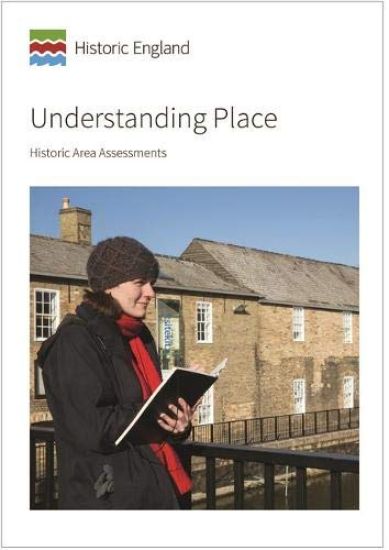
This guidance explains how to undertake Historic Area Assessments (HAAs) in order to understand and explain the heritage interest of an area. HAAs help explain the character of a place and define its significance, providing a sound evidence base for the informed management of the historic environment. The approach is intended to assist historic environment specialists, planners, developers, local communities and others in evaluating the historic environment by understanding how the past is encapsulated in today’s landscape, explaining why it has assumed its present form and highlighting its more significant elements. HAAs typically give insights into how and why a place has come to look the way it does. They identify the range of landscapes and building types, their dates and forms, and relate them to the wider evolution of the area. The Introduction sets out the principles and benefits of assessment and explains how it relates to other approaches to the understanding of historic areas. Sections 2–4 explain the practical issues underlying HAAs and how to carry them out at various levels of resolution.
An illuminating look at a controversial architectural style – and its finest examplesPost-modernism was the 1980s’ counter to Brutalism but fell out of fashion until its best buildings began to disappear. Now is the time to reassess its values. Historians Geraint Franklin and Elain Harwood discuss its background and key architects before celebrating Britain's finest examples. Individual entries are beautifully illustrated, many with new photography, including the SIS Building made famous by James Bond, John Outram’s awe-inspiring pumping station in London's Docklands and Judge Institute in Cambridge, and the late works of James Stirling and Michael Wilford, including No.1 Poultry – an extraordinary corner of the City that in 2016 became England’s youngest listed building.
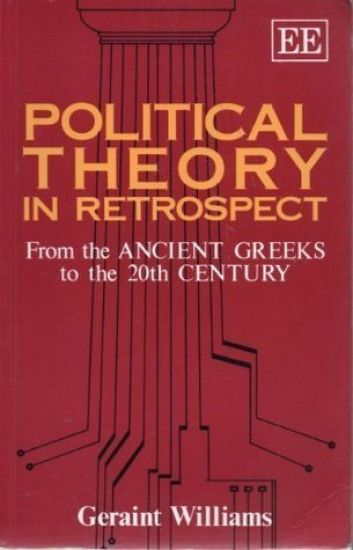
This important new book presents a lucid introduction to political thought from Socrates to the present. It successfully marries the hitherto diverse traditions of history and theory in the search for political understanding.Political theorists share in common an attempt to reveal the reality which underlies the world of politics. Is there a key to unlock the mysteries of politics? And if there is, what impact does this have on morality? Is politics a separate world or one which should serve a moral purpose? By examining major thinkers both in the context of their own time and their relevance to the present, the book shows how political theory can be applied to major controversies in the 20th century.Political Theory in Retrospect makes an important contribution to historical discussion and philosophical analysis. It successfully integrates political theory into the study of modern politics.
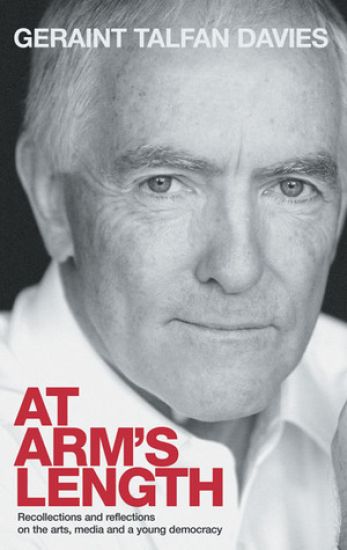
The battles in arts funding is a common problem in many nations and this commentary relates the struggles of arts and media programs in Wales. Written from a personal perspective, this account focuses on the battle to maintain the arm's length principle--both parties are on equal footing with no gain--in arts funding, while also describing the long devolutionary road and a struggle to sustain a more local voice in the face of globalization and the increasing centralization of British government and media.
This book will describe the development of European Community consumer law and seek to determine to what extent action by the European Community has promoted the interest of consumer protection. In doing so it will consider important areas relating to protection of the consumers economic interests and physical safety, as well as questions of access to justice. In addition to assessing the success of community consumer policy the authors will also put forward suggestions for ways in which consumer protection can be enhanced at the community level.
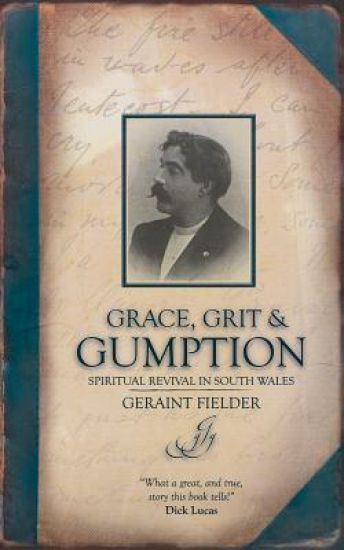
John Pugh, railway worker, Seth Joshua, donkey driver, fighter and Frank Joshua, teacher were all converted in the Welsh valleys. Pugh became a dedicated pastor who planted and grew several large churches before becoming involved in the ‘Forward Movement’. The Joshua brothers had independently, and with no training, started a venture of their own which saw great growth amongst the English language dominated industrial areas. It became the sort of pilot scheme that Pugh was looking for and they joined forces. The title of the book is taken from Pugh’s plan to reach the unchurched industrial wasteland of Splott, next to Cardiff. He advertised the fact that he wanted ‘To secure men of GRACE, GRIT AND GUMPTION’ for the work.
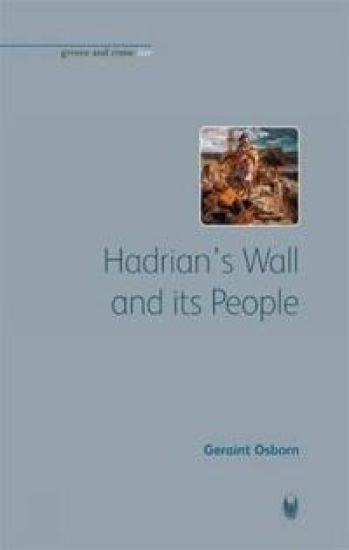
Hadrian’s Wall – one of the most prominent monuments of the Roman period in Britain – has a special place in the public imagination. It offers a tangible reminder of our ancient past and a concrete link with the Roman occupation. Visitors can stand amid the remains, knowing that they tread in the footsteps of the soldiers who garrisoned the province. Guides to the Wall have tended to concentrate on the archaeological record, on the Wall’s construction and on military organisation. This book folds these aspects into a wider historical, social and economic perspective, providing the general reader with an analysis of how Hadrian’s Wall functioned. It describes the impact it had on the lives of both Rome’s soldiers and the native population, dealing with the contentious issue of ‘Romanisation’. It looks, too, at what happened in Christian communities of the Wall area after the Roman army’s departure. Geraint Osborn utilises archaeological evidence, including the content of the remarkable Vindolanda tablets, to give a rounded picture of military life on the Wall. He also considers the role of the monument in the context of Victorian England, a time when parallels were frequently drawn between the Roman and British empires, and how this in turn affected the excavation, preservation and modern presentation of Hadrian’s Wall.
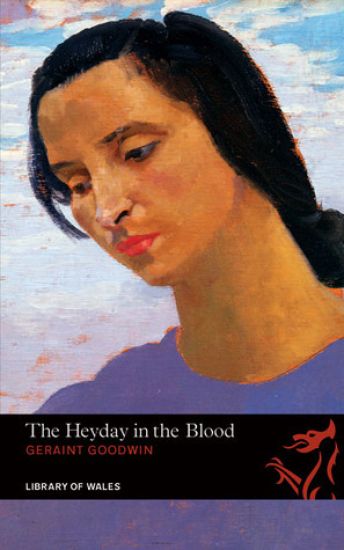
The village of Tanygraig on the Welsh-English border is the setting for this passionate novel of love and its consequences. Beti, the beautiful and wilful daughter of a pub landlord, is pursued by two men: Llew, her aggressive, red-haired cousin, and Evan, the dreamy miller and would-be poet. She has to make a choice but it's not her future alone that depends on her decision. She and Tanygraig are positioned precariously on borders of class, nation, language, and changing times. In this enduring novel by Geraint Goodwin, first published in 1936, Wales is associated with tradition and stability, England connotes modernity and movement. Beti is conscious of living at a temporal border: "The old way of things was ending; she had come at the end of one age and the beginning of another. Wales would be the last to go - but it was going..."
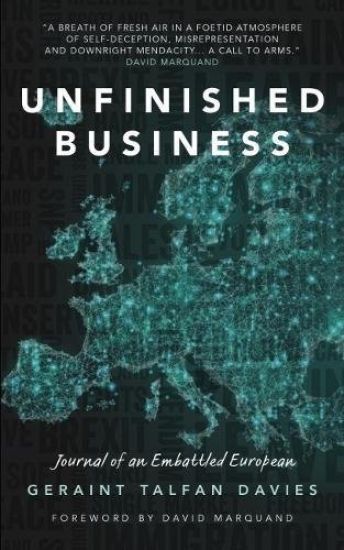
Geraint Davies explores the potential impact of Brexit on our universities and our cultural life. He also takes us through a clutch of referendums - on devolution in Wales and on independence in Scotland - charting the interplay of devolution and the European issue.

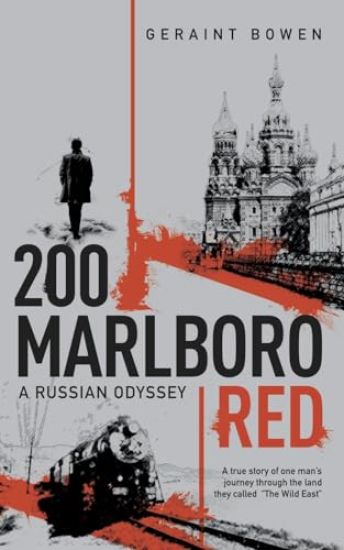
Focussing on the chaotic period during the collapse of the former Soviet Union this is the first-hand account of a young man's struggle to make a fairly honest buck in a world riddled with corruption and deceit.Unlike other memoirs, this book offers a "view from the street" and shows the human face of the Russian people, so at odds with their autocratic leader.

Black Dragon includes a full and comprehensive summary of the main reasons as to why the human-caused Global Warming theory is false.Global warming science is taught falsely, right from the start. This false teaching is to convince people to believe in science which isn't true, so that they willingly make expensive and unnecessary life changes, submit themselves to restrictions on their energy usage and happy to pay extra taxes. Extra taxes to people whom offer nothing in return for the extra expense but hardship.Black Dragon shines a light upon the major aspects of these falsehoods and illuminates the truth in a manner which can be understood, plainly and simply.The "twaddle talk" about how greenhouses work by radiation or the lies that atmospheres back-warm planets and the ever ready falsehood that Venus suffers a "Runaway Greenhouse Effect" are all absurd. This book explains why. The deceptive experiments of the left are laid bare and true science is taught. Black Dragon breaks the code of deceit and teaches how greenhouses really work and how to use real thermal radiation equations to quickly approximate temperatures of simple objects in space. It explains how light bulbs work and how this mechanism disproves back radiation theory. It explains why a CO2 gas planet is cold and an Oxygen gas planet is hot. It shows the real factors at work in the infamous two gas bottle experiment. It explains Venus and goes on to prove oil isn't really a fossil fuel. Oil is being unfairly demonized to force people to pay more. It shows what could be wrong with the often used mathematical proof of back radiation using two plates and why a basic two-dimensional flat plate model is inappropriate. This often used "London's Calling 911" two plate model could be completely wrong itself. London should put the phone down and stop making crank calls. This book is a must read, it will change how you think about climate change. This true science should be compulsory teaching in all schools.The brainwashing of the high tax left must end.

Erased Erased de Kooning Drawing
Geraint Edwards
Createspace Independent Publishing Platform
2017
pokkari
"It's really lovely." - Kenneth Goldsmith"i enjoyed every single page" - Olia Lialina."l l'd" - Cory Arcangel.The title "Erased Erased de Kooning Drawing" refers to the Robert Rauschenberg work in which he erased a Willem de Kooning drawing over the space of a month, using around 40 erasers in an act of "additive subtraction", leaving an "empty" image, which showed traces of its former state: a palimpsest.As digital erasure is so much more visually complete, a blank digital image will not show such a history. The pure absence of visual information could represent the beginning point of an act of creation, or the end point of an act of destruction.De Kooning told Rauschenberg that he would make it as difficult as possible for him, selecting a drawing which included charcoal, oil paint, pencil and crayon. In the same spirit, a 1-pixel diameter Eraser tool was selected in Photoshop and an image of the Rauschenberg artwork was erased over five sessions and a total of nine hours and thirty-three minutes (a total of 973 "Eraser" actions).Whilst the final visual image is devoid of information, the story of the erasure is encoded in the metadata in the History Log file. This text serves as a digital palimpsest; an epic poem which begs a more general question about how truth has retreated from our retinal environment.When pushed as to what his Erased de Kooning Drawing was, Rauschenberg denied that it was an act of the youngster challenging the authority of the established master, instead calling it a "celebration". He similarly rejected claims that the work was an act of destruction or negation, stating instead that it was "poetry".
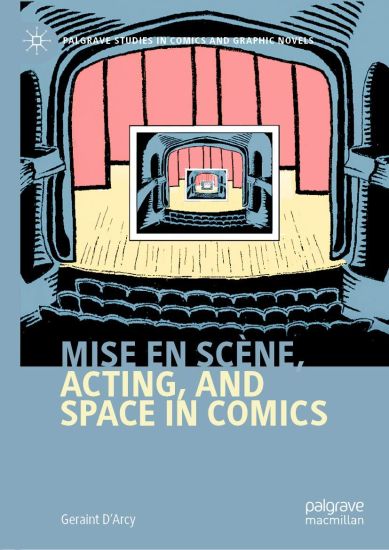
Mise en scène, Acting, and Space in Comics
Geraint D'Arcy
Springer Nature Switzerland AG
2020
sidottu
This book explores some of the less frequently questioned ideas which underpin comics creation and criticism. “Mise en scène” is a term which refers to the way in which visual elements work together to create meaning in comics. It is a term that comics have borrowed from cinema, which borrowed it in turn from theatre. But comics are not film and they are not cinema, so how can this term be of any use? If we consider comics to have mise en scène, should not we also ask if the characters in comics act like the characters on film and stage? In its exploration of these ideas, this book also asks what film and theatre can learn from comics.
Mise en scène, Acting, and Space in Comics
Geraint D'Arcy
Springer Nature Switzerland AG
2021
nidottu
This book explores some of the less frequently questioned ideas which underpin comics creation and criticism. “Mise en scène” is a term which refers to the way in which visual elements work together to create meaning in comics. It is a term that comics have borrowed from cinema, which borrowed it in turn from theatre. But comics are not film and they are not cinema, so how can this term be of any use? If we consider comics to have mise en scène, should not we also ask if the characters in comics act like the characters on film and stage? In its exploration of these ideas, this book also asks what film and theatre can learn from comics.

Britain and the Dhofar War in Oman, 1963–1976
Geraint Hughes
Springer International Publishing AG
2024
sidottu
This book explores Britain’s involvement in the Dhofar War of 1963-1976, focusing on the military aspects of this conflict in Southern Oman. It reveals how both the Conservative and Labour governments in office during this time provided military and security assistance to Oman’s rulers without parliamentary or press scrutiny. Based on archival material and witness accounts, as well as existing secondary source literature and memoirs, this study provides new insights into Britain’s clandestine embroilment in the Dhofar War, an often overlooked but historically significant intervention in the Middle East. This book will be a valuable resource for scholars and students interested in the complex and often controversial history of Britain’s involvement in Middle Eastern politics in the post-colonial period.