Kirjojen hintavertailu. Mukana 11 715 462 kirjaa ja 12 kauppaa.

Kirjahaku

Etsi kirjoja tekijän nimen, kirjan nimen tai ISBN:n perusteella.

1000 tulosta hakusanalla Gabriele

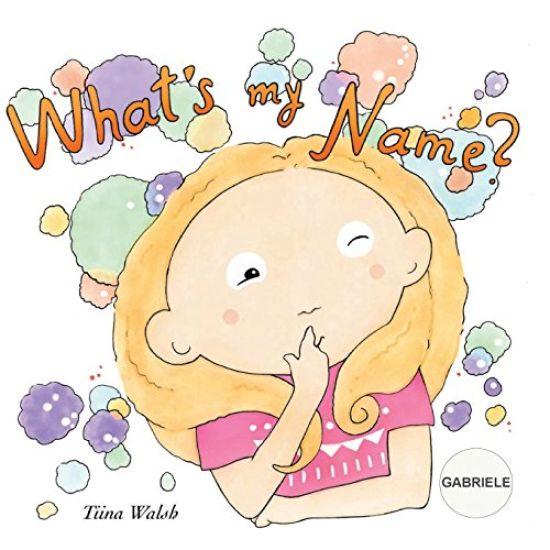
What's my name? GABRIELE

What's my name? GABRIELE

Tiina Walsh

Createspace Independent Publishing Platform
2018
nidottu
A personalised storybook for girls called GABRIELE. The story is based on the letters of the child's own name. All books are different from one another. The girl wakes up but can't remember her name. Magic Mouse knows how to solve the problem. They go on a wonderful adventure in the Magic Bus Translated and adapted by the author from the top-selling Finnish language children's namebook series "Tytt /Poika, joka unohti nimens ". The beautiful hand-drawn pictures will delight both the young and the young-at-heart Looking for a namebook "What's my name?" but couldn't find a book for the name you are looking for? Please don't hesitate to contact me with your name request -Tiina Walsh Author fb.me/whatsmynamestorybooks for more details about the storybooks

Sobre a concepção das personagens em três obras selecionadas de Gabriele D'Annunzio
O objetivo deste livro analisar a magn fica obra Il piacere, de Gabriele D'Annunzio, no que diz respeito constela o de personagens. As personagens da sua obra principal s o comparadas com as personagens dos seus romances Il trionfo della morte e L'innocente. Antes de analisar as obras individualmente, h um cap tulo sobre a corrente do decadentismo, na qual as obras analisadas se enquadram, bem como um cap tulo sobre a an lise de personagens em geral. Al m da hist ria da cria o e da estrutura narrativa da obra Il piacere, s o analisados principalmente os protagonistas, o d ndi Andrea Sperelli, a femme fatale Elena Muti e a femme fragile Donna Maria Ferres. Como esta obra fortemente autobiogr fica, um cap tulo tamb m faz uma compara o entre Andrea Sperelli e o autor Gabriele D'Annunzio. Nos cap tulos seguintes, s o analisados os personagens principais dos outros dois romances, Giorgio Aurispa e Ippolita Sanzio, bem como Tullio Hermil e sua esposa Giuliana. O objetivo determinar se os personagens dos diferentes romances s o semelhantes ou n o.
Sur la conception des personnages dans trois oeuvres choisies de Gabriele D'Annunzio
L'objectif de cet ouvrage est d' tudier le chef-d'oeuvre Il piacere de Gabriele D'Annunzio sous l'angle de la constellation de ses personnages. Les personnages de son oeuvre majeure sont compar s ceux de ses romans Il trionfo della morte et L'innocente. Avant d'examiner les diff rentes oeuvres, un chapitre est consacr au courant d cadent dans lequel s'inscrivent les oeuvres tudi es, ainsi qu'un chapitre l'analyse des personnages en g n ral. Outre l'histoire de la gen se et la structure narrative de l'oeuvre Il piacere, ce sont surtout les protagonistes, le dandy Andrea Sperelli, la femme fatale Elena Muti et la femme fragile Donna Maria Ferres, qui sont analys s. Cette oeuvre tant fortement autobiographique, un chapitre est galement consacr la comparaison entre Andrea Sperelli et l'auteur Gabriele D'Annunzio. Les chapitres suivants examinent enfin les personnages principaux des deux autres romans, Giorgio Aurispa et Ippolita Sanzio, ainsi que Tullio Hermil et sa femme Giuliana. L'objectif est de d terminer si les personnages des diff rents romans se ressemblent ou non.
On character conception in three selected works by Gabriele D'Annunzio
The aim of this book is to examine Gabriele D'Annunzio's magnificent work Il piacere with regard to its constellation of characters. The characters in his magnum opus are compared with those in his novels Il trionfo della morte and L'innocente. Before examining the individual works, there is a chapter on the decadent movement in which the works under examination are to be placed, as well as a chapter on character analysis in general. In addition to the history of the work Il piacere and its narrative structure, the protagonists, the dandy Andrea Sperelli, the femme fatale Elena Muti and the fragile woman Donna Maria Ferres, are analysed in detail. As this work is highly autobiographical, one chapter also compares Andrea Sperelli with the author Gabriele D'Annunzio. The following chapters examine the main characters of the two other novels, Giorgio Aurispa and Ippolita Sanzio, as well as Tullio Hermil and his wife Giuliana. The aim is to determine whether the characters in the different novels are similar or not.
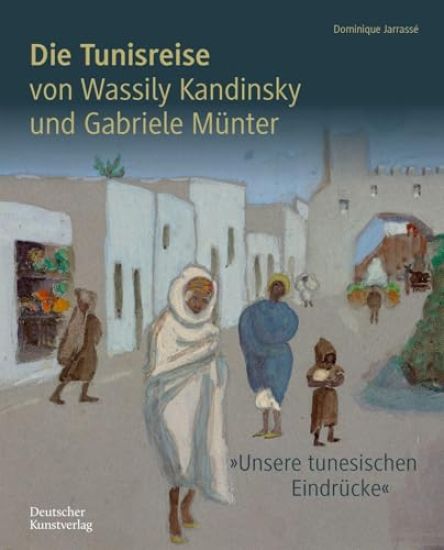
Le Voyage en Tunisie de Wassily Kandinsky et Gabriele Münter
In 1905, Wassily Kandinsky and Gabriele Münter spent three months in Tunisia. Side by side during this little-documented trip, they created around 540 works, which are presented in this publication as a visual travel journal. Both were experiencing Arab culture for the first time in Tunisia, where they were fascinated by the alleyways of the medinas, folkish scenes, and Muslim places of worship, the mosques and cemeteries, as well as Arabic scripts and applied arts. This is the first publication devoted entirely to the little-known group of works from their Tunisian stay. Around half of the material has not been published before, presented here for the first time in a comprehensive catalogue and analysed against the context of its creation. First comprehensive study and cataloguing of Wassily Kandinsky’s and Gabriele Münter’s trip to Tunisia Direct comparison of Kandinsky’s and Münter’s works Presentation of 540 artworks, about half of which have never been published before
All Roads Lead To Rome: First part. Father Gabriele's journey

All Roads Lead To Rome: First part. Father Gabriele's journey

Annamaria Arcangeli

Createspace Independent Publishing Platform
2013
nidottu
Starting from the previous "Welcome to Nicktown", adventurous family saga of her maternal grandmother Assunta Berardi, the authoress digs in the fascinating story of the great-uncle Father Gabriele M. Berardi O.S.M., Assunta's brother, Servite Friar in the odor of sanctity, known as "Padre Pio of Rome." The first part of his complex biography wants to retrace the journey both material and spiritual, from the origins between Marche and Romagna, where vocation and predestination are outlined, along the years of religious formation in Umbria and then the heroic priesthood in Orvieto, overwhelmed by events of the last war, and then follow the daring escape to Paris with his brother Rocco, immediately after the war, and the subsequent return of pilgrimage on the Camino de Santiago, through Fatima and Marseille, until the return to Rimini by Assunta and hence finish the race in Rome where will start the glorious rise, postponed to the second part. The famous saying quoted in the title does not only refer to the geographical destination of the trip, but also wants to be a metaphor of the inevitable journey towards destiny.
Die Frauenfiguren Effi Briest und Agathe Heidling in den Romanen von Theodor Fontane und Gabriele Beurer. Vor dem Hintergrund der Identitätsfindung und den (Un-)Möglichkeiten der weiblichen Selbstverwirklichung im Wilhelminischen Zeitalter
Studienarbeit aus dem Jahr 2021 im Fachbereich Germanistik - Neuere Deutsche Literatur, Note: 1,0, Leopold-Franzens-Universit t Innsbruck (Germanistik), Sprache: Deutsch, Abstract: Effi Briest und Agathe Heidling: zwei unterschiedliche Frauen, zwei unterschiedliche Geschichten und dennoch viele Gemeinsamkeiten. In der vorliegenden Arbeit werden die Hauptprotagonistinnen Effi Briest und Agathe Heidling in den Romanen "Effi Briest" von Theodor Fontane und "Aus guter Familie - Leidensgeschichte eines M dchens" von Gabriele Reuter genauer betrachtet. Die Werke werden hinsichtlich ihrer Gemeinsamkeiten in puncto weiblicher Selbstverwirklichung und Identit tsfindung vor dem Hintergrund der gesellschaftlichen Konventionen im Wilhelminischen Zeitalter genauer beleuchtet. Die Fragen, mit denen sich diese Arbeit besch ftigt, sind daher: Inwiefern hneln sich die Schicksale der beiden Figuren in den Romanen und worin lassen sie sich vergleichen? Und inwiefern decken sich ihre fiktiven Erlebnisse und die Ereignisse mit den wirklichen Begebenheiten und Verh ltnissen f r junge Frauen w hrend der Wilhelminischen Epoche in Deutschland?
Schriftliche Planung fur einen Unterrichtsbesuch im Fach Deutsch zu "Die Sonne bleibt nicht stehen" von Gabriele Beyerlein und Herbert Lorenz
Unterrichtsentwurf aus dem Jahr 2011 im Fachbereich Deutsch - P dagogik, Didaktik, Sprachwissenschaft, Universit t Paderborn (Germanistik), Veranstaltung: Unterrichtsgestaltung Deutsch, Sprache: Deutsch, Abstract: Die SuS sollen die vorgegebenen Textstellen in der ihnen bekannten Vorgehensweise bearbeiten: den Text lesen, f r sie wichtige Textstellen unterstreichen und diese dann auswerten. Dadurch soll sich bei den Sch lern die Methode der Texterschlie ung verfestigen, sowie ihre F higkeit Textzusammenh nge zu erkennen ausbauen. Zus tzlich sollen sie lernen gelesene Sachverhalte in eigenen Worten wiederzugeben.