Kirjojen hintavertailu. Mukana 12 083 983 kirjaa ja 12 kauppaa.

Kirjahaku

Etsi kirjoja tekijän nimen, kirjan nimen tai ISBN:n perusteella.

1000 tulosta hakusanalla Georg Muffat

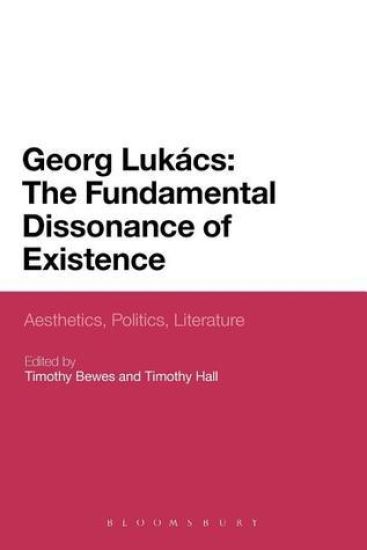
Georg Lukacs: The Fundamental Dissonance of Existence
The end of the Soviet period, the vast expansion in the power and influence of capital, and recent developments in social and aesthetic theory, have made the work of Hungarian Marxist philosopher and social critic Georg Lukács more vital than ever.The very innovations in literary method that, during the 80s and 90s, marginalized him in the West have now made possible new readings of Lukács, less in thrall to the positions taken by Lukács himself on political and aesthetic matters. What these developments amount to, this book argues, is an opportunity to liberate Lukács's thought from its formal and historical limitations, a possibility that was always inherent in Lukács's own thinking about the paradoxes of form. This collection brings together recent work on Lukács from the fields of Philosophy, Social and Political Thought, Literary and Cultural Studies. Against the odds, Lukács's thought has survived: as a critique of late capitalism, as a guide to the contradictions of modernity, and as a model for a temperament that refuses all accommodation with the way things are.
Georg Lukacs Reconsidered

Georg Lukacs Reconsidered

Bloomsbury Academic USA
2012
nidottu
Georg Lukács stands as a towering figure in the areas of critical theory, literary criticism, aesthetics, ethical theory and the philosophy of Marxism and German Idealism. Yet, despite his influence throughout the twentieth century, his contributions to the humanities and theoretical social sciences are marked by neglect. What has been lost is a crucial thinker in the tradition of critical theory, but also, by extension, a crucial set of ideas that can be used to shed new light on the major problems of contemporary society. This book reconsiders Lukács' intellectual contributions in the light of recent intellectual developments in political theory, aesthetics, ethical theory, and social and cultural theory. An international team of contributors contend that Lukács' ideas and theoretical contributions have much to offer the theoretical paucity of the present. Ultimately the book reintegrates Lukács as a central thinker, not only in the tradition of critical theory, but also as a major theorist and critic of modernity, of capitalism, and of new trends in political theory, cultural criticism and legal theory.
Georg Bühler's Contribution to Indology
This book deals with the life and pioneering work of Georg Bühler in the various fields of Indology. It argues that Bühler's interactions with the 19th c. India influenced his approach as a researcher and in turn his methodology which then followed his self-developed path of Ethno-Indology. The work is a result of study for the doctoral degree of the Savitribai Phule Pune University, Pune, India. Along with source materials available in India, the author consulted those in Germany and Austria.
Georg Lukács’s Philosophy of Praxis

Georg Lukács’s Philosophy of Praxis

Konstantinos Kavoulakos

Bloomsbury Academic
2018
sidottu
Georg Lukács’ early Marxist philosophy of the 1920s laid the foundations of Critical Theory. However the evaluation of Lukács’ philosophical contribution has been largely determined by one-sided readings of eminent theorists like Adorno, Habermas, Honneth or even Lukács himself. This book offers a new reconstruction of Lukács’ early Marxist work, capable of restoring its dialectical complexity by highlighting its roots in his neo-Kantian, 'pre-Marxist' period. In his pre-Marxist work Lukács sought to articulate a critique of formalism from the standpoint of a dubious mystical ethics of revolutionary praxis. Consequently, Lukács discovered a more coherent and realistic answer to his philosophical dilemmas in Marxism. At the same time, he retained his neo-Kantian reservations about idealist dialectics. In his reading of historical materialism he combined non-idealist, non-systematic historical dialectics with an emphasis on conscious, collective, transformative praxis. Reformulated in this way Lukács’ classical argument plays a central role within a radical Critical Theory.
Georg Friedrich Handel Water Music for three guitars: from the Suite in D major for winds, horns and strings
This is a transcription for three guitars of Georg Friedrich Handel's Water Music, Suite # 2 in D major, originally written for winds, horns and strings. The Water Music is one of Handel's most celebrated compositions. It premiered on July 17, 1717 and was composed at the request of King George I. The concert is said to have been performed by fifty musicians playing on a barge on the River Themes. The King and his party listened from the royal barge and the entire group traveled on the Themes from London to Chelsea or Lambeth. Some accounts record that the King so enjoyed the music he asked that the entire concert be repeated three times.This edition is designed for concert performance as well as for classroom instruction. The score is presented with amply notated guitar fingerings for each of the three parts. Also included are separate parts for each of the guitars.
Georg Wilhelm Friedrich Hegels Phanomenologie Des Geistes (1841)

Georg Wilhelm Friedrich Hegels Phanomenologie Des Geistes (1841)

Georg Wilhelm Friedrich Hegel; Johannes Schulze

Literary Licensing, LLC
2014
sidottu
Georg Wilhelm Friedrich Hegels Ph�����nomenologie des Geistes (1841) ist ein philosophisches Werk, das sich mit der menschlichen Wahrnehmung und dem Bewusstsein befasst. In diesem Buch beschreibt Hegel die Entwicklung des menschlichen Geistes von der einfachen Wahrnehmung bis hin zur Vernunft und zur Erkenntnis der Welt. Er untersucht die Beziehung zwischen dem Individuum und der Gesellschaft sowie die Rolle der Sprache und der Kultur in der menschlichen Entwicklung.Hegel argumentiert, dass der Geist nicht einfach ein passiver Empf�����nger von Informationen ist, sondern aktiv an der Konstruktion der Welt beteiligt ist. Er beschreibt auch die Dialektik als eine Methode, um Widerspr�����che in der menschlichen Erfahrung zu l������sen und zu einem h������heren Verst�����ndnis der Welt zu gelangen.Die Ph�����nomenologie des Geistes ist ein wichtiger Beitrag zur Philosophie und hat einen gro�����en Einfluss auf die Entwicklung der westlichen Denktradition gehabt. Es ist ein anspruchsvolles Werk, das eine gr�����ndliche Kenntnis der Philosophie erfordert, aber es ist auch eine lohnende Lekt�����re f�����r jeden, der sich f�����r die menschliche Erfahrung und die Natur des Bewusstseins interessiert.This Is A New Release Of The Original 1841 Edition.This scarce antiquarian book is a facsimile reprint of the old original and may contain some imperfections such as library marks and notations. Because we believe this work is culturally important, we have made it available as part of our commitment for protecting, preserving, and promoting the world's literature in affordable, high quality, modern editions, that are true to their original work.
Georg Ebers, Collection novels

Georg Ebers, Collection novels

Georg Ebers

Createspace Independent Publishing Platform
2014
nidottu
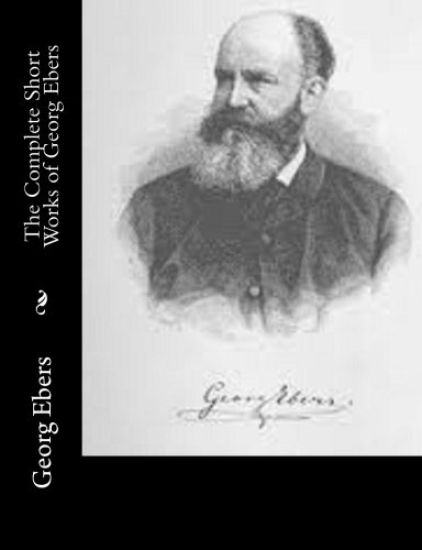
Georg Moritz Ebers (1837 -1898), was a German Egyptologist and novelist, discovered the Egyptian medical papyrus, of ca. 1550 BCE, named for him (see Ebers Papyrus) at Luxor (Thebes) in the winter of 1873-74. Ebers early conceived the idea of popularizing Egyptian lore by means of historical romances. Eine gyptische K nigstochter was published in 1864 and obtained great success. His subsequent works of the same kind-Uarda (1877), Homo sum (1878), Die Schwestern (1880), Der Kaiser (1881), of which the scene is laid in Egypt at the time of Hadrian, Serapis (1885), Die Nilbraut (1887), and Kleopatra (1894), were also well received, and did much to make the public familiar with the discoveries of Egyptologists. In this book: Homo Sum, Complete Uarda, Complete Serapis, Complete The Emperor, Complete
Georg Simmel and the Disciplinary Imaginary

Georg Simmel and the Disciplinary Imaginary

Elizabeth S. Goodstein

Stanford University Press
2017
pokkari
An internationally famous philosopher and best-selling author during his lifetime, Georg Simmel has been marginalized in contemporary intellectual and cultural history. This neglect belies his pathbreaking role in revealing the theoretical significance of phenomena—including money, gender, urban life, and technology—that subsequently became established arenas of inquiry in cultural theory. It further ignores his philosophical impact on thinkers as diverse as Benjamin, Musil, and Heidegger. Integrating intellectual biography, philosophical interpretation, and a critical examination of the history of academic disciplines, this book restores Simmel to his rightful place as a major figure and challenges the frameworks through which his contributions to modern thought have been at once remembered and forgotten.
Georg Elser: The Zither Player

Georg Elser: The Zither Player

Tom Ferry

Createspace Independent Publishing Platform
2016
nidottu
THE FULL STORY OF THE MAN WHO ALMOST KILLED ADOLF HITLER IN 1939In 1939 a massive time bomb exploded in a Munich beer hall. Exactly who planted the bomb sparked a propaganda brawl. The Nazis blamed the British Secret Service and Otto Strasser, while the British accused the Nazis of staging the beer hall bombing to bolster appetite for war. No one wanted to believe a zither-playing cabinet maker was the sole perpetrator.Written like fiction, this is the true story of one man obsessed with an ambitious plan: to prevent a catastrophic war that would by its end kill over 60 million people worldwide. Elser's bold attempt to assassinate Adolf Hitler in November 1939 is told in parallel with the failed British SIS operation to bring peace by making contact with the German Opposition. Instead the British agents were kidnapped by Nazi intelligence agents in what became known as the Venlo Incident. As personal prisoners of Adolf Hitler the fate of both Elser and the British agents hung in the balance until April 1945.Elser was condemned to live through the escalating atrocities of the Third Reich - the evil he was so desperate to prevent.Illustrated.