Kirjojen hintavertailu. Mukana 12 016 292 kirjaa ja 12 kauppaa.

Kirjahaku

Etsi kirjoja tekijän nimen, kirjan nimen tai ISBN:n perusteella.

1000 tulosta hakusanalla Gerd Tesch

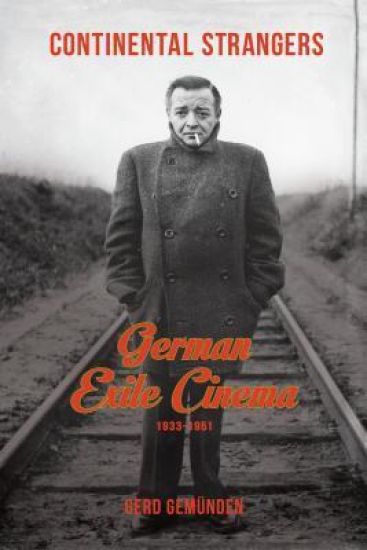
Continental Strangers

Continental Strangers

Gerd Gemünden

Columbia University Press
2014
sidottu
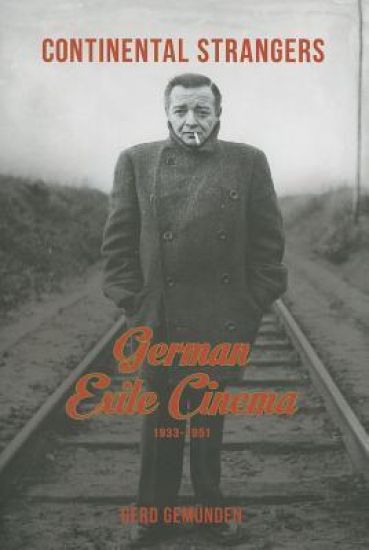
Hundreds of German-speaking film professionals took refuge in Hollywood during the 1930s and 1940s, making a lasting contribution to American cinema. Hailing from Austria, Hungary, Poland, Russia, and the Ukraine, as well as Germany, and including Ernst Lubitsch, Fred Zinnemann, Billy Wilder, and Fritz Lang, these multicultural, multilingual writers and directors betrayed distinct cultural sensibilities in their art. Gerd Gemunden focuses on Edgar G. Ulmer's The Black Cat (1934), William Dieterle's The Life of Emile Zola (1937), Ernst Lubitsch's To Be or Not to Be (1942), Bertolt Brecht and Fritz Lang's Hangmen Also Die (1943), Fred Zinnemann's Act of Violence (1948), and Peter Lorre's Der Verlorene (1951), engaging with issues of realism, auteurism, and genre while tracing the relationship between film and history, Hollywood politics and censorship, and exile and (re)migration.
Continental Strangers

Continental Strangers

Gerd Gemünden

Columbia University Press
2014
pokkari
Hundreds of German-speaking film professionals took refuge in Hollywood during the 1930s and 1940s, making a lasting contribution to American cinema. Hailing from Austria, Hungary, Poland, Russia, and the Ukraine, as well as Germany, and including Ernst Lubitsch, Fred Zinnemann, Billy Wilder, and Fritz Lang, these multicultural, multilingual writers and directors betrayed distinct cultural sensibilities in their art. Gerd Gemunden focuses on Edgar G. Ulmer's The Black Cat (1934), William Dieterle's The Life of Emile Zola (1937), Ernst Lubitsch's To Be or Not to Be (1942), Bertolt Brecht and Fritz Lang's Hangmen Also Die (1943), Fred Zinnemann's Act of Violence (1948), and Peter Lorre's Der Verlorene (1951), engaging with issues of realism, auteurism, and genre while tracing the relationship between film and history, Hollywood politics and censorship, and exile and (re)migration.
Risk Savvy

Risk Savvy

Gerd Gigerenzer

Penguin Books Ltd
2015
pokkari
A fascinating, practical guide to making better decisions with our money, health and personal lives from Gerd Gigerenzer, the author of Reckoning with Risk.Numbers don't lie - but they often mislead us. From health risks to financial decisions, we often find it hard to make decisions because the statistics have been presented to us by 'experts' who misinterpret the data themselves. Here Gerd Gigerenzer shows how we can all use simple rules to become better-informed, risk-savvy citizens. 'Important, Gigerenzer draws valuable lessons . . . his clear explanations will be a great help to all' Omar Malik, Times Higher Education'Gerd Gigerenzer argues that when it comes to taking risks in life, we are often much better off following our instincts than expert advice' Oliver Burkeman, Guardian'Things will only get better, he shows, when specialists, particularly doctors and investment advisers, improve on their appalling record of analysing and communicating risks in their fields' Clive Cookson, Financial Times, Books of the Year'Gigerenzer is brilliant' Steven PinkerGerd Gigerenzer is Director of the Center for Adaptive Behavior and Cognition at the Max Planck Institute for Human Development in Berlin and former Professor of Psychology at the University of Chicago. He is the author of several books on heuristics and decision making, including Reckoning with Risk.
Lucrecia Martel

Lucrecia Martel

Gerd Gemünden

University of Illinois Press
2019
sidottu
Films like Zama and The Headless Woman have made Lucrecia Martel a fixture on festival marquees and critic's best lists. Though often allied with mainstream figures and genre frameworks, Martel works within art cinema, and since her 2001 debut The Swamp she has become one of international film's most acclaimed auteurs.Gerd Gemünden offers a career-spanning analysis of a filmmaker dedicated to revealing the ephemeral, fortuitous, and endless variety of human experience. Martel's focus on sound, touch, taste, and smell challenge film's usual emphasis on what a viewer sees. By merging of these and other experimental techniques with heightened realism, she invites audiences into film narratives at once unresolved, truncated, and elliptical. Gemünden aligns Martel's filmmaking methods with the work of other international directors who criticize—and pointedly circumvent—the high-velocity speeds of today's cinematic storytelling. He also explores how Martel's radical political critique forces viewers to rethink entitlement, race, class, and exploitation of indigenous peoples within Argentinian society and beyond.
Lucrecia Martel

Lucrecia Martel

Gerd Gemünden

University of Illinois Press
2019
nidottu
Films like Zama and The Headless Woman have made Lucrecia Martel a fixture on festival marquees and critic's best lists. Though often allied with mainstream figures and genre frameworks, Martel works within art cinema, and since her 2001 debut The Swamp she has become one of international film's most acclaimed auteurs.Gerd Gemünden offers a career-spanning analysis of a filmmaker dedicated to revealing the ephemeral, fortuitous, and endless variety of human experience. Martel's focus on sound, touch, taste, and smell challenge film's usual emphasis on what a viewer sees. By merging of these and other experimental techniques with heightened realism, she invites audiences into film narratives at once unresolved, truncated, and elliptical. Gemünden aligns Martel's filmmaking methods with the work of other international directors who criticize—and pointedly circumvent—the high-velocity speeds of today's cinematic storytelling. He also explores how Martel's radical political critique forces viewers to rethink entitlement, race, class, and exploitation of indigenous peoples within Argentinian society and beyond.
How to Stay Smart in a Smart World

How to Stay Smart in a Smart World

Gerd Gigerenzer

MIT PRESS LTD
2022
sidottu
How to stay in charge in a world populated by algorithms that beat us in chess, find us romantic partners, and tell us to "turn right in 500 yards." Doomsday prophets of technology predict that robots will take over the world, leaving humans behind in the dust. Tech industry boosters think replacing people with software might make the world a better place--while tech industry critics warn darkly about surveillance capitalism. Despite their differing views of the future, they all agree: machines will soon do everything better than humans. In How to Stay Smart in a Smart World, Gerd Gigerenzer shows why that's not true, and tells us how we can stay in charge in a world populated by algorithms. Machines powered by artificial intelligence are good at some things (playing chess), but not others (life-and-death decisions, or anything involving uncertainty). Gigerenzer explains why algorithms often fail at finding us romantic partners (love is not chess), why self-driving cars fall prey to the Russian Tank Fallacy, and how judges and police rely increasingly on nontransparent "black box" algorithms to predict whether a criminal defendant will reoffend or show up in court. He invokes Black Mirror, considers the privacy paradox (people want privacy, but give their data away), and explains that social media get us hooked by programming intermittent reinforcement in the form of the "like" button. We shouldn't trust smart technology unconditionally, Gigerenzer tells us, but we shouldn't fear it unthinkingly, either.
How to Stay Smart in a Smart World: Why Human Intelligence Still Beats Algorithms
How to stay in charge in a world populated by algorithms that beat us in chess, find us romantic partners, and tell us to "turn right in 500 yards." Doomsday prophets of technology predict that robots will take over the world, leaving humans behind in the dust. Tech industry boosters think replacing people with software might make the world a better place--while tech industry critics warn darkly about surveillance capitalism. Despite their differing views of the future, they all seem to agree: machines will soon do everything better than humans. In How to Stay Smart in a Smart World, Gerd Gigerenzer shows why that's not true, and tells us how we can stay in charge in a world populated by algorithms. Machines powered by artificial intelligence are good at some things (playing chess), but not others (life-and-death decisions, or anything involving uncertainty). Gigerenzer explains why algorithms often fail at finding us romantic partners (love is not chess), why self-driving cars fall prey to the Russian Tank Fallacy, and how judges and police rely increasingly on nontransparent "black box" algorithms to predict whether a criminal defendant will reoffend or show up in court. He invokes Black Mirror, considers the privacy paradox (people want privacy but give their data away), and explains that social media get us hooked by programming intermittent reinforcement in the form of the "like" button. We shouldn't trust smart technology unconditionally, Gigerenzer tells us, but we shouldn't fear it unthinkingly, either.
The Human Situation

The Human Situation

Gerd Haeffner

University of Notre Dame Press
1989
sidottu
Since the beginning of conscious thought the human animal has questioned the meaning of its existence. Although qualified in numerous ways by time and circumstance, the question has remained. In modern times it has assumed an unusual urgency due to the disintegration of self-understanding caused in part by the Industrial Revolution and the destruction and degradation of this century's wars. We ask again, "What is the nature of human life?" "What qualifies as a meaningful life?" and "How shall we come to understand ourselves in the future?" Using the resources of anthropology, biological research, ad philosophy to plumb the essence of humanity, The Human Situation renews this quest for understanding. Gerh Haeffner leads the reader through an examination of the different levels of human consciousness, beginning with the techniques of biology and the human sciences. Through this approach the reader is progressively made aware of the central question of "What is it to be human?" and is led to an understanding of the unity of human life, the central realities of conscience and freedom, and finally the question of the meaning of life. Other considerations include the basic dimensions of human existence, the mental element of the act, and the unity of human life and its meaning. This work is an excellent general introduction to philosophical anthropology for students in a variety of disciplines, with emphasis on developing issues and problems with a phenomenological method rather than presenting its material within a formal historical framework. Though dealing with concepts that are challenging and demanding, the writing is never technical and is appropriate for undergraduates.
The Human Situation

The Human Situation

Gerd Haeffner

University of Notre Dame Press
1989
nidottu
Since the beginning of conscious thought the human animal has questioned the meaning of its existence. Although qualified in numerous ways by time and circumstance, the question has remained. In modern times it has assumed an unusual urgency due to the disintegration of self-understanding caused in part by the Industrial Revolution and the destruction and degradation of this century's wars. We ask again, "What is the nature of human life?" "What qualifies as a meaningful life?" and "How shall we come to understand ourselves in the future?" Using the resources of anthropology, biological research, ad philosophy to plumb the essence of humanity, The Human Situation renews this quest for understanding. Gerh Haeffner leads the reader through an examination of the different levels of human consciousness, beginning with the techniques of biology and the human sciences. Through this approach the reader is progressively made aware of the central question of "What is it to be human?" and is led to an understanding of the unity of human life, the central realities of conscience and freedom, and finally the question of the meaning of life. Other considerations include the basic dimensions of human existence, the mental element of the act, and the unity of human life and its meaning. This work is an excellent general introduction to philosophical anthropology for students in a variety of disciplines, with emphasis on developing issues and problems with a phenomenological method rather than presenting its material within a formal historical framework. Though dealing with concepts that are challenging and demanding, the writing is never technical and is appropriate for undergraduates.
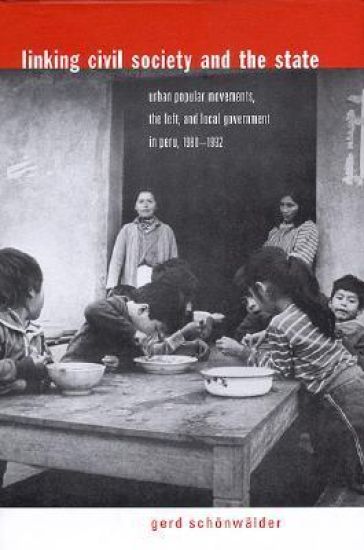
Linking Civil Society and the State

Linking Civil Society and the State

Gerd Schönwälder

Pennsylvania State University Press
2002
sidottu
With the role of local government becoming more important as Latin American countries moved away from state-led development models in the 1980s, and with social movements helping to bring about the transition to democracy, questions arose about whether and how popular participation at the local level might be able to contribute to the consolidation of democracy from the grassroots upward. This book, based on extensive research in low-income districts of Lima, provides a sophisticated analysis of the relationship between a resurgent civil society and democratization.Exploring the complex interactions among urban popular movements, local government, political parties, and nongovernmental organizations (NGOs), Schönwälder shows that the democratic potential of these movements is genuine but that their influence has been limited. His balanced assessment credits their achievements while illuminating the sources of their failures, mainly a variety of institutional barriers and a persistent threat of manipulation and co-optation by stronger actors, especially political parties. His analysis helps us understand better why the left has so often failed to convert its considerable support at the grassroots into political successes at higher levels.
Otto III

Otto III

Gerd Althoff

Pennsylvania State University Press
2002
pokkari
Otto III (980–1002) was one of the most powerful rulers in Europe in the late tenth century. He is also one of the most enigmatic. The son of the German emperor Otto II and the Greek princess Theophanu, he came to the throne at the age of three and was only twenty-one years old at the time of his death. Nonetheless, his reign had a lasting impact on both Germany and Italy for generations. In this book, Gerd Althoff provides a much-needed biography of this fascinating figure. In the process, he uses Otto’s life to explain how in practice early medieval kingship worked.
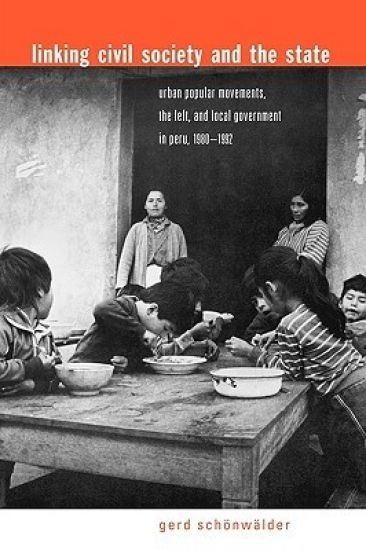
Linking Civil Society and the State

Linking Civil Society and the State

Gerd Schönwälder

Pennsylvania State University Press
2004
pokkari
With the role of local government becoming more important as Latin American countries moved away from state-led development models in the 1980s, and with social movements helping to bring about the transition to democracy, questions arose about whether and how popular participation at the local level might be able to contribute to the consolidation of democracy from the grassroots upward. This book, based on extensive research in low-income districts of Lima, provides a sophisticated analysis of the relationship between a resurgent civil society and democratization.Exploring the complex interactions among urban popular movements, local government, political parties, and nongovernmental organizations (NGOs), Schönwälder shows that the democratic potential of these movements is genuine but that their influence has been limited. His balanced assessment credits their achievements while illuminating the sources of their failures, mainly a variety of institutional barriers and a persistent threat of manipulation and co-optation by stronger actors, especially political parties. His analysis helps us understand better why the left has so often failed to convert its considerable support at the grassroots into political successes at higher levels.
In Search of Security

In Search of Security

Gerd Langguth

Praeger Publishers Inc
1995
sidottu
Germany is the only country in the world where two major transformations are taking place at the same time: a process of modernization in the west and a transition from command economy to free market economy in the east. In this work, Langguth highlights the dramatic social and political changes occurring in east and west Germany. He concludes that the increasingly complex European political and social landscape and the new diversity of lifestyles in Germany have raised levels of insecurity among individual Germans. Moreover, the end of the bipolar world, with its rigid political, social, and economic structures, is requiring Germans—particularly German youth—to adjust their political and philosophical positions. This important work will be of interest to scholars and students of Germany and the contemporary European scene.
In Search of Security

In Search of Security

Gerd Langguth

Praeger Publishers Inc
1995
nidottu
Germany is the only country in the world where two major transformations are taking place at the same time: a process of modernization in the west and a transition from command economy to free market economy in the east. In this work, Langguth highlights the dramatic social and political changes occurring in east and west Germany. He concludes that the increasingly complex European political and social landscape and the new diversity of lifestyles in Germany have raised levels of insecurity among individual Germans. Moreover, the end of the bipolar world, with its rigid political, social, and economic structures, is requiring Germans—particularly German youth—to adjust their political and philosophical positions. This important work will be of interest to scholars and students of Germany and the contemporary European scene.
Nightmare's Fairy Tale

Nightmare's Fairy Tale

Gerd Korman

University of Wisconsin Press
2005
sidottu
This is a story of twentieth-century survival, from Kindertransport to New York's Lower East Side. Fleeing the Nazis in the months before World War II, the Korman family scattered from a Polish refugee camp with the hope of reuniting in America. The father sailed to Cuba on the ill-fated St. Louis; the mother left for the United States after sending her two sons on a Kindertransport. One of the sons was Gerd Korman, whose memoir follows his own path - from the family's deportation from Hamburg, through his time with an Anglican family in rural England, to the family's reunited life in New York City. His memoir plumbs the depths of twentieth-century history to rescue the remarkable life story of one of its survivors.
Early Christianity According to the Traditions in Acts
Particularly after the standard commentaries by Ernst Haenchen and Hans Cormehnann, the Acts of the Apostles has come to be seen as a work in which the theology of its author has distorted his account of earliest Christianity. Attention has therefore focussed on that theology, in an attempt to give as full a picture of it as possible and consequently the question 'what actually happened?' has fallen right into the background. Professor Luedemann does not go back on the work of his German predecessors. But he is very well aware of the question of the historicity of Acts and their failure to deal with it thoroughly. So in his work, which essentially takes the form of a commentary, he goes through Acts from beginning to end, trying to ascertain whether despite all the difficulties it is nevertheless possible to establish a core of reliable historical information in particular sections of the work. The result is an important addition to the literature on Acts, much needed since the Haenchen and Conzelmann commentaries are now dated. A notable feature of the work is its attention to the literature written in English. Account is taken of this up to 1986.
On Having a Critical Faith

On Having a Critical Faith

Gerd Theissen

SCM Press
2012
nidottu
This book, 'Dr Theissen remarks, 'means more to me than any other of my writings. The ideas in it go back to my student days, and my dissatisfaction then over the attitude of so many theologians. I kept on asking myself, how they could go on working, day after day, when they could not even give a convincing answer to the insinuation that God is an illusion. I resolved either to find an answer of my own or to give up theology altogether.' This is his answer. In a short and clearly reasoned study he considers the arguments most commonly produced against Christian belief from the outside, and explores how they can be answered. First he looks at the charge that Christianity is an ideology born out of social conflict and distorted personalities. Then he counters the criticism that religious belief has no grounding in everyday experience and reality. Finally, he argues against the view that the historical approach makes everything relative. There are good reasons, he concludes, for being a Christian. But this does not mean that Christianity can be defended in its traditional form. It will have to change if it is not going to lose all credibility in the modern world.
The Resurrection of Christ

The Resurrection of Christ

Gerd Luedemann

SCM PRESS
2012
nidottu
Since his student days, Gerd Ludemann has noted how both New Testament scholars and theologians have tended to be evansive about what actually happened at the resurrection of Jesus. How was Jesus seen? Was the tomb really empty, and, if so, what happened to the body? Dissatisfied with so much of what he read, he set out to write his own book, making a thourough examination of all the passages relating to the resurrection in the New Testament, beginning with the fanmous verse in 1 Corinthians 15 and going through to the last chapter of John's Gospel. The results of this exhausttive study are largely negative, Ludemann succeeds in demonstrating just how much tradition and the evangelists themselves have contributed to the Easter story. THis is an honest scholarly book with the ring of truth, and needs to be read without prejudice. Those who do so will find that in fact it is remarkably positive.