

Kirjahaku
Etsi kirjoja tekijän nimen, kirjan nimen tai ISBN:n perusteella.
1000 tulosta hakusanalla Gilles Seban

Saint-Gilles / Vauvert / le Petite Camargue
INSTITUT GEOGRAPHIQUE NATIONAL
2025
kartta, viikattu


Wow Gilles!
Skira
2018
sidottu
The legendary Canadian racing driver Gilles Villeneuve died on 8 May 1982 on the Zolder track in Belgium. Villeneuve had spent six years in Grand Prix racing with Ferrari, winning six races and widespread acclaim for his performances. Although he never obtained a world title, he won hearts all over the world. Wow Gilles covers the "reckless" life of Gilles Villeneuve through the photographs of Ercole Colombo and texts by Giorgio Terruzzi. The voices of these two exceptional narrators (both were eyewitnesses to the Canadian race driver's over-the-top life) guide us along a journey that begins in 1977 and ends in 1982. From his F1 debut to his tragic accident in Belgium, this spectacular photo album allows readers to relive the romanticism of the sport that characterized those years, of which Villeneuve was a key player.
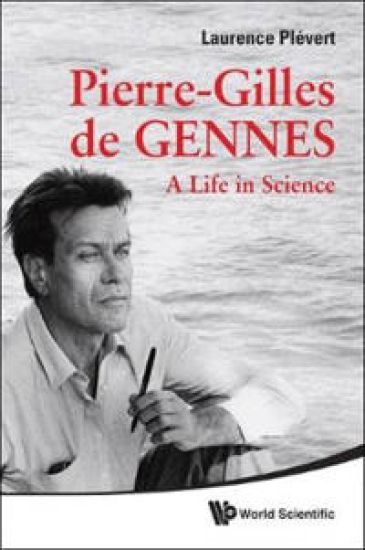
Pierre-gilles De Gennes: A Life In Science
Laurence Plevert
World Scientific Publishing Co Pte Ltd
2011
nidottu
Best known outside the scientific community for the Nobel Prize in Physics he won in 1991, Pierre-Gilles de Gennes was exceptional amongst scientists for the breadth and depth of his contributions in multiple fields of physics. He was also much ahead of his time in his desire to break down barriers between scientific disciplines and between fundamental and applied science. He was equally unusual in his willingness to explain the nature and purpose of his work to society at large and to young people in particular.Laurence Plévert's fascinating work retraces the influences and experiences that moulded this complex, charismatic, charming and eclectic genius. It follows him from his unconventional childhood on the fringes of the old French aristocracy and in war-divided France, through his glittering school and early scientific career, up to the revolutionary breakthroughs in fields as diverse as superconductivity, liquid crystals, polymers and soft matter, culminating in the final consecration of the Nobel prize.Constructed from exclusive interviews with the physicist himself, his family, friends and colleagues, this biography immerses us in the work and character of a truly remarkable figure, a Renaissance man of the 20th century.

The Neurobiology of the Gilles De La Tourette Syndrome and Chronic Tics: Part A
ELSEVIER SCIENCE TECHNOLOGY
2022
sidottu
The Neurobiology of the Gilles de la Tourette Syndrome and Chronic Tics, Volume Three reviews historical background and current nosology and guidelines. In addition, it includes an overview of pathophysiology, ranging from its genetic basis and changes in neurochemistry and electrophysiology to widespread neural circuits. Specific chapters cover Tourette syndrome from phenomenology and natural history to neurobiology, Update and Recent progress in the Neurobiology of Tourette Syndrome, Current guidelines and nosology of Tourette syndrome, Neuroimaging applications in Tourette's Syndrome, Clinical and neurodevelopmental brain imaging of Tourette syndrome, Altered Structural Connectivity in Gilles de la Tourette Syndrome, and much more. The last 20 years have seen an exponential growing body of research dedicated to Gilles de la Tourette Syndrome in the understanding of the syndrome’s complex genetics and underlying neurobiology. This unprecedented surge in basic and clinical research has resulted in over 3,000 scientific publications.

The Neurobiology of the Gilles De La Tourette Syndrome and Chronic Tics: Part B
ELSEVIER SCIENCE TECHNOLOGY
2022
sidottu
The Neurobiology of the Gilles de la Tourette Syndrome and Chronic Tics, Part B, Volume Four reviews historical background, current nosology and guidelines. In addition, it includes an overview of pathophysiology, ranging from its genetic basis and changes in neurochemistry and electrophysiology to widespread neural circuits. Specific chapters cover The genetic basis of Gilles de la Tourette Syndrome, Genome-wide association study of Tourette Syndrome, De Novo mutations in Tourette Syndrome, Animal models for Tourette Syndrome, The neural-immune crosstalk in Tourette syndrome: from immunobiology to epistemology, Functional connectivity in the Gilles de la Tourette Syndrome, and much more.
Variations: The Philosophy of Gilles Deleuze
Jean-Clet Martin
Edinburgh University Press
2010
sidottu
Jean-Clet Martin offers an insightful reading of Deleuze, from the point of view of a student, a reader and a fellow philosopher with whom Deleuze himself corresponded about his work. By providing a philosophical reading of Deleuze by a major philosophical peer, Martin offers the reader a unique analysis of Deleuze's texts. An opening letter-preface by Deleuze to Martin testifies to the confidence that Deleuze had placed in Martin's interpretation of his work.
Sounding the Virtual: Gilles Deleuze and the Theory and Philosophy of Music
Nick Nesbitt
Ashgate Publishing Limited
2010
sidottu
It is the contention of the editors and contributors of this volume that the work carried out by Gilles Deleuze, where rigorously applied, has the potential to cut through much of the intellectual sedimentation that has settled in the fields of music studies. Deleuze is a vigorous critic of the Western intellectual tradition, calling for a 'philosophy of difference', and, despite its ambitions, he is convinced that Western philosophy fails to truly grasp (or think) difference as such. It is argued that longstanding methods of conceptualizing music are vulnerable to Deleuze's critique. But, as Deleuze himself stresses, more important than merely critiquing established paradigms is developing ways to overcome them, and by using Deleuze's own concepts this collection aims to explore that possibility.

Afterimages of Gilles Deleuze’s Film Philosophy
University of Minnesota Press
2010
sidottu
The French philosopher Gilles Deleuze was one of the most innovative and revolutionary thinkers of the twentieth century. Author of more than twenty books on literature, music, and the visual arts, Deleuze published the first volume of his two-volume study of film, Cinema 1: The Movement-Image, in 1983 and the second volume, Cinema 2: The Time-Image, in 1985. Since their publication, these books have had a profound impact on the study of film and philosophy. Film, media, and cultural studies scholars still grapple today with how they can most productively incorporate Deleuze's thought.The first new collection of critical studies on Deleuze's cinema writings in nearly a decade, Afterimages of Gilles Deleuze's Film Philosophy provides original essays that evaluate the continuing significance of Deleuze's film theories, accounting systematically for the ways in which they have influenced the investigation of contemporary visual culture and offering new directions for research.Contributors: Raymond Bellour, Centre Nationale de Recherches Scientifiques; Ronald Bogue, U of Georgia; Giuliana Bruno, Harvard U; Ian Buchanan, Cardiff U; James K. Chandler, U of Chicago; Tom Conley, Harvard U; Amy Herzog, CUNY; András Bálint Kovács, Eötvös Loránd U; Patricia MacCormack, Anglia Ruskin U; Timothy Murray, Cornell U; Dorothea Olkowski, U of Colorado; John Rajchman, Columbia U; Marie-Claire Ropars-Wuilleumier, U Paris VIII; Garrett Stewart, U of Iowa; Damian Sutton, Glasgow School of Art; Melinda Szaloky, UC Santa Barbara.

Afterimages of Gilles Deleuze's Film Philosophy
University of Minnesota Press
2010
nidottu
The French philosopher Gilles Deleuze was one of the most innovative and revolutionary thinkers of the twentieth century. Author of more than twenty books on literature, music, and the visual arts, Deleuze published the first volume of his two-volume study of film, Cinema 1: The Movement-Image, in 1983 and the second volume, Cinema 2: The Time-Image, in 1985. Since their publication, these books have had a profound impact on the study of film and philosophy. Film, media, and cultural studies scholars still grapple today with how they can most productively incorporate Deleuze's thought.The first new collection of critical studies on Deleuze's cinema writings in nearly a decade, Afterimages of Gilles Deleuze's Film Philosophy provides original essays that evaluate the continuing significance of Deleuze's film theories, accounting systematically for the ways in which they have influenced the investigation of contemporary visual culture and offering new directions for research.Contributors: Raymond Bellour, Centre Nationale de Recherches Scientifiques; Ronald Bogue, U of Georgia; Giuliana Bruno, Harvard U; Ian Buchanan, Cardiff U; James K. Chandler, U of Chicago; Tom Conley, Harvard U; Amy Herzog, CUNY; András Bálint Kovács, Eötvös Loránd U; Patricia MacCormack, Anglia Ruskin U; Timothy Murray, Cornell U; Dorothea Olkowski, U of Colorado; John Rajchman, Columbia U; Marie-Claire Ropars-Wuilleumier, U Paris VIII; Garrett Stewart, U of Iowa; Damian Sutton, Glasgow School of Art; Melinda Szaloky, UC Santa Barbara.

The Non-Philosophy of Gilles Deleuze takes up Deleuze's most powerful argument on the task of contemporary philosophy in the West. Deleuze argues that it is only through a creative engagement with the forms of non-philosophy--notably modern art, literature and cinema--that philosophy can hope to attain the conceptual resources to restore the broken links of perception, language and emotion. In short, this is the only future for philosophy if it is to repair its fragile relationship to immanence to the world as it is.A sequence of dazzling essays analyze Deleuze's investigations into the modern arts. Particular attention is paid to Deleuze's exploration of Liebniz in relation to modern painting and of Borges to an understanding of the relationship between philosophy, literature and language. By illustrating Deleuze's own approach to the arts, and to modern literature in particular, the book demonstrates the critical significance of Deleuze's call for a future philosophy defined as an art of inventing concepts.
This text takes up Deleuze's most powerful argument on the task of contemporary philosophy in the West. Deleuze argues that it is only through a creative engagement with the forms of non-philosophy - notably modern art, literature and cinema - that philosophy can hope to restore the broken links of perception, language and emotion. In a sequence of essays, Gregg Lambert analyses Deleuze's investigations into the modern arts. Particular attention is paid to Deleuze's exploration of Liebniz in relation to modern painting and to Borges with regard to an understanding of the relationship between philosophy, literature and language. By illustrating Deleuze's own approach to the arts, and to modern literature in particular, the book demonstrates the critical significance of Deleuze's call for a future philosophy defined as an "art of inventing concepts".
The first of two volumes, The Works of Gilles Deleuze I: 1953-1969 introduces, book by book, the philosopher's daunting corpus, from his early monographs on Hume, Nietzsche, Kant, and Bergson; to the "literary clinic" he creates in relation to Proust and Masoch; and, finally, to the landmark publication of Difference and Repetition (1968) and Logic of Sense (1969). Perhaps no one is better suited to this ambitious undertaking than Jon Roffe. Possessing an encyclopedic knowledge Deleuze's work, he also claims an intimate familiarity with so many of the philosopher's sources, subjects, and conceptual personae. With enviable clarity, Roffe's eight substantial chapters adroitly elaborate the circumstances and argument, problems and concepts all but one of the nine books from this period. Indeed, the uniqueness of this volume consists in forgoing any reductive synthesis of Deleuze in order to elaborate each of his major publications on its own terms. The Works of Gilles Deleuze I is incredibly useful, deeply pedagogical, and structurally ingenious.
The first of two volumes, The Works of Gilles Deleuze I: 1953-1969 introduces, book by book, the philosopher's daunting corpus, from his early monographs on Hume, Nietzsche, Kant, and Bergson; to the "literary clinic" he creates in relation to Proust and Masoch; and, finally, to the landmark publication of Difference and Repetition (1968) and Logic of Sense (1969). Perhaps no one is better suited to this ambitious undertaking than Jon Roffe. Possessing an encyclopedic knowledge Deleuze's work, he also claims an intimate familiarity with so many of the philosopher's sources, subjects, and conceptual personae. With enviable clarity, Roffe's eight substantial chapters adroitly elaborate the circumstances and argument, problems and concepts all but one of the nine books from this period. Indeed, the uniqueness of this volume consists in forgoing any reductive synthesis of Deleuze in order to elaborate each of his major publications on its own terms. The Works of Gilles Deleuze I is incredibly useful, deeply pedagogical, and structurally ingenious.

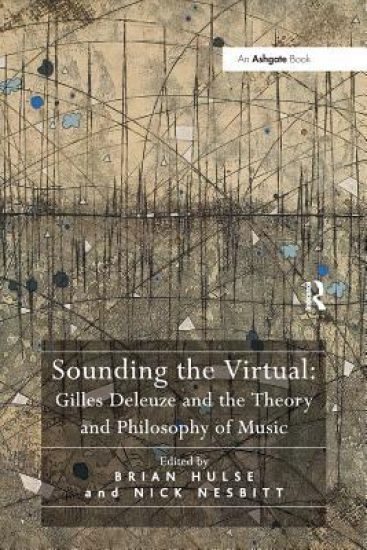
Sounding the Virtual: Gilles Deleuze and the Theory and Philosophy of Music
Nick Nesbitt
Routledge
2016
nidottu
It is the contention of the editors and contributors of this volume that the work carried out by Gilles Deleuze, where rigorously applied, has the potential to cut through much of the intellectual sedimentation that has settled in the fields of music studies. Deleuze is a vigorous critic of the Western intellectual tradition, calling for a 'philosophy of difference', and, despite its ambitions, he is convinced that Western philosophy fails to truly grasp (or think) difference as such. It is argued that longstanding methods of conceptualizing music are vulnerable to Deleuze's critique. But, as Deleuze himself stresses, more important than merely critiquing established paradigms is developing ways to overcome them, and by using Deleuze's own concepts this collection aims to explore that possibility.

Le Fratricide Ou Gilles De Bretagne (1850)
Joseph Alexis Walsh
KESSINGER PUBLISHING, LLC
2010
pokkari

Notice Historique Sur Saint-Gilles (1862)
Jean Andre Teissonnier
KESSINGER PUBLISHING, LLC
2010
pokkari

Congressman? Stolen by Indians? French nobility? Horse thief? King's Daughters? Brewery founders? How much do you really know about the men and women who created our family?