Kirjojen hintavertailu. Mukana 11 699 587 kirjaa ja 12 kauppaa.

Kirjahaku

Etsi kirjoja tekijän nimen, kirjan nimen tai ISBN:n perusteella.

1000 tulosta hakusanalla Graham W.

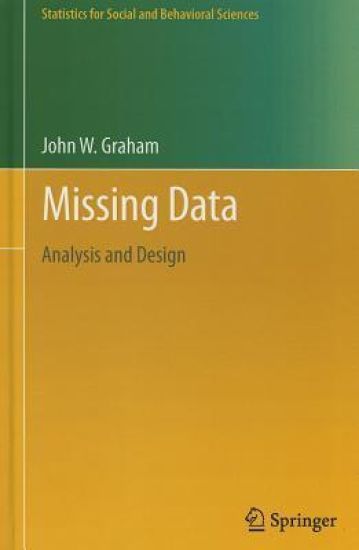
Missing Data

Missing Data

John W. Graham

Springer-Verlag New York Inc.
2012
sidottu
Missing data have long plagued those conducting applied research in the social, behavioral, and health sciences. Good missing data analysis solutions are available, but practical information about implementation of these solutions has been lacking. The objective of Missing Data: Analysis and Design is to enable investigators who are non-statisticians to implement modern missing data procedures properly in their research, and reap the benefits in terms of improved accuracy and statistical power. Missing Data: Analysis and Design contains essential information for both beginners and advanced readers. For researchers with limited missing data analysis experience, this book offers an easy-to-read introduction to the theoretical underpinnings of analysis of missing data; provides clear, step-by-step instructions for performing state-of-the-art multiple imputation analyses; and offers practical advice, based on over 20 years' experience, for avoiding and troubleshooting problems. For more advanced readers, unique discussions of attrition, non-Monte-Carlo techniques for simulations involving missing data, evaluation of the benefits of auxiliary variables, and highly cost-effective planned missing data designs are provided. The author lays out missing data theory in a plain English style that is accessible and precise. Most analysis described in the book are conducted using the well-known statistical software packages SAS and SPSS, supplemented by Norm 2.03 and associated Java-based automation utilities. A related web site contains free downloads of the supplementary software, as well as sample empirical data sets and a variety of practical exercises described in the book to enhance and reinforce the reader’s learning experience. Missing Data: Analysis and Design and its web site work together to enable beginners to gain confidence in their ability to conduct missing data analysis, and more advancedreaders to expand their skill set.
Missing Data

Missing Data

John W. Graham

Springer-Verlag New York Inc.
2014
nidottu
Missing data have long plagued those conducting applied research in the social, behavioral, and health sciences. Good missing data analysis solutions are available, but practical information about implementation of these solutions has been lacking. The objective of Missing Data: Analysis and Design is to enable investigators who are non-statisticians to implement modern missing data procedures properly in their research, and reap the benefits in terms of improved accuracy and statistical power. Missing Data: Analysis and Design contains essential information for both beginners and advanced readers. For researchers with limited missing data analysis experience, this book offers an easy-to-read introduction to the theoretical underpinnings of analysis of missing data; provides clear, step-by-step instructions for performing state-of-the-art multiple imputation analyses; and offers practical advice, based on over 20 years' experience, for avoiding and troubleshooting problems. For more advanced readers, unique discussions of attrition, non-Monte-Carlo techniques for simulations involving missing data, evaluation of the benefits of auxiliary variables, and highly cost-effective planned missing data designs are provided. The author lays out missing data theory in a plain English style that is accessible and precise. Most analysis described in the book are conducted using the well-known statistical software packages SAS and SPSS, supplemented by Norm 2.03 and associated Java-based automation utilities. A related web site contains free downloads of the supplementary software, as well as sample empirical data sets and a variety of practical exercises described in the book to enhance and reinforce the reader’s learning experience. Missing Data: Analysis and Design and its web site work together to enable beginners to gain confidence in their ability to conduct missing data analysis, and more advancedreaders to expand their skill set.
Whose Man in Havana?

Whose Man in Havana?

John W. Graham

University of Calgary Press
2015
nidottu
In Whose Man in Havana? the author offers an unconventional, often dark, but more often hilarious view of diplomacy in settings as varied as Haiti, London, the Dominican Republic, the Balkans, Palestine, Paraguay, Guyana, and Kyrgyzstan, including covert monitoring of Soviet military operations in Cuba on behalf of the CIA with the blessing of President Kennedy and Prime Minister Pearson.In a career that spans the Canadian foreign service and international organizations, he was fortunate to be in the right place at interesting, if turbulent, times. Throughout the book he has focussed on the lighter side of people and places, but almost everywhere the dark side intrudes. Graham makes plain that the intersection of the two is frequently black comedy.
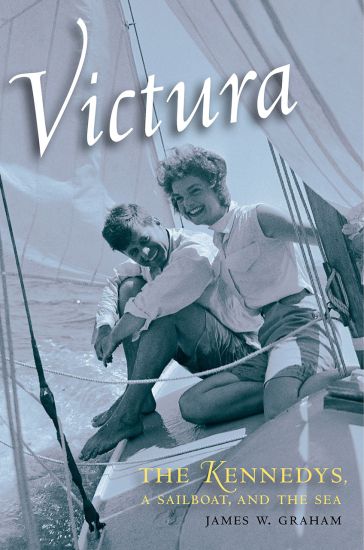
Victura

Victura

James W. Graham

Dartmouth College Press
2015
nidottu
To truly understand the dynamics and magic of the Kennedy family, one must understand their passion for sailing and the sea. Many families sail together, but the Kennedys' relationship with Victura, the 25-foot sloop purchased in 1932, stands apart. Throughout their brief lives, Joe Jr., Jack, and Bobby spent many hours racing Victura. Lack of effort in a race by one of his sons could infuriate Joseph P. Kennedy, and Joe Jr. and Jack ranked among the best collegiate sailors in New England. Likewise, Eunice emerged as a gifted sailor and fierce competitor, the equal of any of her brothers. The Kennedys believed that Jack's experience sailing Victura helped him survive the sinking of his PT boat during World War II. In the 1950s, glossy Life magazine photos of Jack and Jackie on Victura's bow helped define the winning Kennedy brand. Jack doodled sketches of Victura during Oval Office meetings, and it's probable that his love of seafaring played a role in his 1961 decision to put a man on the moon, an enterprise he referred to as"spacefaring." Ted loved Victura as much as any of his siblings did and, with his own children and the children of his lost brothers as crew, he sailed into his old age: past the shoals of an ebbing career, and into his eventual role as the"Lion of the Senate." In Victura, James W. Graham charts the progress of America's signature twentieth-century family dynasty in a narrative both stunningly original and deeply gripping. This true tale of one small sailboat is an invaluable contribution to our understanding of the great story of the Kennedys.
Logistics & Supply Chain Management: In Multi-Domain Operations
"Significant...This book is smart, instructive, valuable, and surprisingly moving." Dr. Joseph Graham, one of the world's most successful thinkers and planners, shares the hidden principles and systems that he's developed, refined, and used over the past twenty years to create unique results in both life and business-and which any person or organization can use and leverage to game out and help achieve success.Starting In 2000, Dr. Joseph W. Graham discovered a set of unique principles that have led to exceptionally effective thinking, which he describes as "context thinking". It is these principles, and not anything special about Dr. Graham-who grew up an ordinary kid in a rural community-that he believes are the reason behind his success.In Logistics & Supply Chain Management: In Multi-Domain Operations, Dr. Graham shares what he's learned over the course of his remarkable career. He argues that life, management, economics, underpinned by smart thinking can all be systemized into guiding rules of thumb and simply understood. The book's practical lessons, which are built around his cornerstones of "clear-eyed" insight, include Dr. Graham laying out the most effective and efficient ways for individuals and organizations to make decisions, approach challenges, and mitigate risks. He also describes the innovative tools leaders use to bring a plan to life, such as creating "color-codes" for all that distill weighted strengths and weaknesses for decision-making. Logistics & Supply Chain Management: In Multi-Domain Operations also offers a straightforward approach to decision-making and problem-solving that Dr. Graham believes anyone can use to get the right results in complex environments.More importantly, here, from a man who has had a ring-side seat with some of the leading thinkers of this modern age, and who from an early age has been call "the General', is a rare opportunity to gain proven-insightful-forward looking advice unlike anything you'll find anywhere.Get your copy today
Fallen among Thieves

Fallen among Thieves

Graham Greene; Arthur W Beckett

Hansebooks
2017
pokkari
Fallen among Thieves - a novel of interest is an unchanged, high-quality reprint of the original edition of 1870. Hansebooks is editor of the literature on different topic areas such as research and science, travel and expeditions, cooking and nutrition, medicine, and other genres. As a publisher we focus on the preservation of historical literature. Many works of historical writers and scientists are available today as antiques only. Hansebooks newly publishes these books and contributes to the preservation of literature which has become rare and historical knowledge for the future.
Corning and the Craft of Innovation

Corning and the Craft of Innovation

Margaret B.W. Graham; Alec T. Shuldiner

Oxford University Press Inc
2001
sidottu
For 150 years, Corning Incorporated has repeatedly succeeded in their quest to create new products for an ever-changing marketplace. Corning and the Craft of Innovation is the story of the extraordinary research and development strategy that propelled this company to its leadership position in leading-edge technologies for the new world economy. Since its founding in the mid-nineteenth century, Corning has placed a premium on research and development in tandem with an unending spirit of innovation. Corning's innovations made possible such essential items as light bulbs, television, Pyrex, catalytic converters for cars, and high-speed telecommunications through fiber optics. Most impressive is Corning's evolution into a highly innovative producer of specialty materials. In its early days, Corning developed specialty glass for use in railroad signal lenses that had to withstand the rigors of high and low temperatures; and developed its high speed Ribbon Machine - still used today - to produce glass envelopes for light bulbs more quickly and efficiently than anyone else. Today Corning leads the world in fibre optics and is a premier provider of cable and photonic products. In 1999 Wired magazine nominated Corning for its coveted Wired Index, confirming Corning's astonishing staying power as a leading-edge company. Corning and the Craft of Innovation examines how Corning fostered a culture of innovation while showing extraordinary patience in backing long-term projects. The book illustrates how a pattern of deliberate, regular, and profitable innovation begun 150 years ago has put Corning at the vanguard of leading-edge technologies for the fastest-growing markets of the global marketplace. It will be essential reading for anyone interested in strategic management, innovation, science and technology or knowledge management.
New Collected Poems

New Collected Poems

W.S. Graham

Faber Faber
2005
nidottu
'I first read a W. S. Graham poem in 1949. It sent a shiver down my spine. Forty-five years later nothing has changed. His song is unique and his work an inspiration.' Harold Pinter. From his first publications in the early 1940s, to his final works of the late 1970s, W. S. Graham has given us a poetry of intense power and inquisitive vision - a body of work regarded by many as among the best Romantic poetry of the twentieth century. This New Collected Poems, edited by poet and Graham-scholar Matthew Francis and with a foreword by Douglas Dunn, offers the broadest picture yet of Graham's work.
Reno Court of Inquiry

Reno Court of Inquiry

W. Graham; Brian Pohanka

Stackpole Books
2018
nidottu
“The inquiry quickly developed into a broad investigation of the manner in which the battle was fought, and competent historians and students consider the record of its proceedings to be the chief and most important repository of authentic detailed information on the subject. The original official record, some 1,300 pages in length, was held in the confidential files of the Judge Advocate General’s Office until 1941, when it was turned over to the National Archives. In 1951 a verbatim edition of the official record, limited to 125 copies, was published by me. This volume is an abstract of that record.” The search for a scapegoat began almost immediately after news of the disaster at the Little Big Horn reached the press and public in the early summer of 1876. Custer’s partisans accused Captain Frederick W. Benteen, the senior captain, and Marcus A. Reno, the regiment’s second in command, of cowardice in their failure to go to Custer’s aid. Benteen was largely cleared in the public mind, but Reno was not. In
The Story of the Little Big Horn

The Story of the Little Big Horn

W. Graham

Stackpole Books
2017
nidottu
“Custer had been usually effective as an Indian fighter for several years… He was adept in bringing off surprise attacks that crushed and paralyzed resistance. Both his reputation and his experience as an Indian campaigner were second to none; and the Seventh Cavalry…was held one of the best regiments in the service. It was but natural, then, that when the regiment marched proudly away from the mouth of the Rosebud on its mission, Terry could and did feel confident that if he could but catch the recalcitrant braves of Sitting Bull between Custer and Gibbon, he would certainly crush and capture them; and if, perchance, Custer found them elsewhere than was expected, the Seventh Cavalry, under such a leader, would be more than equal to any emergency.” From the Story of the Little Big Horn In June 1876, General George A Custer was detailed to a column under General Alfred H. Terry. After being sent ahead of General George Crook at the Rosebud River, Custer and the Seventh Cavalry discovered a Souix encampment on