Kirjojen hintavertailu. Mukana 12 459 402 kirjaa ja 12 kauppaa.

Kirjahaku

Etsi kirjoja tekijän nimen, kirjan nimen tai ISBN:n perusteella.

1000 tulosta hakusanalla Grant N Perryman

Plaidoyer Pour S.-N.-H. Linguet, Prononcé Par Lui-Même En La Grand'chambre, Dans Sa Discussion
Plaidoyer pour S.-N.-H. Linguet, ... prononce par lui-meme en la grand'chambre, dans sa discussion avec M. le duc d'Aiguillon, ...Date de l'edition originale: 1787Ce livre est la reproduction fidele d'une oeuvre publiee avant 1920 et fait partie d'une collection de livres reimprimes a la demande editee par Hachette Livre, dans le cadre d'un partenariat avec la Bibliotheque nationale de France, offrant l'opportunite d'acceder a des ouvrages anciens et souvent rares issus des fonds patrimoniaux de la BnF.Les oeuvres faisant partie de cette collection ont ete numerisees par la BnF et sont presentes sur Gallica, sa bibliotheque numerique.En entreprenant de redonner vie a ces ouvrages au travers d'une collection de livres reimprimes a la demande, nous leur donnons la possibilite de rencontrer un public elargi et participons a la transmission de connaissances et de savoirs parfois difficilement accessibles.Nous avons cherche a concilier la reproduction fidele d'un livre ancien a partir de sa version numerisee avec le souci d'un confort de lecture optimal. Nous esperons que les ouvrages de cette nouvelle collection vous apporteront entiere satisfaction.Pour plus d'informations, rendez-vous sur www.hachettebnf.fr
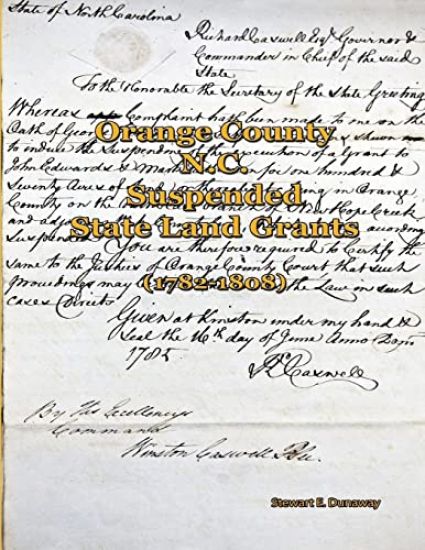
Orange County, N.C. - Suspended Land Grants (1782-1808)
Suspended land grants are records dealing with conflicts over "vacant land". These records are for Orange County, NC. This book contains images of the original documents, including a transcript so that names and locations can be indexed. These original records are in the State Archives (Raleigh) - but are not cataloged on an individual basis.
Strategija Vizantijskoj imperii. Luttwak Edward N. The Grand Strategy of the Byzantine Empire / per. s angl. A. N. Kovalja
Kniga Edvarda N. Ljuttvaka "Strategija Vizantijskoj imperii" predstavljaet soboju popytku otvetit na vopros o tom, pochemu Vizantijskaja - Vostochnaja Rimskaja - imperija prosuschestvovala pochti vdvoe dolshe Zapadnoj. Etot vopros uzhe ne raz privlekal vnimanie istorikov. Ved u Vizantii ne bylo kakikh-libo osobykh geograficheskikh ili voennykh preimuschestv po sravneniju s Rimom, a okruzhavshie ee narody i plemena byli ne menee moguschestvenny i kovarny, chem te, chto v techenie pjatogo veka nashej ery okonchatelno razorili Zapadnuju imperiju. Pozitsija Ljuttvaka interesna tem, chto on issleduet cheredu sobytij vizantijskoj istorii, ispolzuja ne tolko traditsionnyj instrumentarij istorikov-teoretikov, no i metodologiju i nabor sredstv, osvoennye im v protsesse raboty v kachestve spetsialista po izucheniju sovremennykh nam gosudarstvennykh obrazovanij..."Strategija Vizantijskoj imperii" - eto istorija formirovanija i razvitija kompleksnoj strategii Vizantii, vkljuchavshej v sebja mnozhestvo aspektov: voennoe delo, diplomatiju, razvedku,
Voyages intéressans dans différentes colonies françaises, espagnoles, anglaises, &c; ... Avec des anecdotes singulières, ... Le tout rédigé & mis au jour, d'après un grand nombre de manuscrits, par M. N ...
The 18th century was a wealth of knowledge, exploration and rapidly growing technology and expanding record-keeping made possible by advances in the printing press. In its determination to preserve the century of revolution, Gale initiated a revolution of its own: digitization of epic proportions to preserve these invaluable works in the largest archive of its kind. Now for the first time these high-quality digital copies of original 18th century manuscripts are available in print, making them highly accessible to libraries, undergraduate students, and independent scholars.Rich in titles on English life and social history, this collection spans the world as it was known to eighteenth-century historians and explorers. Titles include a wealth of travel accounts and diaries, histories of nations from throughout the world, and maps and charts of a world that was still being discovered. Students of the War of American Independence will find fascinating accounts from the British side of conflict. ++++The below data was compiled from various identification fields in the bibliographic record of this title. This data is provided as an additional tool in helping to insure edition identification: ++++Cambridge University LibraryT152364With a half-title. P.507 misnumbered 407. Probably printed in Paris.Londres i.e. Paris?]: et se trouve Paris, chez Jean-Fran ois Bastien, 1788. vii, 1],407 i.e.507], 1]p.; 8
Giant Resonances

Giant Resonances

Muhsin N. Harakeh; Adriaan van der Woude

Oxford University Press
2001
sidottu
Giant resonances are collective excitations of the atomic nucleus, a typical quantum many-body system. The study of these fundamental modes has in many respects contributed to our understanding of the bulk behaviour of the nucleus and of the dynamics of non-equilibrium excitations. Although the phenomenon of giant resonances has been known for more than 50 years, a large amount of information has been obtained in the last 10 years. This book gives an up-to-date, comprehensive account of our present knowledge of giant resonances. It presents the experimental facts and the techniques used to obtain that information, describes how these facts fit into theoretical concepts and how this allows to determine various nuclear properties which are otherwise difficult to obtain. Included as an introduction is an overview of the main facts, a short history of how the field has developed in the course of time, and a discussion of future perspectives.
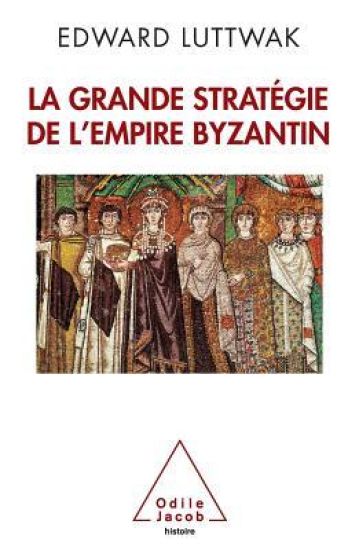
Grand Strategy of the Byzantine Empire / La Grande Stratégie de l'empire byzantin
Internationally respected as an authority on strategic studies and geopolitics, Edward Luttwak is a senior fellow at the Center for Strategic and International Studies, in Washington, D.C. In this book, Edward Luttwak presents the strategy of the eastern Roman empire we know as Byzantine, which lasted more than twice as long as the more familiar western Roman empire. This extraordinary endurance is all the more remarkable because the Byzantine Empire was favoured neither by geography nor by military preponderance. So why did it last so much longer than the western empire, which dissolved during the fifth century?According to Luttwak, the Byzantine Empire endured because its rulers were able to adapt strategically to diminished circumstances by devising new ways of coping with successive enemies. It relied less on military strength and more on persuasion - to recruit allies, dissuade threatening neighbours and manipulate enemies into attacking one another instead. Even when the Byzantines fought, they were less inclined to destroy their enemies than to contain them, for they were aware that today's enemies could be tomorrow's allies. Born in the fifth century in the face of the formidable threat posed by Attila's Huns, who were defeated with a minimum of force, Byzantine strategy continued to be refined over the centuries.With extraordinary precision the author analyses every aspect of the Byzantine art of warfare. In the process, he studies Byzantine religion, power, diplomacy, dynastic customs, weapons, tactics, fiscal system and even methods of espionage.- Could the Byzantine Empire's "resilience" provide a lesson for tomorrow's great powers?- This fascinating account of Byzantine strategy has already become a standard reference work - as such it follows in the footsteps of the author's earlier book, The Grand Strategy of the Roman Empire, which revolutionised the history of Rome and of its frontiers.- A highly enjoyable book for anyone wishing to delve into the complexities of the Byzantine Empire, from Antiquity to the Miedle Ages.
Sales Giant: How to master the art of selling in just 90 days
YOU CAN HAVE IT ALL If Genie showed up at your front door and gave you one wish, what would it be? And what if I told you that you could make that wish come true without a genie? It's true and I'll show you how. Hello, my name is Tom Monson and I became mega-successful in my first career, selling life insurance. And with all my other careers since. I've made million-dollar sales - where I made millions of dollars on a single sale. When I started in the life insurance business, I was young, inexperienced, and socially awkward. Less than a year later, I was the leading agent in my office and a leading agent in the biggest insurance company in the world. And surprisingly, the only thing I knew about life insurance was that when my dad died, we didn't have enough. My manager asked me to do a presentation to the agency and tell my teammates how I was able to sell more insurance in one month than the average agent did in a year. I had to think about it for a while. I finally came up with a couple of reasons. The first reason was very simple, I did so well because I wanted to. Not in just a passive way, because I really wanted to make a lot of money so I could take care of my family. I wanted to because I was this awkward kid, who didn't know much about insurance, and no one thought I would do well. And then there was the fact that I wanted to because "I wanted to." As my friend Les Brown always says, "I WAS HUNGRY " Hungry wasn't just a word to, it was what I was. It was like, "If I didn't make my goals, I wouldn't be able to breathe." But being hungry wasn't enough. I told them the real reason I crushed it was because I had made a total commitment to my success. I told them "I was willing to do whatever I needed to do to be successful." (I have to add here that I wasn't willing to compromise my integrity.) But looking back, I have to admit there was much more than even I was aware of. It wasn't as if I didn't want to share a secret, it was that I didn't realize why I was so successful. Sure being totally committed and hungry are important, but by themself, they aren't enough. Think about it this way, if a boxer steps in the ring being hungry and committed alone, he is going to end up on the mat in short order. It wasn't until years later that I understood the real reason I was so successful. When I was 12 my father passed and left my mom with four young children to take care of. Times were tough so when I was 16, I quit school to look for work. That's when I caught my first really big break. Here's how it happened: my mom was driving home one day, stopped at a red light, and a drunk driver crashed into her car. She wasn't hurt but had to take the car in for repair. She asked me to follow her to the body and fender shop to give her a ride home. That's when I met him. His name was Lane Schultz. He owned AAA Auto Body. He was talking to mom and me about how long the job would take and so on. I really liked him and when he finished, I asked if he had any jobs I could do. He looked me over and asked me what I knew how to do. All I could do was shrug, "I don't know," I said. On second thought, I said, "But I'll work hard." He smiled and said, "I'll bet you will. Can you start tomorrow?" I said, "Sure." and from there my life went in a whole different direction than your typical high-school dropout. Because for the next four years Lane became my mentor and my personal sales trainer. He spent hours coaching and teaching the skills of being a great salesman. Over the years, I've studied successful salespeople and found that there are a number of traits they have and a number o things they do and I've put them in this book. If you read one of the short chapters every day and put it into practice, you will change the trajectory of your career in a most positive way. So order your paperback copy today and set your course to success.
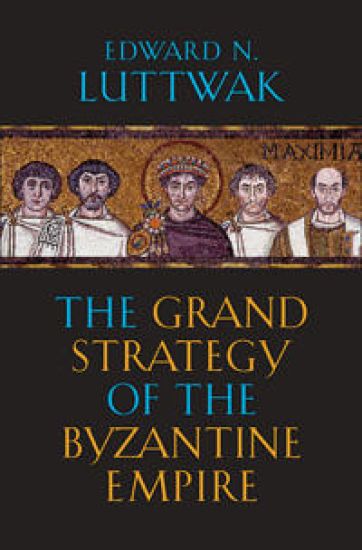
The Grand Strategy of the Byzantine Empire

The Grand Strategy of the Byzantine Empire

Edward N. Luttwak

The Belknap Press
2011
nidottu
In this book, the distinguished writer Edward N. Luttwak presents the grand strategy of the eastern Roman empire we know as Byzantine, which lasted more than twice as long as the more familiar western Roman empire, eight hundred years by the shortest definition. This extraordinary endurance is all the more remarkable because the Byzantine empire was favored neither by geography nor by military preponderance. Yet it was the western empire that dissolved during the fifth century.The Byzantine empire so greatly outlasted its western counterpart because its rulers were able to adapt strategically to diminished circumstances, by devising new ways of coping with successive enemies. It relied less on military strength and more on persuasion—to recruit allies, dissuade threatening neighbors, and manipulate potential enemies into attacking one another instead. Even when the Byzantines fought—which they often did with great skill—they were less inclined to destroy their enemies than to contain them, for they were aware that today’s enemies could be tomorrow’s allies. Born in the fifth century when the formidable threat of Attila’s Huns were deflected with a minimum of force, Byzantine strategy continued to be refined over the centuries, incidentally leaving for us several fascinating guidebooks to statecraft and war.The Grand Strategy of the Byzantine Empire is a broad, interpretive account of Byzantine strategy, intelligence, and diplomacy over the course of eight centuries that will appeal to scholars, classicists, military history buffs, and professional soldiers.
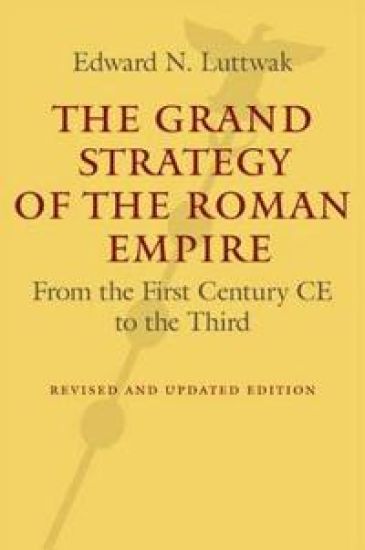
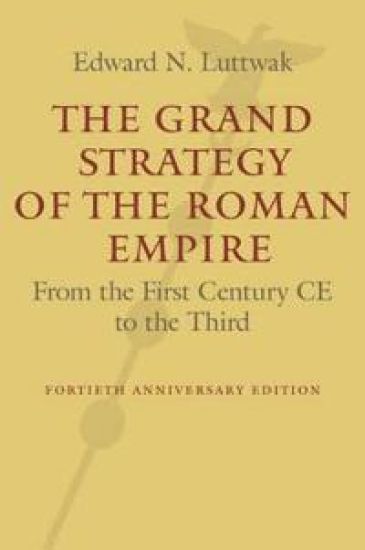
The Grand Strategy of the Roman Empire

The Grand Strategy of the Roman Empire

Edward N. Luttwak

Johns Hopkins University Press
2016
sidottu
At the height of its power, the Roman Empire encompassed the entire Mediterranean basin, extending much beyond it from Britain to Mesopotamia, from the Rhine to the Black Sea. Rome prospered for centuries while successfully resisting attack, fending off everything from overnight robbery raids to full-scale invasion attempts by entire nations on the move. How were troops able to defend the Empire's vast territories from constant attacks? And how did they do so at such moderate cost that their treasury could pay for an immensity of highways, aqueducts, amphitheaters, city baths, and magnificent temples? In The Grand Strategy of the Roman Empire, seasoned defense analyst Edward N. Luttwak reveals how the Romans were able to combine military strength, diplomacy, and fortifications to effectively respond to changing threats. Rome's secret was not ceaseless fighting, but comprehensive strategies that unified force, diplomacy, and an immense infrastructure of roads, forts, walls, and barriers. Initially relying on client states to buffer attacks, Rome moved to a permanent frontier defense around 117 CE. Finally, as barbarians began to penetrate the empire, Rome filed large armies in a strategy of "defense-in-depth," allowing invaders to pierce Rome's borders. This updated edition has been extensively revised to incorporate recent scholarship and archeological findings. A new preface explores Roman imperial statecraft. This illuminating book remains essential to both ancient historians and students of modern strategy.
The Grand Strategy of the Roman Empire

The Grand Strategy of the Roman Empire

Edward N. Luttwak

Johns Hopkins University Press
2016
pokkari
At the height of its power, the Roman Empire encompassed the entire Mediterranean basin, extending much beyond it from Britain to Mesopotamia, from the Rhine to the Black Sea. Rome prospered for centuries while successfully resisting attack, fending off everything from overnight robbery raids to full-scale invasion attempts by entire nations on the move. How were troops able to defend the Empire's vast territories from constant attacks? And how did they do so at such moderate cost that their treasury could pay for an immensity of highways, aqueducts, amphitheaters, city baths, and magnificent temples? In The Grand Strategy of the Roman Empire, seasoned defense analyst Edward N. Luttwak reveals how the Romans were able to combine military strength, diplomacy, and fortifications to effectively respond to changing threats. Rome's secret was not ceaseless fighting, but comprehensive strategies that unified force, diplomacy, and an immense infrastructure of roads, forts, walls, and barriers. Initially relying on client states to buffer attacks, Rome moved to a permanent frontier defense around 117 CE. Finally, as barbarians began to penetrate the empire, Rome filed large armies in a strategy of "defense-in-depth," allowing invaders to pierce Rome's borders. This updated edition has been extensively revised to incorporate recent scholarship and archeological findings. A new preface explores Roman imperial statecraft. This illuminating book remains essential to both ancient historians and students of modern strategy.