Kirjojen hintavertailu. Mukana 11 342 296 kirjaa ja 12 kauppaa.

Kirjahaku

Etsi kirjoja tekijän nimen, kirjan nimen tai ISBN:n perusteella.

1000 tulosta hakusanalla Griffiths Jay

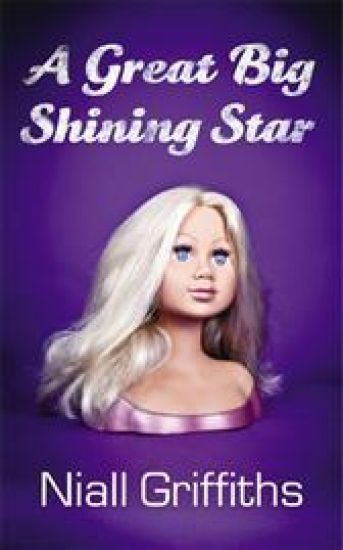
Great Big Shining Star

Great Big Shining Star

Niall Griffiths

Vintage
2014
pokkari
Sixteen-year-old Grace has dreams, and she knows how to make them come true: a little silicone and surgery here and there -nose, breasts, lips, hair, teeth, nails. Then with the right clothes and a new tan she'll be ready: ready to be seen, consumed and adored by millions.
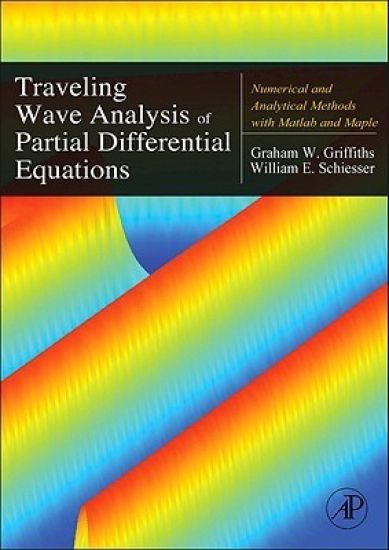
Traveling Wave Analysis of Partial Differential Equations

Traveling Wave Analysis of Partial Differential Equations

Graham Griffiths; William E. Schiesser

Academic Press Inc
2011
sidottu
Although the Partial Differential Equations (PDE) models that are now studied are usually beyond traditional mathematical analysis, the numerical methods that are being developed and used require testing and validation. This is often done with PDEs that have known, exact, analytical solutions. The development of analytical solutions is also an active area of research, with many advances being reported recently, particularly traveling wave solutions for nonlinear evolutionary PDEs. Thus, the current development of analytical solutions directly supports the development of numerical methods by providing a spectrum of test problems that can be used to evaluate numerical methods. This book surveys some of these new developments in analytical and numerical methods, and relates the two through a series of PDE examples. The PDEs that have been selected are largely "named'' since they carry the names of their original contributors. These names usually signify that the PDEs are widely recognized and used in many application areas. The authors’ intention is to provide a set of numerical and analytical methods based on the concept of a traveling wave, with a central feature of conversion of the PDEs to ODEs. The Matlab and Maple software will be available for download from this website shortly. www.pdecomp.net
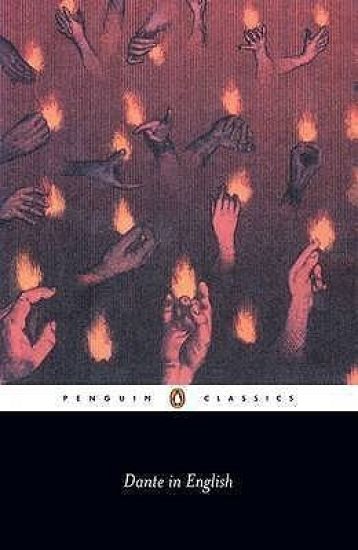
Dante in English

Dante in English

Eric Griffiths; Matthew Reynolds

Penguin Classics
2005
pokkari
Dante Alighieri created poetry of unparalleled force and beauty that proved influential far beyond the borders of his native Italy and beyond his own time. This new collection brings together selections from a wide variety of English translations of Dante's poetry including the passionate Vita Nuova and the Commedia - his epic tale of one man's journey into the after-life. It also includes extracts from a wealth of poems inspired by his work - including Spenser's Faerie Queen, Milton's Paradise Lost, Ezra Pound's Cantos and T. S. Eliot's The Waste Land. Covering the period from Chaucer to the present day, this is a remarkable exploration of the heritage provided by one of the most inspirational poets of all time.
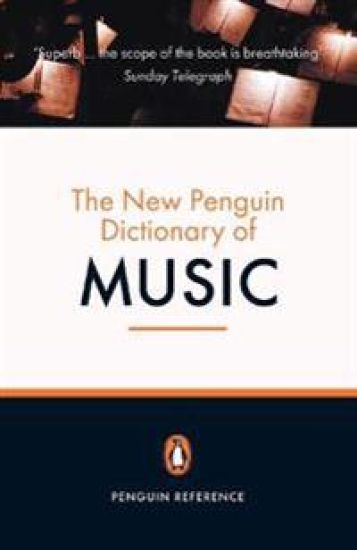
The New Penguin Dictionary of Music

The New Penguin Dictionary of Music

Paul Griffiths

Penguin Books Ltd
2006
pokkari
The New Penguin Dictionary of Music is the essential A-Z of some 1,000 years of Western music. It explores in detail the lives and achievements of a huge range of composers, and examines such key topics as music history (from medieval plainchant to contemporary minimalism), performers, theory and jargon. Written by an award-winning music critic, and blending scholarship with personal insight and opinion, this dictionary is both a pleasurable read and an invaluable and authoritative reference book for all lovers of music, whether amateur or professional.
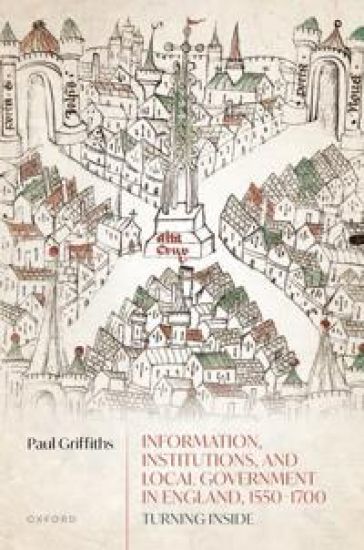
Information, Institutions, and Local Government in England, 1550-1700
The years between 1550 and 1700 saw significant changes in the nature and scope of local government: sophisticated information and intelligence systems were developed; magistrates came to rely more heavily on surveillance to inform 'good government'; and England's first nationwide system of incarceration was established within bridewells. But while these sizeable and lasting shifts have been well studied, less attention has been paid to the important characteristic that they shared: the 'turning inside' of the title. What was happening beneath this growth in activity was a shift from 'open' to 'closed' management of a host of problems--from the representation of authority itself to treatment of every kind of local disorder, from petty crime and poverty to dirty streets. Information, Institutions, and Local Government in England, 1550-1700 explores the character and consequences of these changes for the first time. Drawing on wide-ranging archival research in 34 archives, the book examines the ways in which the notion of representing authority and ethics in public (including punishment) was increasingly called into question in early modern England, and how and why local government officials were involved in this. This 'turning inside' was encouraged by insistence on precision and clarity in broad bodies of knowledge, culture, and practice that had lasting impacts on governance, as well as a range of broader demographic, social, and economic changes that led to deeper poverty, thinner resources, more movement, and imagined or real crime-waves. In so doing, and by drawing on a diverse range of examples, the book offers important new perspectives on local government, visual representation, penal cultures, institutions, incarceration, and surveillance in the early modern period.
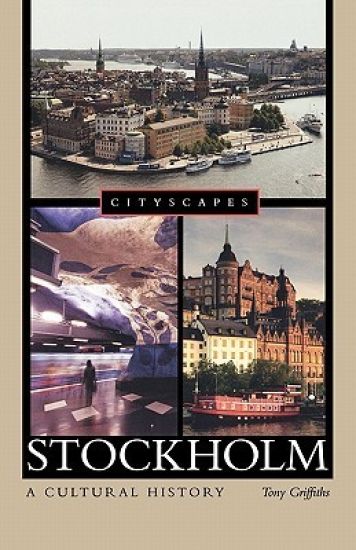
Stockholm: A Cultural History

Stockholm: A Cultural History

Tony Griffiths

Oxford University Press
2009
nidottu
Situated on one of the world's most beautiful harbors, Stockholm has set the benchmark for civilized urban living since the time of the Vikings. Tony Griffiths reveals a city of power, intrigue, and murder; of scientists and investors; and a sensual city, home of Greta Garbo and the sm rg sbord. Its medieval period saw the Vasa dynasty turn a small town into the capital of a dominant European power and a major trading port. In the Napoleonic era, Stockholm established itself as a center of both technical and social innovation. While the city has suffered more than its fair share of misfortune, Stockholm's cultural and commercial elite transformed it into a community which now welcomes innovation and spreads the fruits of its achievements far beyond its borders.
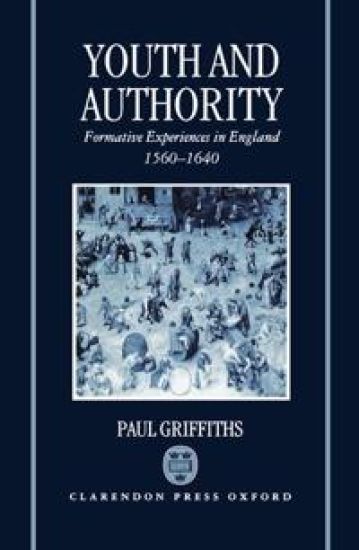
Youth and Authority

Youth and Authority

Paul Griffiths

Clarendon Press
1996
sidottu
It is now well-known that there was a separate age of youth in sixteenth-and seventeenth-century society (and before) but in much of the writing on this subject, youth has emerged as a passive construct of the adult society, lacking formative experiences. Paul Griffiths seeks to redress this imbalance by presenting a more `positive' image of young people, showing that they had a creative presence, an identity, and a historical significance which has never been fully explored. The author looks beyond the prescriptive codes of moralists and governors to survey the attitudes and activities of young people, examining their reaction to authority and to society's concept of the `ideal place' for them in the social order. He sheds new light on issues as diverse as juvenile delinquency, masculinity, the celebration of Shrovetide, sexual behaviour and courtship, clothing, catechizing, office-holding, vocabularies of insult, prostitution, and church seating plans. His research reveals much about the nature of youth culture, religious commitment, and master/servant relations, and leads to the identification of a separate milieu of `masterless' young people. Contemporary moralists called youth `the choosing time', a time of great risks and great potential; and the best time to incalculate political conformity and sound religion. Yet the concept of choice was double-edged, it recognized that young people had other options besides these expectations. This ambiguity is a central theme of theis book which demonstrates that although there was a critical politics of age during this period, young people had their own initiatives and strategies and grew up in all sorts of ways.
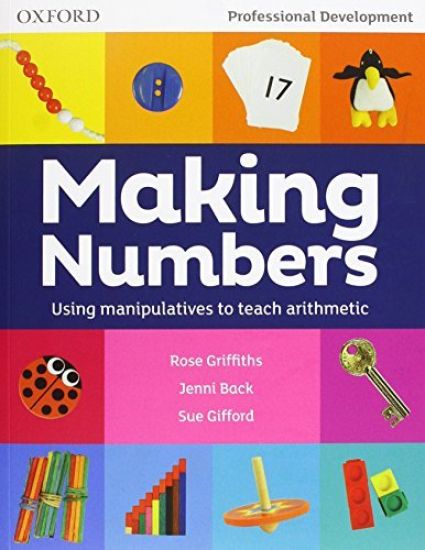
Making Numbers

Making Numbers

Rose Griffiths; Sue Gifford; Jenni Back

Oxford University Press
2016
nidottu
Making Numbers shares exemplars of good practice drawing on the latest research on using manipulatives to develop understanding of arithmetic. Focusing initially on the teaching of numbers from 1-12, Making Numbers progresses to 200 and beyond, including ideas for teaching partitioning, arrays, and times tables. Making Numbers was written by experts with decades of experience in primary mathematics education, Professor Rose Griffi ths, Dr. Sue Gifford and Dr. Jenni Back, based on their Nuffield Foundation funded research and development project Using Manipulatives in the Foundations of Arithmetic.
If Not Critical

If Not Critical

Eric Griffiths

Oxford University Press
2018
sidottu
Eric Griffiths delivered hundreds of lectures at the Faculty of English in Cambridge, yet his lectures were never turned into books. If Not Critical brings together ten lectures, published here for the first time, that offer a representative selection of Dr Griffiths' original, fully-argued, and richly exemplified contributions to literary criticism and literary history. Crammed into his writing are decades of reading in several languages and across most genres and literary periods. In these lectures, he pursues the blind spots not only of other people's arguments, but of the whole business of criticism in general, with what he calls its 'over-concentration on a narrow range of examples . . . such over-concentration warps our thinking'. Implicit and explicit throughout his work is the argument that 'an appropriately wide range of instances is essential to making progress in conceptualisation'; that what we need, in order to do better thinking, is 'a keener attention to a greater variety of examples'. Such examples include, in these lectures, the works of Shakespeare, Dante, Kafka, Beckett, Racine, Rabelais, T. S. Eliot, and Jonathan Swift.
The Printed Voice of Victorian Poetry

The Printed Voice of Victorian Poetry

Eric Griffiths

Oxford University Press
2018
sidottu
The Printed Voice of Victorian Poetry starts from a simple fact: our written language does not represent the way we speak. Intonation, accent, tempo, and pitch of utterance can be inferred from a written text but they are not clearly demonstrated there. The book shows the implications of this fact for linguists and philosophers of language and offers fundamental criticisms of some recent work in these fields. It aims principally to describe the ways in which nineteenth-century English poets–Tennyson, Browning, Hopkins–responded creatively to the ambiguities involved in writing down their own voices, the melodies of their speech. Original readings of the poets' work are given, both at a minutely detailed level and with regard to major preoccupations of the period–immortality, morbidity, marriage, social divisions, and religious conversions–and in this way Eric Griffiths offers a new map of Victorian poetry.
One True Logic

One True Logic

Owen Griffiths; A.C. Paseau

Oxford University Press
2022
sidottu
Logical monism is the claim that there is a single correct logic, the 'one true logic' of our title. The view has evident appeal, as it reflects assumptions made in ordinary reasoning as well as in mathematics, the sciences, and the law. In all these spheres, we tend to believe that there are determinate facts about the validity of arguments. Despite its evident appeal, however, logical monism must meet two challenges. The first is the challenge from logical pluralism, according to which there is more than one correct logic. The second challenge is to determine which form of logical monism is the correct one. One True Logic is the first monograph to explicitly articulate a version of logical monism and defend it against the first challenge. It provides a critical overview of the monism vs pluralism debate and argues for the former. It also responds to the second challenge by defending a particular monism, based on a highly infinitary logic. It breaks new ground on a number of fronts and unifies disparate discussions in the philosophical and logical literature. In particular, it generalises the Tarski-Sher criterion of logicality, provides a novel defence of this generalisation, offers a clear new argument for the logicality of infinitary logic and replies to recent pluralist arguments.
The Ambivalence of Gay Liberation

The Ambivalence of Gay Liberation

Craig Griffiths

Oxford University Press
2021
sidottu
The Ambivalence of Gay Liberation explores ways of thinking, feeling, and talking about being gay in the 1970s, an influential decade sandwiched between the partial decriminalisation of male homosexuality in 1969, and the arrival of the HIV/AIDS crisis in the early 1980s. Moving beyond divided Cold War Berlin, it also focuses on lesser-known cities, such as Aachen, Cologne, Frankfurt, Münster, and Stuttgart, to name just a few of the 53 localities that were home to a gay group by the end of the 1970s. These groups were important, and this book tells their story. In 1970s West Germany gay liberation did not take place only in activist meetings, universities, and on street demonstrations, but also on television, in magazine editorial offices, ordinary homes, bedrooms, and beyond. In considering all these spaces and individuals, this book provides a more complex account than previous histories, which have tended to focus only on a social movement and only on the idea of 'gay pride'. By drawing attention to ambivalence, this book shows that gay liberation was never only about pride, but also about shame; characterized not only by hope, but also by fear; and driven forward not just by the pushes of confrontation, but also by the pulls of conformism. Ranging from the painstaking emergence of the gay press to the first representation of homosexuality on television, from debates over the sexual legacy of 1968 and the student movement to the memory of Nazi persecution, The Ambivalence of Gay Liberation is the first English-language book to tell the story of male homosexual politics in 1970s West Germany. In doing so, this book changes the way we think about modern queer history.
One True Logic

One True Logic

Owen Griffiths; A.C. Paseau

Oxford University Press
2025
nidottu
One True Logic is a major contribution to the philosophy of logic. It is the first monograph explicitly to articulate a version of logical monism, the view that there is a single correct foundational logic. Logical monism is opposed to logical pluralism, according to which there are many correct logics. One True Logic provides a critical overview of the monism vs pluralism debate and argues for the former. It defends a particular monism, based on a highly infinitary logic. Breaking new ground on a number of fronts, it offers novel arguments for the genuine logicality of infinitary logic and unifies disparate discussions in the philosophical and logical literature.
The Lancashire Working Classes c.1880-1930

The Lancashire Working Classes c.1880-1930

Trevor Griffiths

Oxford University Press
2001
sidottu
This book examines the experiences and values which shaped working-class life in Britain in the half-century from 1880. It takes as its focus a region, Lancashire, which was central to the social and political changes of the period. The discussion centres on two towns, Bolton and Wigan, which, while they were geographically close, differed significantly in their industrial fortunes and their electoral development. The formation of class identity is traced through developments in the world of work, from the impact of technological and managerial innovations to the elaboration of collective-bargaining procedures. Beyond work, particular attention is paid to the dynamics of neighbourhood and family life, the latter emerging as an important source of continuity in working-class life. The broader impact of such influences are traced through a close examination of the electoral politics of the period. Dr Griffiths' conclusions fundamentally challenge the notion that the fifty years around the turn of the century witnessed the emergence of a working class more culturally and politically united than at any other time, either before or since. Rather, an alternative narrative of class development is offered, in which broad continuities in working-class life, in particular the survival of religious, ethnic, and occupational points of division, are emphasised. Despite the presence of strong and stable labour institutions, from trade unions to Co-operative and Friendly Societies, the picture emerges of a working class more individualist than collectivist in outlook, more flexible in response to economic change, and less constrained by the broader solidarities of work and neighbourhood than has previously been supposed.
John Skelton and Poetic Authority

John Skelton and Poetic Authority

Jane Griffiths

Clarendon Press
2006
sidottu
John Skelton and Poetic Authority is the first book-length study of Skelton for almost twenty years, and the first to trace the roots of his poetic theory to his practice as a writer and translator. It demonstrates that much of what has been found challenging in his work may be attributed to his attempt to reconcile existing views of the poet's role in society with discoveries about the writing process itself. The result is a highly idiosyncratic poetics that locates the poet's authority decisively within his own person, yet at the same time predicates his 'liberty to speak' upon the existence of an engaged, imaginative audience. Skelton is frequently treated as a maverick, but this book places his theory and practice firmly in the context of later sixteenth as well as fifteenth-century traditions. Focusing on his relations with both past and present readers, it reassess his place in the English literary canon.
Diverting Authorities

Diverting Authorities

Jane Griffiths

Oxford University Press
2014
sidottu
Diverting Authorities examines the glossing of a variety of fifteenth- and sixteenth-century texts by authors including Lydgate, Douglas, Chaloner, Baldwin, Bullein, Harington, and Nashe. It is concerned particularly with the use of glosses as a means for authors to reflect on the process of shaping a text, and with the emergence of the gloss as a self-consciously literary form. One of the main questions it addresses is to what extent the advent of print affects glossing practices. To this end, it traces the transmission of a number of glossed texts in both manuscript and print, but also examines glossing that is integral to texts written with print production in mind. With the latter, it focuses particularly on a little-remarked but surprisingly common category of gloss: glossing that is ostentatiously playful, diverting rather than directing its readers. Setting this in the context of emerging print conventions and concerns about the stability of print, Jane Griffiths argues that---like self-glossing in manuscript---such diverting glosses shape as well as reflect contemporary ideas of authorship and authority, and are thus genuinely experimental. The book reads across medieval-renaissance and manuscript-print boundaries in order to trace the emergence of the gloss as a genre and the way in which theories of authorship are affected by the material processes of writing and transmission.
Modern Music and After

Modern Music and After

Paul Griffiths

Oxford University Press Inc
2011
nidottu
Over three decades, Paul Griffiths's survey has remained the definitive study of music since the Second World War; this fully revised and updated edition re-establishes Modern Music and After as the preeminent introduction to the music of our time. The disruptions of the war, and the struggles of the ensuing peace, were reflected in the music of the time: in Pierre Boulez's radical reformation of compositional technique and in John Cage's development of zen music; in Milton Babbitt's settling of the serial system and in Dmitry Shostakovich's unsettling symphonies; in Karl Stockhausen's development of electronic music and in Luigi Nono's pursuit of the universally human, in Iannis Xenakis's view of music as sounding mathematics and in Luciano Berio's consideration of it as language. The initiatives of these composers and their contemporaries opened prospects that haven't yet stopped unfolding. This constant expansion of musical thinking since 1945 has left us with no singular history of music; Griffiths's study accordingly follows several different paths, showing how and why they converge and diverge. This new edition of Modern Music and After discusses not only the music of the fifteen years that have passed since the previous edition, but also the recent explosion of scholarly interest in the latter half of the Twentieth Century. In particular, the third section of the book, 1980-1990, is expanded to incorporate the variety of responses to the modernist impasse experienced by composers of the time. In addition, a new fourth part, "After Postmodernism: the 1990s and 2000s," examines highly influential composers like Philip Glass and Pierre Boulez as well as such topics as "Modernist Continuation" and "Music and the Internet." For its breadth, wealth of detail, and characteristic wit and clarity, the third edition of Modern Music and After is required reading for the student and the enquiring listener.
Where Oh Where Is Teddington?

Where Oh Where Is Teddington?

Barbara Griffiths

Tellwell Talent
2020
pokkari
Where Oh Where is Teddington brings a lovely rhyme time and I-Spy opportunity for infants, toddlers and young readers alike. See if you can spot Teddington on each page, and you might see his three little cat friends and poppy flowers if you look closely too What else can you see?
Where Oh Where Is Teddington?

Where Oh Where Is Teddington?

Barbara Griffiths

Tellwell Talent
2020
sidottu
Where Oh Where is Teddington brings a lovely rhyme time and I-Spy opportunity for infants, toddlers and young readers alike. See if you can spot Teddington on each page, and you might see his three little cat friends and poppy flowers if you look closely too What else can you see?