Kirjojen hintavertailu. Mukana 12 363 183 kirjaa ja 12 kauppaa.

Kirjahaku

Etsi kirjoja tekijän nimen, kirjan nimen tai ISBN:n perusteella.

1000 tulosta hakusanalla Guillermo Calderon

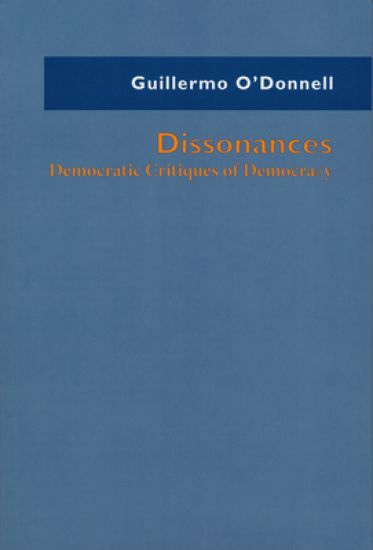
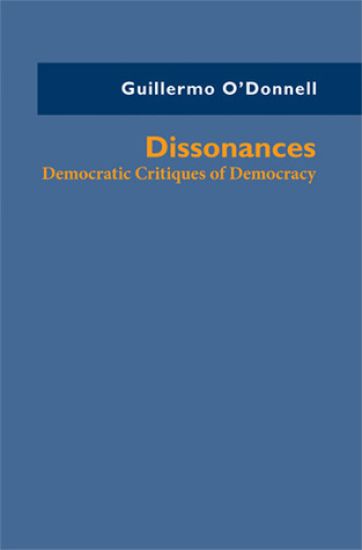
Dissonances

Dissonances

Guillermo O'Donnell

University of Notre Dame Press
2007
nidottu
Guillermo O'Donnell here brings together a collection of significant recent essays in which he considers both the method for and substance of critiques of democracies. While progress has been made in democratization, the authoritarian legacy hangs as a shadow over that advancement. O'Donnell engages in his analysis while keeping a firm gaze on that dangerous past. O'Donnell's work has influenced a generation of political scientists. The essays in this volume bring forward and develop many of the ideas presented in his earlier collection, Counterpoints: Selected Essays on Authoritarianism and Democracy
Dissonances

Dissonances

Guillermo O'Donnell

UNIVERSITY OF NOTRE DAME PRESS
2022
sidottu
Guillermo O'Donnell here brings together a collection of significant recent essays in which he considers both the method for and substance of critiques of democracies. While progress has been made in democratization, the authoritarian legacy hangs as a shadow over that advancement. O'Donnell engages in his analysis while keeping a firm gaze on that dangerous past. O'Donnell's work has influenced a generation of political scientists. The essays in this volume bring forward and develop many of the ideas presented in his earlier collection, Counterpoints: Selected Essays on Authoritarianism and Democracy
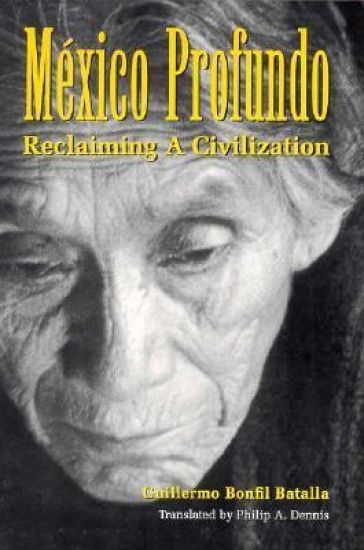
México Profundo

México Profundo

Guillermo Bonfil Batalla

University of Texas Press
1996
pokkari
This translation of a major work in Mexican anthropology argues that Mesoamerican civilization is an ongoing and undeniable force in contemporary Mexican life.For Guillermo Bonfil Batalla, the remaining Indian communities, the "de-Indianized" rural mestizo communities, and vast sectors of the poor urban population constitute the México profundo. Their lives and ways of understanding the world continue to be rooted in Mesoamerican civilization. An ancient agricultural complex provides their food supply, and work is understood as a way of maintaining a harmonious relationship with the natural world. Health is related to human conduct, and community service is often part of each individual's life obligation. Time is circular, and humans fulfill their own cycle in relation to other cycles of the universe.Since the Conquest, Bonfil argues, the peoples of the México profundo have been dominated by an "imaginary México" imposed by the West. It is imaginary not because it does not exist, but because it denies the cultural reality lived daily by most Mexicans.Within the México profundo there exists an enormous body of accumulated knowledge, as well as successful patterns for living together and adapting to the natural world. To face the future successfully, argues Bonfil, Mexico must build on these strengths of Mesoamerican civilization, "one of the few original civilizations that humanity has created throughout all its history."
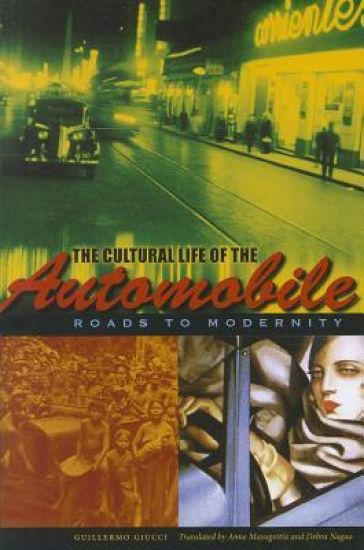
The Cultural Life of the Automobile

The Cultural Life of the Automobile

Guillermo Giucci

University of Texas Press
2012
nidottu
From its invention in Europe at the end of the nineteenth century, the automobile crisscrossed the world, completely took over the cities, and became a feature of daily life. Considered basic to the American lifestyle, the car reflected individualism, pragmatism, comfort, and above all modernity. In Latin America, it served as a symbol of distinction, similar to jewelry or fine clothing. In The Cultural Life of the Automobile, Guillermo Giucci focuses on the automobile as an instrument of social change through its “kinetic modernity” and as an embodiment of the tremendous social impact of technology on cultural life.Material culture-how certain objects generate a wide array of cultural responses-has been the focus of much scholarly discussion in recent years. The automobile wrought major changes and inspired images in language, literature, and popular culture. Focusing primarily on Latin America but also covering the United States, Europe, Asia, and Africa, Giucci examines how the automobile was variously adapted by different cultures and how its use shaped and changed social and economic relationships within them. At the same time, he shows how the “automobilization” of society became an essential support for the development of modern individualism, and the automobile its clearest material manifestation.
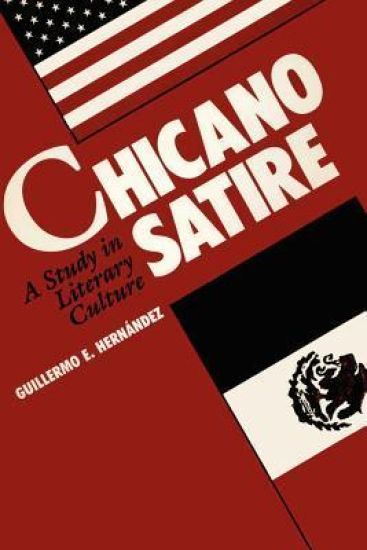
Chicano Satire

Chicano Satire

Guillermo Hernandez

University of Texas Press
2012
pokkari
Geographically close to Mexico, but surrounded by Anglo-American culture in the United States, Chicanos experience many cultural tensions and contradictions. Their lifeways are no longer identical with Mexican norms, nor are they fully assimilated to Anglo-American patterns. Coping with these tensions-knowing how much to let go of, how much to keep-is a common concern of Chicano writers, who frequently use satire as a means of testing norms and deviations from acceptable community standards. In this groundbreaking study, Guillermo HernÁndez focuses on the uses of satire in the works of three authors-Luis Valdez, Rolando Hinojosa, and JosÉ Montoya-and on the larger context of Chicano culture in which satire operates.HernÁndez looks specifically at the figures of the pocho (the assimilated Chicano) and the pachuco (the zoot-suiter, or urbanized youth). He shows how changes in their literary treatment-from simple ridicule to more understanding and respect-reflect the culture's changes in attitude toward the process of assimilation.HernÁndez also offers many important insights into the process of cultural definition that engaged Chicano writers during the 1960s and 1970s. He shows how the writers imaginatively and syncretically formed new norms for the Chicano experience, based on elements from both Mexican and United States culture but congruent with the historical reality of Chicanos.With its emphasis on culture change and creation, Chicano Satire will be of interest across a range of human sciences.
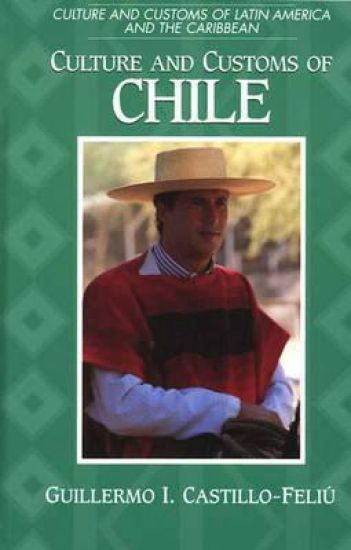
Culture and Customs of Chile

Culture and Customs of Chile

Guillermo I. Castillo-Feliu

Greenwood Press
2000
sidottu
Chile's natural beauty, fascinating history, cultural traditions, and warm people are uniquely evoked in Culture and Customs of Chile. Chilean American Castillo-Feliu effectively conveys how Chile's geography has helped to shape it into a modern, socially responsible model in Latin America. Students and other readers will learn how this small country has contributed to the hemisphere's stature, from a stable political scene to seafood-inspired cuisine. Chile's lively history forms the backdrop for a survey of a wealth of social riches. The literary lion Pablo Neruda, Andean music, and fine wine are just a few of the highlights found herein.Because it has been such a model country, except for a troubled period in the 1970s and 1980s under the dictator Augusto Pinochet, Chile often stays out of headline news in the United States. Through chapters on history and people, religion, social customs, broadcasting and print media, literature, performing arts, and the arts and architecture, Culture and Customs of Chile will introduce Chile to a wider audience who can appreciate its understated charms. A chronology and appendix of the Spanish of Chile are indispensable aids.
Cardiovascular Outcomes of Treatments available for Patients with Type 1 and 2 Diabetes, An Issue of Endocrinology and Metabolism Clinics of North America
This issue of Endocrinology and Metabolism Clinics, edited by Dr. Guillermo E. Umpierrez, will focus on Cardiovascular Outcomes of Treatments available for Patients with Type 1 and 2 Diabetes. Topics include--but are not limited to--Diabetes and CAD and PVD; Prediabetes and CVD- DM prevention; Pathogenesis of atherosclerosis/CVD in diabetes Intensive Diabetes Treatment and CV Outcomes in T1D; Intensive blood glucose control and vascular outcomes in patients with type 2 diabetes, Diabetes and Stroke; Cardiovascular outcome trials of glucose-lowering drugs or strategies in type 2 diabetes; Heart Failure in Diabetes Mellitus; Individualizing Glucose Lowering Therapy in the Patient with Diabetes and Heart Disease; Managing Dyslipidemia in Type 2 Diabetes; Blood pressure control and cardiovascular and renal outcomes; Hyperglycemia in acute coronary syndromes; Hospital Glucose Control; Managing Diabetes and cardiovascular risk in chronic kidney disease; and more.
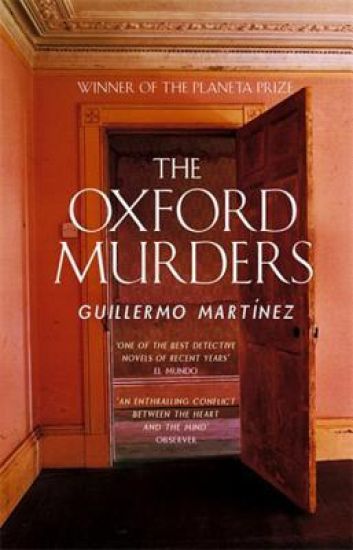
Oxford Murders

Oxford Murders

Guillermo Martinez

Little, Brown Book Group
2006
pokkari
* A compelling and sophisticated crime novel in the tradition of award-winning Jose Carlos Somoza. * Using rules and axioms, there will always be some propositions that can't be proved either true or false... But can this apply to murder?
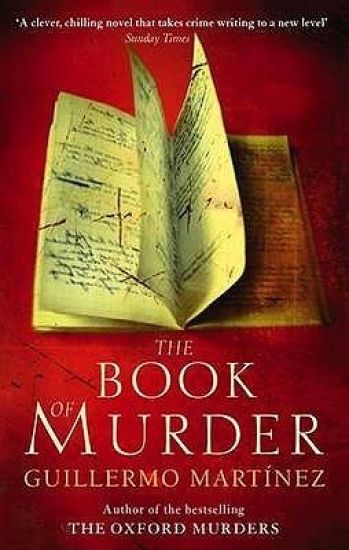
The Book Of Murder

The Book Of Murder

Guillermo Martinez

Abacus
2009
pokkari
Art imitates life. Or does it? One sleepy Sunday morning in Buenos Aires, the protagonist of Martinez's brilliant new mystery finds himself unexpectedly tangled up in the story of Luciana, a former authors' assistant whom he has not seen for at least ten years, and Kloster, a rival writer - only far more successful; bestselling, in fact. What he discovers will make him question everything he had always believed - taken for granted - about chance and calculation, cause and effect.Luciana is desperate. In the decade since she last had anything to do with either of the writers, nearly all her close family have died, in highly unusual circumstances. And Luciana or her sister could be next. Luciana's convinced that her one-time employer Kloster is behind the deaths, punishing her for her part in the break-up of his marriage in a murderous frenzy of revenge worthy of one of his own prodigiously successful crime novels. But which comes first, murder or novel? Clever and gripping, THE BOOK OF MURDER is a chilling crime story in which the line between fact and fiction suddenly seems blurred.
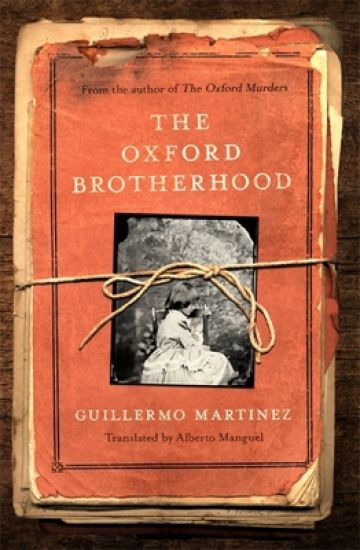
The Oxford Brotherhood

The Oxford Brotherhood

Guillermo Martinez

Abacus
2021
pokkari
Mathematics student G is trying to resurrect his studies, which is proving difficult as he finds himself - and not for the first time - drawn into investigating a series of mysterious crimes.When Kristen, a researcher hired by the Lewis Carroll Brotherhood, makes a startling new discovery concerning pages torn from Caroll's diary, she hesitates to reveal to her employers a hitherto unknown chapter in his life. Oxford would be rocked to its core if the truth about Lewis Carroll's relationship with Alice Liddell - the real Alice - were brought to light.After Kristen is involved in a surreal accident and members of the Brotherhood are anonymously sent salacious photographs of Alice, G joins forces with Kristen as they begin to realise that dark powers are at work. More pictures are received, and it becomes clear that a murderer is stalking anyone who shows too much interest in Carroll's life. G must stretch his mathematical mind to its limits to solve the mystery and understand the cryptic workings of the Brotherhood. Until then, nobody, not even G, is safe. A thrilling novel from the author of The Oxford Murders, inspired by true, strange stories from Caroll's life, The Oxford Brotherhood is sure to make you curiouser and curiouser.
Psychoanalysis of Aging and Maturity

Psychoanalysis of Aging and Maturity

Guillermo Julio Montero

Routledge
2020
sidottu
As developing countries increasingly confront the issues of an aging population, this important book identifies the key period in the life cycle in which changes to the body, as well as concomitant psychological developments, result in the entering of a new phase of life, maturescence.The author defines the metapsychology of maturescence from a psychoanalytic standpoint, detaching it from the concepts of midlife and middle age. Supported by clinical examples, the book defines the stimuli which are the precursors to this phase, before examining the complete set of psychological challenges it entails. The author also highlights how maturescence has been illustrated in key literary figures in the 20th century and draws parallels with the mythical cycle of the hero.This fascinating and original book will be essential reading for psychoanalysts, psychotherapists and any professional working with issues around aging.
Psychoanalysis of Aging and Maturity

Psychoanalysis of Aging and Maturity

Guillermo Julio Montero

Routledge
2020
nidottu
As developing countries increasingly confront the issues of an aging population, this important book identifies the key period in the life cycle in which changes to the body, as well as concomitant psychological developments, result in the entering of a new phase of life, maturescence.The author defines the metapsychology of maturescence from a psychoanalytic standpoint, detaching it from the concepts of midlife and middle age. Supported by clinical examples, the book defines the stimuli which are the precursors to this phase, before examining the complete set of psychological challenges it entails. The author also highlights how maturescence has been illustrated in key literary figures in the 20th century and draws parallels with the mythical cycle of the hero.This fascinating and original book will be essential reading for psychoanalysts, psychotherapists and any professional working with issues around aging.
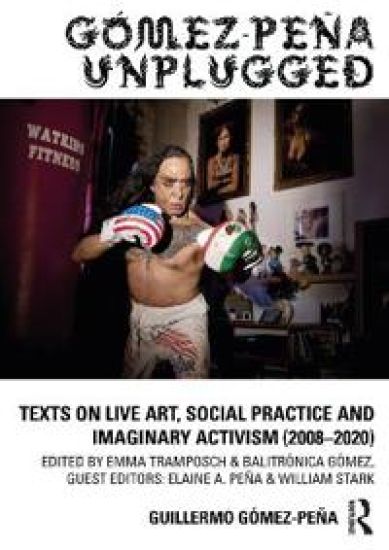
Gómez-Peña Unplugged

Gómez-Peña Unplugged

Guillermo Gómez-Peña

Routledge
2020
sidottu
Gómez-Peña Unplugged is an anthology of recent and rewritten classic writings from Guillermo Gómez-Peña, a figure who stands alone as unique and ground-breaking in the history of performance art and as the artistic director of transdisciplinary performance troupe La Pocha Nostra. Throughout this collection, Gómez-Peña tackles literature, theory, pedagogy, activism and live art in an eclectic mix that demonstrates how the process of writing is simultaneously a performative exercise in embodied language. The writing stands as a call for action, utilizing what Gómez-Peña terms “imaginary activism” and “radical citizenship”; it invites the reader to embrace a borderless, polygendered, crossgenerational and race-literate ethos. This timely anthology comes straight from the heart of a troubled Trump-era United States and a crime cartel–ridden Mexico. Artists and writers are prompted to engage in radical performance pedagogy within the civic realm and to think of themselves as public intellectuals and “artivists” participating in the great debates of our times.By encouraging emerging artists and writers to wildly imagine their practice beyond the normative art world and academia, this book is a fundamental read for scholars and students of performance art, political theatre, cultural studies, literature, poetry, activism and race and gender politics.Performance Art, Live or Time-Based Art, Cultural Studies, Experimental Poetry, Multiculturalism, Social Practice, Chicano/Latino/Border Art & Literature, Relational Aesthetics, Public Art, Artivism, Activism, Psychomagic Ritual, Literary Studies, Anthropology, Sociology, Ethnic & Gender Studies, Queer & Women Studies, Post-Colonial Theory, Techno-Art, Cyborgian Studies, Exoticized & Fetishized Identities, Deconstruction Stereotypes & Binaries, Anti-Essentialism, Anti-Nationalism, Radical Citizenship, Anti-Racism, Race & Gender Literacy
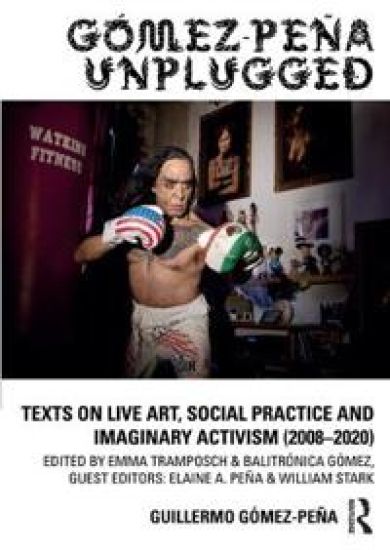
Gómez-Peña Unplugged

Gómez-Peña Unplugged

Guillermo Gómez-Peña

Routledge
2020
nidottu
Gómez-Peña Unplugged is an anthology of recent and rewritten classic writings from Guillermo Gómez-Peña, a figure who stands alone as unique and ground-breaking in the history of performance art and as the artistic director of transdisciplinary performance troupe La Pocha Nostra. Throughout this collection, Gómez-Peña tackles literature, theory, pedagogy, activism and live art in an eclectic mix that demonstrates how the process of writing is simultaneously a performative exercise in embodied language. The writing stands as a call for action, utilizing what Gómez-Peña terms “imaginary activism” and “radical citizenship”; it invites the reader to embrace a borderless, polygendered, crossgenerational and race-literate ethos. This timely anthology comes straight from the heart of a troubled Trump-era United States and a crime cartel–ridden Mexico. Artists and writers are prompted to engage in radical performance pedagogy within the civic realm and to think of themselves as public intellectuals and “artivists” participating in the great debates of our times.By encouraging emerging artists and writers to wildly imagine their practice beyond the normative art world and academia, this book is a fundamental read for scholars and students of performance art, political theatre, cultural studies, literature, poetry, activism and race and gender politics.Performance Art, Live or Time-Based Art, Cultural Studies, Experimental Poetry, Multiculturalism, Social Practice, Chicano/Latino/Border Art & Literature, Relational Aesthetics, Public Art, Artivism, Activism, Psychomagic Ritual, Literary Studies, Anthropology, Sociology, Ethnic & Gender Studies, Queer & Women Studies, Post-Colonial Theory, Techno-Art, Cyborgian Studies, Exoticized & Fetishized Identities, Deconstruction Stereotypes & Binaries, Anti-Essentialism, Anti-Nationalism, Radical Citizenship, Anti-Racism, Race & Gender Literacy
La Pocha Nostra

La Pocha Nostra

Guillermo Gómez-Peña; Saúl García-López

Routledge
2020
sidottu
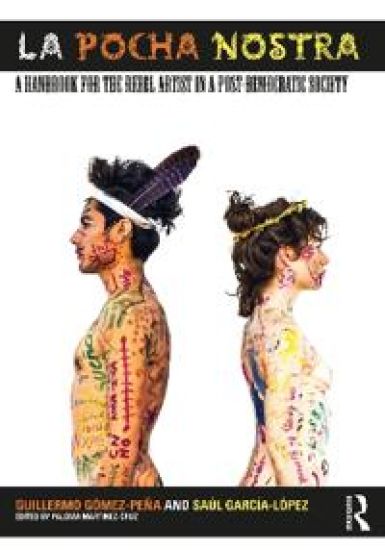
La Pocha Nostra: A Handbook for the Rebel Artist in a Post-Democratic Society marks a transformation from its sister book, Exercises for Rebel Artists, into a pedagogical matrix suited for use as a performance handbook and conceptual tool for artists, activists, theorists, pedagogues, and trans-disciplinary border crossers of all stripes. Featuring a newly reworked outline of La Pocha Nostra's overall pedagogy, and how it has evolved in the time of Trump, cartel violence, and the politics of social media, this new handbook presents deeper explanations of the interdisciplinary pedagogical practices developed by the group that has been labeled "the most influential Latino/a performance troupe of the past ten years."Co-written by Guillermo Gómez-Peña in collaboration with La Pocha Nostra’s artistic co-director Saúl García-López and edited by Paloma Martinez-Cruz, this highly anticipated follow-up volume raises crucial questions in the new neo-nationalist era. Drawing on field experience from ten years of touring, the authors blend original methods with updated and revised exercises, providing new material for teachers, universities, radical artists, curators, producers, and students. This book features:Introductions by the authors and editor to Pocha Nostra practice in a post-democratic society.Theoretical, historical, poetic, and pedagogical contexts for the methodology.Suggestions for how to use the book in the classroom and many other scenarios.Detailed, hands-on exercises for using Pocha Nostra-inspired methods in workshops.A step-by-step guide to creating large-scale group performances.New, unpublished photos of the Pocha Nostra methods in practice.Additional texts by Reverend Billy and Savitri D., Dragonfly, Francesca Carol Rolla, VestAndPage, Micha Espinosa, Zulfikar Ali Bhutto, Praba Pilar, L. M. Bogad, Anuradha Vikram, and Annie Sprinkle and Beth Stephens, among many others. The book is complemented by the new book Gómez-Peña Unplugged: Texts on Live Art, Social Practice and Imaginary Activism (2008–2019).
La Pocha Nostra

La Pocha Nostra

Guillermo Gómez-Peña; Saúl García-López

Routledge
2020
nidottu
La Pocha Nostra: A Handbook for the Rebel Artist in a Post-Democratic Society marks a transformation from its sister book, Exercises for Rebel Artists, into a pedagogical matrix suited for use as a performance handbook and conceptual tool for artists, activists, theorists, pedagogues, and trans-disciplinary border crossers of all stripes. Featuring a newly reworked outline of La Pocha Nostra's overall pedagogy, and how it has evolved in the time of Trump, cartel violence, and the politics of social media, this new handbook presents deeper explanations of the interdisciplinary pedagogical practices developed by the group that has been labeled "the most influential Latino/a performance troupe of the past ten years."Co-written by Guillermo Gómez-Peña in collaboration with La Pocha Nostra’s artistic co-director Saúl García-López and edited by Paloma Martinez-Cruz, this highly anticipated follow-up volume raises crucial questions in the new neo-nationalist era. Drawing on field experience from ten years of touring, the authors blend original methods with updated and revised exercises, providing new material for teachers, universities, radical artists, curators, producers, and students. This book features:Introductions by the authors and editor to Pocha Nostra practice in a post-democratic society.Theoretical, historical, poetic, and pedagogical contexts for the methodology.Suggestions for how to use the book in the classroom and many other scenarios.Detailed, hands-on exercises for using Pocha Nostra-inspired methods in workshops.A step-by-step guide to creating large-scale group performances.New, unpublished photos of the Pocha Nostra methods in practice.Additional texts by Reverend Billy and Savitri D., Dragonfly, Francesca Carol Rolla, VestAndPage, Micha Espinosa, Zulfikar Ali Bhutto, Praba Pilar, L. M. Bogad, Anuradha Vikram, and Annie Sprinkle and Beth Stephens, among many others. The book is complemented by the new book Gómez-Peña Unplugged: Texts on Live Art, Social Practice and Imaginary Activism (2008–2019).
Mathematicians of the World, Unite!

Mathematicians of the World, Unite!

Guillermo Curbera

CRC Press
2019
nidottu
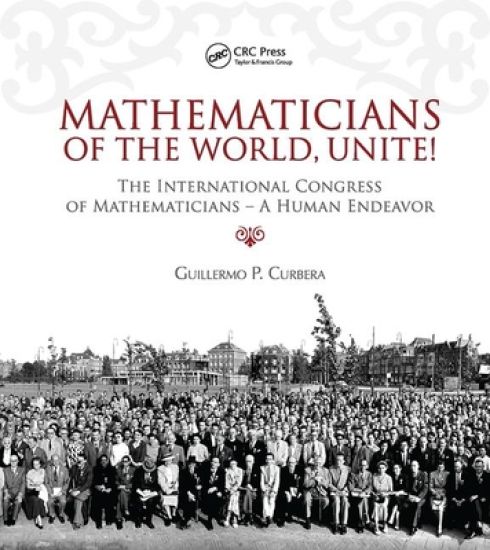
This vividly illustrated history of the International Congress of Mathematicians — a meeting of mathematicians from around the world held roughly every four years — acts as a visual history of the 25 congresses held between 1897 and 2006, as well as a story of changes in the culture of mathematics over the past century. Because the congress is an international meeting, looking at its history allows us a glimpse into the effect of wars and strained relations between nations on the scientific community.
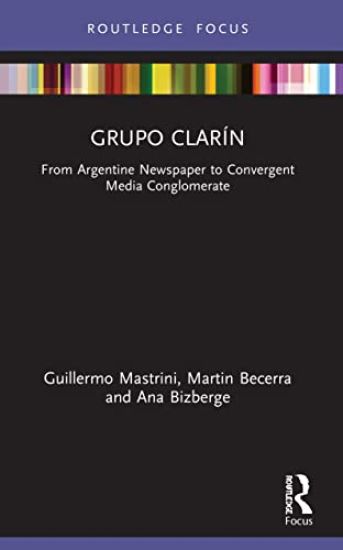
Grupo Clarín

Grupo Clarín

Guillermo Mastrini; Martin Becerra; Ana Bizberge

Routledge
2021
sidottu
From its emergence as a modest newspaper to becoming the largest communication group in Argentina, and one of the main communications groups in Latin America, this book examines the media conglomerate Grupo Clarín.Guillermo Mastrini, Martín Becerra and Ana Bizberge analyze the group’s corporate structure and the aspects that have contributed to its expansion throughout its history, mapping its stages of growth to the regulatory policies, cultural politics, economics and political history of Argentina over the last few decades. This book offers a compelling analysis of one of the key players in the Latin American communication and information market, highlighting how the conglomerate has continued to grow under various different governments - by achieving legal reforms and influencing policies - and continues to have great capacity to influence the policy and regulation of the system, the market structure and cultural consumption in the region.This book is ideal for students, scholars and researchers of global media, political economy, and media and communication, especially those with an interest in Latin America.
Grupo Clarín

Grupo Clarín

Guillermo Mastrini; Martin Becerra; Ana Bizberge

TAYLOR FRANCIS LTD
2023
nidottu
From its emergence as a modest newspaper to becoming the largest communication group in Argentina, and one of the main communications groups in Latin America, this book examines the media conglomerate Grupo Clarín.Guillermo Mastrini, Martín Becerra and Ana Bizberge analyze the group’s corporate structure and the aspects that have contributed to its expansion throughout its history, mapping its stages of growth to the regulatory policies, cultural politics, economics and political history of Argentina over the last few decades. This book offers a compelling analysis of one of the key players in the Latin American communication and information market, highlighting how the conglomerate has continued to grow under various different governments - by achieving legal reforms and influencing policies - and continues to have great capacity to influence the policy and regulation of the system, the market structure and cultural consumption in the region.This book is ideal for students, scholars and researchers of global media, political economy, and media and communication, especially those with an interest in Latin America.
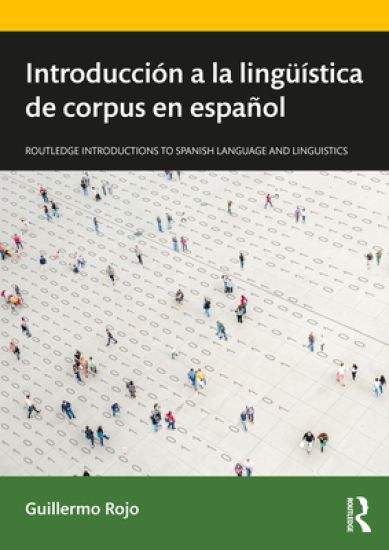
Introducción a la lingüística de corpus en español
Introducción a la lingüística de corpus en español es la primera obra concebida desde la óptica del español para investigar los corpus textuales existentes en la actualidad. Destinada a conjugar armónicamente la exposición de cuestiones teóricas y metodológicas, proporciona información detallada sobre las tareas necesarias en el diseño, construcción y explotación de un corpus a partir de numerosos ejemplos de obtención de datos sobre diferentes cuestiones léxicas y gramaticales.Características principales:• Exposición de cuestiones teóricas y metodológicas combinada con el tratamiento de casos prácticos de extracción y análisis de datos procedentes de corpus textuales de español;• Análisis de fenómenos léxicos y gramaticales del español desde diferentes perspectivas y con atención a la variabilidad diacrónica, diatópica y diastrática;• Indicación detallada del modo de obtener los datos necesarios para la investigación en diferentes corpus del español;• Inclusión de un resumen inicial, actividades de investigación en cada capítulo y lecturas complementarias recomendadas;• Presentación de un capítulo final con herramientas informáticas útiles para el análisis de textos no incluidos en corpus textuales;• Recopilación de los principales términos usados en la lingüística de corpus en un glosario bilingüe (español e inglés).Introducción a la lingüística de corpus en español es una obra con un enfoque marcadamente didáctico, y dirigida fundamentalmente a estudiantes avanzados de grado y posgrado, profesores que necesiten hacer uso de corpus en sus clases, investigadores que precisen un conocimiento más profundo de la lingüística de corpus o expertos en otras disciplinas que deseen familiarizarse con una perspectiva técnica de los fenómenos lingüísticos.Introducción a la lingüística de corpus en español provides the first complete overview of corpus linguistics in Spanish. Combining the discussion of theoretical and methodological issues, it provides detailed information on the design, construction and use of a corpus, with numerous examples of obtaining data on different lexical and grammatical issues.This is an ideal resource for undergraduate and graduate students, teachers who need to make use of corpora in their classes, researchers who need a deeper knowledge of corpus linguistics, or experts in other disciplines who wish to become familiar with a technical perspective of linguistic phenomena.