Kirjojen hintavertailu. Mukana 11 627 220 kirjaa ja 12 kauppaa.

Kirjahaku

Etsi kirjoja tekijän nimen, kirjan nimen tai ISBN:n perusteella.

1000 tulosta hakusanalla Guillermo Matta

The Book Of Murder

The Book Of Murder

Guillermo Martinez

Abacus
2009
pokkari
Art imitates life. Or does it? One sleepy Sunday morning in Buenos Aires, the protagonist of Martinez's brilliant new mystery finds himself unexpectedly tangled up in the story of Luciana, a former authors' assistant whom he has not seen for at least ten years, and Kloster, a rival writer - only far more successful; bestselling, in fact. What he discovers will make him question everything he had always believed - taken for granted - about chance and calculation, cause and effect.Luciana is desperate. In the decade since she last had anything to do with either of the writers, nearly all her close family have died, in highly unusual circumstances. And Luciana or her sister could be next. Luciana's convinced that her one-time employer Kloster is behind the deaths, punishing her for her part in the break-up of his marriage in a murderous frenzy of revenge worthy of one of his own prodigiously successful crime novels. But which comes first, murder or novel? Clever and gripping, THE BOOK OF MURDER is a chilling crime story in which the line between fact and fiction suddenly seems blurred.
The Oxford Brotherhood

The Oxford Brotherhood

Guillermo Martinez

Abacus
2021
pokkari
Mathematics student G is trying to resurrect his studies, which is proving difficult as he finds himself - and not for the first time - drawn into investigating a series of mysterious crimes.When Kristen, a researcher hired by the Lewis Carroll Brotherhood, makes a startling new discovery concerning pages torn from Caroll's diary, she hesitates to reveal to her employers a hitherto unknown chapter in his life. Oxford would be rocked to its core if the truth about Lewis Carroll's relationship with Alice Liddell - the real Alice - were brought to light.After Kristen is involved in a surreal accident and members of the Brotherhood are anonymously sent salacious photographs of Alice, G joins forces with Kristen as they begin to realise that dark powers are at work. More pictures are received, and it becomes clear that a murderer is stalking anyone who shows too much interest in Carroll's life. G must stretch his mathematical mind to its limits to solve the mystery and understand the cryptic workings of the Brotherhood. Until then, nobody, not even G, is safe. A thrilling novel from the author of The Oxford Murders, inspired by true, strange stories from Caroll's life, The Oxford Brotherhood is sure to make you curiouser and curiouser.
Psychoanalysis of Aging and Maturity

Psychoanalysis of Aging and Maturity

Guillermo Julio Montero

Routledge
2020
sidottu
As developing countries increasingly confront the issues of an aging population, this important book identifies the key period in the life cycle in which changes to the body, as well as concomitant psychological developments, result in the entering of a new phase of life, maturescence.The author defines the metapsychology of maturescence from a psychoanalytic standpoint, detaching it from the concepts of midlife and middle age. Supported by clinical examples, the book defines the stimuli which are the precursors to this phase, before examining the complete set of psychological challenges it entails. The author also highlights how maturescence has been illustrated in key literary figures in the 20th century and draws parallels with the mythical cycle of the hero.This fascinating and original book will be essential reading for psychoanalysts, psychotherapists and any professional working with issues around aging.
Psychoanalysis of Aging and Maturity

Psychoanalysis of Aging and Maturity

Guillermo Julio Montero

Routledge
2020
nidottu
As developing countries increasingly confront the issues of an aging population, this important book identifies the key period in the life cycle in which changes to the body, as well as concomitant psychological developments, result in the entering of a new phase of life, maturescence.The author defines the metapsychology of maturescence from a psychoanalytic standpoint, detaching it from the concepts of midlife and middle age. Supported by clinical examples, the book defines the stimuli which are the precursors to this phase, before examining the complete set of psychological challenges it entails. The author also highlights how maturescence has been illustrated in key literary figures in the 20th century and draws parallels with the mythical cycle of the hero.This fascinating and original book will be essential reading for psychoanalysts, psychotherapists and any professional working with issues around aging.
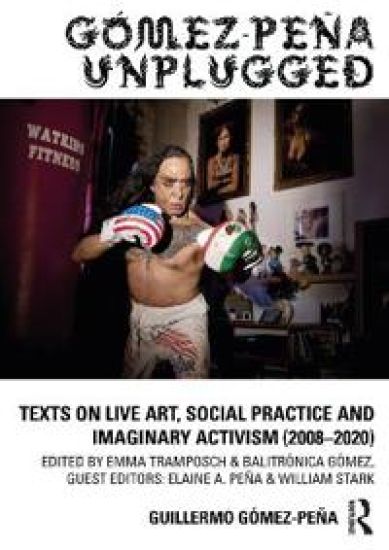
Gómez-Peña Unplugged

Gómez-Peña Unplugged

Guillermo Gómez-Peña

Routledge
2020
sidottu
Gómez-Peña Unplugged is an anthology of recent and rewritten classic writings from Guillermo Gómez-Peña, a figure who stands alone as unique and ground-breaking in the history of performance art and as the artistic director of transdisciplinary performance troupe La Pocha Nostra. Throughout this collection, Gómez-Peña tackles literature, theory, pedagogy, activism and live art in an eclectic mix that demonstrates how the process of writing is simultaneously a performative exercise in embodied language. The writing stands as a call for action, utilizing what Gómez-Peña terms “imaginary activism” and “radical citizenship”; it invites the reader to embrace a borderless, polygendered, crossgenerational and race-literate ethos. This timely anthology comes straight from the heart of a troubled Trump-era United States and a crime cartel–ridden Mexico. Artists and writers are prompted to engage in radical performance pedagogy within the civic realm and to think of themselves as public intellectuals and “artivists” participating in the great debates of our times.By encouraging emerging artists and writers to wildly imagine their practice beyond the normative art world and academia, this book is a fundamental read for scholars and students of performance art, political theatre, cultural studies, literature, poetry, activism and race and gender politics.Performance Art, Live or Time-Based Art, Cultural Studies, Experimental Poetry, Multiculturalism, Social Practice, Chicano/Latino/Border Art & Literature, Relational Aesthetics, Public Art, Artivism, Activism, Psychomagic Ritual, Literary Studies, Anthropology, Sociology, Ethnic & Gender Studies, Queer & Women Studies, Post-Colonial Theory, Techno-Art, Cyborgian Studies, Exoticized & Fetishized Identities, Deconstruction Stereotypes & Binaries, Anti-Essentialism, Anti-Nationalism, Radical Citizenship, Anti-Racism, Race & Gender Literacy
Gómez-Peña Unplugged

Gómez-Peña Unplugged

Guillermo Gómez-Peña

Routledge
2020
nidottu
Gómez-Peña Unplugged is an anthology of recent and rewritten classic writings from Guillermo Gómez-Peña, a figure who stands alone as unique and ground-breaking in the history of performance art and as the artistic director of transdisciplinary performance troupe La Pocha Nostra. Throughout this collection, Gómez-Peña tackles literature, theory, pedagogy, activism and live art in an eclectic mix that demonstrates how the process of writing is simultaneously a performative exercise in embodied language. The writing stands as a call for action, utilizing what Gómez-Peña terms “imaginary activism” and “radical citizenship”; it invites the reader to embrace a borderless, polygendered, crossgenerational and race-literate ethos. This timely anthology comes straight from the heart of a troubled Trump-era United States and a crime cartel–ridden Mexico. Artists and writers are prompted to engage in radical performance pedagogy within the civic realm and to think of themselves as public intellectuals and “artivists” participating in the great debates of our times.By encouraging emerging artists and writers to wildly imagine their practice beyond the normative art world and academia, this book is a fundamental read for scholars and students of performance art, political theatre, cultural studies, literature, poetry, activism and race and gender politics.Performance Art, Live or Time-Based Art, Cultural Studies, Experimental Poetry, Multiculturalism, Social Practice, Chicano/Latino/Border Art & Literature, Relational Aesthetics, Public Art, Artivism, Activism, Psychomagic Ritual, Literary Studies, Anthropology, Sociology, Ethnic & Gender Studies, Queer & Women Studies, Post-Colonial Theory, Techno-Art, Cyborgian Studies, Exoticized & Fetishized Identities, Deconstruction Stereotypes & Binaries, Anti-Essentialism, Anti-Nationalism, Radical Citizenship, Anti-Racism, Race & Gender Literacy
La Pocha Nostra

La Pocha Nostra

Guillermo Gómez-Peña; Saúl García-López

Routledge
2020
sidottu
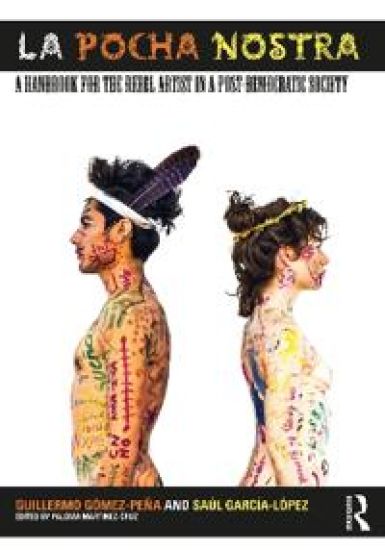
La Pocha Nostra: A Handbook for the Rebel Artist in a Post-Democratic Society marks a transformation from its sister book, Exercises for Rebel Artists, into a pedagogical matrix suited for use as a performance handbook and conceptual tool for artists, activists, theorists, pedagogues, and trans-disciplinary border crossers of all stripes. Featuring a newly reworked outline of La Pocha Nostra's overall pedagogy, and how it has evolved in the time of Trump, cartel violence, and the politics of social media, this new handbook presents deeper explanations of the interdisciplinary pedagogical practices developed by the group that has been labeled "the most influential Latino/a performance troupe of the past ten years."Co-written by Guillermo Gómez-Peña in collaboration with La Pocha Nostra’s artistic co-director Saúl García-López and edited by Paloma Martinez-Cruz, this highly anticipated follow-up volume raises crucial questions in the new neo-nationalist era. Drawing on field experience from ten years of touring, the authors blend original methods with updated and revised exercises, providing new material for teachers, universities, radical artists, curators, producers, and students. This book features:Introductions by the authors and editor to Pocha Nostra practice in a post-democratic society.Theoretical, historical, poetic, and pedagogical contexts for the methodology.Suggestions for how to use the book in the classroom and many other scenarios.Detailed, hands-on exercises for using Pocha Nostra-inspired methods in workshops.A step-by-step guide to creating large-scale group performances.New, unpublished photos of the Pocha Nostra methods in practice.Additional texts by Reverend Billy and Savitri D., Dragonfly, Francesca Carol Rolla, VestAndPage, Micha Espinosa, Zulfikar Ali Bhutto, Praba Pilar, L. M. Bogad, Anuradha Vikram, and Annie Sprinkle and Beth Stephens, among many others. The book is complemented by the new book Gómez-Peña Unplugged: Texts on Live Art, Social Practice and Imaginary Activism (2008–2019).
La Pocha Nostra

La Pocha Nostra

Guillermo Gómez-Peña; Saúl García-López

Routledge
2020
nidottu
La Pocha Nostra: A Handbook for the Rebel Artist in a Post-Democratic Society marks a transformation from its sister book, Exercises for Rebel Artists, into a pedagogical matrix suited for use as a performance handbook and conceptual tool for artists, activists, theorists, pedagogues, and trans-disciplinary border crossers of all stripes. Featuring a newly reworked outline of La Pocha Nostra's overall pedagogy, and how it has evolved in the time of Trump, cartel violence, and the politics of social media, this new handbook presents deeper explanations of the interdisciplinary pedagogical practices developed by the group that has been labeled "the most influential Latino/a performance troupe of the past ten years."Co-written by Guillermo Gómez-Peña in collaboration with La Pocha Nostra’s artistic co-director Saúl García-López and edited by Paloma Martinez-Cruz, this highly anticipated follow-up volume raises crucial questions in the new neo-nationalist era. Drawing on field experience from ten years of touring, the authors blend original methods with updated and revised exercises, providing new material for teachers, universities, radical artists, curators, producers, and students. This book features:Introductions by the authors and editor to Pocha Nostra practice in a post-democratic society.Theoretical, historical, poetic, and pedagogical contexts for the methodology.Suggestions for how to use the book in the classroom and many other scenarios.Detailed, hands-on exercises for using Pocha Nostra-inspired methods in workshops.A step-by-step guide to creating large-scale group performances.New, unpublished photos of the Pocha Nostra methods in practice.Additional texts by Reverend Billy and Savitri D., Dragonfly, Francesca Carol Rolla, VestAndPage, Micha Espinosa, Zulfikar Ali Bhutto, Praba Pilar, L. M. Bogad, Anuradha Vikram, and Annie Sprinkle and Beth Stephens, among many others. The book is complemented by the new book Gómez-Peña Unplugged: Texts on Live Art, Social Practice and Imaginary Activism (2008–2019).
Mathematicians of the World, Unite!

Mathematicians of the World, Unite!

Guillermo Curbera

CRC Press
2019
nidottu
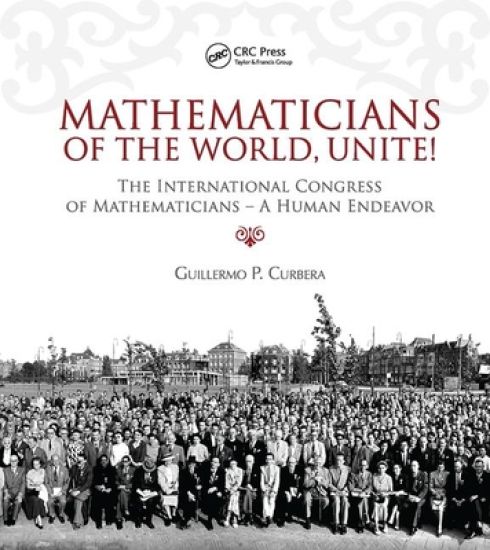
This vividly illustrated history of the International Congress of Mathematicians — a meeting of mathematicians from around the world held roughly every four years — acts as a visual history of the 25 congresses held between 1897 and 2006, as well as a story of changes in the culture of mathematics over the past century. Because the congress is an international meeting, looking at its history allows us a glimpse into the effect of wars and strained relations between nations on the scientific community.
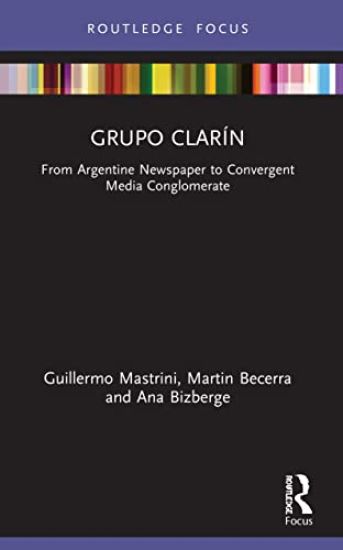
Grupo Clarín

Grupo Clarín

Guillermo Mastrini; Martin Becerra; Ana Bizberge

Routledge
2021
sidottu
From its emergence as a modest newspaper to becoming the largest communication group in Argentina, and one of the main communications groups in Latin America, this book examines the media conglomerate Grupo Clarín.Guillermo Mastrini, Martín Becerra and Ana Bizberge analyze the group’s corporate structure and the aspects that have contributed to its expansion throughout its history, mapping its stages of growth to the regulatory policies, cultural politics, economics and political history of Argentina over the last few decades. This book offers a compelling analysis of one of the key players in the Latin American communication and information market, highlighting how the conglomerate has continued to grow under various different governments - by achieving legal reforms and influencing policies - and continues to have great capacity to influence the policy and regulation of the system, the market structure and cultural consumption in the region.This book is ideal for students, scholars and researchers of global media, political economy, and media and communication, especially those with an interest in Latin America.
Grupo Clarín

Grupo Clarín

Guillermo Mastrini; Martin Becerra; Ana Bizberge

TAYLOR FRANCIS LTD
2023
nidottu
From its emergence as a modest newspaper to becoming the largest communication group in Argentina, and one of the main communications groups in Latin America, this book examines the media conglomerate Grupo Clarín.Guillermo Mastrini, Martín Becerra and Ana Bizberge analyze the group’s corporate structure and the aspects that have contributed to its expansion throughout its history, mapping its stages of growth to the regulatory policies, cultural politics, economics and political history of Argentina over the last few decades. This book offers a compelling analysis of one of the key players in the Latin American communication and information market, highlighting how the conglomerate has continued to grow under various different governments - by achieving legal reforms and influencing policies - and continues to have great capacity to influence the policy and regulation of the system, the market structure and cultural consumption in the region.This book is ideal for students, scholars and researchers of global media, political economy, and media and communication, especially those with an interest in Latin America.
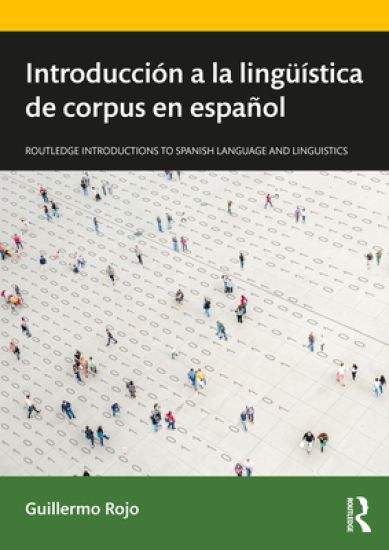
Introducción a la lingüística de corpus en español
Introducción a la lingüística de corpus en español es la primera obra concebida desde la óptica del español para investigar los corpus textuales existentes en la actualidad. Destinada a conjugar armónicamente la exposición de cuestiones teóricas y metodológicas, proporciona información detallada sobre las tareas necesarias en el diseño, construcción y explotación de un corpus a partir de numerosos ejemplos de obtención de datos sobre diferentes cuestiones léxicas y gramaticales.Características principales:• Exposición de cuestiones teóricas y metodológicas combinada con el tratamiento de casos prácticos de extracción y análisis de datos procedentes de corpus textuales de español;• Análisis de fenómenos léxicos y gramaticales del español desde diferentes perspectivas y con atención a la variabilidad diacrónica, diatópica y diastrática;• Indicación detallada del modo de obtener los datos necesarios para la investigación en diferentes corpus del español;• Inclusión de un resumen inicial, actividades de investigación en cada capítulo y lecturas complementarias recomendadas;• Presentación de un capítulo final con herramientas informáticas útiles para el análisis de textos no incluidos en corpus textuales;• Recopilación de los principales términos usados en la lingüística de corpus en un glosario bilingüe (español e inglés).Introducción a la lingüística de corpus en español es una obra con un enfoque marcadamente didáctico, y dirigida fundamentalmente a estudiantes avanzados de grado y posgrado, profesores que necesiten hacer uso de corpus en sus clases, investigadores que precisen un conocimiento más profundo de la lingüística de corpus o expertos en otras disciplinas que deseen familiarizarse con una perspectiva técnica de los fenómenos lingüísticos.Introducción a la lingüística de corpus en español provides the first complete overview of corpus linguistics in Spanish. Combining the discussion of theoretical and methodological issues, it provides detailed information on the design, construction and use of a corpus, with numerous examples of obtaining data on different lexical and grammatical issues.This is an ideal resource for undergraduate and graduate students, teachers who need to make use of corpora in their classes, researchers who need a deeper knowledge of corpus linguistics, or experts in other disciplines who wish to become familiar with a technical perspective of linguistic phenomena.
Introducción a la lingüística de corpus en español
Introducción a la lingüística de corpus en español es la primera obra concebida desde la óptica del español para investigar los corpus textuales existentes en la actualidad. Destinada a conjugar armónicamente la exposición de cuestiones teóricas y metodológicas, proporciona información detallada sobre las tareas necesarias en el diseño, construcción y explotación de un corpus a partir de numerosos ejemplos de obtención de datos sobre diferentes cuestiones léxicas y gramaticales.Características principales:• Exposición de cuestiones teóricas y metodológicas combinada con el tratamiento de casos prácticos de extracción y análisis de datos procedentes de corpus textuales de español;• Análisis de fenómenos léxicos y gramaticales del español desde diferentes perspectivas y con atención a la variabilidad diacrónica, diatópica y diastrática;• Indicación detallada del modo de obtener los datos necesarios para la investigación en diferentes corpus del español;• Inclusión de un resumen inicial, actividades de investigación en cada capítulo y lecturas complementarias recomendadas;• Presentación de un capítulo final con herramientas informáticas útiles para el análisis de textos no incluidos en corpus textuales;• Recopilación de los principales términos usados en la lingüística de corpus en un glosario bilingüe (español e inglés).Introducción a la lingüística de corpus en español es una obra con un enfoque marcadamente didáctico, y dirigida fundamentalmente a estudiantes avanzados de grado y posgrado, profesores que necesiten hacer uso de corpus en sus clases, investigadores que precisen un conocimiento más profundo de la lingüística de corpus o expertos en otras disciplinas que deseen familiarizarse con una perspectiva técnica de los fenómenos lingüísticos.Introducción a la lingüística de corpus en español provides the first complete overview of corpus linguistics in Spanish. Combining the discussion of theoretical and methodological issues, it provides detailed information on the design, construction and use of a corpus, with numerous examples of obtaining data on different lexical and grammatical issues.This is an ideal resource for undergraduate and graduate students, teachers who need to make use of corpora in their classes, researchers who need a deeper knowledge of corpus linguistics, or experts in other disciplines who wish to become familiar with a technical perspective of linguistic phenomena.
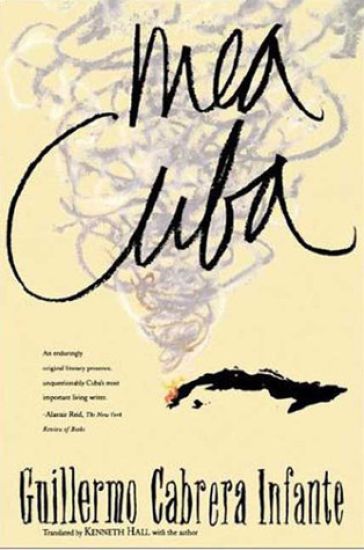
Mea Cuba

Mea Cuba

Guillermo Cabrena Infante

Farrar, Straus and Giroux
1995
nidottu
"Quirky, unpredictable, often hilarious, Infante's book tells us much about the effect of the Cuban revolution on Cuban literature." - Publishers Weekly With bitter irony, the author tells a story sadly repeated during this century. A dictatorship that silences the intellectuals, a regime that lies and kills, and a propaganda war that has yet to end. One of the best compilations of documents on recent Cuban history.
Ethno-Techno

Ethno-Techno

Guillermo Gomez-Pena

Routledge
2005
sidottu
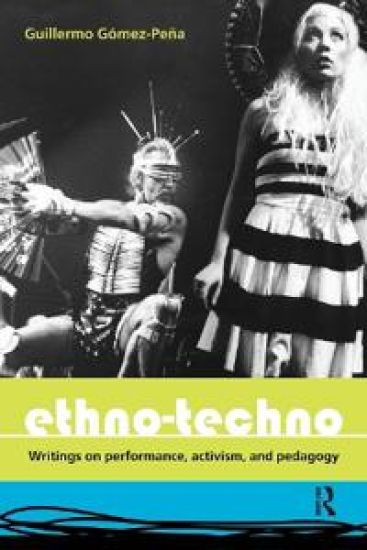
Guillermo Gómez-Peña has spent many years developing his unique style of performance-activism; his theatricalizations of postcolonial theory. In Ethno-Techno: Writings on Performance, Activism and Pedagogy, he pushes the boundaries still further, exploring what's left for artists to do in a post-9/11 repressive culture of what he calls 'the mainstream bizarre'.Over forty-five photos document his artistic experiments and the text not only explores and confronts his political and philosophical parameters; it offers groundbreaking insights into his, and his company's, methods of production, development and teaching.The result is an extraordinary and inspiring glimpse into the life and work of one of the most daring, innovative and challenging performance artists of our age.
Ethno-Techno

Ethno-Techno

Guillermo Gomez-Pena

Routledge
2005
nidottu
Guillermo Gómez-Peña has spent many years developing his unique style of performance-activism; his theatricalizations of postcolonial theory. In Ethno-Techno: Writings on Performance, Activism and Pedagogy, he pushes the boundaries still further, exploring what's left for artists to do in a post-9/11 repressive culture of what he calls 'the mainstream bizarre'.Over forty-five photos document his artistic experiments and the text not only explores and confronts his political and philosophical parameters; it offers groundbreaking insights into his, and his company's, methods of production, development and teaching.The result is an extraordinary and inspiring glimpse into the life and work of one of the most daring, innovative and challenging performance artists of our age.
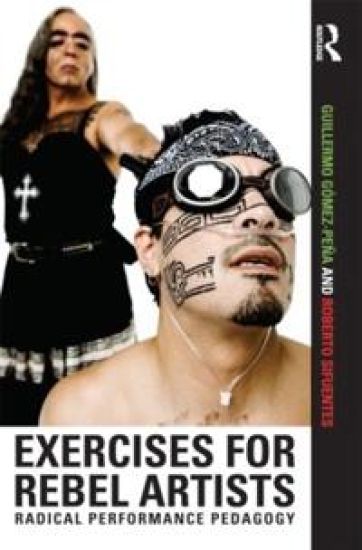
Exercises for Rebel Artists

Exercises for Rebel Artists

Guillermo Gómez Peña; Roberto Sifuentes

Routledge
2011
sidottu
In Exercises for Rebel Artists, Guillermo Gomez-Pena and Roberto Sifuentes use their extensive teaching and performance experience with La Pocha Nostra to help students and practitioners to create ‘border art’.Designed to take readers right into the heart of radical performance, the authors use a series of crucial practical exercises, honed in workshops worldwide, to help create challenging theatre which transcends the boundaries of nation, gender, and racial identity.The book features: Detailed exercises for using Pocha Nostra methods in workshops Inspirational approaches for anyone creating, producing or teaching radical performance A step-by-step guide for large-scale group performance New, unpublished photos of the Pocha Nostra method in practiceExercises for Rebel Artists advocates teaching as an important form of activism and as an extension of the performance aesthetic. It is an essential text for anyone who wants to learn how use performance to both challenge and change.
Exercises for Rebel Artists

Exercises for Rebel Artists

Guillermo Gómez Peña; Roberto Sifuentes

Routledge
2011
nidottu
In Exercises for Rebel Artists, Guillermo Gomez-Pena and Roberto Sifuentes use their extensive teaching and performance experience with La Pocha Nostra to help students and practitioners to create ‘border art’.Designed to take readers right into the heart of radical performance, the authors use a series of crucial practical exercises, honed in workshops worldwide, to help create challenging theatre which transcends the boundaries of nation, gender, and racial identity.The book features: Detailed exercises for using Pocha Nostra methods in workshops Inspirational approaches for anyone creating, producing or teaching radical performance A step-by-step guide for large-scale group performance New, unpublished photos of the Pocha Nostra method in practiceExercises for Rebel Artists advocates teaching as an important form of activism and as an extension of the performance aesthetic. It is an essential text for anyone who wants to learn how use performance to both challenge and change.