Kirjojen hintavertailu. Mukana 11 244 527 kirjaa ja 12 kauppaa.

Kirjahaku

Etsi kirjoja tekijän nimen, kirjan nimen tai ISBN:n perusteella.

1000 tulosta hakusanalla Hans Becker

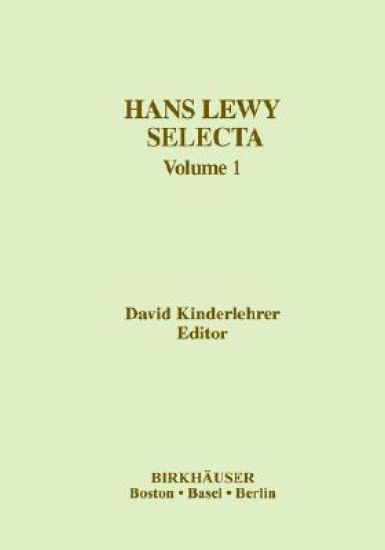
Hans Lewy Selecta

Hans Lewy Selecta

Birkhauser Boston Inc
2001
sidottu
The work of Hans Lewy (1904--1988) has had a profound influence in the direction of applied mathematics and partial differential equations, in particular, from the late 1920s. Two of the particulars are well known. The Courant--Friedrichs--Lewy condition (1928), or CFL condition, was devised to obtain existence and approximation results. This condition, relating the time and spatial discretizations for finite difference schemes, is now universally employed in the simulation of solutions of equations describing propagation phenomena. Lewy's example of a linear equation with no solution (1957), with its attendant consequence that most equations have no solution, was not merely an unexpected fact, but changed the viewpoint of the entire field. Lewy made pivotal contributions in many other areas, for example, the regularity theory of elliptic equations and systems, the Monge-- AmpSre Equation, the Minkowski Problem, the asymptotic analysis of boundary value problems, and several complex variables. He was among the first to study variational inequalities. In much of his work, his underlying philosophy was that simple tools of function theory could help one understand the essential concepts embedded in an issue, although at a cost in generality. This approach was extremely successful. In this two-volume work, most all of Lewy's papers are presented, in chronological order. They are preceded by several short essays about Lewy himself, prepared by Helen Lewy, Constance Reid, and David Kinderlehrer, and commentaries on his work by Erhard Heinz, Peter Lax, Jean Leray, Richard MacCamy, Fran?ois Treves, and Louis Nirenberg. Additionally, there are Lewy's own remarks on the occasion of his honorary degree from the University of Bonn.
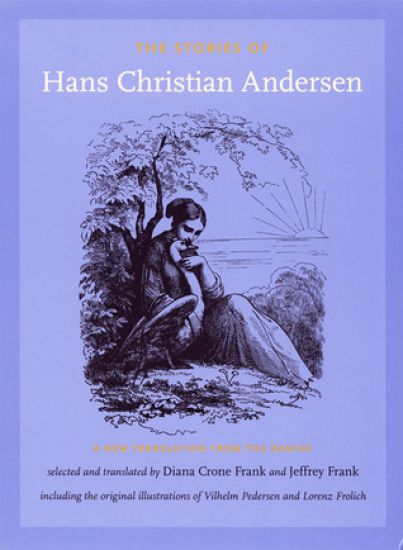
The Stories of Hans Christian Andersen

The Stories of Hans Christian Andersen

Hans Christian Andersen

Duke University Press
2005
pokkari
On the bicentennial of Hans Christian Andersen’s birth, this collection takes Andersen out of the nursery and places him squarely in the literary pantheon. While Andersen’s tales continue to seize the imagination with their singular blend of simplicity, eccentricity, and charm, English-language readers have until now had to content themselves with inaccurate retellings and inadequate translations. Diana Crone Frank, a Danish novelist and linguist, and Jeffrey Frank, a novelist and editor at the New Yorker, offer a much-needed modern translation.In this collection are twenty-two tales that best represent Andersen’s literary legacy, including such classics as “The Little Mermaid,” “The Ugly Duckling,” “Thumbelisa,” and “The Emperor’s New Clothes,” as well as largely unfamiliar stories like “By the Outermost Sea.” Illuminating notes clarify references in the tales. And in an introductory essay, the Franks explore the writer and his times, placing the enigmatic and often bizarre figure of Andersen among his literary contemporaries, such as Charles Dickens and Søren Kierkegaard, with whom he crossed paths; and they bring to life Andersen’s fascinating relationship with the United States. Illustrated with the delicate and beautiful drawings that accompanied the original Danish publication, The Stories of Hans Christian Andersen will delight readers of all ages.
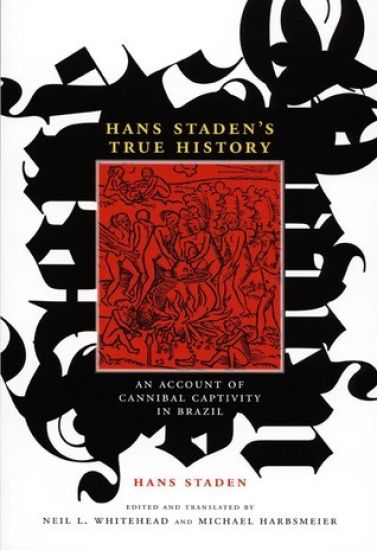
Hans Staden's True History

Hans Staden's True History

Hans Staden

Duke University Press
2008
sidottu
In 1550 the German adventurer Hans Staden was serving as a gunner in a Portuguese fort on the Brazilian coast. While out hunting, he was captured by the Tupinambá, an indigenous people who had a reputation for engaging in ritual cannibalism and who, as allies of the French, were hostile to the Portuguese. Staden’s True History, first published in Germany in 1557, tells the story of his nine months among the Tupi Indians. It is a dramatic first-person account of his capture, captivity, and eventual escape. Staden’s narrative is a foundational text in the history and European “discovery” of Brazil, the earliest European account of the Tupi Indians, and a touchstone in the debates on cannibalism. Yet the last English-language edition of Staden’s True History was published in 1929. This new critical edition features a new translation from the sixteenth-century German along with annotations and an extensive introduction. It restores to the text the fifty-six woodcut illustrations of Staden’s adventures and final escape that appeared in the original 1557 edition.In the introduction, Neil L. Whitehead discusses the circumstances surrounding the production of Staden’s narrative and its ethnological significance, paying particular attention to contemporary debates about cannibalism. Whitehead illuminates the value of Staden’s True History as an eyewitness account of Tupi society on the eve before its collapse, of ritual war and sacrifice among Native peoples, and of colonial rivalries in the region of Rio de Janeiro. He chronicles the history of the various editions of Staden’s narrative and their reception from 1557 until the present. Staden’s work continues to engage a wide range of readers, not least within Brazil, where it has recently been the subject of two films and a graphic novel.
Hans Staden's True History

Hans Staden's True History

Hans Staden

Duke University Press
2008
pokkari
In 1550 the German adventurer Hans Staden was serving as a gunner in a Portuguese fort on the Brazilian coast. While out hunting, he was captured by the Tupinambá, an indigenous people who had a reputation for engaging in ritual cannibalism and who, as allies of the French, were hostile to the Portuguese. Staden’s True History, first published in Germany in 1557, tells the story of his nine months among the Tupi Indians. It is a dramatic first-person account of his capture, captivity, and eventual escape. Staden’s narrative is a foundational text in the history and European “discovery” of Brazil, the earliest European account of the Tupi Indians, and a touchstone in the debates on cannibalism. Yet the last English-language edition of Staden’s True History was published in 1929. This new critical edition features a new translation from the sixteenth-century German along with annotations and an extensive introduction. It restores to the text the fifty-six woodcut illustrations of Staden’s adventures and final escape that appeared in the original 1557 edition.In the introduction, Neil L. Whitehead discusses the circumstances surrounding the production of Staden’s narrative and its ethnological significance, paying particular attention to contemporary debates about cannibalism. Whitehead illuminates the value of Staden’s True History as an eyewitness account of Tupi society on the eve before its collapse, of ritual war and sacrifice among Native peoples, and of colonial rivalries in the region of Rio de Janeiro. He chronicles the history of the various editions of Staden’s narrative and their reception from 1557 until the present. Staden’s work continues to engage a wide range of readers, not least within Brazil, where it has recently been the subject of two films and a graphic novel.
Hans Urs von Balthasar and the Dramatic Structure of Truth

Hans Urs von Balthasar and the Dramatic Structure of Truth

David C. Schindler

Fordham University Press
2004
sidottu
Hans Urs von Balthasar (1905-1988) was one of the most prolific and influential theologians of the twentieth century. This book, the first English-language study of Balthasar, seeks to show the fruitfulness of his thought by drawing out its philosophical implications for the question of truth. D. C. Schindler argues that a "dramatic" approach, shaping both the form and content of philosophy, enables a new conception of being, of human consciousness, and of their coming together to satisfy both traditional concerns about unity and postmodern calls for difference-while avoiding the pitfalls of a one-sided emphasis on either.
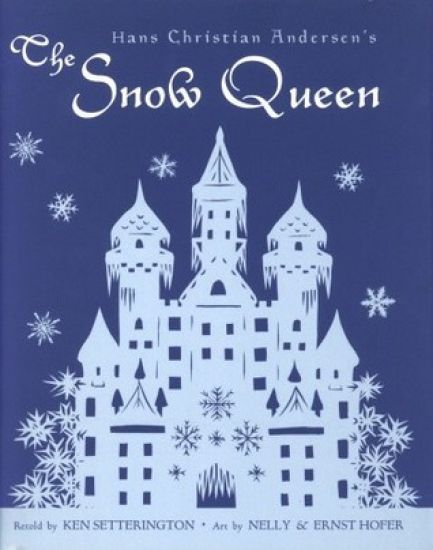
Hans Christian Andersen's The Snow Queen
Gerda and Kay are the best of friends. They live across an alley from each other and happily chat, play, and tend their lovely rose garden. The children are happy until tragedy strikes Kay. His eye and heart are pierced with fragments of a mirror, and the loving boy Gerda knew vanishes. The Snow Queen has put him under her spell and taken him to her palace of snow and ice. It is up to Gerda to find him and bring him home to the love that awaits him.In this timeless storybook, Ken Setterington has captured the haunting beauty of the classic tale of love’s ability to conquer the coldest, most damaged heart. The book is illustrated with the delicate traditional cut paper art of scherenschnitt, which Hans Christian Andersen himself practiced.
Hans Kotter

Hans Kotter

Peter Lodermeyer

GlobalArt Affairs
2008
nidottu
Colour Rush. Hans Kotters theme is light. His works always address light, tracing its most-unexpected effects. In doing so, the diversity of the light phenomena allows the artist to break fresh ground in finding highly varied possibilities of expression and ever-new techniques, materials, and manners of presentation. Kotter not only constructs light boxes, he also builds objects, pours things he has found into transparent resins, marks entire rooms with paths of light made of luminescent foils, and, using his camera, approaches the most subtle phenomena of light. Confronted out of the blue with the artists photographic works,
Hans Schabus: Deserted Conquest
Renowned for disrupting and reconfiguring space in unexpected ways, Austrian artist Hans Schabus, born in 1970, produces site-specific installations that use spatial displacement to debunk cultural symbols. For his first solo museum exhibition in the United States, Schabus made Deserted Conquest, a 15,000-square-foot installation commissioned by SITE Santa Fe, 2007. Taking the New Mexico landscape as his subject, he created a series of confrontations that dismantle our cultural romanticism of the desert landscape and idealizations of "the West." This consisted of two new videos, sculptures, drawings and a variety of found objects, including a partially reconstructed mobile home and more than 100 tons of dirt. Viewers were encouraged to navigate the terrain freely, their tracks transforming the space over time. As a further conceit orchestrated by the artist, the catalogue's full-color images are photographed along cardinal lines, lending the reader a fresh perspective on the original exhibit.
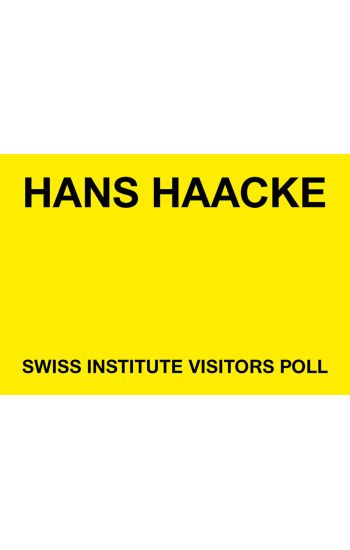
Hans Haacke: Swiss Institute Visitors Poll
Complete documentation of the longest-running work from Hans Haacke's famous Poll series German artist and institutional critique pioneer Hans Haacke (born 1936) is famed worldwide for examining museums by directly asking their audiences questions. Hans Haacke: Swiss Institute Visitors Poll documents the results of his longest ever poll work, which was conducted at Swiss Institute from June 21, 2018 to October 24, 2019. Newly commissioned for this publication, Haacke's featured essay outlines the history of his poll works, discussing the context and development of this body of work over four decades—all leading up to the Swiss Institute Visitors Poll. The book documents the results of the poll, including 652 pages of facsimile index cards that were written by poll respondents in response to Question #20: “What multiple-choice question would you also have liked to see in this poll?”
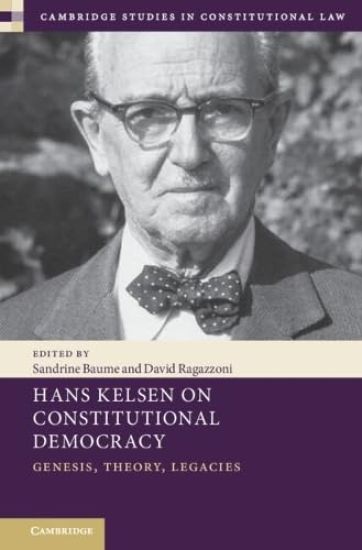
Hans Kelsen on Constitutional Democracy
This volume challenges conventional interpretations by demonstrating that Hans Kelsen was far from being a purely formalist thinker. Instead, it highlights his profound and enduring engagement with the threats facing constitutional democracies. The political and institutional upheavals of interwar Europe significantly influenced Kelsen's evolving vision of democracy, as this volume shows. His contributions to twentieth-century democratic theory include groundbreaking insights into multiparty systems, mechanisms of moderation, minority protections, and judicial review. Furthermore, Kelsen's reflections on the crises and collapses of democracies during the 1930s remain strikingly relevant, offering valuable perspectives on contemporary challenges such as polarisation and populism. This title is also available as Open Access on Cambridge Core.
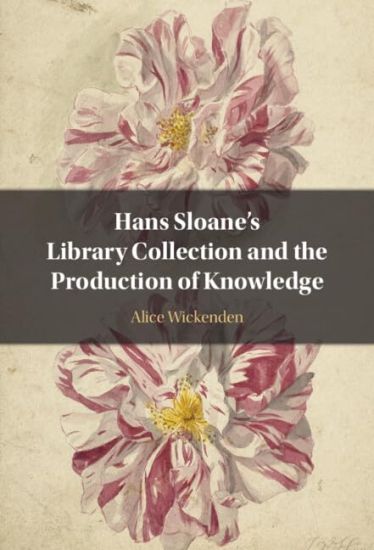
Hans Sloane's Library Collection and the Production of Knowledge
On his death in 1753, Hans Sloane's collection of books and manuscripts was estimated at 50,000 volumes, and, combined with his collected objects, would become the founding core of the British Library and British Museum. Delving into the particular history of this remarkable collection, Alice Wickenden asks wide-reaching questions about archival practices and knowledge production, showing how books function both as and alongside objects. Hers is the first book to bring the theoretical questions and methodologies arising from material culture and book history alongside a full-length study of the founding book collection of the British Library. Each carefully-selected case study raises questions that, though seemingly playful, strike at the heart of past and present practices of collecting and knowledge production: how might books of dried plants be books? Is something a book if nobody can read it? Why collect duplicates? And how, after all, do we actually define a library?
The Hans Blix Iraq War Diaries

The Hans Blix Iraq War Diaries

Hans Blix

Cambridge University Press
2025
pokkari
This diary will take the reader back to the pivotal period at the turn of the Millennium, when Hans Blix was the UN Chief Weapons Inspector to Iraq, responsible for extensive investigations into the possible existence of weapons of mass destruction. Blix was required to report to the world what he had – and had not – found, under immense time pressure from a broader political context, where the success of the inspections might avert a US led war. It sheds new light on the intense diplomacy behind the scenes at the UN headquarters in New York and capitals around the world, where Hans met with leaders like US President Bush, UK Prime Minister Blair and French President Chirac. The diary is a valuable historical document of events leading up to the Iraq war but it can also be read as a guide in practical diplomacy with the highest of stakes.
The Hans Blix Iraq War Diaries

The Hans Blix Iraq War Diaries

Hans Blix

Cambridge University Press
2025
sidottu
This diary will take the reader back to the pivotal period at the turn of the Millennium, when Hans Blix was the UN Chief Weapons Inspector to Iraq, responsible for extensive investigations into the possible existence of weapons of mass destruction. Blix was required to report to the world what he had – and had not – found, under immense time pressure from a broader political context, where the success of the inspections might avert a US led war. It sheds new light on the intense diplomacy behind the scenes at the UN headquarters in New York and capitals around the world, where Hans met with leaders like US President Bush, UK Prime Minister Blair and French President Chirac. The diary is a valuable historical document of events leading up to the Iraq war but it can also be read as a guide in practical diplomacy with the highest of stakes.