Kirjojen hintavertailu. Mukana 12 016 292 kirjaa ja 12 kauppaa.

Kirjahaku

Etsi kirjoja tekijän nimen, kirjan nimen tai ISBN:n perusteella.

1000 tulosta hakusanalla Harald Taglinger

Josephine Lang

Josephine Lang

Harald Krebs

Oxford University Press Inc
2007
sidottu
Josephine Lang (1815-80) was one of the most gifted, respected, prolific, and widely published song composers of the nineteenth century, yet her life and works have remained virtually unknown. Now, this carefully researched, compelling, and poignant study recognizes the composer for her remarkable accomplishments. Based on years of study of unpublished letters, musical autographs, reviews, and the autobiographical poetry of Lang's husband, Reinhold Koestlin, the biographical portions of the book offer a stunning portrait of the composer as a woman and an artist. In-depth musical analyses interwoven with the biography will be illuminating to scholars and to musicians of all skill levels. The analyses reveal Lang's sensitivity to her chosen poetic texts, as well as the validity of her claim that her songs were her diary; the authors demonstrate that many of the songs are directly connected to the events of Lang's life. The analyses are illustrated by an abundance of musical examples, including a number of complete songs. A companion CD, on which theauthors have recorded 30 songs by Lang, complements the text.
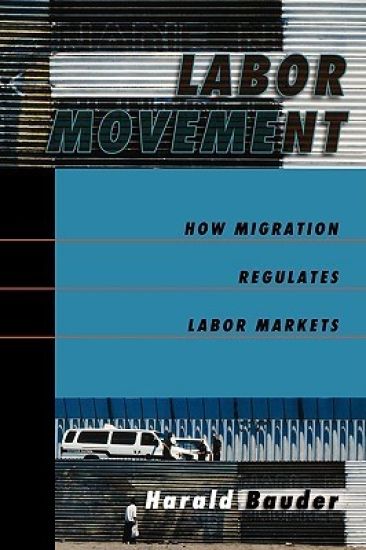
Labor Movement

Labor Movement

Harald Bauder

Oxford University Press Inc
2006
nidottu
Throughout the industrialized world, international migrants serve as nannies, construction workers, gardeners and small-business entrepreneurs. Labor Movement suggests that the international migration of workers is necessary for the survival of industrialized economies. The book thus turns the conventional view of international migration on its head: it investigates how migration regulates labor markets, rather than labor markets shaping migration flows. Assuming a critical view of orthodox economic theory, the book illustrates how different legal, social and cultural strategies towards international migrants are deployed and coordinated within the wider neo-liberal project to render migrants and immigrants vulnerable, pushing them into performing distinct economic roles and into subordinate labor market situations. Drawing on social theories associated with Pierre Bourdieu and other prominent thinkers, Labor Movement suggests that migration regulates labor markets through processes of social distinction, cultural judgement and the strategic deployment of citizenship. European and North American case studies illustrate how the labor of international migrants is systematically devalued and how popular discourse legitimates the demotion of migrants to subordinate labor. Engaging with various immigrant groups in different cities, including South Asian immigrants in Vancouver, foreigners and Spätaussiedler in Berlin, and Mexican and Caribbean offshore workers in rural Ontario, the studies seek to unravel the complex web of regulatory labor market processes related to international migration. Recognizing and understanding these processes, Bauder argues, is an important step towards building effective activist strategies and for envisioning new roles for migrating workers and people. The book is a valuable resource to researchers and students in economics, ethnic and migration studies, geography, sociology, political science, and to frontline activists in Europe, North America and beyond.
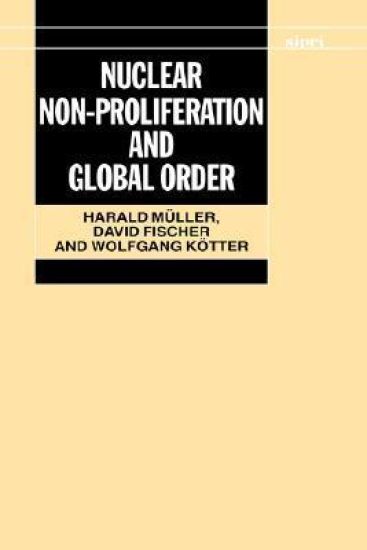
Nuclear Non-Proliferation and Global Order

Nuclear Non-Proliferation and Global Order

Harald Müller; David Fischer; Wolfgang Kötter

Oxford University Press
1994
sidottu
This book presents different views on nuclear disarmament and arms control and a brief history of nuclear non-proliferation policy and the nuclear test ban issue. It describes the preparations for and results of the 1990 Non-Proliferation Treaty Review Conference and the 1991 Partial Test Ban Treaty Amendment Conference. With a view to 1995, it assesses the chances for consensus or dissension regarding regarding nuclear proliferation and the test ban, and the prospects for an extension of NPT. It concludes by examining the future and the threat of a new North-South divide over these issues.
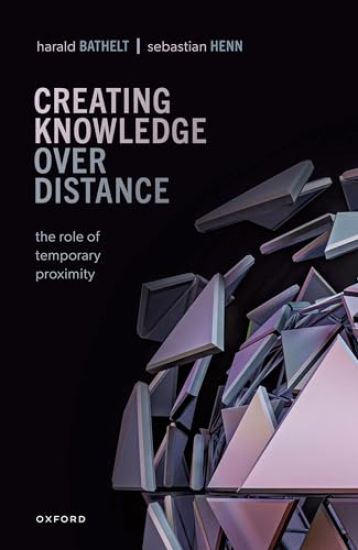
Creating Knowledge over Distance

Creating Knowledge over Distance

Harald Bathelt; Sebastian Henn

Oxford University Press
2025
sidottu
Creating Knowledge over Distance shows that economic knowledge creation fundamentally depends on, benefits from, and is structured by temporary geographical proximity - that is, by economic actors meeting in person or interacting in a co-present context to discuss business opportunities, problems and solutions are face to face. During the Covid-19 pandemic, personal meetings often had to be reduced or were replaced by virtual meetings, leading many observers to assume a fundamental reconfiguration of economic life in the future as face-to-face interaction may be substituted by virtual interaction through the use of new information and communication technologies. While communication patterns certainly changed during this period, this book demonstrates that the face-to-face meetings the authors investigate across a sequence of 11 chapters with different knowledge-creation contexts are unlikely to be fully substituted by distant interactions - and may even become more important over time. The book develops the argument by systematically analyzing three configurations of knowledge transfers over distance: (1) international community gatherings, such as trade fairs, delegation travel, conventions and conferences, (2) mobile business practices, including intra-firm business coordination, inter-firm projects, producer-user meetings, and corporate expansions/inter-firm negotiations, as well as (3) transnational networks, related to transnational corporations and transnational migrant firms (including new transnational firms/new Argonauts and transnational family networks).
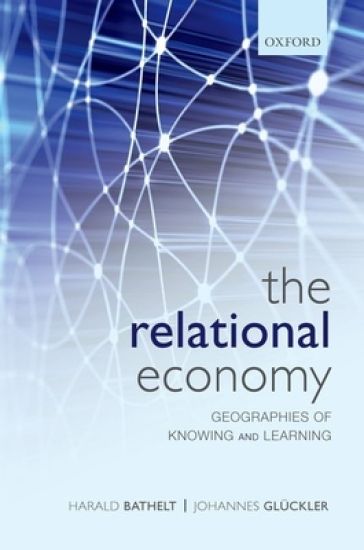
The Relational Economy

The Relational Economy

Harald Bathelt; Johannes Glückler

Oxford University Press
2011
sidottu
How are firms, networks of firms, and production systems organized and how does this organization vary from place to place? What are the new geographies emerging from the need to create, access, and share knowledge, and sustain competitiveness? In what ways are local clusters and global exchange relations intertwined and co-constituted? What are the impacts of global changes in technology, demand, and competition on the organization of production, and how do these effects vary between communities, regions, and nations? This book synthesizes theories from across the social sciences with empirical research and case studies in order to answer these questions and to demonstrate how people and firms organize economic action and interaction across local, national, and global flows of knowledge and innovation. It is structured in four clear parts: - Part I: Foundations of Relational Thinking - Part II: Relational Clusters of Knowledge - Part III: Knowledge Circulation Across Territories - Part IV: Toward a Relational Economic Policy? The book employs a novel relational framework, which recognizes values, interpretative frameworks, and decision-making practices as subject to the contextuality of the social institutions that characterize the relationships between the human agents. It will be a valuable resource for academics, researchers, and graduate students across the social sciences, and practitioners in clusters policy.
The Relational Economy

The Relational Economy

Harald Bathelt; Johannes Glückler

Oxford University Press
2011
nidottu
How are firms, networks of firms, and production systems organized and how does this organization vary from place to place? What are the new geographies emerging from the need to create, access, and share knowledge, and sustain competitiveness? In what ways are local clusters and global exchange relations intertwined and co-constituted? What are the impacts of global changes in technology, demand, and competition on the organization of production, and how do these effects vary between communities, regions, and nations? This book synthesizes theories from across the social sciences with empirical research and case studies in order to answer these questions and to demonstrate how people and firms organize economic action and interaction across local, national, and global flows of knowledge and innovation. It is structured in four clear parts: - Part I: Foundations of Relational Thinking - Part II: Relational Clusters of Knowledge - Part III: Knowledge Circulation Across Territories - Part IV: Toward a Relational Economic Policy? The book employs a novel relational framework, which recognizes values, interpretative frameworks, and decision-making practices as subject to the contextuality of the social institutions that characterize the relationships between the human agents. It will be a valuable resource for academics, researchers, and graduate students across the social sciences, and practitioners in clusters policy.
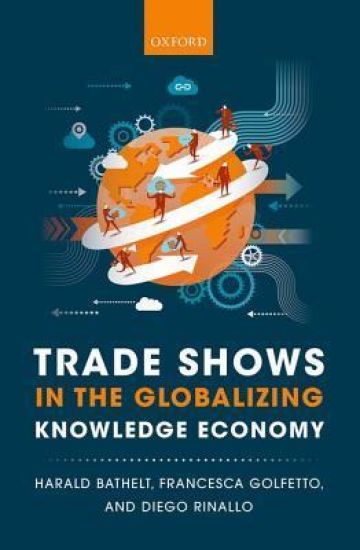
Trade Shows in the Globalizing Knowledge Economy

Trade Shows in the Globalizing Knowledge Economy

Harald Bathelt; Francesca Golfetto; Diego Rinallo

Oxford University Press
2014
sidottu
This book presents a radically innovative view on trade shows as knowledge-rich places, where firms learn through observation and interaction with other economic actors, and as enablers, rather than mere consequences, of globalization. Traditionally seen as marketing tools, trade shows are conceptualised as temporary clusters that facilitate the creation and diffusion of knowledge across geographical distances, even in the age of social media. The book is organized in four parts. Part I lays out the conceptual foundations of the knowledge-based perspective, from the early development of trade fairs to modern-day events. Part II analyses specific global developments, focussing on the trade show ecologies of Europe, North America, and the Asia-Pacific region. Part III investigates differences in the nature of knowledge generation practices across international hub shows, exports shows, and import shows in different industries, and investigates competition between such events. Part IV discusses the implications of a knowledge-based conceptualisation of trade shows. The book will be of interest to scholars and students in economic geography, management, marketing, organization studies, political science, and sociology. It also has practical implications for trade show organisers on how to make their events more competitive through knowledge-based strategies; for industry associations and cities, on how to use these events for collective/place marketing purposes; and for policy makers, on how to use trade shows for export promotion and innovation policies.
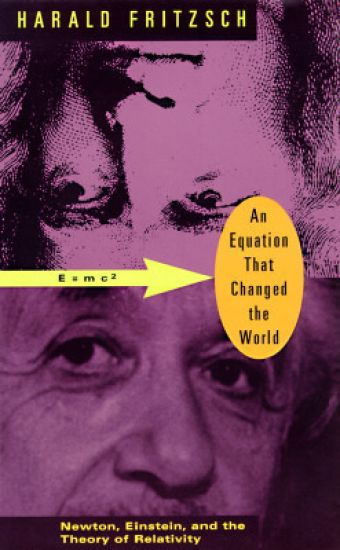
An Equation That Changed the World

An Equation That Changed the World

Harald Fritzsch

University of Chicago Press
1994
sidottu
Fritzsch offers readers the opportunity to listen in on a meeting of Isaac Newton, Albert Einstein, and a present-day physicist. While he introduces the theory of relativity, Fritzsch teaches its sources, its workings, and the ways it has revolutionized our view of the physical world. An Equation That Changed the World dramatizes the importance of relativity, for the human race, and the survival of our planet. "Fritzsch could not give the modern reader a more memorable introduction to the personalities and science of Isaac Newton and Albert Einstein unless somehow he could find the keys to H. G. Wells' time machine...Many readers will applaud Fritzsch for this lively but profoundly insightful book." --Booklist, starred review "[Fritzsch] has dreamed up a dialogue between the two great physicists, helped along by a fictional modern physicist...The conversation builds up to an explanation of E=mc2, and on the way illuminates the important points where Newtonian and Einsteinian theory diverge." --David Lindley, New York Times Book Review
An Equation That Changed the World

An Equation That Changed the World

Harald Fritzsch

University of Chicago Press
1997
nidottu
Fritzsch offers readers the opportunity to listen in on a meeting of Isaac Newton, Albert Einstein, and a present-day physicist. While he introduces the theory of relativity, Fritzsch teaches its sources, its workings, and the ways it has revolutionized our view of the physical world. An Equation That Changed the World dramatizes the importance of relativity, for the human race, and the survival of our planet."Fritzsch could not give the modern reader a more memorable introduction to the personalities and science of Isaac Newton and Albert Einstein unless somehow he could find the keys to H. G. Wells' time machine. . . . Many readers will applaud Fritzsch for this lively but profoundly insightful book." —Booklist, starred review"[Fritzsch] has dreamed up a dialogue between the two great physicists, helped along by a fictional modern physicist. . . . The conversation builds up to an explanation of E=mc2, and on the way illuminates the important points where Newtonian and Einsteinian theory diverge." —David Lindley, New York Times Book Review
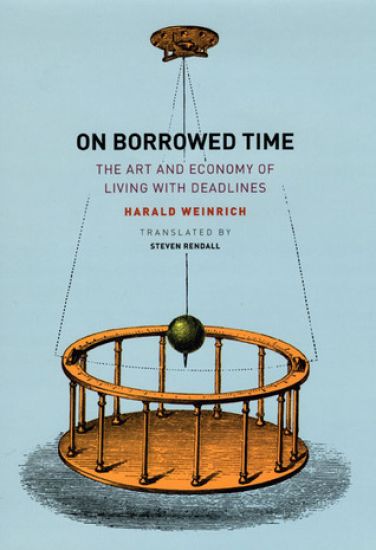
On Borrowed Time

On Borrowed Time

Harald Weinrich

University of Chicago Press
2008
sidottu
Life is short. This indisputable fact of existence has driven human ingenuity since antiquity, whether through efforts to lengthen our lives with medicine or shorten the amount of time we spend on work using technology. Alongside this struggle to manage the pressure of life's ultimate deadline, human perception of the passage and effects of time has also changed. In "On Borrowed Time", Harald Weinrich examines an extraordinary range of materials - from Hippocrates to Run Lola Run - to put forth a new conception of time and its limits that, unlike older models, is firmly grounded in human experience.Weinrich's analysis of the roots of the word time connects it to the temples of the skull, demonstrating that humans first experienced time in the beating of their pulses. Tracing this corporeal perception of time across literary, religious, and philosophical works, Weinrich concludes that time functions as a kind of sixth sense - the crucial sense that enables the other five.Written with Weinrich's customary narrative elegance, "On Borrowed Time" is an absorbing - and, fittingly, succinct - meditation on life's inexorable brevity.
Human Resource Management in Ageing Societies

Human Resource Management in Ageing Societies

Harald Conrad; Viktoria Heindorf; Franz Waldenberger

Palgrave Macmillan
2008
sidottu
Japan and Germany have faced very similar challenges, namely ageing populations, changing employment structures, and globalization. This book explores the demographic challenges for human resource management and labour market policies in Germany and Japan and how public and company policies in both countries deal with these challenges.
The Curvature of Spacetime

The Curvature of Spacetime

Harald Fritzsch

Columbia University Press
2004
pokkari
The internationally renowned physicist Harald Fritzsch deftly explains the meaning and far-flung implications of the general theory of relativity and other mysteries of modern physics by presenting an imaginary conversation among Newton, Einstein, and a fictitious contemporary particle physicist named Adrian Haller-the same device Fritzsch employed to great acclaim in his earlier book An Equation That Changed the World, which focused on the special theory of relativity. Einstein's theory of gravitation, his general theory of relativity, touches on basic questions of our existence. Matter, according to Einstein, has no existence independent of space and time. It is even capable of bending the structure of space and changing the course of time-it introduces a "curvature." Gravity emerges not as an actual physical force but as a consequence of space-time geometry. Even the apple that drops from the tree follows the curvature of time and space. In this entertaining and involving account of relativity, Newton serves as the skeptic and asks the questions a modern reader might ask. Einstein himself does the explaining, while Haller explains the new developments that have occurred since the general theory was proposed. The result is an intellectual roller-coaster ride in which concepts that have entered the vernacular become clear for the first time: the Big Bang, "black holes," elementary particles, and much more.
People on the Move

People on the Move

Harald Kleinschmidt

Praeger Publishers Inc
2003
sidottu
While most people in the world are descendants of migrants, not everyone is conscious of the migration patterns of their ancestors. The goals and motives for moving or staying are changing, diverse, and often difficult to specify. As a result of 19th-century residentialist social and political theories, many scholars generally assume that migration is a pattern of behavior that deviates from the norm and requires a specific motive or reason. This study details the variety of changing historical patterns of migrant behavior by examining migration patterns over 1500 years in Europe and Southeast Asia.Kleinschmidt researches migrants and describes how they viewed themselves. He also includes a look at lawmakers, political decision-makers, and administrators to analyze the changes of their attitudes towards and perceptions of migration. The study places migration within and out of the two regions into a long timeframe to demonstrate the ubiquitous and transience of patterns of migrant behavior. It considers external attitudes and perceptions of migration within the context of the social and political theories of their own time. The two distinct geographic foci of the study allow for discussion of the characteristic features of each region.
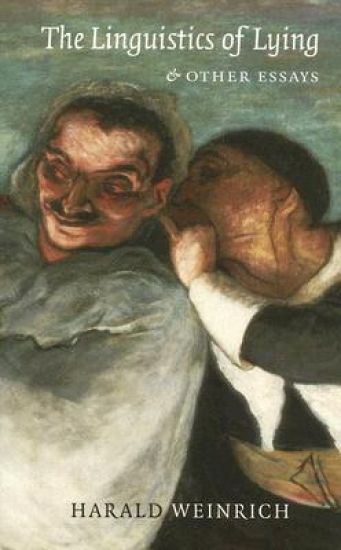
The Linguistics of Lying And Other Essays

The Linguistics of Lying And Other Essays

Harald Weinrich

University of Washington Press
2005
pokkari
Can language hide thoughts? This question, posed by the German Academy for Language and Literature in 1965 as the topic of its first essay competition, was taken up by the philologist Harald Weinrich, with far-ranging results. The most immediate was his claiming first prize with this volume's title essay, published the following year as Linguistik der Luge. Weinrich's influential essay, now in its sixth printing in Germany, is presented here for the first time in English, with an updated preface by the author and additional essays selected by him.With wit and clarity, Weinrich brings sophisticated thinking about semantics to bear on the question of how, and how much, language corresponds to thought. He argues that lying is a function not of words but of sentences; it belongs to the semantic aspect of language. His survey of the different ways in which language is untrue forges striking links between linguistic and literary categories on the one hand and ethics and even good manners on the other.In contrast with scholars of an earlier generation, for whom literary and cultural theory circumscribed the issue of style within a fixed aesthetic framework, Weinrich demonstrates that stylistic analysis is closely linked with analysis in the domains of sociology and anthropology. The essays "Jonah's Sign: On the Very Large and the Very Small in Literature," "Politeness, an Affair of Honor," "Politeness and Sincerity," and "The Style Is the Man Is the Devil" complement "The Linguistics of Lying" in their focus on real and false representations in literature and in life, and notably on the immensely destructive lies, Adolf Hitler's in particular, that marked the politics of the twentieth century.
High-Tc Superconductors

High-Tc Superconductors

Harald W. Weber

Kluwer Academic/Plenum Publishers
1989
sidottu
In the past two years conferences on superconductivity have been characterized by the attendance of hundreds of scientists. Consequently, the organizers were forced to schedule numerous parallel sessions and poster presentations with an almost unsurveyable amount of information. It was, therefore, felt that a more informal get-together, providing ample time for a thourough discussion of some topics of current interest in high-temperature superconductivity, was timely and benefitial for leading scientists as well as for newcomers in the field. The present volume contains the majority of papers presented at the International Discussion Meeting on High-Tc Superconductors held at the Mauterndorf Castle in the Austrian Alps from February 7 to 11, 1988. Each subject was introduced in review form by a few invited speakers and then discussed together with the contributed poster presentations. These discussion sessions chaired by selected scientists turned out to be the highlights of the meeting, not only because all the participants truly appreciated the possibility of an information exchange, but mainly because of the magnificent job done by the discussion chairmen, John A. Mydosh (Leiden), Martin Peter (Geneva) and Ken E. Gray (Argonne). First results on the just discovered Bi-superconductors and the clarification of electron resonance experiments on (123)-compounds should be mentioned in particular. The relaxed atomosphere favoring free discussions was certainly promoted by the surroundings offered in the Mauterndorf Castle, which dates back to 1253. Poster presentations and a conference banquet in historic knight's halls are certainly not found everyday in conference routines.
Clinical Pain Management : Practice and Procedures

Clinical Pain Management : Practice and Procedures

Harald Breivik; Michael Nicholas; William Campbell; Toby Newton-John

Hodder Arnold
2008
sidottu
Largely reorganised and much expanded in this second edition, Practice and Procedures brings together in a single volume general methods of pain assessment and presents the wide range of therapies that can be provided by a range of health care disciplines. Authored by a multidisciplinary team of experts, chapters can stand alone for readers looking for a general overview of the methods of techniques for pain management available to them or work to complement chapters in the preceeding three volumes, providing practical procedures and applications in the management of acute, chronic and cancer pain. The book is divided into three parts. Part One covers the principles of measurement and diagnosis, including history taking and examination, the selection of pain measures, diagnostic tests and novel imaging techniques. Part Two discusses the full range of therapeutic protocols available, from pharmacological therapies, through psychological techniques, physical therapy and international procedures, to techniques specific to pain assessment and management in paediatric patients. Part Three provides information on planning, conducting, analysing and publishing clinical trials, with invaluable guidance on the techniques of systematic review and meta-analysis in pain research. Part Four considers the role of multidisciplinary pain management teams, their organization, their place within different health care systems, and how best to manage change when implementing such a service. Part Five concludes the volume, investigating the use of guidelines, standards and quality improvement initiatives in the management of post-operative pain, and discussing the expert medicolegal report.
Clinical Pain Management : Practice and Procedures

Clinical Pain Management : Practice and Procedures

Harald Breivik; Michael Nicholas; William Campbell; Toby Newton-John

CRC Press
2019
nidottu
Largely reorganised and much expanded in this second edition, Practice and Procedures brings together in a single volume general methods of pain assessment and presents the wide range of therapies that can be provided by a range of health care disciplines. Authored by a multidisciplinary team of experts, chapters can stand alone for readers looking for a general overview of the methods of techniques for pain management available to them or work to complement chapters in the preceeding three volumes, providing practical procedures and applications in the management of acute, chronic and cancer pain. The book is divided into three parts. Part One covers the principles of measurement and diagnosis, including history taking and examination, the selection of pain measures, diagnostic tests and novel imaging techniques. Part Two discusses the full range of therapeutic protocols available, from pharmacological therapies, through psychological techniques, physical therapy and international procedures, to techniques specific to pain assessment and management in paediatric patients. Part Three provides information on planning, conducting, analysing and publishing clinical trials, with invaluable guidance on the techniques of systematic review and meta-analysis in pain research. Part Four considers the role of multidisciplinary pain management teams, their organization, their place within different health care systems, and how best to manage change when implementing such a service. Part Five concludes the volume, investigating the use of guidelines, standards and quality improvement initiatives in the management of post-operative pain, and discussing the expert medicolegal report.
Understanding the New Global Economy
Understanding the New Global Economy: A European Perspective argues that globalisation is facing economic and political headwinds. A new global economic geography is emerging, cross-border relationships are changing, and global governance structures must come to terms with a new multipolar world. This book clarifies the fundamental questions and trade-offs in this new global economy, and gives readers the tools to understand contemporary debates. It presents a range of possible policy options, without being prescriptive.Following a modular structure, each chapter takes a similar approach but can also be read as a stand-alone piece. State-of-the-art academic research and historical experiences are weaved throughout the book, and readers are pointed towards relevant sources of information .This text is an accessible guide to the contemporary world economy, suited to students of international economics, political economy, globalisation, and European studies. It will also be valuable reading for researchers, professionals, and general readers interested in economics, politics, and civil society.
Understanding the New Global Economy
Understanding the New Global Economy: A European Perspective argues that globalisation is facing economic and political headwinds. A new global economic geography is emerging, cross-border relationships are changing, and global governance structures must come to terms with a new multipolar world. This book clarifies the fundamental questions and trade-offs in this new global economy, and gives readers the tools to understand contemporary debates. It presents a range of possible policy options, without being prescriptive.Following a modular structure, each chapter takes a similar approach but can also be read as a stand-alone piece. State-of-the-art academic research and historical experiences are weaved throughout the book, and readers are pointed towards relevant sources of information .This text is an accessible guide to the contemporary world economy, suited to students of international economics, political economy, globalisation, and European studies. It will also be valuable reading for researchers, professionals, and general readers interested in economics, politics, and civil society.