Kirjojen hintavertailu. Mukana 11 342 296 kirjaa ja 12 kauppaa.

Kirjahaku

Etsi kirjoja tekijän nimen, kirjan nimen tai ISBN:n perusteella.

1000 tulosta hakusanalla Helen Fielding

Helen Macfarlane

Helen Macfarlane

David Black

Lexington Books
2004
nidottu
Helen Macfarlane, a young British woman, was living in Vienna when she was radicalized by the 1848 Revolution. On returning to England in 1850, she became a journalist for the radical wing of the Chartist movement. The Chartists received support from such luminaries as Karl Marx and Fredrich Engles; the latter had written on the movement's political significance. It was Marx who described Macfarlane as the most original writer in the Chartist press. Macfarlane was the first English translator of The Communist Manifesto. Her original translation is included in this edition. She is also the first of the British to comment, critically and extensively, on the revolutionary implications of Hegel's philosophy. After having been hidden for a century her stature as a revolutionary, writer, and feminist emerges in David Black's seminal work. With diligent research into her life and work, Black, in Helen Macfarlane: A Feminist, Revolutionary Journalist, and Philosopher in Mid 19th Century England, recreates her intellectual and political world at a key turning point in European history. This work also includes Macfarlane's original translation of The Communist Manifesto.
Helen Oxenbury: A Life in Illustration

Helen Oxenbury: A Life in Illustration

Leonard S. Marcus; Helen Oxenbury

Candlewick Press (MA)
2019
sidottu
A fascinating, beautiful, and definitive account of the life of esteemed artist Helen Oxenbury. Filled with insights that span Helen Oxenbury's life -- from her early childhood through a career in children's books that started in the 1960s and is still going strong today -- here is an exquisitely designed and thoroughly entertaining celebration of one of the finest illustrators of our time. Written by acclaimed author Leonard S. Marcus, Helen Oxenbury: A Life in Illustration is a keepsake that is sure to engage and delight everyone from scholars to art aficionados, as well as the many fans who have grown up with Helen Oxenbury's enchanting books.
Helen Nash's Kosher Kitchen

Helen Nash's Kosher Kitchen

Helen Nash

Jason Aronson Inc. Publishers
2000
sidottu
"Kosher food is more than chopped liver and gefilte fish," says Helen Nash, and her cookbook covers a complete range of innovative meals, from a simple lunch to a dinner-party menu. Her dishes are fresh and creative, combining traditional ingredients with those found in the modern kitchen: curried wontons and spaghettini with arugula, roast capon with olives, and broiled fillets of red snapper with pine-nut coating. Each chapter separates dairy, pareve, and meat dishes for easy reference. Helen Nash has provided notes on ingredients, equipment, and techniques, including how to maintain a kosher kitchen. This is the cookbook for both everyday meals and the special occasion that Craig Claiborne praised in The New York Times for its "inventive menus and subtle flavors."
Helen's Big World: The Life of Helen Keller

Helen's Big World: The Life of Helen Keller

Doreen Rappaport

Little, Brown Books for Young Readers
2012
sidottu
This "magnificent account" (New York Times) of Helen Keller's life presents a moving portrait of one of the world's great luminaries. When Helen was nineteen months old, an illness left her unable to see or speak. She struggled to make herself understood, and often lashed out when she couldn't. With the help of a teacher named Annie Sullivan, she learned to spell words with her fingers, opening her world immeasurably. She soon learned to write and to read Braille, and even to read lips by touch; with Annie by her side, she went to college, and wrote an autobiography that shared her story with the world. She was lauded as a genius and became an advocate for people with disabilities, workers' rights, women's rights, and racial justice. With her signature style of accessible prose laced with stirring quotes, Doreen Rappaport brings to life Helen Keller's poignant narrative in this addition to the Big Words series of picture book biographies. Acclaimed illustrator Matt Tavares beautifully captures the dynamism and verve of Helen's life and legacy, making Helen's Big World an unforgettable portrait of a woman whose vision for innovation and progress changed America--and the world--forever. ★ "Stirring and awe-inspiring." --The Horn Book ★ "While there are many books available about Helen Keller for this age group, this title offers a unique and beautiful perspective on her life." --School Library Journal "No child could read this book without imagining herself, as Helen put it, 'in the still, dark world in which I lived.' But it makes Helen's path to self-expression all the more resonant and inspiring." --New York Times "A worthwhile addition to biography shelves." --Booklist Don't miss these other titles in the Big Words series Ellen Takes Flight: The Life of Astronaut Ellen Ochoa Ruth Objects: The Life of Ruth Bader Ginsburg Wilma's Way Home: The Life of Wilma Mankiller Abe's Honest Words: The Life of Abraham Lincoln Martin's Big Words: The Life of Dr. Martin Luther King, Jr.
Helen of Troy and Her Shameless Phantom

Helen of Troy and Her Shameless Phantom

Austin Norman

CORNELL UNIVERSITY PRESS
1994
sidottu
Like the male heroes of epic poetry, Helen of Troy has been immortalized, but not for deeds of strength and honor; she is remembered as the beautiful woman who disgraced herself and betrayed her family and state. Norman Austin here surveys interpretations of Helen in Greek literature from the Homeric period through later antiquity. He looks most closely at a revisionist myth according to which Helen never sailed to Troy, but remained blameless, while a libertine phantom or ghost impersonated her at Troy. Comparing the functions of contradictory images of Helen, Austin helps to clarify the problematic relations between beauty and honor and between ugliness and shame in ancient Greece.Austin first discusses the canonical account of the Iliad and the Odyssey: Helen as the archetype of woman without shame. He next considers different versions of Helen in the Homeric tradition. Among these, he shows how Sappho presents Helen as an icon of absolute beauty while she defends her own preference of eros over honor and her choice of woman as the object of desire. Austin then turns to three major authors who repudiated the traditional Helen of Troy: the lyric poet Stesichorus and the dramatist Euripides, who embraced the alternative myth of Helen's phantom; and the historian Herodotus, who claimed to have found in Egypt a Helen story that dispenses with both Helen and the phantom. Austin maintains that the conflicting motives that prompted these writers to rehabilitate Helen led to further revisions of her image, though none have endured as a credible substitute for the Helen of epic tradition.
Helen of Troy and Her Shameless Phantom

Helen of Troy and Her Shameless Phantom

Norman Austin

Cornell University Press
2008
pokkari
Like the male heroes of epic poetry, Helen of Troy has been immortalized, but not for deeds of strength and honor; she is remembered as the beautiful woman who disgraced herself and betrayed her family and state. Norman Austin here surveys interpretations of Helen in Greek literature from the Homeric period through later antiquity. He looks most closely at a revisionist myth according to which Helen never sailed to Troy, but remained blameless, while a libertine phantom or ghost impersonated her at Troy. Comparing the functions of contradictory images of Helen, Austin helps to clarify the problematic relations between beauty and honor and between ugliness and shame in ancient Greece. Austin first discusses the canonical account of the Iliad and the Odyssey: Helen as the archetype of woman without shame. He next considers different versions of Helen in the Homeric tradition. Among these, he shows how Sappho presents Helen as an icon of absolute beauty while she defends her own preference of eros over honor and her choice of woman as the object of desire. Austin then turns to three major authors who repudiated the traditional Helen of Troy: the lyric poet Stesichorus and the dramatist Euripides, who embraced the alternative myth of Helen's phantom; and the historian Herodotus, who claimed to have found in Egypt a Helen story that dispenses with both Helen and the phantom. Austin maintains that the conflicting motives that prompted these writers to rehabilitate Helen led to further revisions of her image, though none have endured as a credible substitute for the Helen of epic tradition.
Helen Hunt Jackson and Her Indian Reform Legacy

Helen Hunt Jackson and Her Indian Reform Legacy

Valerie Sherer Mathes

University of Oklahoma Press
1997
nidottu
Helen Hunt Jackson and Her Indian Reform Legacy is a detailed account of the last six years of Jackson's life (1879-1885), when she struggled to promote the rights of American Indians displaced and dispossessed by the U.S. government. Valerie Sherer Mathes places Jackson's work within the larger nineteenth-century Indian rights movement and details her crusade of traveling, writing, and lobbying government officials. Jackson's efforts culminated in the publication of A Century of Dishonor, an indictment of the government's Indian policy, and the novel Ramona, a sympathetic portrayal of the plight of California's Mission Indians. Her influence was felt immediately in the actions of subsequent reform workers in the Women's National Indian Association, the Indian Rights Association, and the Lake Mohonk Conference.
The Indian Reform Letters of Helen Hunt Jackson, 1879-1885

The Indian Reform Letters of Helen Hunt Jackson, 1879-1885

Helen Hunt Jackson

University of Oklahoma Press
2015
nidottu
Helen Hunt Jackson's passionate crusade for Indian rights comes to life in this collection of more than 200 letters, most of which have never been published before. With Valerie Sherer Mathes's helpful notes, the letters reveal the behind-the-scenes drama of Jackson's involvement in Indian reform, which led her to write A Century of Dishonor and her protest novel, Ramona.Ralph Waldo Emerson described Jackson as the ""greatest American woman poet."" These stirring letters will intrigue anyone interested in Indian affairs, nineteenth-century women's studies, or the social history of Victorian America, where Jackson made her mark despite the restrictions on women. Among her correspondents were Oliver Wendell Holmes, Henry Wadsworth Longfellow, Moncure D. Conway, Henry B. Whipple, Henry L. Dawes, Henry Teller, Carl Schurz, and of course, commissioners of Indian affairs and such prominent editors as Whitelaw Reid, Charles Dudley Warner, and Richard Watson Gilder.The letters are presented in sections on the Ponca and Mission Indian causes, allowing readers to focus on the time period and Indian group of choice.
Helen Matthews Lewis

Helen Matthews Lewis

Helen M. Lewis

The University Press of Kentucky
2014
nidottu
Often referred to as the leader of inspiration in Appalachian studies, Helen Matthews Lewis linked scholarship with activism and encouraged deeper analysis of the region. Lewis shaped the field of Appalachian studies by emphasizing community participation and challenging traditional perceptions of the region and its people. Helen Matthews Lewis: Living Social Justice in Appalachia, a collection of Lewis's writings and memories that document her life and work, begins in 1943 with her job on the yearbook staff at Georgia State College for Women with Mary Flannery O'Connor. Editors Patricia D. Beaver and Judith Jennings highlight the achievements of Lewis's extensive career, examining her role as a teacher and activist at Clinch Valley College (now University of Virginia at Wise) and East Tennessee State University in the 1960s, as well as her work with Appalshop and the Highland Center. Helen Matthews Lewis connects Lewis's works to wider social movements by examining the history of progressive activism in Appalachia. The book provides unique insight into the development of regional studies and the life of a dynamic revolutionary, delivering a captivating and personal narrative of one woman's mission of activism and social justice.
Helen Prejean

Helen Prejean

Joyce Duriga; Robert Ellsberg

Liturgical Press
2017
pokkari
No person has worked more effectively toward the abolition of the death penalty in the United States than Helen Prejean, CSJ. Her best-selling book Dead Man Walking, and the hit Hollywood film adaptation in which she was played by Susan Sarandon, was a catalyst for drawing national attention to the issue. In the years since then, her continuing and often controversial work with death-row inmates has kept the issue near the forefront of national debate. She has confronted lawyers and judges, politicians and the media, to expose the indignity and injustice of the death penalty and inhumane prison conditions. In Helen Prejean: Death Row’s Nun, Joyce Duriga explores Sister Helen’s life growing up in upper-middle-class Louisiana, her growing awareness of the injustice of the death penalty, and its disproportionate targeting of the poor and minorities, and her introduction to death-row inmates Patrick Sonnier and Robert Lee Willie. Through this book, readers will witness her life’s work with victims and their families, and see how she came to understand her role in prison ministry, not only as an activist but as a champion fighting for hope and restorative justice for those facing the death penalty.
Helen Keller

Helen Keller

New York University Press
2005
sidottu
"[My life] is so rich with blessings—an immense capacity of enjoyment, books, and beloved friends. . . . Most earnestly I pray the dear Heavenly Father that I may sometime make myself far more worthy of the love shown to me than I am now." —April 22, 1900 letter from Helen Keller to John Hitz, AFB When Helen Keller died in 1968, at the age of eighty-eight years old, she was one of the most widely known women in the world. The overnight success of her biography, The Story of My Life, written at age twenty-three, made it obvious to Keller that she was endowed with a gift for writing and speaking. As she got older, she increasingly began to do both on a variety of subjects extending beyond her own disability, including social, political, and theological issues. Helen Keller: Selected Writings collects Keller's personal letters, political writings, speeches, and excerpts of her published materials from 1887 to 1968. The book also includes an introductory essay by Kim E. Nielsen, headnotes to each document, and a selected bibliography of work by and about Keller. The majority of the letters and some prints, all drawn from the Helen Keller Archives at the American Foundation for the Blind in New York, are being published for the first time. Literature, education, advocacy, politics, religion, travel: the many interests of Helen Keller culminate in this book and are reflected in her spirited narration. Also portrayed are the individuals Keller inspired and took inspiration from, including her teacher Annie Sullivan, her family, and others with whom she formed friendships throughout the course of her life. This often charming collection revels in and preserves Keller's public and private life, coming to us in the year which marks the 125th anniversary of her birthday.
An Eye-Witness Account of the French Revolution by Helen Maria Williams
Helen Maria Williams (1761-1827), English poet, novelist, and chronicler of the French Revolution, here vividly recounts her experiences in France during the Terror. Arrested in the fall of 1793, Williams records with passion and sorrow the degeneration of the Revolution into chaos and murder. She sketches the colorful personalities of her friends and acquaintances (Madame Roland, Charlotte Corday, Georges-Jacques Danton) and enemies (Maximilien Robespierre, Louis-Antoine de St. Just, Jean Paul Marat), while all the time displaying her enduring optimism that Revolution would eventually succeed in liberty and justice for people everywhere.
Helen Clay Frick

Helen Clay Frick

Martha Frick Symington Sanger

University of Pittsburgh Press
2007
sidottu
In 1919, at the age of thirty-one, Helen Clay Frick inherited $38 million, becoming the richest single woman in America. These riches, however, came at a price. Helen's tumultuous early life was shaped by her father's infamy as a union strikebreaker and the ensuing attempt on his life, her mother's debilitating depression, and the death of her older sister and newborn brother about a year apart. Despite these events, Helen built a luminous legacy through her lifelong commitment to social welfare, the environment, and a supreme devotion to the visual arts. Helen's philanthropy touched the lives of thousands. Her contributions included a vacation home for young female textile workers, two wildlife preserves, one a public wilderness park, a Victorian-era house museum, a pre-Civil War historic Mennonite village, a university fine arts department, two art history libraries, and the purchase of many significant works of art for her private collection, the Frick Collection in New York, the University of Pittsburgh teaching collection, and the Frick Art Museum. Through extensive period research and singular access to Frick family archives and Helen Clay Frick's personal writings, Martha Frick Symington Sanger fashions a multifaceted portrait of a complex, often misunderstood, yet indomitable humanitarian, philanthropist, and cultural force in twentieth-century America.
Helen Frankenthaler

Helen Frankenthaler

Thomas E. Crow

RIZZOLI INTERNATIONAL PUBLICATIONS
2023
sidottu
Helen Frankenthaler: Drawing within Nature documents an exhibition of Frankenthaler s sumptuous paintings from the early to mid-1990s, many shown in New York for the first time. This catalog documents an exhibition that focuses on Helen Frankenthaler s paintings on canvas of the early 1990s, along with three large-scale paintings on paper from 1995. In this period, Frankenthaler experimented with new mediums and techniques, resulting in thickly impastoed surfaces that recalibrate our understanding of her practice. A new essay by Thomas Crow examines these paintings in the context of the varied environments in which Frankenthaler lived and worked, from the warm-toned terrain of Santa Fe, New Mexico, to her seaside home and studio in Stamford, Connecticut. Helen Frankenthaler (1928 2011) has long been recognized as one of the great American artists of the twentieth century. A member of the second generation of postwar American abstract painters, she is widely credited with expanding the possibilities of abstraction through her invention of the soak-stain technique, while at times referencing figuration and landscape in highly personal ways.
Helen Foster Snow

Helen Foster Snow

Kelly Ann Long

University Press of Colorado
2006
sidottu
Helen Foster Snow: An American Woman in Revolutionary China tells the story of a remarkable woman born in rural Utah in 1907, who lived in China during the 1930s and became an important author, a lifelong humanitarian, and a bridge-builder between the United States and China. As Kelly Ann Long recounts in this engaging biography, Helen Foster Snow immersed herself in the social and political currents of a nation in turmoil. After marrying renowned journalist Edgar Snow, she developed her own writing talents and offered an important perspective on emerging events in China as that nation was wracked by Japanese invasion, the outbreak of World War II, and a continuing civil war. She supported the December Ninth Movement of 1935, broke boundaries to enter communist Yenan in 1937, and helped initiate the "gung ho" Chinese Industrial Co-operative movement. Helen Foster Snow wrote about the people and events in Chinas remote communist territories during an important era. She relayed detailed portraits of female communist leaders and famous figures such as Mao Zedong and Zhu De, as well as common people struggling to survive in a period of increasing turmoil.Her informed, compassionate depictions built a bridge linking American interest to the welfare of the Chinese. Longs account recovers the story of a controversial and important commentator on a critical period in U.S.-China relations and in Chinese history.
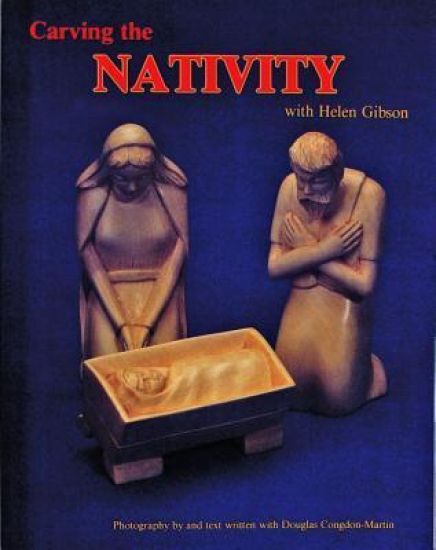
Carving the Nativity with Helen Gibson

Carving the Nativity with Helen Gibson

Helen Gibson

Schiffer Publishing Ltd
1997
nidottu
Step-by-step instructions for the delicate process carving a nativity, with clear color photography illustrating each technique. An old tradition is shared here with today's carvers. Author Helen Gibson teaches woodcarving at the John C. Campbell Folk School in North Carolina. The patterns for the creche she carves have been part of the tradition of the school for so long that no one is quite sure of their origins. Carving them is a community effort, with different carvers having different specialties. Helen takes the reader step-by-step through the delicate carving process of one of the figures, with clear color photography illustrating each technique. Patterns and complete views for the Mary, Joseph, three Wisemen, three Shepherds, and the baby in the manager are included.
Helen Gibson Carves the Animals of the Nativity

Helen Gibson Carves the Animals of the Nativity

Helen Gibson

Schiffer Publishing Ltd
1997
nidottu
A step-by-step guide through the process of carving each one of the animals of the nativity scene, with color photographs to illustrate every cut. In her previous book, Helen Gibson shared her techniques for carving the human figures of the nativity story: Mary, Joseph, Jesus, the wise men, and the shepherds. Now she returns to the story to complete the scene by carving the animals, of the nativity: camels, sheep, cattle, and donkeys. Helen has a highly detailed style of carving that is perfect for this subject. The reader is lead step-by-step through the process of carving one of the animals. Clear color photographs illustrate every cut. A gallery of the other animals shown from every angle and patterns help the carver complete the set.
Carving Moses with Helen Gibson

Carving Moses with Helen Gibson

Helen Gibson

Schiffer Publishing Ltd
1997
nidottu
A step-by-step guide through the carving process for Moses of the nativity, with each step illustrated by a color photograph. The carving of religious figures is a tradition that is thousands of years old. In earlier books, Helen Gibson shared her techniques for carving the nativity and the figure of St. Francis of Asissi. Now, she turns her attention to one of the most dramatic figures in religious history: Moses. This strong, authoritative figure lends itself wonderfully to carving. Helen's friend, Harold Enlow, drew the pattern and Helen leads the reader step-by-step through the carving process. Each step is illustrated with a color photograph. The result is a rewarding carving experience and a great deal of enjoyment.