
Kirjahaku
Etsi kirjoja tekijän nimen, kirjan nimen tai ISBN:n perusteella.
1000 tulosta hakusanalla Helene Cixous

A Walk in the Sunshine: The Inspirational Writings of Helene Clare Kuoni
Helene Clare Kuoni
John P. Kuoni
2019
nidottu
Christian writing groups often challenge their members to compose individual devotions all based on the same scripture passage. Without fail, the exercise results in as many different messages as there are members at the table. Why is that?Often believers who know the Bible well, will report that one day a familar verse jumped off the page with richer meaning. Why is that?Devotion writer, Helene Kuoni believes Biblical nuggets of truth - "gems" if you will - are multifaceted. (See Proverbs 1:5-6, TLB.) Each person reads the passage in light of their life experiences. The Bible speaks truth, but tell the story of Noah's Ark to a child and to an adult, and different aspects of the story will resonate with each. It all depends on the maturity of their faith.God's word does not change. Over time people grow in their understanding.This volume of personal-experience devotions and essays is the work of a writer who desires to grow closer to the Lord. Her hope is that this compilation encourages others to embark on that same glorious path.Enjoy A Walk in the Sunshine
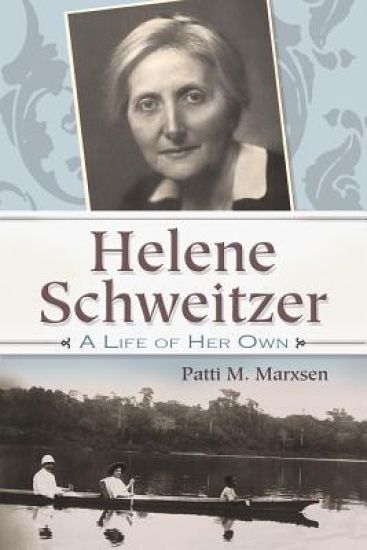
Born in Berlin, Helene Schweitzer came of age in Strasbourg during a time of great social, architectural, and historical developments. It was in this cultural milieu, as a history professor’s daughter, that Helene met a young pastor named Albert Schweitzer (1875–1965) and developed a deep friendship that flourished for a decade before their marriage in 1912. During those years, she served as the first woman Inspector of City Orphanages in Strasbourg, a position she held for four years before becoming a certified nurse. She also edited and proofread a number of Schweitzer’s books in multiple fields as they worked together to realize their shared dream of devoting their lives tohumanity. Together in 1913, Albert and Helene Schweitzer founded what is now the longest-running hospital established by Europeans in Africa, the Albert Schweitzer Hospital in current-day Gabon.With her quiet strength, clear sense of purpose, independent spirit, and wide range of skills and talents, Helene was a model for many other women who later served the Schweitzer Hospital. Drawing upon the couple’s lifelong correspondence, as well as Helene’s journals and professional writing, Marxsenreveals a modern woman of courage in dark times whose resilient, optimistic spirit allowed her to leave a lasting legacy that has yet to be fully understood.Helene Schweitzer’s dramatic life reveals deeper questions of how memory is influenced by gender assumptions and how biography is shaped by place and history. By providing a counter-narrative to the traditional image of a frail woman who sacrificed her life to her husband’s genius, this richly detailed chronicle of a little-known figure invites a larger discussion about the meaning of a woman’s life obscured by a partner’s fame.


Hélène Metzger, Historian and Historiographer of the Sciences
Cristina Chimisso
Taylor Francis Ltd
2021
nidottu
Is there something important to learn from the history of science about knowledge and the mind? Do habits and emotions play a significant role in science? To what extent do present concerns and knowledge distort our understanding of past texts and practices? These are crucial questions in current debates, but they are not new. This monograph evaluates the answers to these and other questions that Hélène Metzger (1889-1944) provided. Metzger, who was the leading historian of chemistry of her generation, left us unparalleled reflections on the theory, practice and aims of history writing. Despite her influence on subsequent generations of thinkers, including Thomas Kuhn, this is the first full-length monograph on her. Beginning with an overview of her life, and the challenges faced by a Jewish woman working within academia, the book goes on to discuss the most important themes of her historiography, and her engagement with other disciplines, notably general history, philosophy, ethnology and religious studies. The book also explores both Metzger’s immediate legacy and the relevance of her ideas for a host of current debates in science studies. The Appendices include four of her historiographical papers, translated into English for the first time.

Hélène Metzger, Historian and Historiographer of the Sciences
Cristina Chimisso
Routledge
2019
sidottu
Is there something important to learn from the history of science about knowledge and the mind? Do habits and emotions play a significant role in science? To what extent do present concerns and knowledge distort our understanding of past texts and practices? These are crucial questions in current debates, but they are not new. This monograph evaluates the answers to these and other questions that Hélène Metzger (1889-1944) provided. Metzger, who was the leading historian of chemistry of her generation, left us unparalleled reflections on the theory, practice and aims of history writing. Despite her influence on subsequent generations of thinkers, including Thomas Kuhn, this is the first full-length monograph on her. Beginning with an overview of her life, and the challenges faced by a Jewish woman working within academia, the book goes on to discuss the most important themes of her historiography, and her engagement with other disciplines, notably general history, philosophy, ethnology and religious studies. The book also explores both Metzger’s immediate legacy and the relevance of her ideas for a host of current debates in science studies. The Appendices include four of her historiographical papers, translated into English for the first time.

Student and protege of Sigmund Freud, Helene Deutsch was one of the most influential psychoanalysts of her time. An early woman analyst, Deutsch was an ardent feminist and a leading proponent of Freud's controversial theories about the psychology of women. Deutsch was also one of the first prominent career women to combine a professional life with motherhood-even though she never resolved her own conflicts over those contradictory demands. At the time of her death in 1982 at the age of 97, Helene Deutsch was the last survivior of Freud's original circle from Vienna. This volume is a definitive account of the life and works of this remarkable-and enigmatic-woman. The author knew Deutsch personally and was given exclusive access to her papers after her death.The private life of Helene Deutsch was as unconventional as her professional life. While Felix Deutsch, a physician who specialized in psychosomatic medicine, was to remain her husband for fifty years and father her son, Martin, their relationship was highly eccentric. Roazen produces evidence that indicates Felix Deutsch may have been homosexual; also that their son was raised primarily by Felix, as Helene was more interested in her career than was Felix in his, and the Deutsches often lived continents apart.With the rise of Nazism, Helene Deutsch departed in 1935 for America She was welcomed in Cambridge, Massachusetts by the Boston Psychoanalytic Society and was made director of the Society's new institute for the training of analysts. Her two-volume The Psychology of Women, published in 1945, remains one of the foundations of modern analysis. Roazen's biography is an authoritative portrait of a pioneer of psychoanalysis, and one of the unique women of her day. It will be of interest to psychoanalysts, cultural historians, and specialists in women's studies.

This work has been selected by scholars as being culturally important, and is part of the knowledge base of civilization as we know it. This work was reproduced from the original artifact, and remains as true to the original work as possible. Therefore, you will see the original copyright references, library stamps (as most of these works have been housed in our most important libraries around the world), and other notations in the work.This work is in the public domain in the United States of America, and possibly other nations. Within the United States, you may freely copy and distribute this work, as no entity (individual or corporate) has a copyright on the body of the work.As a reproduction of a historical artifact, this work may contain missing or blurred pages, poor pictures, errant marks, etc. Scholars believe, and we concur, that this work is important enough to be preserved, reproduced, and made generally available to the public. We appreciate your support of the preservation process, and thank you for being an important part of keeping this knowledge alive and relevant.

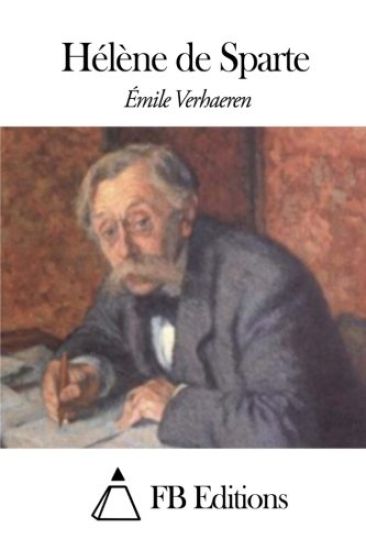
"H l ne de Sparte" par Verhaeren Emile. Verhaeren Emile tait un po te belge flamand, d'expression fran aise(1855-1916).

Helene's Pocket Posh Journal, Chevron
Andrews McMeel Publishing
2016
pokkari

Helene's Pocket Posh Journal, Mum
Andrews McMeel Publishing
2016
pokkari

Helene's Pocket Posh Journal, Polka Dot
Andrews McMeel Publishing
2016
pokkari

Helene's Pocket Posh Journal, Tulip
Andrews McMeel Publishing
2016
pokkari
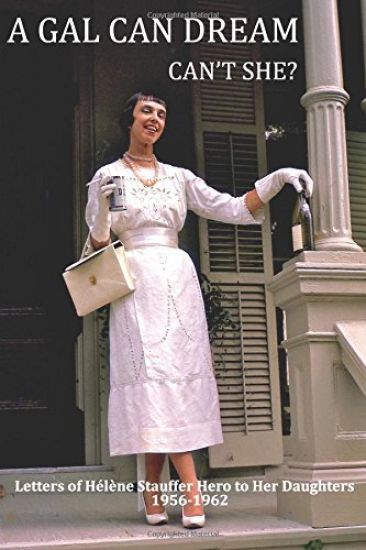
A Gal Can Dream Can't She?: Letters of Helene Stauffer Hero to Her Daughters 1956-1962
Helene Hero Rufty; John Le Bourgeois; Mimi Hero Le Bourgeois
Createspace Independent Publishing Platform
2016
nidottu
Helene: Ein erfülltes Leben für die anderen
Johanna Cart
Createspace Independent Publishing Platform
2016
nidottu
Erinnerungen, die zu Papier gebracht wurden, um nicht vergessen zu werden. M ndliche Erz hlungen als Quelle, die einem aufgeweckten Kind bis hin zu einer erwachsen werdenden Frau im Ged chtnis blieben, weil sie ber hrten. Ein Archiv f r eine Zeit, in der die Erinnerungen zu verblassen beginnen. Pers nlich, poetisch, zu Herzen gehend.
Student and protege of Sigmund Freud, Helene Deutsch was one of the most influential psychoanalysts of her time. An early woman analyst, Deutsch was an ardent feminist and a leading proponent of Freud's controversial theories about the psychology of women. Deutsch was also one of the first prominent career women to combine a professional life with motherhood-even though she never resolved her own conflicts over those contradictory demands. At the time of her death in 1982 at the age of 97, Helene Deutsch was the last survivior of Freud's original circle from Vienna. This volume is a definitive account of the life and works of this remarkable-and enigmatic-woman. The author knew Deutsch personally and was given exclusive access to her papers after her death.The private life of Helene Deutsch was as unconventional as her professional life. While Felix Deutsch, a physician who specialized in psychosomatic medicine, was to remain her husband for fifty years and father her son, Martin, their relationship was highly eccentric. Roazen produces evidence that indicates Felix Deutsch may have been homosexual; also that their son was raised primarily by Felix, as Helene was more interested in her career than was Felix in his, and the Deutsches often lived continents apart.With the rise of Nazism, Helene Deutsch departed in 1935 for America She was welcomed in Cambridge, Massachusetts by the Boston Psychoanalytic Society and was made director of the Society's new institute for the training of analysts. Her two-volume The Psychology of Women, published in 1945, remains one of the foundations of modern analysis. Roazen's biography is an authoritative portrait of a pioneer of psychoanalysis, and one of the unique women of her day. It will be of interest to psychoanalysts, cultural historians, and specialists in women's studies.

Over a period of forty years, Hélène Binet has photographed both contemporary and historical architecture – this is the complete monograph of her work, with two extensive critical essays. Marco Iuliano details Hélène Binet’s background, from her childhood in the Italian fishing village of Sperlonga and in Rome, through her early ‘discovery’ of architectural photographer Lucien Hervé, to other significant influences, like the collaborations with Daniel Libeskind, John Hejduk and the connections at the Architectural Association (AA) in London where she met Zaha Hadid. The essay highlights in detail Binet’s approach to photography, her process and archive. Martino Stierli sets Binet’s work within the conceptual framework of architectural photography, discussing whether an architectural photograph is an inventory of a building or space, a translation into a two-dimensional image or, rather, an image in its own right; an artifact that loosely relates to the original object or phenomenon. Within this context, Stierli argues that Binet’s oeuvre seems to oscillate between two obsessions: a desire to translate spatial phenomena into the two-dimensional space of the image and a quest to articulate the modulation of light on a surface. The two essays are followed by a catalogue of Binet's work, which is framed within a series of her recurring themes emerged through dialogues between the authors and the photographer.