
Kirjahaku
Etsi kirjoja tekijän nimen, kirjan nimen tai ISBN:n perusteella.
1000 tulosta hakusanalla Herbert Marcuse
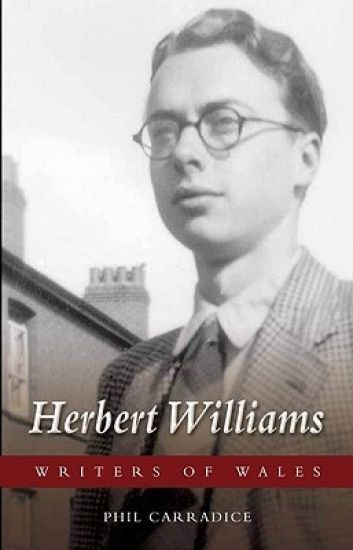
Herbert Williams is one of Wales' most celebrated and distinguished writers. A man of many talents, he is a poet, novelist, short story writer and historian. This book provides a critical survey of his life and writing.
This reader contains the full texts of Herbert Huncke's out-of-print works, "Huncke's Journal" and "The Evening Sun Turned Crimson", and a wide selection from his other published and unpublished poems, stories, memoirs, letters and diaries.
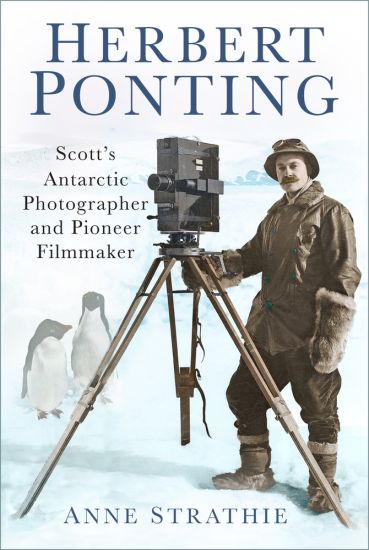
Herbert Ponting (1870-1935) was young bank clerk when he bought an early Kodak compact camera. By the early 1900s, he was living in California, working as a professional photographer, known for stereoview and enlarged images of America, Japan and the Russo-Japanese war. In 1909, back in Britain, Ponting was recruited by Captain Robert Scott as photographer and filmmaker for his second Antarctic expedition. In 1913, following the deaths of Scott and his South Pole party companions, Ponting’s images of Antarctica were widely published, and he gave innovative ‘cinema-lectures’ on the expedition. When war broke out, Ponting’s offers to serve as a photographer or correspondent were declined, but in 1918 he, Ernest Shackleton and other Antarctic veterans joined a government-backed Arctic expedition. During the economically depressed 1920s and 1930s, Ponting wrote his Antarctic memoir, re-worked his Antarctic films into silent and ‘talkie’ versions and worked on inventions. Like others, he struggled financially but was sustained by correspondence with photographic equipment magnate George Eastman, a late-life romance with singer Glae Carrodus and knowing that his images of Antarctica had secured his place in photographic and filmmaking history.
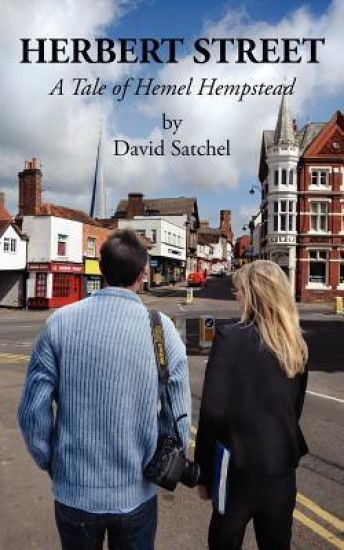
I would like to think that this is the best romantic novel ever written about a newspaper photographer and the town of Hemel Hempstead. This may be because it is the only romantic novel written about a newspaper photographer and Hemel Hempstead!The story starts with the exhumation of the body of Snook. He was a real highway robber who was hung at the scene of his crime on Boxmoor. Examination of the skeleton starts off a trail of mystery and this story runs parallel with that of a photographer who moves to Hemel Hempstead, gets a job on the Gazette and falls in love with an estate agent. Both stories become inter-twined as the plot unfolds with a great deal of action, romance, scary bits and humour.Everyone who has read the book so far, many of these being very critical journalists, has said that it is very entertaining. I am sure you will too.David Satchel.
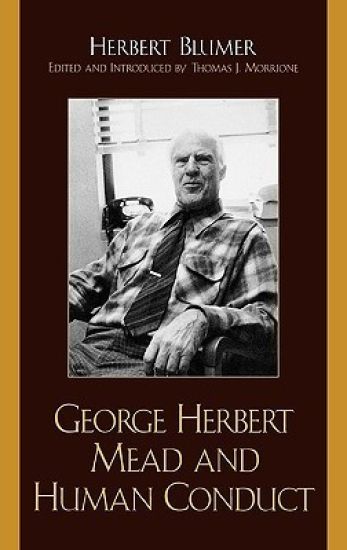
In this posthumous volume, renowned sociologist Herbert Blumer analyzes George Herbert MeadOs position in the study of human conduct. Engaged with MeadOs work for over half a century, Blumer explored MeadOs ideas for developing the theoretical and methodological position of symbolic interactionism, a term that Blumer would later introduce. Although Blumer focused on the sociological and social psychological implications of MeadOs pragmatism, his objective was to explore social processes embodied in and formed through social action. Envisioning individual and collective social action as ongoing accomplishments achieved through symbolic interaction, Blumer insisted on grounding scholarly knowledge about the human condition in the empirical world of peopleOs experiences. Organized and introduced by Thomas J. Morrione, a colleague and friend to whom Blumer entrusted his unpublished papers, the volume also includes BlumerOs correspondence with David L. Miller about Mead's theories and other related correspondence. For a greater understanding of both MeadOs philosophies and Blumer's, this volume will be essential reading for students and teachers of social theory and symbolic interactionism.
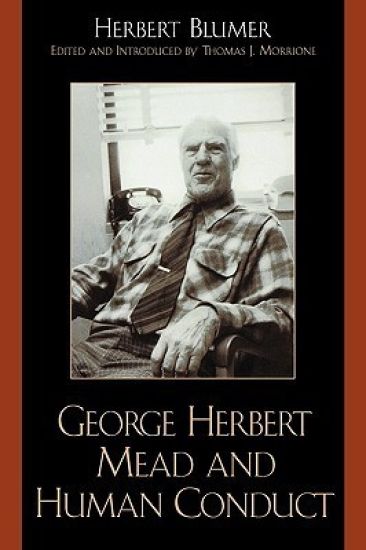
In this posthumous volume, renowned sociologist Herbert Blumer analyzes George Herbert MeadOs position in the study of human conduct. Engaged with MeadOs work for over half a century, Blumer explored MeadOs ideas for developing the theoretical and methodological position of symbolic interactionism, a term that Blumer would later introduce. Although Blumer focused on the sociological and social psychological implications of MeadOs pragmatism, his objective was to explore social processes embodied in and formed through social action. Envisioning individual and collective social action as ongoing accomplishments achieved through symbolic interaction, Blumer insisted on grounding scholarly knowledge about the human condition in the empirical world of peopleOs experiences. Organized and introduced by Thomas J. Morrione, a colleague and friend to whom Blumer entrusted his unpublished papers, the volume also includes BlumerOs correspondence with David L. Miller about Mead's theories and other related correspondence. For a greater understanding of both MeadOs philosophies and Blumer's, this volume will be essential reading for students and teachers of social theory and symbolic interactionism.
Herbert Hoover, Unemployment, and the Public Sphere
Vincent Gaddis; Mary O. Furner
University Press of America
2005
sidottu
Herbert Hoover, Unemployment, and the Public Sphere examines the fulfillment of Hoover's ideas in the area of unemployment between 1919 and 1933. The economic system Herbert Hoover envisioned, one based on cooperation and individual initiative with limited government, and the language he used to promote this system defined New Era discourse. His American Individualism, printed in 1923, served as the political philosophy of the administrations of the 1920s. In his discourse from 1919-1921, Hoover expanded the criteria- the conceptual definitions of virtue and liberty. The book includes a foreword by Mary O. Furner.
Herbert Hoover, Unemployment, and the Public Sphere
Vincent Gaddis; Mary O. Furner
University Press of America
2005
nidottu
Herbert Hoover, Unemployment, and the Public Sphere examines the fulfillment of Hoover's ideas in the area of unemployment between 1919 and 1933. The economic system Herbert Hoover envisioned, one based on cooperation and individual initiative with limited government, and the language he used to promote this system defined New Era discourse. His American Individualism, printed in 1923, served as the political philosophy of the administrations of the 1920s. In his discourse from 1919-1921, Hoover expanded the criteria- the conceptual definitions of virtue and liberty. The book includes a foreword by Mary O. Furner.

Herbert Hoover and World Peace summarizes Hoover's career-long efforts to preserve peace in the world and to help America avoid unnecessary wars, from his opposition to our entry into World War I to his proposed — and rejected — Cold War strategy, which would have avoided the Vietnam War. Personal experiences in the Boxer Rebellion in China and helping to feed Belgium during World War I, coupled with his early Quaker nurture, that sensitized him to war-related tragedies. These essays illustrate the varied ways in which Hoover expressed and implemented his commitment to world peace, as humanitarian, advisor, cabinet member, president, citizen, and writer. No other president was so consistent and thoughtful on matters of world peace.
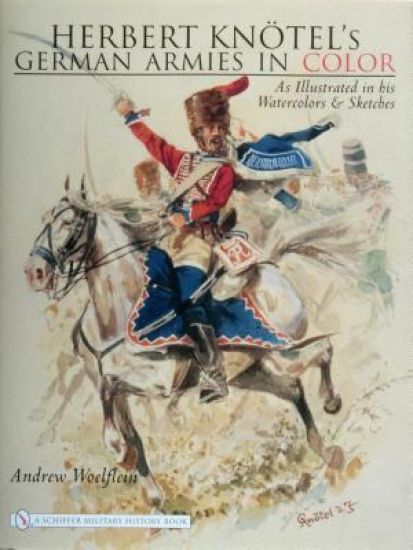
Herbert Knötel adroitly brings soldiers of every age and every nationality to life with his detailed sketches and masterful watercolors. "Herbert Knötel's German Armies" includes 137 never-before-published sketches and watercolors of German military figures from the 18th-20th centuries. This unique art, from the Anne S.K. Brown Military Collection at Brown University and the private collection of Alfred and Roland Umhey, offers vivid insight into one of the 20th century's most accomplished military artists. A superb biographical essay from Knötel's only child provides personal context for the artist's life and brilliant work.
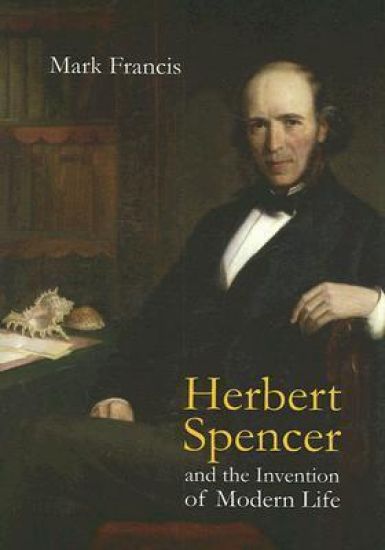
The ideas of the English philosopher Herbert Spencer (1820-1903) profoundly shaped Victorian thought regarding evolutionary theory, the philosophy of science, sociology, and politics. In his day, Spencer's works ranked alongside those of Darwin and Marx in their importance to the development of disciplines as wide-ranging as sociology, anthropology, political theory, philosophy, and psychology. Yet during his lifetime—and certainly in the decades that followed—Spencer has been widely misunderstood. Both lauded and disparaged as the father of Social Darwinism (it was Spencer who coined the phrase "survival of the fittest"), and as an apologist for individualism and unrestrained capitalism, he was, in fact, none of these; he was instead a subtle and complex thinker.In his major new intellectual biography of Spencer, Mark Francis uses archival material and contemporary printed sources to create a fascinating portrait of a man who attempted to explain modern life in all its biological, psychological, and sociological forms through a unique philosophical and scientific system that bridged the gap between empiricism and metaphysics. Vastly influential in England and beyond—particularly the United States and Asia—his philosophy was, as Francis shows, systematic and rigorous. Despite the success he found in the realm of ideas, Spencer was an unhappy man. Francis reveals how Spencer felt permanently crippled by the Christian values he had absorbed during childhood, and was incapable of romantic love, as became clear during his relationship with the novelist George Eliot. Elegantly written, provocative, and rich in insight, Herbert Spencer and the Invention of Modern Life is an exceptional work of scholarship that not only dispels the misinformation surrounding Spencer but also illuminates the broader cultural and intellectual history of the nineteenth century.
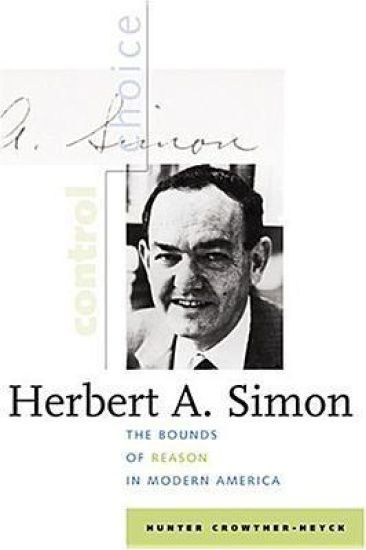
Rarely does the world see as versatile a figure as Herbert Simon. A Nobel laureate in economics, he was an accomplished political scientist, winner of a lifetime achievement award from the American Psychological Association, and founder of the Department of Computer Science at Carnegie Mellon University. In all his work in all these fields, he pursued a single goal: to create a science that could map the bounds of human reason and so enlarge its role in human affairs. Hunter Crowther-Heyck uses the career of this unique individual to examine the evolution of the social sciences after World War II, particularly Simon's creation of a new field, systems science, which joined together two distinct, powerful approaches to human behavior, the sciences of choice and control. Simon sought to develop methods by which human behavior, specifically human problem-solving, could be modeled and simulated. Regarding mind and machine as synonymous, Simon applied his models of human behavior to many other areas, from public administration and business management to artificial intelligence and the design of complex social and technical systems. In this informed and discerning study, Crowther-Heyck explores Simon's contributions to science and their influences on modern life and thought. For historians of science, social science, and technology, and for scholars of twentieth-century American intellectual and cultural history, this account of Herbert Simon's life and work provides a rich and valuable perspective.
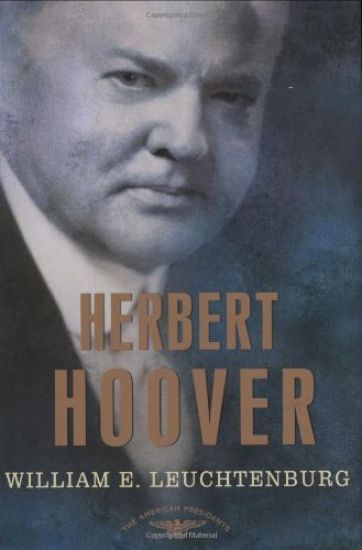
Catapulted into national politics by his heroic campaigns to feed Europe during and after World War I, Herbert Hoover - an engineer by training - exemplified the economic optimism of the 1920s. As president, however, Hoover was sorely tested by America's first crisis of the twentieth century: the Great Depression. Renowned New Deal historian William E. Leuchtenburg demonstrates how Hoover was blinkered by his distrust of government and his belief that volunteer ism would solve all social ills. As Leuchtenburg shows, Hoover's attempts to enlist the aid of private sector leaders did little to mitigate the Depression, and he was routed from office by Franklin D. Roosevelt in 1932. From his retirement at Stanford University, Hoover remained a vocal critic of the New Deal and big government until the end of his long life. Leuchtenburg offers a frank, thoughtful portrait of this lifelong public servant, and shrewdly assesses Hoover's policies and legacy in the face of one of the darkest periods of American history.
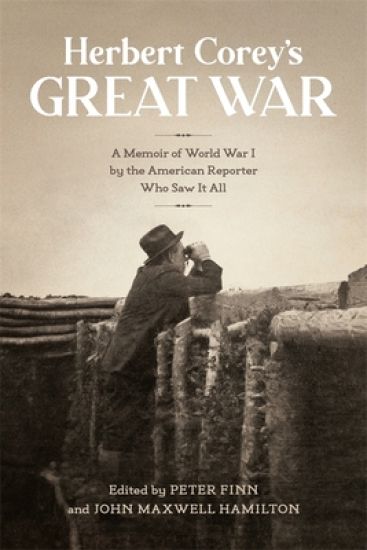
In 1914, the Associated Newspapers sent correspondent Herbert Corey to Europe on the day Great Britain declared war on Germany. During the Great War that followed, Corey reported from France, Britain, and Germany, visiting the German lines on both the western and eastern fronts. He also reported from Greece, Italy, Switzerland, Holland, Belgium, and Serbia. When the Armistice was signed in November 1918, Corey defied the rules of the American Expeditionary Forces and crossed into Germany. He covered the Paris Peace Conference the following year. No other foreign correspondent matched the longevity of his reporting during World War I. Until recently, however, his unpublished memoir lay largely unnoticed among his papers in the Library of Congress.With publication of Herbert Corey's Great War, coeditors Peter Finn and John Maxwell Hamilton reestablish Corey's name in the annals of American war reporting. As a correspondent, he defies easy comparison. He approximates Ernie Pyle in his sympathetic interest in the American foot soldier, but he also told stories about troops on the other side and about noncombatants. He is especially illuminating on the obstacles reporters faced in conveying the story of the Great War to Americans. As his memoir makes clear, Corey didn't believe he was in Europe to serve the Allies. He viewed himself as an outsider, one who was deeply ambivalent about the entry of the United States into the war. His idiosyncratic, opinionated, and very American voice makes for compelling reading.
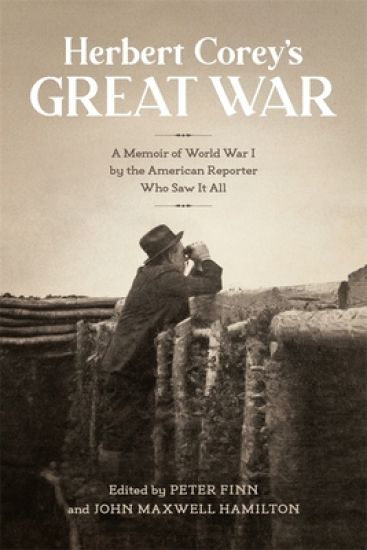
In 1914, the Associated Newspapers sent correspondent Herbert Corey to Europe on the day Great Britain declared war on Germany. During the Great War that followed, Corey reported from France, Britain, and Germany, visiting the German lines on both the western and eastern fronts. He also reported from Greece, Italy, Switzerland, Holland, Belgium, and Serbia. When the Armistice was signed in November 1918, Corey defied the rules of the American Expeditionary Forces and crossed into Germany. He covered the Paris Peace Conference the following year. No other foreign correspondent matched the longevity of his reporting during World War I. Until recently, however, his unpublished memoir lay largely unnoticed among his papers in the Library of Congress.With publication of Herbert Corey's Great War, coeditors Peter Finn and John Maxwell Hamilton reestablish Corey's name in the annals of American war reporting. As a correspondent, he defies easy comparison. He approximates Ernie Pyle in his sympathetic interest in the American foot soldier, but he also told stories about troops on the other side and about noncombatants. He is especially illuminating on the obstacles reporters faced in conveying the story of the Great War to Americans. As his memoir makes clear, Corey didn't believe he was in Europe to serve the Allies. He viewed himself as an outsider, one who was deeply ambivalent about the entry of the United States into the war. His idiosyncratic, opinionated, and very American voice makes for compelling reading.