Kirjojen hintavertailu. Mukana 11 627 220 kirjaa ja 12 kauppaa.

Kirjahaku

Etsi kirjoja tekijän nimen, kirjan nimen tai ISBN:n perusteella.

1000 tulosta hakusanalla Hussein Alshaima Taleb

Theological Approaches to Qur'anic Exegesis
This book provides a comprehensive and systematic analysis of the various schools of Qur'anic exegesis, from the earliest periods through to the present day.Employing a comparative-contrastive methodology, the author examines traditional and rational schools of thought – such as the Mu’tazili, Shi’i, Ibadi, Sufi, metaphysical, modern, and scientific approaches to the interpretation of the Qur’an – to give a detailed analysis of the similarities and differences in their theological views. The study spans a broad period, covering exegetical techniques adopted in Qur’anic exegesis from its infancy during the 1st/7th century up to the beginning of the 15th/21st century. Furnished with copious micro- and macro-level examples which explicate the Qur’anic notions and the points of view relevant to each school and exegetical approach, the book provides a rounded empirical study of Islamic thought.This thorough and holistic historical investigation is an important contribution to the study of Qur’anic exegesis and Islamic theology, and as such will be of enormous interest to scholars of religion, philosophy and Islamic studies.
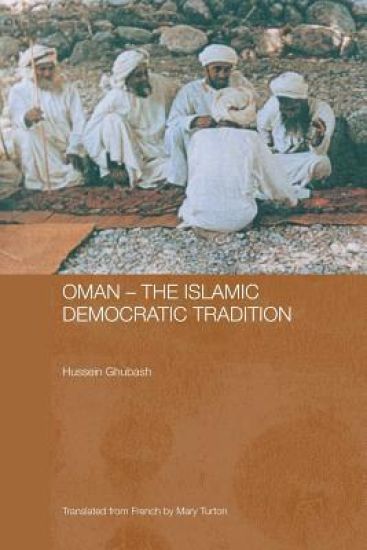
Oman - The Islamic Democratic Tradition
Oman is the inheritor of a unique political tradition, the imama (imamate), and has a special place in the Arab Islamic world. From the eighth century and for more than a thousand years, the story of Oman was essentially a story of an original, minority, movement: the Ibadi. This long period was marked by the search for a just imama through the Ibadi model of the Islamic State.Hussein Ghubash’s well-researched book takes the reader on an historical voyage through geography, politics, and culture of the region, from the sixteenth century to the present day. Oman has long-standing ties with East Africa as well as Europe; the first contact between Oman and European imperialist powers took place at the dawn of the 1500s with the arrival of the Portuguese, eventually followed by the Dutch, French and British.Persuasive, thorough and drawing on Western as well as Islamic political theory, this book analyzes the different historical and geopolitical roles of this strategic country. Thanks to its millennial tradition, Oman enjoys a solid national culture and a stable socio-political situation. Today, it is moving steadily towards a democratic future.
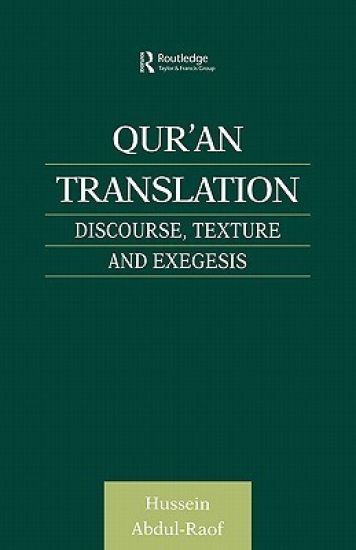
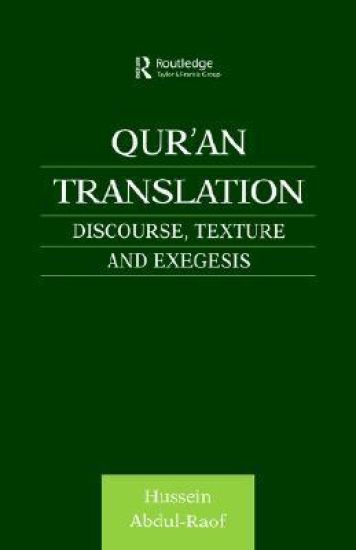
Qur'an Translation

Qur'an Translation

Hussein Abdul-Raof

Routledge
2010
nidottu
The Qur'an is read by millions of Muslims on a daily basis, yet there is no book available to the reader, Arab or non-Arab, which provides a linguistic and rhetorical insight into Qur'anic discourse. This book explains Qur'an translational problems and provides a thorough account of the unique syntactic, semantic, phonetic, prosodic, pragmatic, and rhetorical features of the Qur'an.
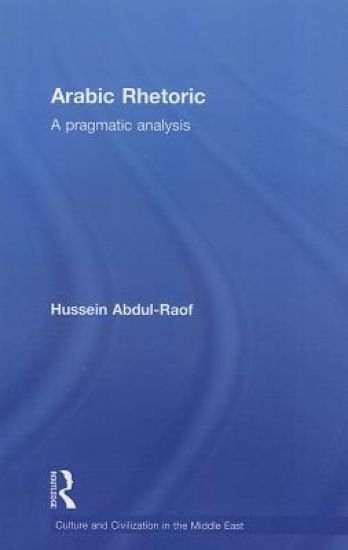
Arabic Rhetoric

Arabic Rhetoric

Hussein Abdul-Raof

Routledge
2011
nidottu
Arabic Rhetoric explores the history, disciplines, order and pragmatic functions of Arabic speech acts. It offers a new understanding of Arabic rhetoric and employs examples from modern standard Arabic as well as providing a glossary of over 448 rhetorical expressions listed in English with their translations, which make the book more accessible to the modern day reader. Hussein’s study of Arabic rhetoric bridges the gap between learning and research, whilst also meeting the academic needs of our present time. This up-to-date text provides a valuable source for undergraduate students learning Arabic as a foreign language, and is also an essential text for researchers in Arabic, Islamic studies, and students of linguistics and academics.
Schools of Qur'anic Exegesis

Schools of Qur'anic Exegesis

Hussein Abdul-Raof

Routledge
2013
nidottu
Qur’anic exegesis has become the battleground of political Islam and theological conflict among various Muslim schools of thought. Using comparative and contrastive methodology, examples from the Qur'an are investigated in the light of various theological views to delineate the birth, development and growth of Qur'anic exegesis.The political status quo, in the past and at present, has impinged upon Qur’anic exegesis more than on any other discipline in Islamic studies. This book illustrates the dichotomy between mainstream and non-mainstream Islam, showing how Qur’anic exegesis reflects the subtle dogmatic differences and political cleavages in Islamic thought. Chapters explore in depth the intrusive views of the compilers of early exegesis manuscripts, the scepticism among Western scholars about the authenticity of early Muslim works of exegesis and of prophetic tradition, and the role of exegesis as a tool to reaffirm the Qur’an as a canon.Written to appeal to those with comparative exegetical interests as well as those focused on Islamic studies in general, this book will be an important reference for research students, scholars, and students of Islamic Studies, Theology, Religious studies and Middle Eastern Studies.
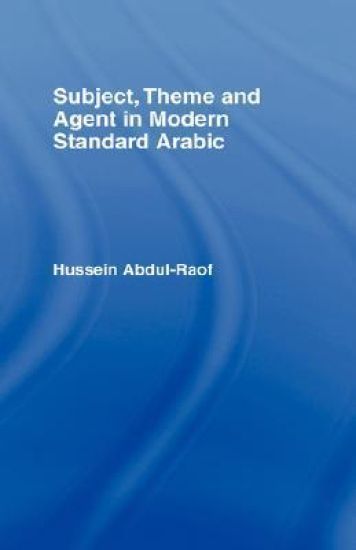
Subject, Theme and Agent in Modern Standard Arabic

Subject, Theme and Agent in Modern Standard Arabic

Hussein Abdul-Raof

RoutledgeCurzon
1998
sidottu
Investigates the universal categories 'subject', 'theme', and 'agent' with special reference to their functional status in Modern Standard Arabic (MSA) and how these three distinct functions may or may not coincide in Arabic sentences. These functions are inexplicitly characterised by classical and modern Arab linguists and Arabists alike. It has been found that the pre- (viz. sentence - initial) or post-verbal noun phrase (NP) in Arabic can be assigned the syntactic function 'subject' but may not necessarily assume the semantic function 'agent', that the pre-verbal NP, which may not necessarily be the 'subject', has the pragmatic function 'theme', and that these distinct functions sometimes cluster around a single NP in certain sentences, depending on genre. It has also been found that in MSA the order of sentence constituents is relatively free, subject to a verb-initial preference, especially when needed to prevent ambiguity. The present study reveals the fact that although coding features such as word order, case marking, and cross-referencing (viz. agreement) may provide a clear indication of which NPs are 'subjects' in MSA, they do not provide a clear-cut indication of semantic relations such as 'agent'; the 'subject' position in MSA is not necessarily the canonical 'agent' position.
Qur'an Translation

Qur'an Translation

Hussein Abdul-Raof

RoutledgeCurzon
2001
sidottu
The Qur'an is read by millions of Muslims on a daily basis, yet there is no book available to the reader, Arab or non-Arab, which provides a linguistic and rhetorical insight into Qur'anic discourse. This book explains Qur'an translational problems and provides a thorough account of the unique syntactic, semantic, phonetic, prosodic, pragmatic, and rhetorical features of the Qur'an.
High Voltage Devices and Circuits in Standard CMOS Technologies
Standard voltages used in today's ICs may vary from about 1.3V to more than 100V, depending on the technology and the application. High voltage is therefore a relative notion. High Voltage Devices and Circuits in Standard CMOS Technologies is mainly focused on standard CMOS technologies, where high voltage (HV) is defined as any voltage higher than the nominal (low) voltage, i.e. 5V, 3.3V, or even lower. In this standard CMOS environment, IC designers are more and more frequently confronted with HV problems, particularly at the I/O level of the circuit. In the first group of applications, a large range of industrial or consumer circuits either require HV driving capabilities, or are supposed to work in a high-voltage environment. This includes ultrasonic drivers, flat panel displays, robotics, automotive, etc. On the other hand, in the emerging field of integrated microsystems, MEMS actuators mainly make use of electrostatic forces involving voltages in the typical range of 30 to 60V. Last but not least, with the advent of deep sub-micron and/or low-power technologies, the operating voltage tends towards levels ranging from 1V to 2.5V, while the interface needs to be compatible with higher voltages, such as 5V. For all these categories of applications, it is usually preferable to perform most of the signal processing at low voltage, while the resulting output rises to a higher voltage level. Solving this problem requires some special actions at three levels: technology, circuit design and layout. High Voltage Devices and Circuits in Standard CMOS Technologies addresses these topics in a clear and organized way. The theoretical background is supported by practical information and design examples. It is an invaluable reference for researchers and professionals in both the design and device communities.
Selective Linear-Phase Switched-Capacitor and Digital Filters
Modern high-capacity communication systems require filters with simultaneous good amplitude and phase responses. Selective Linear-Phase Switched-Capacitor and Digital Filters is the first coherent treatment of selective linear-phase switched-capacitor filters written by a leading international authority on the subject. Digital realizations of the same characteristics are also treated. In both cases, emphasis is laid on optimal low-sensitivity structures, a highly desirable attribute from the practical view-point. With the increasing interest in high-frequency switched-capacitor filters, the range of operation reaches a point where the phase response becomes a major design consideration, thus heightening the importance of this book. Selective Linear-Phase Switched-Capacitor and Digital Filters is an invaluable reference for electronic circuit design engineers and researchers as well as graduate students, and may be used as a text for an advanced course on the subject.
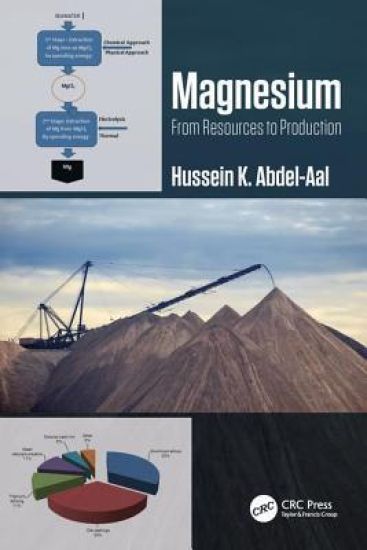
Magnesium: From Resources to Production

Magnesium: From Resources to Production

Hussein K. Abdel-Aal

CRC Press Inc
2018
sidottu
Magnesium is one of the most abundant minerals in seawater. Extracting magnesium from seawater could reduce cost of this mineral, resulting in positive implications for industries that use it. This book addresses mineral process engineering with emphasis on magnesium and provides practicing engineers and students with comprehensive knowledge on magnesium and how it is extracted from seawater and magnesium ores. It takes a chemical engineering approach as separation of magnesium from seawater involves the application of the powerful science of chemistry and transport phenomena principles. This monograph discusses magnesium resources and occurrence, includes an exploration study on deriving magnesium and mineral salts from seawater, and features coverage of magnesium chloride. It also covers commercial methods for magnesium production as an end product, current and prospective applications in the energy domain, and offers an account of the use of magnesium to store hydrogen in the form of magnesium hydride.
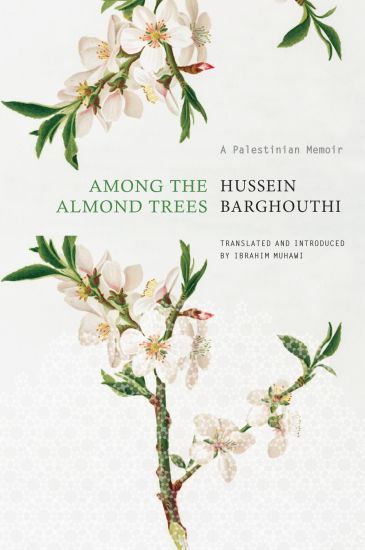
Among the Almond Trees

Among the Almond Trees

Hussein Barghouthi

Seagull Books London Ltd
2022
sidottu
A poetically written and bitterly sweet memoir about nature, death, life in Palestine, and the universal concept of home. Palestinian writer Hussein Barghouthi was in his late forties when he was diagnosed with lymphoma. He had feared it was HIV, so when the cancer diagnosis was confirmed, he left the hospital feeling a bitter joy because his wife and son would be spared. The bittersweetness of this reaction characterizes the alternating moods of narration and reflection that distinguish this meditative memoir, Among the Almond Trees. Barghouthi’s way of dealing with finality is to return to memories of childhood in the village of his birth in central Palestine, where the house in which he grew up is surrounded by almond and fig orchards. He takes many healing walks in the moonlit shadows of the trees, where he observes curious foxes, dancing gazelles, a badger with an unearthly cry, a weasel, and a wild boar with its young—a return not only to the house but to nature itself. The author decides to build a house where he would live with his wife and son, in whom he sees a renewal of life. The realization of his impending death also urges him to vocalize this experience, and he relates the progress of the disease at infrequent intervals. And, ultimately, he details the imaginative possibility of a return to life—to the earth, where he would be buried among the almond trees.
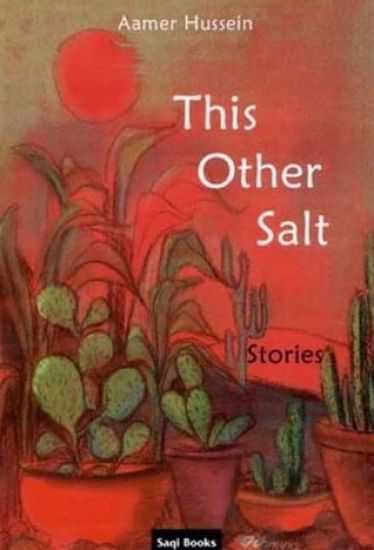
This Other Salt

This Other Salt

Hussein Aamer

Saqi Books
2001
sidottu
This collection of stories includes: "The Blue Direction", where a teenage boy's life uncannily begins to resemble the role he plays in a school operetta and "The Lost Cantos of the Silken Tiger", where a poet revenges herself on her faithless lover by turning their romance into a biblical legend.
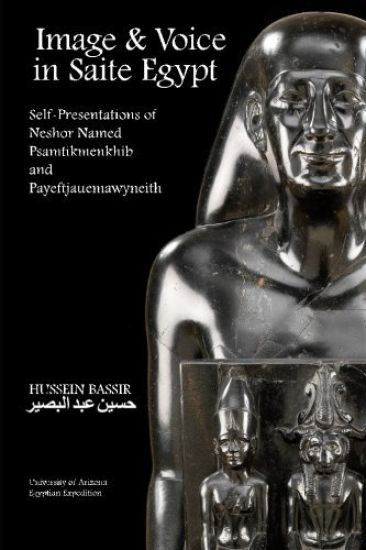
Image and Voice in Saite Egypt

Image and Voice in Saite Egypt

Hussein Bassir

Journal of Ancient Egyptian Interconnections
2014
nidottu
A scholarly work that explores the self-presentation of some elite members of late Saite Egypt. This study examines the biographies and statues of two individuals who were principal members of the non-royal aristocracy. The approach integrates images, monuments, and texts with the places, participants and broader historical environment that gives them meaning. Ultimately, the goal is to bridge the gap between image and text.
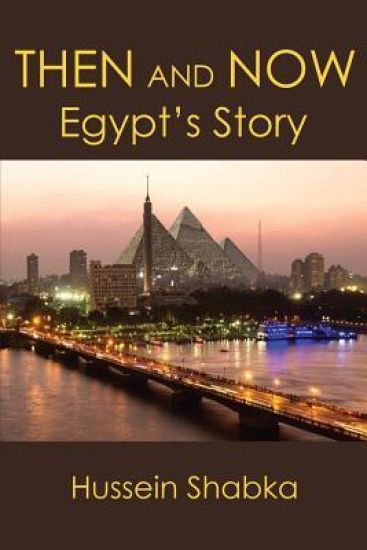
Then and Now

Then and Now

Hussein Shabka

New Academia Publishing, LLC
2018
pokkari
The rise and fall of civilizations has been a fact of history since before it was recorded. It is a normal process. So what is the particular significance of Egypt's descent from a wealthy, organized, sophisticated society into the chaotic milieu that reigns today? Perhaps it relates to the nature of the yawning gap that exists between that sophistication that endured for more than four thousand years and earned Egypt the title, om el donya, mother of the world, as Egyptians refer to her, and the social and cultural degradation over the last two thousand years since the last pharaoh, Cleopatra, departed the scene.As the living gods, the pharaohs were the pivots around which all social institutions turned, creating stability, prosperity, and security for four millennia. The death of the last pharaoh, therefore, was not merely an event that signaled loss of independence and a transfer of power to Rome. It signaled the collapse of the foundations of society and the beginning of a steep decline into chaos.For the following two millennia, a succession of foreign occupations and despotic rulers undermined Egypt's national identity, exported her wealth to far away seats of power, imported a new language and culture and spawned social values that are inimical to the very notion of modernity. Understanding these developments provides one possible route to getting a handle on the social and cultural deterioration and its effects in Egypt. This may also allow insight into developments today not only in Egypt, but also in the greater Middle East that surrounds her.
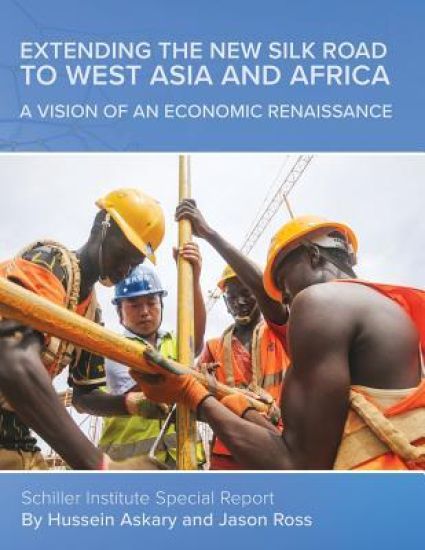
Extending the New Silk Road to West Asia and Africa

Extending the New Silk Road to West Asia and Africa

Hussein Askary; Jason a Ross

Schiller Institute, Inc.
2017
pokkari
Are you ready for the coming economic renaissance in Africa and West Asia? Stay ahead of the curve with the Schiller Institute's groundbreaking report Extending the New Silk Road to West Asia and Africa.This Nov 2017 report covers ongoing and proposed infrastructure projects, and defines the scientific-economic principles underlying a new economic platform for the region. This vision of the future is completely different than anything you'll get from the general media or standard think tank analysis.Contents: Preface Introduction A New Global Paradigm China's Role in the Economic Renaissance of West Asia and Africa What is Win-Win Philosophy? The Age of Mega-Projects Is Back Redefining 'Sustainable Development' The African Union Aims High Africa Must Leap Ahead, Not Crawl Forward Chapter 1: West Asia: The Silk Road's Crossroads to the Mediterranean and Africa Egypt: A Bridge between Asia, Europe and Africa Chapter 2: The Silk Road Reaches Africa China in Africa: Myths or Facts Europe, not China, Is Engaged in Land Grabbing in Africa Defining an African Future Chapter 3: The Economic Science Behind the World Land-Bridge What is Infrastructure, Really? Economics: The Ultimate Science Platforms: Artificial Environments Energy Flux Density Aspects of the 'Synthetic Environment' A Future Platform: Nuclear Fusion Conclusion Chapter 4: Financing Regional and National Infrastructure Money vs. Credit A Southwest Asia/Africa Regional Infrastructure Bank Public-Private Partnerships Cannot Substitute Chapter 5: Demography and Development Case Study: Egypt--Myth of Overpopulation Chapter 6: Integration of West Asia with the New Silk Road The Bridge Among Continents A Common Enemy: The Desert Petrochemicals: Industry of the Future Appendix--Case Study: Syria's Reconstruction Project Phoenix Chapter 7: Africa -- Transport Network Integration A. The Nile Basin and East Africa B. Southern Africa C. West and Central Africa D. North Africa Chapter 8: Africa -- Water Resources Development Managing the Water Cycle as a Cycle Case study: The Nile Basin Chapter 9: To Power Africa, Go Nuclear Energy Requirements An African Visionary: Diop Chapter 10: Africa -- Food Security: Realizing Africa's Vast Agricultural Potential Land and Yield Commitment to Transformation Chapter 11: Africa in Space New Space Nations Space as a Driver for Development Case Study -- South Africa: Looking to the Heavens to Develop the Continent Space Technology Can Support Africa's Development Goals Chapter 12: Conclusions and Recommendations The Political and Economic Context Some Necessary Axiomatic Shifts Understanding Physical Economics Financing Infrastructure Science and Technology Transport Power Water Agriculture Chapter 13: Selection of Proposed Mega Projects in Africa Pan-African High-Speed Rail Network Regional and Continental Corridors New Suez Canal and Industrial Zone Transaqua: The Centerpiece of Africa's Development Grand Inga Dam Project South African Nuclear Program Sicily-Tunis Connector -- TUNeIT
An Introduction to Arabic Translation

An Introduction to Arabic Translation

Hussein Abdul-Raof

TAYLOR FRANCIS LTD
2022
sidottu
Combining theory and practice, this book is a model for Arabic translation and prepares students for the translation industry.Containing 22 approaches, An Introduction to Arabic Translation provides the normative principles to guide training in Arabic-English-Arabic translation. It revitalizes Arabic-English-Arabic translation through its empirical textual reality, hinged upon Arabic and English authentic contexts and their linguistic, discoursal, and cultural incongruity. The exercises in each chapter provide practical training supported by translation theory. The translation commentaries included represent a critical translation quality assessment based on an analysis of discourse and textual features to highlight the process of translation, the translation approach adopted, and why. Such commentary invites students to reflect on their understanding of the translation process and the approach required for a given Arabic-English-Arabic translation problem.Providing a methodologically comprehensive course of Arabic-English-Arabic translation studies, and insightful discussion of high value for both students and teachers, this book will be invaluable to anyone seeking to learn or improve their Arabic and translation skills.