Kirjojen hintavertailu. Mukana 11 244 527 kirjaa ja 12 kauppaa.

Kirjahaku

Etsi kirjoja tekijän nimen, kirjan nimen tai ISBN:n perusteella.

1000 tulosta hakusanalla J -P -R Cuisin

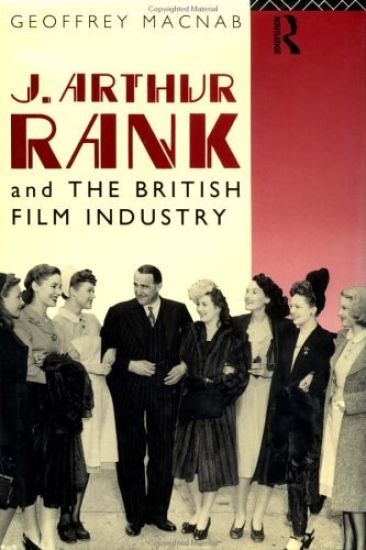
J. Arthur Rank and the British Film Industry
Presiding over the "golden era" of the British Film Industry from the mid to late 1940s, J. Arthur Rank financed movies such as Oliver Twist, The Red Shoes, Brief Encounter, Caesar and Cleopatra and Black Narcissus. Never before, and never since, has the industry risen to such heights.J. Arthur Rank charts every aspect of the robust film culture that Rank helped to create. Having started out with relatively little knowledge of the cinema, Rank's sponsorship was to bring about astounding progress within the industry, and by establishing an organization comparable in size to any of the major Hollywood studios, Rank briefly managed to reconcile and consolidate the competing demands of "art" and "business" - an achievement very much absent from today's diminished and fragmented film industry. Macnab goes on to explain the eventual collapse of the Rank experiment amidst the economic and political maelstrom of post-war Britain, highlighting the problems still facing the industry today. By meshing archival research with interviews with Rank's contemporaries and members of his family, this definitive study firmly restores Rank to his rightful place at the hub of British film history.
J. Arthur Rank and the British Film Industry
Presiding over the "golden era" of the British Film Industry from the mid to late 1940s, J. Arthur Rank financed movies such as Oliver Twist, The Red Shoes, Brief Encounter, Caesar and Cleopatra and Black Narcissus. Never before, and never since, has the industry risen to such heights.J. Arthur Rank charts every aspect of the robust film culture that Rank helped to create. Having started out with relatively little knowledge of the cinema, Rank's sponsorship was to bring about astounding progress within the industry, and by establishing an organization comparable in size to any of the major Hollywood studios, Rank briefly managed to reconcile and consolidate the competing demands of "art" and "business" - an achievement very much absent from today's diminished and fragmented film industry. Macnab goes on to explain the eventual collapse of the Rank experiment amidst the economic and political maelstrom of post-war Britain, highlighting the problems still facing the industry today. By meshing archival research with interviews with Rank's contemporaries and members of his family, this definitive study firmly restores Rank to his rightful place at the hub of British film history.
J.D. Salinger's The Catcher in the Rye
J.D. Salinger’s The Catcher in the Rye (1951) is a twentieth-century classic. Despite being one of the most frequently banned books in America, generations of readers have identified with the narrator, Holden Caulfield, an angry young man who articulates the confusion, cynicism and vulnerability of adolescence with humour and sincerity.This guide to Salinger’s provocative novel offers:an accessible introduction to the text and contexts of The Catcher in the Rye a critical history, surveying the many interpretations of the text from publication to the presenta selection of new critical essays on the The Catcher in the Rye, by Sally Robinson, Renee R. Curry, Denis Jonnes, Livia Hekanaho and Clive Baldwin, providing a range of perspectives on the novel and extending the coverage of key critical approaches identified in the survey sectioncross-references between sections of the guide, in order to suggest links between texts, contexts and criticismsuggestions for further reading.Part of the Routledge Guides to Literature series, this volume is essential reading for all those beginning detailed study of The Catcher in the Rye and seeking not only a guide to the novel, but a way through the wealth of contextual and critical material that surrounds Salinger’s text.
J.D. Salinger's The Catcher in the Rye
J.D. Salinger’s The Catcher in the Rye (1951) is a twentieth-century classic. Despite being one of the most frequently banned books in America, generations of readers have identified with the narrator, Holden Caulfield, an angry young man who articulates the confusion, cynicism and vulnerability of adolescence with humour and sincerity.This guide to Salinger’s provocative novel offers:an accessible introduction to the text and contexts of The Catcher in the Rye a critical history, surveying the many interpretations of the text from publication to the presenta selection of new critical essays on the The Catcher in the Rye, by Sally Robinson, Renee R. Curry, Denis Jonnes, Livia Hekanaho and Clive Baldwin, providing a range of perspectives on the novel and extending the coverage of key critical approaches identified in the survey sectioncross-references between sections of the guide, in order to suggest links between texts, contexts and criticismsuggestions for further reading.Part of the Routledge Guides to Literature series, this volume is essential reading for all those beginning detailed study of The Catcher in the Rye and seeking not only a guide to the novel, but a way through the wealth of contextual and critical material that surrounds Salinger’s text.
J.C. Fischer and his Diary of Industrial England
This book was first published in 1966. It was surprising that so small and so remote a country as Switzerland should have played such an important part in the industrial revolution on the Continent in the nineteenth century. A lack of natural resources and basic raw materials and population of 1,687,000 in 1817, faraway trade ports, and until 1848 no real central government with the administrative structure to support expansion of manufacturers. However, the people were hardworking, thrifty and high standards of workmanship; and had good relations with France and Germany, which saw the watchmakers, silkweavers and chocolate crafters start to thrive. Johann Conrad Fischer was typical of the entrepreneurs who laid the foundations of Switzerland's prosperity with his steelworks.
J.B. Priestley

J.B. Priestley

Maggie B. Gale

Routledge
2008
sidottu
J. B. Priestley is the first book to provide a detailed and up to date analysis of the enormous contribution made by this playwright, novelist, journalist and critic to twentieth century British theatre. Priestley was often criticised for being either too populist or too experimental and this study unpicks the contradictions of a playwright and theatre theorist popular with audiences but too often dismissed by critics; describing and analysing in detail not only his plays but also their specific historical and contemporary productions.Using a combination of archive, review and critical materials, the book re-locates Priestley as a theatre theorist of substance as well as a playwright who challenged theatre conventions and assumptions about audience expectations, at a time when theatre was considered both conservative and lacking in innovation.
J.B. Priestley

J.B. Priestley

Maggie B. Gale

Routledge
2008
nidottu
J. B. Priestley is the first book to provide a detailed and up to date analysis of the enormous contribution made by this playwright, novelist, journalist and critic to twentieth century British theatre. Priestley was often criticised for being either too populist or too experimental and this study unpicks the contradictions of a playwright and theatre theorist popular with audiences but too often dismissed by critics; describing and analysing in detail not only his plays but also their specific historical and contemporary productions.Using a combination of archive, review and critical materials, the book re-locates Priestley as a theatre theorist of substance as well as a playwright who challenged theatre conventions and assumptions about audience expectations, at a time when theatre was considered both conservative and lacking in innovation.
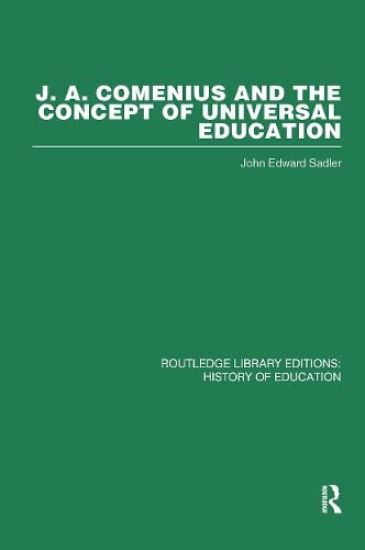
J A Comenius and the Concept of Universal Education
Originally published in 1966, this volume reappraises the educational philosophy of Comenius. Until recently the attention given to Comenius and his work concentrated on a narrow interpretation of his pedagogy which played down his pansophic theory. In the second half of the nineteenth century Germany led the way in pedagogical study and Comenius was widely accepted as having laid the foundations of a science of education. The emergence of education as an academic subject in England and the USA led to a considerable interest in the history of educational ideas and Comenius’ work.
J. Popular Culture
These four volumes are part of the forty-one volume set New Accents. First launched in 1977, the New Accents series rapidly changed the face of literary studies. Its clear and concise volumes brought the latest in literary theory to students and academics and paved the way for undergraduate teaching on essential new topics and approaches.
J. Japan

J. Japan

Andrew Wyatt

Routledge
2007
muu
This set demonstrates the increasing interest among Western people paid to civilisation in the East at the turn of the nineteenth century. Included are Kishio Satomi's studies on Nichiren and Japanese idealism, which were written from an Eastern viewpoint specifically for a Western audience. Also reprinted here is Chamberlain's translation from classical Japanese poetry which offers one of the first known attempts to interpret the literature of the Japanese to the Western world.
J A Comenius and the Concept of Universal Education
Originally published in 1966, this volume reappraises the educational philosophy of Comenius. Until recently the attention given to Comenius and his work concentrated on a narrow interpretation of his pedagogy which played down his pansophic theory. In the second half of the nineteenth century Germany led the way in pedagogical study and Comenius was widely accepted as having laid the foundations of a science of education. The emergence of education as an academic subject in England and the USA led to a considerable interest in the history of educational ideas and Comenius’ work.
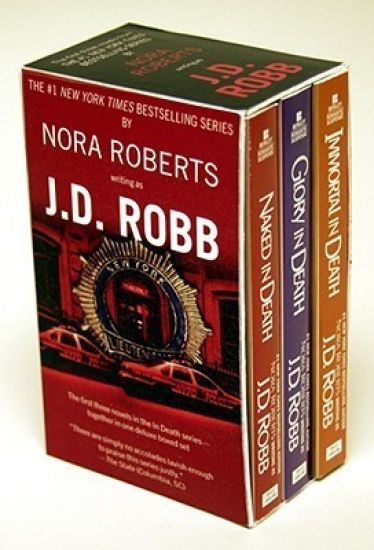
J.D. Robb Box Set

J.D. Robb Box Set

J. D. Robb

BERKLEY BOOKS
2006
nidottu
Now available in one extraordinary box set--Naked in Death, Glory in Death, and Immortal in Death--the first three novels in J.D. Robb's #1 New York Times bestselling series featuring Lieutenant Eve Dallas. NAKED IN DEATH Eve Dallas is a New York police lieutenant using her instincts to hunt for a ruthless killer. Breaking every rule, Eve gets involved with Roarke, an Irish billionaire--and a suspect in Eve's murder investigation. But passion and seduction have rules all their own. GLORY IN DEATH Police Lieutenant Eve Dallas has no problem finding connections between two violent crimes. Both victims were beautiful and highly successful women whose intimate relations with men of great power and wealth provide Eve with a long list of suspects--including her own lover, Roarke. IMMORTAL IN DEATH A top model is dead, the victim of a brutal murder. Police Lieutenant Eve Dallas puts her professional life on the line to take the case when suspicion falls on her best friend, the other woman in a fatal love triangle.
J. Christoph Amberger's Hot Trading Secrets

J. Christoph Amberger's Hot Trading Secrets

J. Christoph Amberger

John Wiley Sons Inc
2006
sidottu
Master the market for maximum profits with HOT TRADING SECRETS Playing the trading game takes audacious confidence, but winning takes more. It's about making chances instead of taking chances. As founder of the remarkably successful Taipan Group-a team of independent financial analysts-author J. Christoph Amberger knows: "There is always an opportunity to make exceptional stock market profits . . . as long as you know how to read the signs." In Hot Trading Secrets, Amberger gives you a blueprint for making big money in any financial climate. He will teach you: How to trade on "insider information" legally and profitablyThe secret strategies of CBOE floor tradersHow to profit from the "Red Zones"How to become a stone-cold profit predator In a simple step-by-step presentation, Amberger will liberate you from restrictive conventional fallacies. Using Hot Trading Secrets as your guide, you will learn to exploit volatile market events to achieve consistent profits-whether the market is up or down.
J.M. Coetzee

J.M. Coetzee

David Attwell

University of California Press
1993
pokkari
David Attwell defends the literary and political integrity of South African novelist J.M. Coetzee by arguing that Coetzee has absorbed the textual turn of postmodern culture while still addressing the ethical tensions of the South African crisis. As a form of "situational metafiction," Coetzee's writing reconstructs and critiques some of the key discourses in the history of colonialism and apartheid from the eighteenth century to the present. While self-conscious about fiction-making, it takes seriously the condition of the society in which it is produced. Attwell begins by describing the intellectual and political contexts surrounding Coetzee's fiction and then provides a developmental analysis of his six novels, drawing on Coetzee's other writings in stylistics, literary criticism, translation, political journalism and popular culture. Elegantly written, Attwell's analysis deals with both Coetzee's subversion of the dominant culture around him and his ability to see the complexities of giving voice to the anguish of South Africa.