Kirjojen hintavertailu. Mukana 11 244 527 kirjaa ja 12 kauppaa.

Kirjahaku

Etsi kirjoja tekijän nimen, kirjan nimen tai ISBN:n perusteella.

1000 tulosta hakusanalla JAMES JOYCE

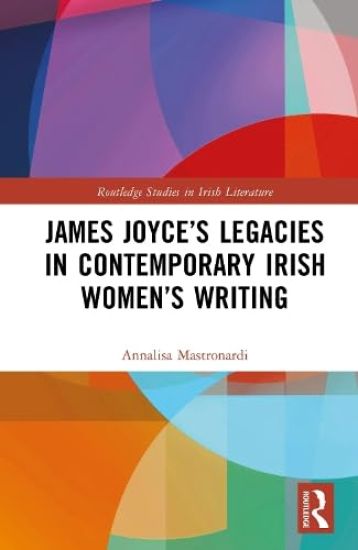
James Joyce’s Legacies in Contemporary Irish Women’s Writing
James Joyce’s Legacies in Contemporary Irish Women’s Writing is a ground-breaking study that, for the first time, explores in depth the influence of James Joyce on Irish women writers, from his contemporaries to more recent voices. With a particular focus on Anne Enright’s The Gathering, Eimear McBride’s A Girl Is a Half-formed Thing and Emilie Pine’s Ruth & Pen, this book examines how Irish women writers have engaged with Joyce’s legacy.Unlike their male counterparts, who have often felt overshadowed by Joyce’s influence, Irish women writers have embraced and expanded upon his work, viewing it not as a constraint but as an opening to new creative possibilities. This book will be of particular value to Joyce scholars working in feminism and reception studies, as well as students of Irish literature and women’s writing. It offers fresh insights into the evolving landscape of Irish literature and complicates Harold Bloom’s theory of the Anxiety of Influence, demonstrating how women writers perceive canonical figures like Joyce not as rivals, but as trailblazers.
James Joyce in the Nineteenth Century

James Joyce in the Nineteenth Century

Cambridge University Press
2013
sidottu
This collection shows the depth and range of James Joyce's relationship with key literary, intellectual and cultural issues that arose in the nineteenth century. Thirteen original essays explore several new themes in Joyce studies, connecting Joyce's writing to that of his predecessors, and linking Joyce's formal innovations to his reading of, and immersion in, nineteenth-century life. The volume begins by addressing Joyce's relationships with fictional forms in nineteenth-century and turn-of-the-century Ireland. Further sections explore the rise of new economies of consumption and Joyce's formal adaptations of major intellectual figures and issues. What emerges is a portrait of Joyce as he has not previously been seen, giving scholars and students of fin-de-siècle culture, literary modernism and English and Irish literature fresh insight into one of the most important writers of the past century.
James Joyce in the Nineteenth Century

James Joyce in the Nineteenth Century

Cambridge University Press
2015
pokkari
This collection shows the depth and range of James Joyce's relationship with key literary, intellectual and cultural issues that arose in the nineteenth century. Thirteen original essays explore several new themes in Joyce studies, connecting Joyce's writing to that of his predecessors, and linking Joyce's formal innovations to his reading of, and immersion in, nineteenth-century life. The volume begins by addressing Joyce's relationships with fictional forms in nineteenth-century and turn-of-the-century Ireland. Further sections explore the rise of new economies of consumption and Joyce's formal adaptations of major intellectual figures and issues. What emerges is a portrait of Joyce as he has not previously been seen, giving scholars and students of fin-de-siècle culture, literary modernism and English and Irish literature fresh insight into one of the most important writers of the past century.
James Joyce in Context

James Joyce in Context

Cambridge University Press
2014
pokkari
This collection of original, cohesive and concise essays charts the vital contextual backgrounds to Joyce's life and writing. The volume begins with a chronology of Joyce's publishing history, an analysis of his various biographies and a study of his many published and unpublished letters. It goes on to examine how his works were received in the main twentieth-century critical and theoretical schools. Most importantly, it places Joyce within multiple Irish, British and European contexts, providing a lively sense of the varied and changing world in which he lived, which formed him, and from which he wrote. The essays collectively show how Joyce was rooted in his times, how he is both a product and a critic of his multiple contexts, and how important he remains to the world of literature, criticism and culture.
James Joyce and the Matter of Paris

James Joyce and the Matter of Paris

Catherine Flynn

Cambridge University Press
2019
sidottu
In James Joyce and the Matter of Paris, Catherine Flynn recovers the paradigmatic city of European urban modernity as the foundational context of Joyce's imaginative consciousness. Beginning with Joyce's underexamined first exile in 1902–03, she shows the significance for his writing of the time he spent in Paris and of a range of French authors whose works inflected his experience of that city. In response to the pressures of Parisian consumer capitalism, Joyce drew on French literature to conceive a somatic aesthetic, in which the philosophically disparaged senses of taste, touch, and smell as well as the porous, digestive body resist capitalism's efforts to manage and instrumentalize desire. This book resituates the most canonical of Irish modernists in a European avant-garde context while revealing important links between Anglophone modernism and critical theory.
James Joyce and the Jesuits

James Joyce and the Jesuits

Michael Mayo

Cambridge University Press
2020
sidottu
James Joyce was educated almost exclusively by the Jesuits; this education and these priests make their appearance across Joyce's oeuvre. This dynamic has never been properly explicated or rigorously explored. Using Joyce's religious education and psychoanalytic theories of depression and paranoia, this book opens radical new possibilities for reading Joyce's fiction. It takes readers through some of the canon's most well-read texts and produces bold, fresh new readings. By placing these readings in light of Jesuit religious practice - in particular, the Spiritual Exercises all Jesuit priests and many students undergo - the book shows how Joyce's deepest concerns about truth, literature, and love were shaped by these religious practices and texts. Joyce worked out his answers to these questions in his own texts, largely by forcing his readers to encounter, and perhaps answer, those questions themselves. Reading Joyce is a challenge not only in terms of interpretation but of experience - the confusion, boredom, and even paranoia readers feel when making their way through these texts.
James Joyce and the Matter of Paris

James Joyce and the Matter of Paris

Catherine Flynn

Cambridge University Press
2025
pokkari
In James Joyce and the Matter of Paris, Catherine Flynn recovers the paradigmatic city of European urban modernity as the foundational context of Joyce's imaginative consciousness. Beginning with Joyce's underexamined first exile in 1902–03, she shows the significance for his writing of the time he spent in Paris and of a range of French authors whose works inflected his experience of that city. In response to the pressures of Parisian consumer capitalism, Joyce drew on French literature to conceive a somatic aesthetic, in which the philosophically disparaged senses of taste, touch, and smell as well as the porous, digestive body resist capitalism's efforts to manage and instrumentalize desire. This book resituates the most canonical of Irish modernists in a European avant-garde context while revealing important links between Anglophone modernism and critical theory.
James Joyce, Urban Planning and Irish Modernism
Irish writing in the modernist era is often regarded as a largely rural affair, engaging with the city in fleeting, often disparaging ways, with Joyce cast as a defiant exception. This book shows how an urban modernist tradition, responsive to the particular political, social, and cultural conditions of Dublin, emerged in Ireland at this time.
James Joyce's Teaching Life and Methods

James Joyce's Teaching Life and Methods

Elizabeth Switaj

Palgrave Macmillan
2016
sidottu
Before Joyce became famous as writer, he supported himself through his other language work: English-language teaching in Pola, Trieste, and Rome. The importance of James Joyce's teaching, however, has been underestimated until now. The very playfulness and unconventionality that made him a popular and successful teacher has led his pedagogy to be underrated, and the connections between his teaching and his writing have been largely neglected. James Joyce's Teaching Life and Methods reveals the importance in A Portrait of the Artist as a Young Man, Ulysses, and Finnegans Wake of pedagogy and the understanding of language Joyce gained teaching English as a Foreign Language in Berlitz schools and elsewhere.
James Joyce and the Politics of Desire

James Joyce and the Politics of Desire

Suzette A. Henke

Routledge
2015
sidottu
This title, first published in 1990, offers a feminist and psychoanalytic reassessment of the Joycean canon in the wake of Freud, Lacan, and Kristeva. The author centres her discussion of Ulysses, Dubliners, A Portrait of the Artist, Finnegans Wake, and Exiles around questions of desire and language and the politics of sexual difference. Suzette Henke’s radical "re-vision" of Joyce’s work is a striking example of the crucial role feminist theory can play in contemporary evaluation of canonical texts. As such it will be welcomed by feminists and students of literature alike.
James Joyce and the Politics of Desire

James Joyce and the Politics of Desire

Suzette A. Henke

Routledge
2017
nidottu
This title, first published in 1990, offers a feminist and psychoanalytic reassessment of the Joycean canon in the wake of Freud, Lacan, and Kristeva. The author centres her discussion of Ulysses, Dubliners, A Portrait of the Artist, Finnegans Wake, and Exiles around questions of desire and language and the politics of sexual difference. Suzette Henke’s radical "re-vision" of Joyce’s work is a striking example of the crucial role feminist theory can play in contemporary evaluation of canonical texts. As such it will be welcomed by feminists and students of literature alike.
James Joyce and Modern Literature
This collection, first published in 1982, brings together thirteen writers from a wide variety of critical traditions to take a fresh look at Joyce and his crucial position not only in English literature but in modern literature as a whole. Comparative views of his work include reflections on his relations to Shakespeare, Blake, MacDiarmid, and the Anglo-Irish revival. Essays, story and poems all combine to celebrate the major constituents of Joyce’s work – his imagination and comedy, his exuberant use of language, his relation to the history of his country and his age, and his passionate commitment to ‘a more veritably human tradition’. This title will be of interest to students of literature.
James Joyce and Modern Literature
This collection, first published in 1982, brings together thirteen writers from a wide variety of critical traditions to take a fresh look at Joyce and his crucial position not only in English literature but in modern literature as a whole. Comparative views of his work include reflections on his relations to Shakespeare, Blake, MacDiarmid, and the Anglo-Irish revival. Essays, story and poems all combine to celebrate the major constituents of Joyce’s work – his imagination and comedy, his exuberant use of language, his relation to the history of his country and his age, and his passionate commitment to ‘a more veritably human tradition’. This title will be of interest to students of literature.
James Joyce's Finnegans Wake
First published in 1991. James Joyce’s Finnegans Wake: A Case Book was published in order to celebrate the 50th anniversary of Joyce's final work with 14 critical essays and a page-by-page outline of the novel. The book includes critical approaches and interpretations in film, drama, and music. This title will be of interest to students of literature.
James Joyce's Finnegans Wake
First published in 1991. James Joyce’s Finnegans Wake: A Case Book was published in order to celebrate the 50th anniversary of Joyce's final work with 14 critical essays and a page-by-page outline of the novel. The book includes critical approaches and interpretations in film, drama, and music. This title will be of interest to students of literature.
James Joyce, Science, and Modernist Print Culture
This book makes an important intervention in the ongoing debates about modernism, science, and the divisions of early Twentieth-Century print culture. In order to establish Joyce's place in the nexus of modernism and scientific thought, Drouin uses the methods of periodical studies and textual criticism to examine the impact of Einstein's relativity theories on the development of Ulysses (1922) and Finnegans Wake (1939). Looking at experiments with space, time, motion, and perspective, it rigorously surveys discourse of science and the novel in the print culture networks connected to Joyce, with concrete analysis of avant-garde magazines, newspapers, popular science books, BBC pamphlets, and radio broadcasts between 1914 and 1939. These sources elucidate changes that Joyce made to the manuscripts, typescripts, and page proofs of certain episodes of his final two novels. The new evidence establishes for the first time the nature of the material link between Joyce and non-technical science, and the manner in which Ulysses and Finnegans Wake owe their structure and meaning to the humanistic issues associated with science during the wartime and inter-war years. In examining the relationships between Joyce's later work and the popular science industry, the book elucidates the often conflicting attitudes toward science in inter-war British print culture, filling in a piece of the puzzle that is modernism's relationship to the new physics and, simultaneously, the history of the novel.
James Joyce's World (Routledge Revivals)

James Joyce's World (Routledge Revivals)

Patricia Hutchins

Routledge
2016
sidottu
First published in 1957, this book explores what remained of Joyce’s background, not only in Ireland but in those cities abroad where his books were written. With the co-operation of those who knew the author, including his brother, much new material was brought together to shed new light on Joyce’s life, character and methods of writing. The author traces Joyce, and his writings, from his beginnings in Ireland, through Zürich, London and Paris, to his difficult final year at Vichy in 1940. Previously unpublished letters illustrate his relationships with important figures of the period like Ezra Pound, T.S. Eliot and H.G. Wells. This title will be of interest to student of literature.
James Joyce's World (Routledge Revivals)

James Joyce's World (Routledge Revivals)

Patricia Hutchins

Routledge
2018
nidottu
First published in 1957, this book explores what remained of Joyce’s background, not only in Ireland but in those cities abroad where his books were written. With the co-operation of those who knew the author, including his brother, much new material was brought together to shed new light on Joyce’s life, character and methods of writing. The author traces Joyce, and his writings, from his beginnings in Ireland, through Zürich, London and Paris, to his difficult final year at Vichy in 1940. Previously unpublished letters illustrate his relationships with important figures of the period like Ezra Pound, T.S. Eliot and H.G. Wells. This title will be of interest to student of literature.
James Joyce, the Poetry of Conscience: A Study of Ulysses

James Joyce, the Poetry of Conscience: A Study of Ulysses

Mary Parr; Karl Priebe

Literary Licensing, LLC
2011
sidottu
James Joyce, The Poetry of Conscience: A Study of Ulysses by Mary Parr is a comprehensive examination of the literary masterpiece Ulysses by James Joyce. The book delves deep into the themes of morality, ethics, and conscience that are present in the novel. The author analyzes the characters, plot, and language used by Joyce to convey his ideas on these themes. The book is divided into several chapters, each focusing on a specific aspect of the novel. The author begins by providing an overview of Joyce's life and his literary style. She then examines the various characters in Ulysses and their moral dilemmas. The author also explores the symbolism and imagery used by Joyce to convey his ideas. The book is written in a clear and concise style, making it accessible to both scholars and general readers. It is an essential read for anyone interested in understanding the complex themes of Ulysses and the literary genius of James Joyce.This scarce antiquarian book is a facsimile reprint of the old original and may contain some imperfections such as library marks and notations. Because we believe this work is culturally important, we have made it available as part of our commitment for protecting, preserving, and promoting the world's literature in affordable, high quality, modern editions, that are true to their original work.
James Joyce: A Bibliography of His Writings, Critical Material and Miscellanea
""James Joyce: A Bibliography Of His Writings, Critical Material And Miscellanea"" is a comprehensive reference book compiled by Alan Parker. The book provides a detailed list of James Joyce's writings, including his novels, short stories, poems, essays, and letters. It also includes critical material related to Joyce's work, such as reviews, articles, and scholarly analyses. The book also includes a section on miscellanea, which covers various aspects of Joyce's life and work, including biographical information, bibliographical details, and other interesting facts. The book is a valuable resource for scholars, students, and anyone interested in the life and work of James Joyce.This scarce antiquarian book is a facsimile reprint of the old original and may contain some imperfections such as library marks and notations. Because we believe this work is culturally important, we have made it available as part of our commitment for protecting, preserving, and promoting the world's literature in affordable, high quality, modern editions, that are true to their original work.