Kirjojen hintavertailu. Mukana 11 417 679 kirjaa ja 12 kauppaa.

Kirjahaku

Etsi kirjoja tekijän nimen, kirjan nimen tai ISBN:n perusteella.

1000 tulosta hakusanalla JAMES W. LEE

Aquatic Geochemical Oceanography

Aquatic Geochemical Oceanography

James W. Murray

Oxford University Press
2025
nidottu
Aquatic Geochemical Oceanography provides a comprehensive review of the quantitative study of the geochemistry of the ocean. It outlines the basic principles of aquatic chemistry, with instruction and tools to develop an in-depth understanding of the distribution of elements and compounds in the ocean and how they transform based on their fundamental chemical properties. Geochemical oceanography includes processes that occur on a wide range of spatial and temporal scales; from global to regional to local to microscopic spatial dimensions and time scales from geological epochs to glacial-interglacial to millennial, decadal, interannual, seasonal, diurnal and all the way to microseconds. Emphasis has been placed on trace elements, the carbonate system, gases and oxidation-reduction environments. Geochemical oceanography will continue to be an exciting, dynamic and vibrant field as the earth's population deals with the effects of the increase in fossil fuel CO2 and other anthropogenic trace gases causing global warming and ocean acidification. Students of this material will obtain the core marine chemical skillset and familiarity with current research topics to address the key questions in addressing global change, preparing them for a diverse range of future career paths.

The Digital Flood

The Digital Flood

James W. Cortada

Oxford University Press Inc
2012
sidottu
No technology seems to have spread so fast around the world in such a short period of time as computers. It was a phenomenon that predated the arrival of the Internet and that began to change how businesses, governments, and whole societies functioned. The diffusion of information technologies occurred in dozens of countries all over the world with fascinating similarities and differences. In this book, historian James W. Cortada provides the first world-wide history of how computers appeared and were used in North America, all of Europe, and in most of Asia in barely a half century. He explores the causes of diffusion, arguing that more than the technology itself, other conditions were required for the spread of computers, such as standards of living, education, the Cold War, and globalization of the economy. He argues that these technologies are the glue that hold together today's economies and are propelling increases in the quality of life of over a billion people moving into the middle class. Based on archival and secondary research, extensive use of economic data, and detailed country case studies of over a dozen nations, Cortada tells the history of how computers were discovered, invented, built, and used, and the consequences for whole regions. This is the first attempt by any expert to write a global history of information technologies, and specifically, about how these spread. It is economic and business history, but also a guide to those who want to understand what is happening today in such nations as India, China, and other emerging economies as the Computer Revolution continues. He has insights for historians, economists, public officials, and business executives.
Dynamics of Human Reproduction

Dynamics of Human Reproduction

James W. Wood

AldineTransaction
1994
sidottu
Awarded the W. W. Howells Award for the Outstanding Book in Biological Anthropology, this volume presents a comprehensive, integrated, and up-to-date overview of the major physiological and behavioral factors affecting human reproduction. In attempting to identify the most important causes of variation in fertility within and among human populations, Wood summarizes data from a wide range of societies. Trained as an anthropologist as well as a demographer, he devotes special attention to so-called "natural fertility" populations, in which modern contraceptives and induced abortion are not used to limit reproductive output. Such an emphasis enables him to study the interaction of biology and behavior with particular clarity.The volume weaves together the physiological, demographic, and biometric approaches to human fertility in a way that will encourage future interdisciplinary research. Instead of offering a general overview, the focus is to answer one question: Why does fertility and the number of live births vary from couple to couple within any particular population, and from population to population across the human species as a whole?Topics covered include ovarian function, conception and pregnancy, intrauterine mortality, reproductive maturation and senescence, coital frequency and the waiting time to conception, marriage patterns and the initiation of reproduction, the fertility-reducing effects of breastfeeding, the impact of maternal nutrition on reproduction, and reproductive seasonality. This unique combination of comprehensive subject matter and an integrated analytical approach makes the book ideally suited both as a graduate-level textbook and as a reference work.
Dynamics of Human Reproduction

Dynamics of Human Reproduction

James W. Wood

AldineTransaction
1994
nidottu
Awarded the W. W. Howells Award for the Outstanding Book in Biological Anthropology, this volume presents a comprehensive, integrated, and up-to-date overview of the major physiological and behavioral factors affecting human reproduction. In attempting to identify the most important causes of variation in fertility within and among human populations, Wood summarizes data from a wide range of societies. Trained as an anthropologist as well as a demographer, he devotes special attention to so-called "natural fertility" populations, in which modern contraceptives and induced abortion are not used to limit reproductive output. Such an emphasis enables him to study the interaction of biology and behavior with particular clarity.The volume weaves together the physiological, demographic, and biometric approaches to human fertility in a way that will encourage future interdisciplinary research. Instead of offering a general overview, the focus is to answer one question: Why does fertility and the number of live births vary from couple to couple within any particular population, and from population to population across the human species as a whole?Topics covered include ovarian function, conception and pregnancy, intrauterine mortality, reproductive maturation and senescence, coital frequency and the waiting time to conception, marriage patterns and the initiation of reproduction, the fertility-reducing effects of breastfeeding, the impact of maternal nutrition on reproduction, and reproductive seasonality. This unique combination of comprehensive subject matter and an integrated analytical approach makes the book ideally suited both as a graduate-level textbook and as a reference work.
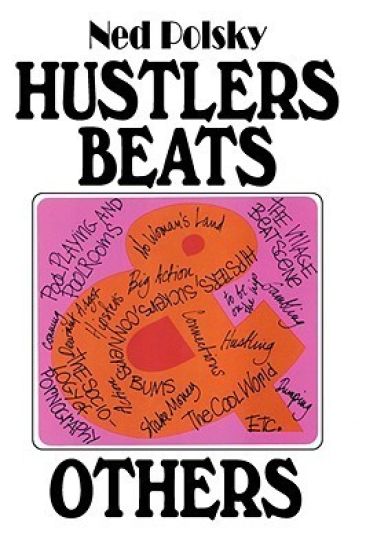
Hustlers, Beats, and Others

Hustlers, Beats, and Others

James W. VanStone; Ned Polsky

AldineTransaction
2006
nidottu
Ranging from pool hustling to pornography, this book analyzes deviant branches of American life, dispels misconceptions about them, and throws new light on sociological theory and method. Each chapter radically dissents from one or more mainstream opinions about deviance.The first chapter examines the alleged causes for the decline of American poolrooms and finds them wanting, traces the rise and fall of poolrooms to historical changes in America's social structure, and cogently dissects the recent poolroom revival. The second chapter, reports a field study of a deviant occupation, pool hustling, describing the hustler's work situation and career from recruitment to retirement. In revealing how pool hustlers, although dedicated wholly to a vocation that merely breaks unenforced gambling laws, frequently supplement their income by means of outright felonies, the author develops a new theory of "crime as moonlighting." The third chapter sharply criticizes our criminology textbooks for avoiding the study of uncaught adult criminals in their natural environments. It demonstrates such research to be both necessary and practical with career felons as well as moonlighters. The author describes field techniques he has used with career felons, offers new findings gleaned by means of these techniques, and answers moral objections to such research. The forth chapter presents the first genuinely empirical study of the beat delinquent sub-culture, in which the author corrects some journalistic views such as that most beats are exhibitionists and some sociological ones such as that "retreatist" drug-users can meet neither legitimate nor criminal success norms. The final chapter, on the sociology of pornography, holds that the courts are wrong to claim that naturalistic erotic art is non-pornographic, and wronger still to claim that hard-core pornography is, in Mr. Justice Brennan's words, "utterly without redeeming social importance."The author's unusual blend of empirical, theoretical, and methodological contributions to the study of deviance is enlivened by a witty yet disputatious style, for Mr. Polsky believes that polemical scholarship improves the quality of intellectual life by forcing genteel discussion to become genuine debate.
The Library: A World History

The Library: A World History

James W. P. Campbell

University of Chicago Press
2013
sidottu
A library is not just a collection of books, but also the buildings that house them. As varied and inventive as the volumes they hold, such buildings can be much more than the dusty, dark wooden shelves found in mystery stories or the catacombs of stacks in the basements of academia. From the great dome of the Library of Congress, to the white facade of the Seinajoki Library in Finland, to the ancient ruins of the library of Pergamum in modern Turkey, the architecture of a library is a symbol of its time as well as of its builders wealth, culture, and learning.Architectural historian James Campbell and photographer Will Pryce traveled the globe together, visiting and documenting over eighty libraries that exemplify the many different approaches to thinking about and designing libraries. The result of their travels, The Library: A World History is one of the first books to tell the story of library architecture around the world and through time in a single volume, from ancient Mesopotamia to modern China and from the beginnings of writing to the present day. As these beautiful and striking photos reveal, each age and culture has reinvented the library, molding it to reflect their priorities and preoccupations and in turn mirroring the history of civilization itself. Campbell s authoritative yet readable text recounts the history of these libraries, while Pryce s stunning photographs vividly capture each building s structure and atmosphere.Together, Campbell and Pryce have produced a landmark book the definitive photographic history of the library and one that will be essential for the home libraries of book lovers and architecture devotees alike."
On the Origin of Phyla

On the Origin of Phyla

James W. Valentine

University of Chicago Press
2004
sidottu
Owing its inspiration and title to "On the Origin of Species", James W. Valentine's ambitious book synthesizes and applies the vast treasury of phyla theory and research collected in the century and a half since Darwin's time. By investigating the origins of life's diversity, Valentine unlocks the mystery of the origin of phyla. One of the twentieth century's most distinguished paleobiologists, Valentine here integrates data from molecular genetics, evolutionary developmental biology, embryology, comparative morphology, and paleontology into an analysis of interest to scholars from any of these fields. He begins by examining the sorts of evidence that can be gleaned from fossils, molecules, and morphology, then reviews and compares the basic morphology and development of animal phyla, emphasizing the important design elements found in the body plans of both living and extinct phyla. Finally, Valentine undertakes the monumental task of developing models to explain the origin and early diversification of animal phyla, as well as their later evolutionary patterns.
On the Origin of Phyla

On the Origin of Phyla

James W. Valentine

University of Chicago Press
2006
nidottu
Owing its inspiration and title to "On the Origin of Species", James W. Valentine's ambitious book synthesizes and applies the vast treasury of phyla theory and research collected in the century and a half since Darwin's time. By investigating the origins of life's diversity, Valentine unlocks the mystery of the origin of phyla. One of the twentieth century's most distinguished paleobiologists, Valentine here integrates data from molecular genetics, evolutionary developmental biology, embryology, comparative morphology, and paleontology into an analysis of interest to scholars from any of these fields. He begins by examining the sorts of evidence that can be gleaned from fossils, molecules, and morphology, then reviews and compares the basic morphology and development of animal phyla, emphasizing the important design elements found in the body plans of both living and extinct phyla. Finally, Valentine undertakes the monumental task of developing models to explain the origin and early diversification of animal phyla, as well as their later evolutionary patterns.
Inside IBM

Inside IBM

James W. Cortada

Columbia University Press
2023
sidottu
IBM was the world’s leading provider of information technologies for much of the twentieth century. What made it so successful for such a long time, and what lessons can this iconic corporation teach present-day enterprises?James W. Cortada—a business historian who worked at IBM for many years—pinpoints the crucial role of IBM’s corporate culture. He provides an inside look at how this culture emerged and evolved over the course of nearly a century, bringing together the perspectives of employees, executives, and customers around the world. Through a series of case studies, Inside IBM explores the practices that built and reinforced organizational culture, including training of managers, employee benefits, company rituals, and the role of humor. It also considers the importance of material culture, such as coffee mugs and lapel pins.Cortada argues that IBM’s corporate culture aligned with its business imperatives for most of its history, allowing it to operate with a variety of stakeholders in mind and not simply prioritize stockholders. He identifies key lessons that managers can learn from IBM’s experience and apply in their own organizations today. This engaging and deeply researched book holds many insights for business historians, executives and managers concerned with stakeholder relations, professionals interested in corporate culture, and IBMers.
What Is a Person?

What Is a Person?

James W. Walters

University of Illinois Press
1997
sidottu
At a time when technology can sustain marginal life, it is ever more important to understand what constitutes a person. What are the medical, ethical, moral, mental, legal, and philosophical criteria that determine protectable human life? Following immediately on the publication of his highly praised book Choosing Who's to Live, James Walters addresses with depth and wisdom another ambitious and complicated matter: determining the nature of personhood. By providing a much-needed religious/philosophical context for the discussion--examining contemporary thinking on just what constitutes valuable life--Walters broadens his inquiry beyond the human to include other animals and deals with the phenomenon of anencephalic infants, those who are born without higher brains. Searching for a measurable and humane standard of personhood, Walters looks at the current definition of it and declares it inadequate--offering instead the idea of proximate personhood, with criteria for helping to determine which individuals possess a unique claim to life.
Persuasions and Performances

Persuasions and Performances

James W. Fernandez

Indiana University Press
1986
pokkari
"This is a rich and stimulating collection of articles." —Journal of Ritual Studies The importance of the figurative imagination in human interaction is the focus of these seminal essays by cultural anthropologist James W. Fernandez.
Professionalism and the Public Interest
The healthcare industry in America consists of a multitude of specialty professions. While most of these require licensing through state agencies, the legislation involved largely rubber stamps the desires of the professional associations, self-perpetuating and self-regulating bodies that effectively impose restrictions on entry to the profession, type and location of practice, and advertising. Professionalism and the Public Interest provides a case study of one such profession-optometry and vision care-as a means of arriving at some valid general conclusions about professional practices, especially (but not exclusively) those in the medical field. To what extent does the practice of self-regulation promote self-interest over the public interest? And are the high, fixed-fee, noncompetitive, unadvertised prices set for services justified by the "noncommercial," "professional" quality of those services? One of the major conclusions of the book is that the high prices that prevail in optometry-and medicine generally-restrict full access to the affluent, which actually lowers the quality of health care available to the average citizen, whereas a competitive price structure would tend to raise the quality of such available to the public at large. Begun skillfully handles the instrumental resources in sociology, political science, and economics in his analysis, much of which is based on a data set that he assembled from a national survey of optometrists. State-by-state comparison of legislation relating to the optometric profession is provided, including information on which states require continuing education of optometrists, which states prohibit advertising by optometrists and opticians, and which states restrict mercantile location.
IBM

IBM

James W. Cortada

MIT PRESS LTD
2023
pokkari
A history of one of the most influential American companies of the last century. For decades, IBM shaped the way the world did business. IBM products were in every large organization, and IBM corporate culture established a management style that was imitated by companies around the globe. It was "Big Blue, " an icon. And yet over the years, IBM has gone through both failure and success, surviving flatlining revenue and forced reinvention. The company almost went out of business in the early 1990s, then came back strong with new business strategies and an emphasis on artificial intelligence. In this authoritative, monumental history, James Cortada tells the story of one of the most influential American companies of the last century.Cortada, a historian who worked at IBM for many years, describes IBM's technology breakthroughs, including the development of the punch card (used for automatic tabulation in the 1890 census), the calculation and printing of the first Social Security checks in the 1930s, the introduction of the PC to a mass audience in the 1980s, and the company's shift in focus from hardware to software. He discusses IBM's business culture and its orientation toward employees and customers; its global expansion; regulatory and legal issues, including antitrust litigation; and the track records of its CEOs. The secret to IBM's unequalled longevity in the information technology market, Cortada shows, is its capacity to adapt to changing circumstances and technologies.
Making Sense of Your Freedom

Making Sense of Your Freedom

James W. Felt

University of Notre Dame Press
2005
nidottu
Written for general readers and students, this book provides an accessible and brief metaphysical defense of freedom. James W. Felt, S.J., invites his audience to consider that we are responsible for what we do precisely because we do it freely. His perspective runs counter to the philosophers who argue that the freedom humans feel in their actions is merely an illusion. Felt argues in detail that there are no compelling reasons for thinking we are not free, and very strong ones for thinking that we are. The view that Felt develops parallels that of the French philosopher Henri Bergson (1859–1941). In the course of his analysis, Felt considers determinism, compatibilism, agency, and the problem of evil. Featuring an updated suggested reading list, this clearly and engagingly written introductory work is ideal for the undergraduate classroom.
Human Knowing

Human Knowing

James W. Felt

University of Notre Dame Press
2005
sidottu
Human Knowing is a clearly written, brief introduction that guides the reader through an exploration of sense perception, ordinary knowing, scientific knowing, and philosophic knowing. This journey culminates in a justification of philosophy as a genuine form of knowing and thus a natural prelude to metaphysics. Though Felt manages to avoid technical language, the development of his argument is a genuine exercise in philosophic thinking. The outcome is a contemporary expression of a position similar to that of Thomas Aquinas, significantly enriched by insights from Bergson, Whitehead, and phenomenology. This book is accessible, smart, and refreshing. Any interested general reader or student will profit from reading it.
Human Knowing

Human Knowing

James W. Felt

University of Notre Dame Press
2005
nidottu
Human Knowing is a clearly written, brief introduction that guides the reader through an exploration of sense perception, ordinary knowing, scientific knowing, and philosophic knowing. This journey culminates in a justification of philosophy as a genuine form of knowing and thus a natural prelude to metaphysics. Though Felt manages to avoid technical language, the development of his argument is a genuine exercise in philosophic thinking. The outcome is a contemporary expression of a position similar to that of Thomas Aquinas, significantly enriched by insights from Bergson, Whitehead, and phenomenology. This book is accessible, smart, and refreshing. Any interested general reader or student will profit from reading it.
Aims

Aims

James W. Felt

University of Notre Dame Press
2007
nidottu
In Aims: A Brief Metaphysics for Today, James W. Felt turns his attention to combining elements of Thomas Aquinas's metaphysics, especially its deep ontology, with Alfred North Whitehead's process philosophy to arrive at a new possibility for metaphysics. In his distinctive style, Felt concisely pulls together the strands of epistemology, ontology, and teleology, synthesizing these elements into his own "process-enriched Thomism." Aims does not simply discuss the strengths and weaknesses of each philosopher's position, but blends the two into a cohesive argument based on principles derived from immediate experience. Felt arrives at what he calls a "Whiteheadian-type solution,"appealing to his original concept of the "essential aim"as necessary for understanding our existence in a coherent yet unique world. This concise, finely crafted discussion provides a thoroughly teleological, value-centered approach to metaphysics. Aims, an experiment in constructive metaphysics, is a thorough and insightful project in modern philosophy. It will appeal to philosophers and students of philosophy interested in enriching their knowledge of contemporary conceptions of metaphysics.