Kirjahaku
Etsi kirjoja tekijän nimen, kirjan nimen tai ISBN:n perusteella.
1000 tulosta hakusanalla Jacob's Notebook
Jacob's Night: The Religious Renascence in France
Wallace Fowlie
Literary Licensing, LLC
2013
nidottu
Jacob's Well of Life: New Sparks from Old Time Religion, the Autobiography of Jacob B. Sparks
Jacob B. Sparks
Literary Licensing, LLC
2013
nidottu
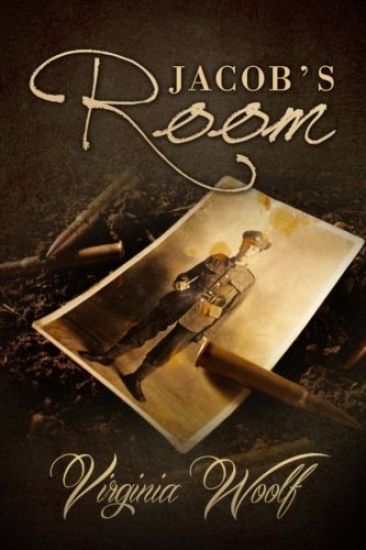
"Blame it or praise it, there is no denying the wild horse in us." Virginia Woolf, Jacob's Room Jacob's Room is the third novel by Virginia Woolf, first published on 26 October 1922. The novel centres, in a very ambiguous way, around the life story of the protagonist Jacob Flanders, and is presented entirely by the impressions other characters have of Jacob (except for those times when we do indeed get Jacob's perspective). Thus, although it could be said that the book is primarily a character study and has little in the way of plot or background, the narrative is constructed as a void in place of the central character, if indeed the novel can be said to have a 'protagonist' in conventional terms. Motifs of emptiness and absence haunt the novel and establish its elegiac feel. Jacob is described to us, but in such indirect terms that it would seem better to view him as an amalgamation of the different perceptions of the characters and narrator. He does not exist as a concrete reality, but rather as a collection of memories and sensations. Literary significance The novel is a departure from Woolf's earlier two novels, The Voyage Out (1915) and Night and Day (1919), which are more conventional in form and narration. The work is seen as an important modernist text; its experimental form is viewed as a progression of the innovative writing style Woolf presented in her earlier collection of short fiction titled Monday or Tuesday (1919).
He left everything just as it was.... Did he think he would come back?" Jacob's Room" was the first book in Virginia Woolf's unique, experimental style, making it an important text of early Modernism. Ostensibly, the story is about the life of Jacob Flanders, the title character, who is evoked purely by other characters' perceptions and memories of him. Jacob remains an absence throughout. Elegiac in tone, the work beautifully memorializes the longing and pain of a generation that lost so many of its most promising young men to World War I. Upon it's release E.M. Forster remarked, "amazing.... a new type of fiction has swum into view." The Art of The Novella Series Too short to be a novel, too long to be a short story, the novella is generally unrecognized by academics and publishers. Nonetheless, it is a form beloved and practiced by literature's greatest writers. In the Art Of The Novella series, Melville House celebrates this renegade art form and its practitioners with titles that are, in many instances, presented in book form for the first time.
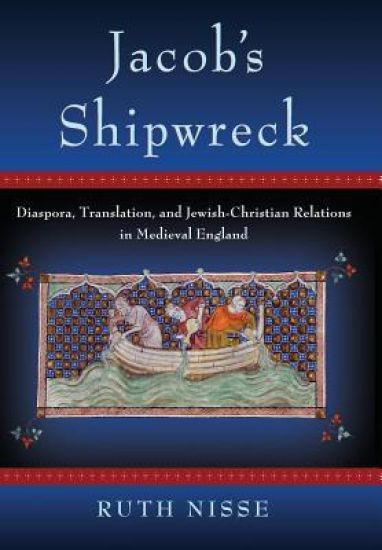
Jewish and Christian authors of the High Middle Ages not infrequently came into dialogue or conflict with each other over traditions drawn from ancient writings outside of the bible. Circulating in Latin and Hebrew adaptations and translations, these included the two independent versions of the Testament of Naphtali in which the patriarch has a vision of the Diaspora, a shipwreck that scatters the twelve tribes. The Christian narrative is linear and ends in salvation; the Jewish narrative is circular and pessimistic. For Ruth Nisse, this is an emblematic text that illuminates relationships between interpretation, translation, and survival. In Nisse's account, extrabiblical literature encompasses not only the historical works of Flavius Josephus but also, in some of the more ingenious medieval Hebrew imaginative texts, Aesop's fables and the Aeneid. While Christian-Jewish relations in medieval England and Northern France are most often associated with Christian polemics against Judaism and persecutions of Jews in the wake of the Crusades, the period also saw a growing interest in language study and translation in both communities. These noncanonical texts and their afterlives provided Jews and Christians alike with resources of fiction that they used to reconsider boundaries of doctrine and interpretation. Among the works that Nisse takes as exemplary of this intersection are the Book of Yosippon, a tenth-century Hebrew adaptation of Josephus with a wide circulation and influence in the later middle ages, and the second-century romance of Aseneth about the religious conversion of Joseph's Egyptian wife. Yosippon gave Jews a new discourse of martyrdom in its narrative of the fall of Jerusalem, and at the same time it offered access to the classical historical models being used by their Christian contemporaries. Aseneth provided its new audience of medieval monks with a way to reimagine the troubling consequences of unwilling Jewish converts.

A man on a mission...Jake can see the future and there's a special woman on his mind. She needs his help and he's just the man to help when danger stalks her every step.A woman with responsibilities...For Ria, being the Nyx-the leader of her people-comes with burdens that few can understand. Her special abilities make her a target of the Venifucus, an ancient faction that hopes to pervert Ria's hereditary power to their own evil purposes. She's lived her life on the run, but the time has come to turn and confront the bad guys on her trail.Can they stop the Venifucus from using the ancient power of the Nyx to return evil to this world? Whatever the cost, they must stop it, before it's too late.