Kirjojen hintavertailu. Mukana 11 342 296 kirjaa ja 12 kauppaa.

Kirjahaku

Etsi kirjoja tekijän nimen, kirjan nimen tai ISBN:n perusteella.

1000 tulosta hakusanalla James N. Butler

Using the MMPI–2 in Forensic Assessment

Using the MMPI–2 in Forensic Assessment

James N. Butcher; Giselle A. Hass; Roger L. Greene; Linda D. Nelson

American Psychological Association
2015
sidottu
This practical guide explains how forensic psychologists can successfully use the MMPI-2 to evaluate clients in various forensic contexts and present results to attorneys and judges. The Minnesota Multiphasic Personality Inventory-2 (MMPI-2) is one of the most widely researched and used assessment tools in psychology. Forensic psychologists often rely on it to evaluate clients involved in civil and criminal cases. Because the test results can have a significant influence on court decisions, psychologists need to understand how to make full use of the MMPI-2 in forensic settings. Building on his popular series of MMPI-2 books, James N. Butcher and his coauthors present this guide that is based on decades of research and personal experience. Following a brief overview of the MMPI-2 and its various scales, the authors further explore its applications in various forensic settings, including personal injury and workers amp rsquo compensation claims, immigration relief and deportation cases, and criminal investigations. Clear, practical guidelines bolstered by illustrative case examples will help psychologists: Understand legal and cultural factors that may influence the assessment process Evaluate neuropsychological issues, such as brain injury Employ computerized interpretations and Present results in testimony and written reports
Monitors of Organic Chemicals in the Environment

Monitors of Organic Chemicals in the Environment

James N. Huckins; Jim D. Petty; Kees Booij

Springer-Verlag New York Inc.
2010
nidottu
Modern, industrialized societies depend on a wide range of chemical substances such as fuels, plastics, biocides, pharmaceuticals and detergents for maintaining the high quality lifestyle to which we aspire. The challenge is to ensure that while weenjoythebene?tsofthesesubstances,theirinevitablereleaseintoourbiosphere does not result in unwanted human and ecosystem exposures, and the risk of - verse effects. One response to this challenge has been the extensive effort to detect and analyze or monitor a multitude of chemicals in a variety of environmental media, especially toxic organic compounds in air, water, soils and biota. The c- ventionalmonitoringstrategyofsamplinglitersorkilogramsoftheenvironmental medium followed by analytical determination of the quantity of chemical in the sample extract has been the successful cornerstone of investigative environmental chemistry. No doubt, it will continue to be so. An extensive literature on these traditional techniques has evolved over the years. In parallel with conventional techniques, and I believe entirely complem- tary to them, a variety of in situ sensing systems have been developed which operate on the principle of the preferential partitioning of contaminants into a - vice, often at concentrations which are large multiples of environmental levels. Advocates point out that these partitioning devices have the advantage of integr- ing chemical concentrations over a prolonged period, thus “averaging” ambient levels. Their high partition coef?cients can yield signi?cant quantities of analyte and reduce problems arising from short-term pulses of concentration and from sample contamination.
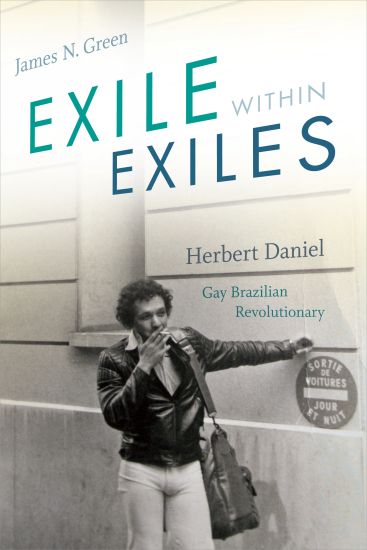
Exile Within Exiles

Exile Within Exiles

James N. Green

Duke University Press
2018
sidottu
Herbert Daniel was a significant and complex figure in Brazilian leftist revolutionary politics and social activism from the mid-1960s until his death in 1992. As a medical student, he joined a revolutionary guerrilla organization but was forced to conceal his sexual identity from his comrades, a situation Daniel described as internal exile. After a government crackdown, he spent much of the 1970s in Europe, where his political self-education continued. He returned to Brazil in 1981, becoming engaged in electoral politics and social activism to champion gay rights, feminism, and environmental justice, achieving global recognition for fighting discrimination against those with HIV/AIDS. In Exile within Exiles, James N. Green paints a full and dynamic portrait of Daniel's deep commitment to leftist politics, using Daniel's personal and political experiences to investigate the opposition to Brazil's military dictatorship, the left's construction of a revolutionary masculinity, and the challenge that the transition to democracy posed to radical movements. Green positions Daniel as a vital bridge linking former revolutionaries to the new social movements, engendering productive dialogue between divergent perspectives in his writings and activism.
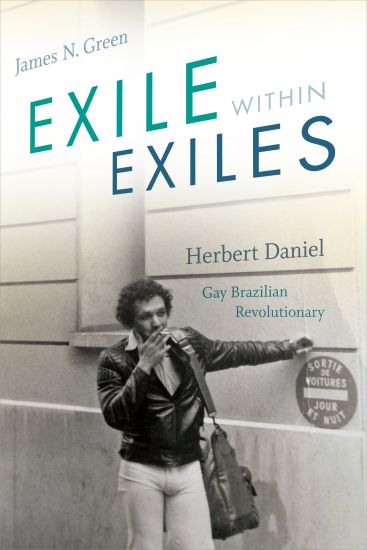
Exile Within Exiles

Exile Within Exiles

James N. Green

Duke University Press
2018
pokkari
Herbert Daniel was a significant and complex figure in Brazilian leftist revolutionary politics and social activism from the mid-1960s until his death in 1992. As a medical student, he joined a revolutionary guerrilla organization but was forced to conceal his sexual identity from his comrades, a situation Daniel described as internal exile. After a government crackdown, he spent much of the 1970s in Europe, where his political self-education continued. He returned to Brazil in 1981, becoming engaged in electoral politics and social activism to champion gay rights, feminism, and environmental justice, achieving global recognition for fighting discrimination against those with HIV/AIDS. In Exile within Exiles, James N. Green paints a full and dynamic portrait of Daniel's deep commitment to leftist politics, using Daniel's personal and political experiences to investigate the opposition to Brazil's military dictatorship, the left's construction of a revolutionary masculinity, and the challenge that the transition to democracy posed to radical movements. Green positions Daniel as a vital bridge linking former revolutionaries to the new social movements, engendering productive dialogue between divergent perspectives in his writings and activism.