Kirjojen hintavertailu. Mukana 11 717 486 kirjaa ja 12 kauppaa.

Kirjahaku

Etsi kirjoja tekijän nimen, kirjan nimen tai ISBN:n perusteella.

1000 tulosta hakusanalla James Procter

James Bond's Socialist Rivals

James Bond's Socialist Rivals

Tarik Cyril Amar

OXFORD UNIVERSITY PRESS INC
2024
sidottu
In August 1973, the large and growing television audience of the Soviet Union first laid eyes on what would become its quintessential if fictitious hero spy. He was nothing like the West's action man and sex icon James Bond who had risen to global fame in the 1960s. By contrast, Shtirlits made his first appearance as a handsome yet somewhat tired-looking, middle-aged man on a meditative stroll in wintry woods, to the score of a very slow piano rendition of the show's wistful signature theme. The Cold War East, the Soviet Union and its sphere of domination and influence in Eastern Europe, produced a rich array of home-made intelligence heroes who became vastly popular among television audiences in the 1960s and '70s. In this work, Tarik Cyril Amar recovers and analyzes a world of spy fiction entertainment, focusing on three blockbuster series in the former Soviet bloc: Seventeen Moments of Spring (USSR), Stakes Greater Than Life (Poland), and The Invisible Visor (East Germany). Not only did these shows feature secret agents as heroes, but they were also important to party-state authorities, including security and intelligence services, who were combatting Western subversion and deliberately polishing their own image behind the Iron Curtain. The series made reference to World War II, the Holocaust, and the Cold War, shaping public interpretations of historical events and inspiring a rising generation to join intelligence services, including Vladmir Putin. And they remained persistently popular, surviving the collapse of the authoritarian-socialist political regimes under which they had been produced. Based on exhaustive research of unpublished primary sources in archives in Berlin, Moscow, and Warsaw, James Bond's Socialist Rivals offers a more expansive vision of the phenomenon of the spy as popular-culture hero and of the complex nature of Cold War interactions across ideological divisions, geopolitical blocs, and national borders.
James Baldwin's "Sonny's Blues"

James Baldwin's "Sonny's Blues"

Tom Jenks

Oxford University Press
2024
sidottu
A close reading of James Baldwin's short story "Sonny's Blues" that provides insight into his life and ideas about art. Tom Jenks's reading of James Baldwin's "Sonny's Blues" follows a scene-by-scene, sometimes line-by-line, discussion of the pattern by which Baldwin indelibly writes "Sonny's Blues" into the consciousness of readers. It provides ongoing observations of the aesthetics underlying the particulars of the story, with references to Edward P. Jones (whose magnificent story "All Aunt Hagar's Children" bears a knowing relationship to "Sonny's Blues,") to Charlie Parker's music, and to Billie Holiday's "Am I Blue?" and John Coltrane's "A Love Supreme" as part of the musical progression Baldwin creates, and with attention to Baldwin's oratorical gifts and the biblical references in the story, to its time structure, characterizations, dramatic action, and, most of all, its totality of effect. Drawing on Baldwin's book-length essay The Fire Next Time, which Baldwin published six years after the publication of the short story, Tom Jenks offers insight on some of the sources in Baldwin's life for "Sonny's Blues" and on the logic and passion by which life may be meaningfully transformed into art.
James Joyce

James Joyce

Colin MacCabe

Oxford University Press
2021
nidottu
James Joyce is one of the greatest writers in English. His first book, A Portrait of the Artist as A Young Man laid down the template for the Coming of Age novel, while his collection of short stories, Dubliners, is of perennial interest. His great modern epic, Ulysses, took the city of Dublin for its setting and all human life for its subject, and its publication in 1922 marked the beginning of the modern novel. Joyce's final work, Finnegans Wake is an endless experiment in narrative and language. But if Joyce is a great writer he is also the most difficult writer in English. Finnegans Wake is written in a freshly invented language, and Ulysses exhausts all the forms and styles of English. Even the apparently simple Dubliners has plots of endless complexity, while the structure of A Portrait of the Artist as A Young Man is exceptionally intricate. This Very Short Introduction explores the work of this most influential yet complex writer, and analyses how Joyce's difficulty grew out of his situation as an Irish writer unwilling to accept the traditions of his imperialist oppressor, and contemptuous of the cultural banality of the Gaelic revival. Joyce wanted to investigate and celebrate his own life, but this meant investigating and celebrating the drunks of Dublin's pubs and the prostitutes of Dublin's brothels. No subject was alien to him and he developed the naturalist project of recording all aspects of life with the symbolist project of finding significant correspondences in the most unlikely material. Throughout, Colin MacCabe interweaves Joyce's life and history with his books, and draws out their themes and connections. Very Short Introductions: Brilliant, Sharp, Inspiring ABOUT THE SERIES: The Very Short Introductions series from Oxford University Press contains hundreds of titles in almost every subject area. These pocket-sized books are the perfect way to get ahead in a new subject quickly. Our expert authors combine facts, analysis, perspective, new ideas, and enthusiasm to make interesting and challenging topics highly readable.
James Joyce

James Joyce

Richard Ellmann

Oxford University Press Inc
1982
sidottu
'A truly masterful biography, wise in its completeness. If Joyce be a great writer, then this is a great book.' Sunday Times 'The greatest literary biography of the century.' Anthony Burgess, The Observer
James Joyce

James Joyce

Richard Ellmann

Oxford University Press Inc
1984
nidottu
Richard Ellmann has revised and expanded his definitive work on Joyce's life to include newly discovered primary material, including details of a failed love affair, a limerick about Samuel Beckett, a dream notebook, previously unknown letters, and much more.
The Selected Writings of James Weldon Johnson: Volume I: The New York Age Editorials (1914-1923)
Johnson's unprecedented role as civil rights leader and literary artist was a dual one that has not been replicated since his time. This volume comprises editorials form the "New York Age" organized thematically, and at a critical introduction discusses Johnson's role in the history of the black press. By painting a vivid picture of the race problem in this nation, and by his portrayal of the successes and possibilities of his race in American life and culture, he picked at white America's conscience. This collection of writings serves to support Dr Wilson's contention that the foundation of black literature had its paternity more in James Weldon Johnson than in anyone else.
The Selected Writings of James Weldon Johnson: Volume II: Social, Political, and Literary Essays
The two volumes edited by Dr Wilson, Director of the John Memorial Foundation, make an important body of Johnson's writings more readily available to scholars in African-American studies. Volume II comprises literary essays, political essays, and song lyrics. The critical introduction places Johnson in relation to other black artists, the development of African-American literature and early integrationist movements.
James Joyce and the Language of History

James Joyce and the Language of History

Robert Spoo

Oxford University Press Inc
1995
sidottu
"History is a nightmare from which I am trying to awake." Stephen Dedalus's famous complaint articulates a characteristic modern attitude toward the perceived burden of the past. As Robert Spoo shows in this study, Joyce's creative achievement, from the time of his sojourn in Rome in 1906-07 to the completion of Ulysses in 1922, cannot be understood apart from the ferment of historical thought that dominated the nineteenth and early twentieth centuries. Tracing James Joyce's historiographic art to its formative contexts, Spoo reveals a modernist author passionately engaged with the problem of history, forging a new language that both dramatizes and redefines that problem.
James Joyce A to Z

James Joyce A to Z

Nicholas Fargnoli; Michael Gillespie

Oxford University Press
1996
nidottu
(series copy) These encyclopedic companions are browsable, invaluable individual guides to authors and their works. Useful for students, but written with the general reader in mind, they are clear, concise, accessible, and supply the basic cultural, historical, biographical and critical information so crucial to an appreciation and enjoyment of the primary works. Each is arranged in an A-Z fashion and presents and explains the terms, people, places, and concepts encountered in the literary worlds of James Joyce, Mark Twain, and Virginia Woolf. As a keen explorer of the mundane material of everyday life, James Joyce ranks high in the canon of modernist writers. He is arguably the most influential writer of the twentieth-century, and may be the most read, studied, and taught of all modern writers. The James Joyce A-Z is the ideal companion to Joyce's life and work. Over 800 concise entries relating to all aspects of Joyce are gathered here in one easy-to-use volume of impressive scope.
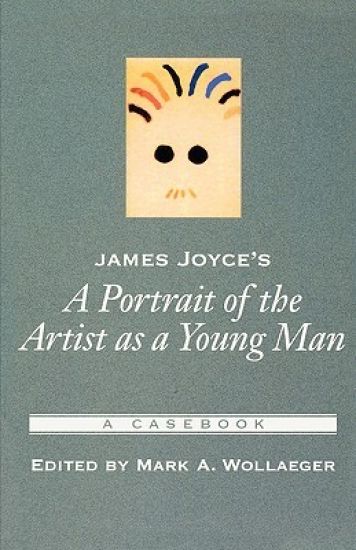
James Joyce's A Portrait of the Artist as a Young Man
James Joyce's A Portrait of the Artist as a Young Man: A Casebook offers a comprehensive introduction to a landmark in modern fiction. The essays collected here will help first-time readers, teachers, and advanced scholars gain new insight into Joyce's semi-autobiographical story of an Irish boy's slow and difficult discovery of his artistic vocation. The epitome of the modernist Bildungsroman, or novel of education, Joyce's novel was controversial from the moment of its publication in 1916, and Mark Wollaeger's introduction provides an overview of the composition and early reception of A Portrait of the Artist as a Young Man as well as a survey of some of the recurrent issues debated by literary critics. The selection of the essays is designed to address major critical issues, provide detailed readings of important passages, and trace the evolution of critical responses to the novel. Essays by Hugh Kenner and Patrick Parrinder offer both indispensable overviews of the entire novel-its themes, structure, and idiom-and close attention to specific interpretive cruxes. In addition to classic responses to Portrait, such as Wayne Booth's critique of authorial "distance," Fritz Senn's unpacking of the epigraph, and Michael Levenson's reading of the diary, the collection includes a newly revised and expanded version of Maud Ellmann's groundbreaking 1982 poststructuralist essay, "Polytropic Man," and essays by Hélène Cixous, Joseph Valente, Vicki Mahaffey, Emer Nolan, Marian Eide, Marjorie Howes, and Mark Wollaeger. Some essays are oriented toward literary history, genre, biography or formalism; others draw on recent developments in queer theory and postcolonial studies; others on the turn towards history exemplified in Irish studies. All are very readable and pay close attention to intricacies of Joyce's text. Together the essays bring into focus the wide range of questions that have kept A Portrait of the Artist as a Young Man fresh for the new millennium.
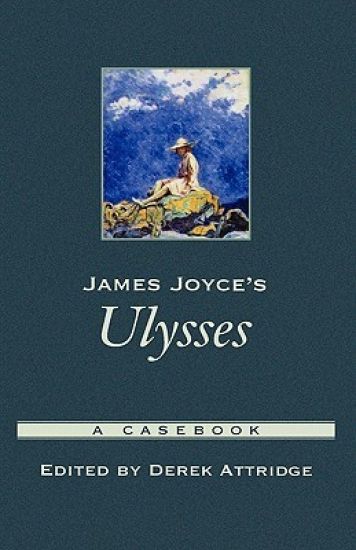
James Joyce's Ulysses

James Joyce's Ulysses

Oxford University Press Inc
2004
sidottu
James Joyce's Ulysses is probably the most famous-or notorious-novel published in the twentieth century. Its length and difficulty mean that readers often turn to critical studies to help them in getting the most out of it. But the vast quantity of secondary literature on the book poses problems for readers, who often don't know where to begin. This casebook includes some of the most influential critics to have written on Joyce, such as Hugh Kenner and Fritz Senn, as well as newer voices who have made a considerable impact in recent years. A wide range of critical schools is represented, from textual analysis to historical and psychoanalytic approaches, from feminism to post-colonialism. One essay considers the relation between art and life, nature and culture, in Ulysses, while another explores the implications of the impassioned debates about the proper editing of Joyce's great work. In an iconoclastic discussion of the book, Leo Bersani finds reasons for giving up reading Joyce. All the contributions are characterized by scrupulous attention to Joyce's words and a sense of the powerful challenge his work offers to our ways of thinking about ourselves, our world, and our language. Also included are records of some of the conversations Joyce had with his friend Frank Budgen during the composition of Ulysses in Zurich, and in an appendix readers will find a version of the schema which Joyce drew up as a guide to his book. Derek Attridge provides an introduction that offers advice on reading Ulysses for the first time, an account of the remarkable story of its composition, and an outline of the history of the critical reception that has played such an important part in our understanding and enjoyment of this extraordinary work.
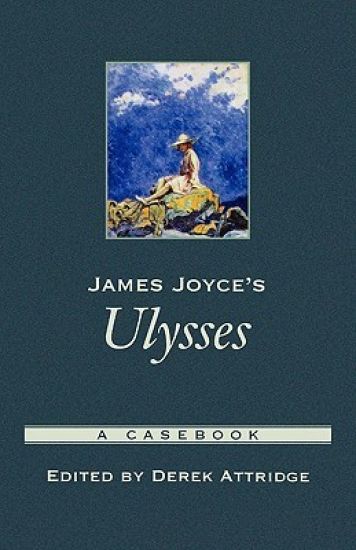
James Joyce's Ulysses

James Joyce's Ulysses

Oxford University Press Inc
2004
nidottu
James Joyce's Ulysses is probably the most famous-or notorious-novel published in the twentieth century. Its length and difficulty mean that readers often turn to critical studies to help them in getting the most out of it. But the vast quantity of secondary literature on the book poses problems for readers, who often don't know where to begin. This casebook includes some of the most influential critics to have written on Joyce, such as Hugh Kenner and Fritz Senn, as well as newer voices who have made a considerable impact in recent years. A wide range of critical schools is represented, from textual analysis to historical and psychoanalytic approaches, from feminism to post-colonialism. One essay considers the relation between art and life, nature and culture, in Ulysses, while another explores the implications of the impassioned debates about the proper editing of Joyce's great work. In an iconoclastic discussion of the book, Leo Bersani finds reasons for giving up reading Joyce. All the contributions are characterized by scrupulous attention to Joyce's words and a sense of the powerful challenge his work offers to our ways of thinking about ourselves, our world, and our language. Also included are records of some of the conversations Joyce had with his friend Frank Budgen during the composition of Ulysses in Zurich, and in an appendix readers will find a version of the schema which Joyce drew up as a guide to his book. Derek Attridge provides an introduction that offers advice on reading Ulysses for the first time, an account of the remarkable story of its composition, and an outline of the history of the critical reception that has played such an important part in our understanding and enjoyment of this extraordinary work.
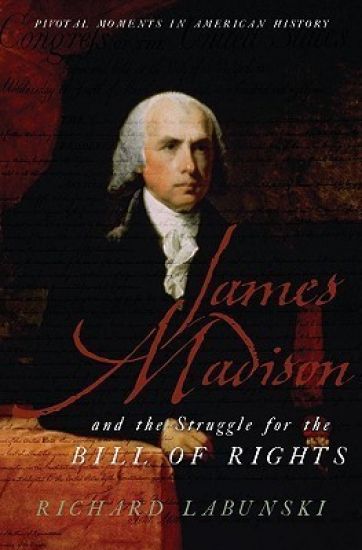
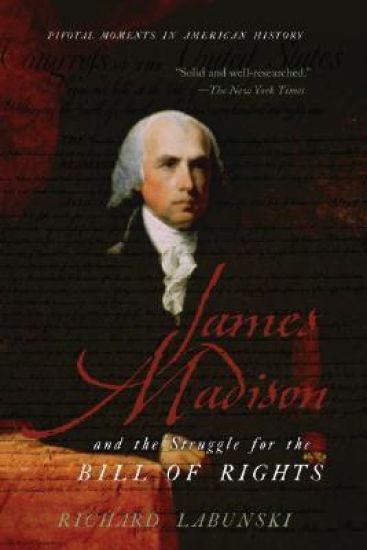
James Madison and the Struggle for the Bill of Rights

James Madison and the Struggle for the Bill of Rights

Richard Labunski

Oxford University Press Inc
2006
sidottu
Today we hold the Constitution in such high regard that we can hardly imagine how hotly contested was its adoption. In fact, many of the thirteen states saw fierce debate over the document, and ratification was by no means certain. Virginia, the largest and most influential state, approved the Constitution by the barest of margins, and only after an epic political battle between James Madison and Patrick Henry. Now Richard Labunski offers a dramatic account of a time when the entire American experiment hung in the balance, only to be saved by the most unlikely of heroes--the diminutive and exceedingly shy Madison. Here is a vividly written account of not one but several major political struggles which changed the course of American history. Labunski takes us inside the sweltering converted theater in Richmond, where for three grueling weeks, the soft-spoken Madison and the charismatic Patrick Henry fought over whether Virginia should ratify the Constitution. The stakes were enormous. If Virginia voted no, George Washington could not become president, New York might follow suit and reject the Constitution, and the young nation would be thrust into political chaos. But Madison won the day by a handful of votes, mollifying Anti-Federalist fears by promising to add a bill of rights to the Constitution. To do this, Madison would have to win a seat in the First Congress. Labunski shows how the vengeful Henry prevented Madison's appointment to the Senate and then used his political power to ensure that Madison would run against his good friend, Revolutionary War hero James Monroe, in a House district teeming with political enemies. Overcoming great odds, Madison won by a few hundred votes, allowing him to attend the First Congress and sponsor the Bill of Rights. Packed with colorful details about life in early America, this compelling and important narrative is the first serious book about Madison written in many years. It will return this under-appreciated patriot to his rightful place among the Founding Fathers and shed new light on a key turning point in our nation's history.
The Works of James McCune Smith

The Works of James McCune Smith

James McCune Smith

Oxford University Press Inc
2007
sidottu
The first African American to receive a medical degree, this invaluable collection brings together the writings of James McCune Smith, one of the foremost intellectuals in antebellum America. The Selected Writings of James McCune Smith is one of the first anthologies featuring the works of this illustrious scholar. Perhaps best known for his introduction to Fredrick Douglass's My Bondage and My Freedom, his influence is still found in a number of aspects of modern society and social interactions. And he was considered by many to be a prophet of the twenty-first century. One of the earliest advocates of the use of "black" instead of "colored," McCune Smith treated racial identities as social constructions, arguing that American literature, music, and dance would be shaped and defined by blacks. Organized chronologically, the collection covers over 40 years of writing, including speeches, letters, and essays, and begins with McCune Smith's first speech as an 11-year old boy to the Marquis de Lafayette. Providing historical context for McCune Smith's current cultural relevance, this book showcases writings on black education and self-help, citizenship, and the fight against racism.
James Madison and the Struggle for the Bill of Rights

James Madison and the Struggle for the Bill of Rights

Richard Labunski

Oxford University Press Inc
2008
nidottu
Today we hold the Constitution in such high regard that we can hardly imagine how hotly contested was its adoption. In fact, many of the thirteen states saw fierce debate over the document, and ratification was by no means certain. Virginia, the largest and most influential state, approved the Constitution by the barest of margins, and only after an epic political battle between James Madison and Patrick Henry. Now Richard Labunski offers a dramatic account of a time when the entire American experiment hung in the balance, only to be saved by the most unlikely of heroes--the diminutive and exceedingly shy Madison. Here is a vividly written account of not one but several major political struggles which changed the course of American history. Labunski takes us inside the sweltering converted theater in Richmond, where for three grueling weeks, the soft-spoken Madison and the charismatic Patrick Henry fought over whether Virginia should ratify the Constitution. The stakes were enormous. If Virginia voted no, George Washington could not become president, New York might follow suit and reject the Constitution, and the young nation would be thrust into political chaos. But Madison won the day by a handful of votes, mollifying Anti-Federalist fears by promising to add a bill of rights to the Constitution. To do this, Madison would have to win a seat in the First Congress. Labunski shows how the vengeful Henry prevented Madison's appointment to the Senate and then used his political power to ensure that Madison would run against his good friend, Revolutionary War hero James Monroe, in a House district teeming with political enemies. Overcoming great odds, Madison won by a few hundred votes, allowing him to attend the First Congress and sponsor the Bill of Rights. Packed with colorful details about life in early America, this compelling and important narrative is the first serious book about Madison written in many years. It will return this under-appreciated patriot to his rightful place among the Founding Fathers and shed new light on a key turning point in our nation's history.
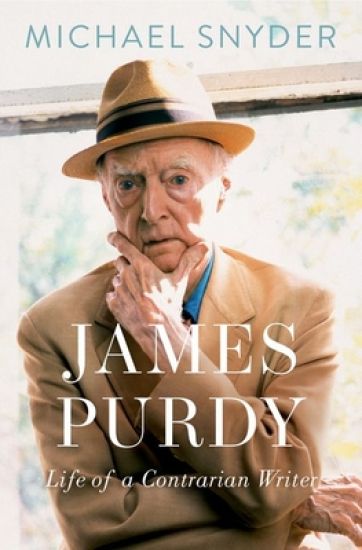
James Purdy

James Purdy

Michael Snyder

OXFORD UNIVERSITY PRESS INC
2023
sidottu
A definitive biography of a twentieth century gay author whose work has recently been rediscovered and enjoys a cult following. One of the most iconoclastic twentieth-century American novelists, James Purdy penned original and sometimes shocking works about those on the margins of American society, exploring small towns, urban life, failure, alienation, sexuality, and familial relations. In his own life, Purdy was a compelling if eccentric figure, declared an "authentic American genius" by Gore Vidal. James Purdy: Life of a Contrarian Writer is the first full-length biography of the gay American novelist, story writer, playwright, and poet. Michael Snyder has spent over a decade plumbing the mysteries of Purdy's career and personal life, including interviews with those who knew him. From his roots in northwestern Ohio, Purdy moved to the world of Bohemian artists and jazz musicians in Chicago in the late 1930s and 1940s, travelled in Spain, studied in Mexico, enlisted in the Army Air Corps, worked for the Federal Security Agency, and taught in Cuba and at a Wisconsin college for nearly a decade. All the while, he aspired to become a writer, but struggled to publish. Only when friends financed the private printing of his work did he find a champion in poet Dame Edith Sitwell, who helped get him published in England, which led to publication in the United States. After moving to New York in 1957, he spent nearly fifty years writing in Brooklyn Heights. Although Purdy's critical reputation peaked in the 1960s and he never enjoyed a bestseller, his often queer and edgy content found a diverse following that included Tennessee Williams, Langston Hughes, William Carlos Williams, Dorothy Parker, Edward Albee, Jonathan Franzen, John Waters, and many LGBTQ readers. Difficult and often contrarian, Purdy sometimes hampered his own career as he sought recognition from a conservative, cliquey New York publishing world. Conveying the potency and influence of Purdy's fierce artistic integrity, vision, and self-definition as a truth-teller, this groundbreaking literary biography recovers the life of a highly talented writer with a persistent cult following.
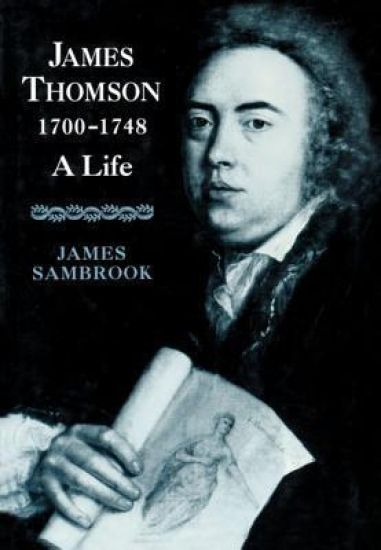
James Thomson (1700-1748)

James Thomson (1700-1748)

James Sambrook

Clarendon Press
1991
sidottu
This is the first full-scale biography of the poet and playwright for forty years. On the personal side it places him in his social and cultural setting: as a welcome member of the disparate circles that surrounded Alexander Pope, Richard Savage, Aaron Hill, James Quin, George Bubb Dodington, George Lyttelton, Lady Hertford, and Frederick, Prince of Wales. More significantly, for the first time Thomson's involvement in politics is thoroughly explored. The analysis of his Scottish Whiggism and his role as the poet of Britannia and Liberty places the poetry in a clear ideological light, which at once deepens our understanding of Thomson the man, and illuminates the political groupings of the period. Drawing on his deep understanding of Thomson's poetry, which he edited for the Oxford English Texts series, James Sambrook also supplies a full critical analysis of the whole body of Thomson's writings that is unrivalled in its depth. This new Life maintains an even balance between biography, history, and literary criticism, and forms both an impressive study of the man and a companion to the highly praised Oxford English Texts edition of the poems.