Kirjojen hintavertailu. Mukana 11 342 296 kirjaa ja 12 kauppaa.

Kirjahaku

Etsi kirjoja tekijän nimen, kirjan nimen tai ISBN:n perusteella.

1000 tulosta hakusanalla James R Cook

Hideout Planet Earth

Hideout Planet Earth

James R Elliott

Tellwell Talent
2020
pokkari
Why are we here on planet earth? It is the destiny of all creation to reach a condition of universal oneness with the creator continually growing toward that common ideal. The cycle of change every where about him and he turns to evolution, but while he is here, man has been given dominion, he is the legitimate keeper of the cosmos for the duration with a mandate to protect and nurture all of those other worlds that may temporarily serve his evolving needs and to become an active participant in the ruling of the universe through his gradual mastery of the universal laws. Now, since there must be a law to everything in creation, it established the universal laws before lighting the big banger or speaking the word that set it all into motion. First, A Big Bang unseen, unheard, yet some what credible to scientists every where as the most acceptable creation theory ever. Who are we? Man in his original state, or permanent conscious is soul, with a spiritual body like unto the maker and here in the flesh the soul is the God part in us. Flesh provides the testing portion for the soul, for the souls original Transgression was the descent into the flesh- form in the beginning as was commanded.
Hideout Planet Earth

Hideout Planet Earth

James R Elliott

Tellwell Talent
2020
sidottu
Why are we here on planet earth? It is the destiny of all creation to reach a condition of universal oneness with the creator continually growing toward that common ideal. The cycle of change every where about him and he turns to evolution, but while he is here, man has been given dominion, he is the legitimate keeper of the cosmos for the duration with a mandate to protect and nurture all of those other worlds that may temporarily serve his evolving needs and to become an active participant in the ruling of the universe through his gradual mastery of the universal laws. Now, since there must be a law to everything in creation, it established the universal laws before lighting the big banger or speaking the word that set it all into motion. First, A Big Bang unseen, unheard, yet some what credible to scientists every where as the most acceptable creation theory ever. Who are we? Man in his original state, or permanent conscious is soul, with a spiritual body like unto the maker and here in the flesh the soul is the God part in us. Flesh provides the testing portion for the soul, for the souls original Transgression was the descent into the flesh- form in the beginning as was commanded.
Seraphim Collective Chronicles: Book 1 - The Shard
'From Brit Writers Award Shortlisted author James R Bowman comes a brand new instalment into his sweeping apocalyptic saga.'Over 8900 years ago, The SERAPHIM COLLECTIVE was formed to protect the fledgling humanity from creatures who believed this world was theirs and ruled everything on it.7500 years ago. The final cataclysmic battle against the malevolent and tyrannical Kalithine Empire took place, the Drakareth - the Dark Dragons - chain of domination was broken, though at great cost to both sides, even the victors.Present day and the SERAPHIM COLLECTIVE still protect us from the shadows, for humanity has forgotten their origins and what terrified them, but that's about to change drastically. Two have been found this century who fulfil an ancient Drakareth vengeance prophecy, screamed in blood by a dying Drakareth seer foretelling the return of Their Malevolent Queen Kalith and her brutal Kalithine Empire.
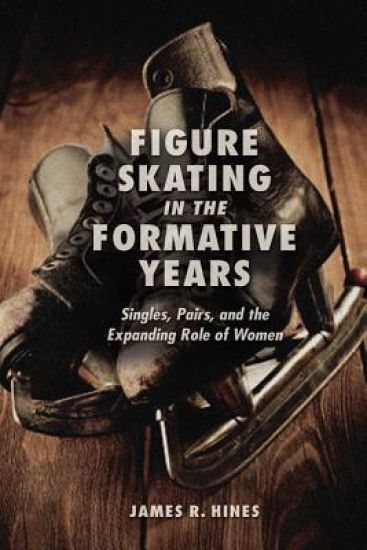
Figure Skating in the Formative Years

Figure Skating in the Formative Years

James R Hines

University of Illinois Press
2015
sidottu
Once a winter pastime for socializing and courtship, skating evolved into the wildly popular competitive sport of figure skating, one of the few athletic arenas where female athletes hold a public profile--and earning power--equal to that of men. Renowned sports historian James R. Hines chronicles figure skating's rise from its earliest days through its head-turning debut at the 1908 Olympics and its breakthrough as entertainment in the 1930s. Hines credits figure skating's explosive expansion to an ever-increasing number of women who had become proficient skaters and wanted to compete, not just in singles but with partners as well. Matters reached a turning point when British skater Madge Syers entered the otherwise-male 1902 World Championship held in London and finished second. Called skating's first feminist, Syers led a wave of women who made significant contributions to figure skating and helped turn it into today's star-making showcase at every Winter Olympics. Packed with stories and hard-to-find details, Figure Skating in the Formative Years tells the early history of a sport loved and followed by fans around the world.
Local Vino

Local Vino

James R Pennell

University of Illinois Press
2017
sidottu
The art and craft of winemaking has put down roots in Middle America, where enterprising vintners coax reds and whites from the prairie earth while their businesses stand at the hub of a new tradition of community and conviviality. In Local Vino, James R. Pennell tracks among the hardy vines and heartland terroir of wineries across Illinois, Iowa, Indiana, and Ohio. Blending history and observation, Pennell gives us a top-down view of the business from cuttings and cultivation to sales and marketing. He also invites entrepreneurs to share stories of their ambitions, hard work, and strategies. Together, author and subjects trace the hows and whys of progress toward that noblest of goals: a great vintage that puts their winery on the map.
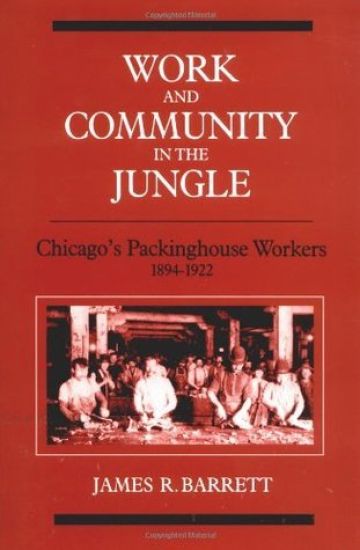
Work and Community in the Jungle

Work and Community in the Jungle

James R. Barrett

University of Illinois Press
2002
nidottu
Mythologized by Upton Sinclair as hopeless, Chicago's packinghouse workers were in fact active agents in the early twentieth century transformation that swept urban industrial America. James R. Barrett's award-winning study explores how the lives and neighborhoods of packinghouse workers convey the experience of mass production work, the quality of working class life, the process of class formation and fragmentation, the effects of unionization, and the changing character of class relations. Merging history and analysis with contemporary social surveys and a computer-assisted analysis of census data, Barrett delves into a wide range of social, economic, and cultural factors that resulted in class cohesion and fragmentation.
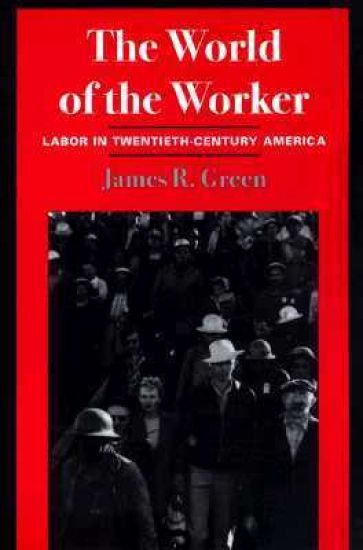
The World of Worker

The World of Worker

James R. Green

University of Illinois Press
1998
nidottu
The World of the Worker illuminates workers' lives at home, on the job, and in the voting booths. A new preface enhances this social, cultural, and political history: an unparalleled picture of working people during the turbulent rise and fall of the labor movement. "A fresh and provocative look at twentieth-century American unions, and a fine introduction to recent labor history scholarship." -- Leslie Woodcock Tentler, Washington Post Book World "Will be welcomed by anyone with a serious interest in labor history." -- Library Journal "Probably the best social history of twentieth-century labor there is." -- Kirkus Reviews "Virtually replaces any previously existing one-volume popular history of the labor movement." -- Ron Radosh, Democratic Left
William Z. Foster and the Tragedy of American Radicalism

William Z. Foster and the Tragedy of American Radicalism

James R. Barrett

University of Illinois Press
2001
nidottu
In this trenchant work, James Barrett traces the political journey of a leading worker radical whose life and experiences encapsulate radicalism's rise and fall in the United States. A self-educated wage earner raised in the slums of a large industrial city, William Z. Foster became a brilliant union organizer who helped build the American Federation of Labor and, later, radical Trade Union Educational League. Embracing socialism, syndicalism, and communism in turn, Foster rose through the ranks of the American Communist Party to stand at the forefront of labor politics throughout the 1920s. Yet by the time he died in 1961, in a Moscow hospital far from the meat-packing plants and steel mills where he had built his reputation, Foster's political marginalism stood as a symbol for the isolation of American labor radicalism in the postwar era. Integrating both the indigenous and the international factors that determined the fate of American communism, William Z. Foster and the Tragedy of American Radicalism provides a new understanding of the basis for radicalism among twentieth-century American workers.
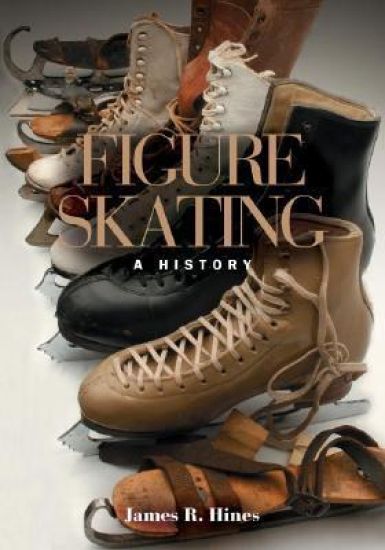
Figure Skating

Figure Skating

James R Hines

University of Illinois Press
2006
nidottu
The only comprehensive history of figure skating in over forty years Figure skating, unique in its sublimely beautiful combination of technical precision, musicality, and interpretive elements, has undergone many dramatic developments since the only previous history of the sport was published in 1959. This exciting and information-packed new history by James R. Hines explains skating’s many technical and artistic advances, its important figures, its intrigues and scandals, and the historical high points during its long evolution. Hines divides his history into three periods separated by the World Wars. In the first section, he follows functional and recreational ice skating through its evolution into national schools, culminating in the establishment of the International Skating Union and the ascendancy of an international style of skating. The second section explains the changes that occurred as the sport expanded into the form we recognize and enjoy today, and the final section shows how skating became increasingly athletic, imaginative, and intense following World War II, as the main focus turns to skaters themselves. The profiles include some 148 World and Olympic Champions as well as others who, in Dick Button’s words, "left the sport better because they were in it." Beginning with mythological tales from twelfth- and thirteenth-century Scandinavians, Hines describes hundreds who have contributed to the sport. They include figure skating’s patron saint Lydwina of Schiedam, whose late-fourteenth-century skating tumble has been documented in a woodcut; Ulrich Salchow and Axel Paulsen, who gave their names to distinctive jumps; Madge Syers, who entered and medaled at the previously all-male World Championships in 1902; and Sonja Henie, who took skating to the silver screen. The history ends with the 2002 skating season, when Maria Butyrskaya and Michelle Kwan commanded the most attention and an unfortunate judging decision rocked the pairs’ competition, resulting in the adoption of a new judging system. Beyond the contributions of individual skaters, Figure Skating also traces the growth of competitions and show skating (professional and amateur), and discussions of relevant social, political, and ethical concerns that have affected the sport. Along with over seventy magnificent historical pictures spread throughout the book, a very special gallery features the picture of every world and Olympic champion. Figure Skating is an informative and inspiring resource, sure to be enjoyed by anyone who has ever skated recreationally or in competition as well as by the many fans who have this beautiful sport as spectators.
Local Vino

Local Vino

James R Pennell

University of Illinois Press
2017
nidottu
The art and craft of winemaking has put down roots in Middle America, where enterprising vintners coax reds and whites from the prairie earth while their businesses stand at the hub of a new tradition of community and conviviality. In Local Vino, James R. Pennell tracks among the hardy vines and heartland terroir of wineries across Illinois, Iowa, Indiana, and Ohio. Blending history and observation, Pennell gives us a top-down view of the business from cuttings and cultivation to sales and marketing. He also invites entrepreneurs to share stories of their ambitions, hard work, and strategies. Together, author and subjects trace the hows and whys of progress toward that noblest of goals: a great vintage that puts their winery on the map.
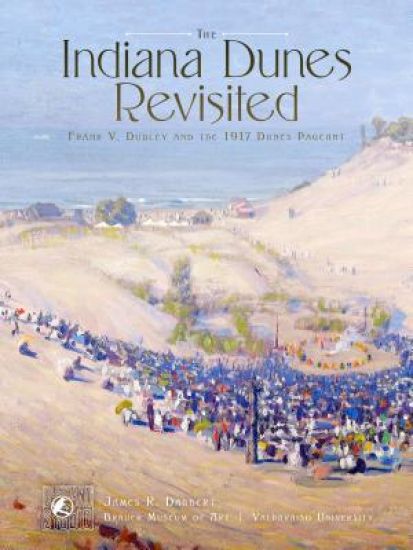
The Indiana Dunes Revisited

The Indiana Dunes Revisited

James R. Dabbert

INDIANA UNIVERSITY PRESS
2017
pokkari
Born of deaf parents at Delavan, Wisconsin, Frank Dudley (1868-1957) sketched the rolling hills and lakes of his boyhood haunts. His love of landscape led him to Chicago and its Art Institute, with his younger brother Clarence soon to follow. The two eventually established a portrait photography shop in the Union Park neighborhood on Chicago's near west side. In the mid-1890s, Union Park Superintendent Jens Jensen was there experimenting with his "American Garden" of native prairie plants, just across the street from the Dudley brothers, boarding together, first on the east and then the west side of the park. By the turn of that century, Clarence Dudley and Jens Jensen were in the Indiana Dunes with their cameras. Beginning in 1896, the Indiana Dunes on Lake Michigan's southern shore drew the interests of botanist Henry Chandler Cowles, whose work on plant succession at the University of Chicago established the Dunes as North America's "birthplace of ecology." In 1908, Jens Jensen began leading hikes to the Dunes, later establishing the Prairie Club that took the lead in a regional conservationist movement. Frank Dudley, established as a landscape artist in Chicago, followed his brother to the Dunes, finding purpose for his art and a mission to preserve a landscape. The 1917 Dunes Pageant brought tens of thousands to Waverly Beach at the mouth of Dunes Creek to push for a national park. Frank Dudley painted the scene, devoting his career to painting the Dunes for the next forty years. As the struggle continues between private industry and environmentalists, Dudley's pictures of his beloved Dunes still remind us of the need to protect a fragile landscape.
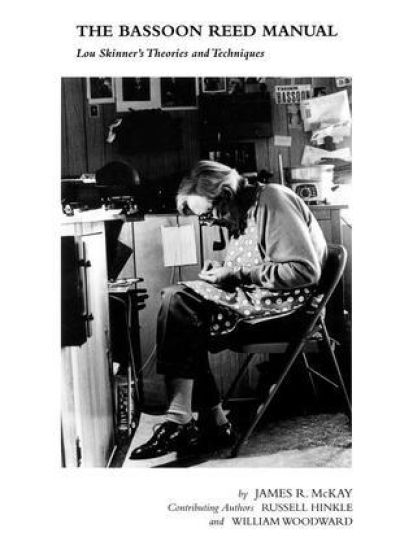
The Bassoon Reed Manual

The Bassoon Reed Manual

James R. McKay; Russel Hinkle; William Woodward

Indiana University Press
2001
pokkari
". . . an extraordinary book, monumental and challenging . . . Buy this book and immerse yourself in it. You will enter a new world." —American Musical Instrument Society Newsletter With the help of author James McKay, the late Louis Skinner, America's master bassoon reedmaker, documented his techniques for making specialized and general purpose reeds for the bassoon and the contrabassoon. In this work, step-by-step explanations of reedmaking techniques are complemented by photographs and drawings, making every procedure clear. Throughout, the emphasis is on giving practical advice, not just giving steps to follow but explaining why they are important.
The Melodramatic Thread

The Melodramatic Thread

James R. Lehning

Indiana University Press
2007
pokkari
In France, both political culture and theatrical performances have drawn upon melodrama. This "melodramatic thread" helped weave the country's political life as it moved from monarchy to democracy. By examining the relationship between public ceremonies and theatrical performance, James R. Lehning sheds light on democratization in modern France. He explores the extent to which the dramatic forms were present in the public performance of political power. By concentrating on the Republic and the Revolution and on theatrical performance, Lehning affirms the importance of examining the performative aspects of French political culture for understanding the political differences that have marked France in the years since 1789.
Guardians of Finance

Guardians of Finance

James R. Barth; Gerard Caprio; Ross Levine

MIT Press
2014
pokkari
How the unaccountable, unmonitorable, and unchecked actions of regulators precipitated the global financial crisis; and how to reform the system. The recent financial crisis was an accident, a "perfect storm" fueled by an unforeseeable confluence of events that unfortunately combined to bring down the global financial systems. Or at least this is the story told and retold by a chorus of luminaries that includes Timothy Geithner, Henry Paulson, Robert Rubin, Ben Bernanke, and Alan Greenspan. In Guardians of Finance, economists James Barth, Gerard Caprio, and Ross Levine argue that the financial meltdown of 2007 to 2009 was no accident; it was negligent homicide. They show that senior regulatory officials around the world knew or should have known that their policies were destabilizing the global financial system and yet chose not to act until the crisis had fully emerged.Barth, Caprio, and Levine propose a reform to counter this systemic failure: the establishment of a "Sentinel" to provide an informed, expert, and independent assessment of financial regulation. Its sole power would be to demand information and to evaluate it from the perspective of the public-rather than that of the financial industry, the regulators, or politicians.
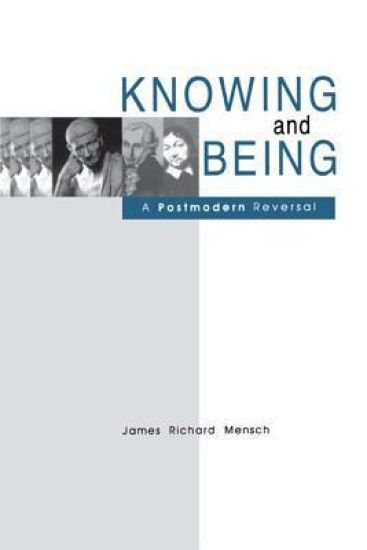
Knowing and Being

Knowing and Being

James R. Mensch

Pennsylvania State University Press
1996
sidottu
Everyone knows that "postmodernism" implies pluralism, anti-foundationalism, and, generally,a postnormative view of the self and reality. While many embrace it, few bother to tell us what is wrong with modernity. What are the problems that brought about its crisis and ultimate demise as a philosophical and cultural movement? What are the lessons for the postmodern movement that can he drawn from them?James Mensch here explains why modernism failed as a viable philosophical enterprise and how postmodernism must be understood if it is to serve as a defensible intellectual project in its stead. The heart of Mensch's argument is a reversal of the modernist view of the unitary subject as a ground of epistemological and ethical normativity. He substitutes for modernism a view, beholden to Aristotle but adapted to for our present age, that sees subjectivity as temporality in a world where subject and object are interactive. The result is a pluralism of forms of subjectivity corresponding to the different modes of temporality brought about by the world. In a series of analyses on the nature knowing, Mensch shows how we can embrace both the perspectivism of postmodernism while avoiding the skepticism and relativism that have constantly threatened to undermine its insights.
Postfoundational Phenomenology

Postfoundational Phenomenology

James R. Mensch

Pennsylvania State University Press
2000
sidottu
This book offers a fresh look at Edmund Husserl’s philosophy as a nonfoundational approach to understanding the self as an embodied presence.Contrary to the conventional view of Husserl as carrying on the Cartesian tradition of seeking a trustworthy foundation for knowledge in the "pure" observations of a disembodied ego, James Mensch introduces us to the Husserl who, anticipating the later investigations of Merleau-Ponty, explored how the body functions to determine our self-presence, our freedom, and our sense of time. The result is a concept of selfhood that allows us to see how consciousness’s arising from sensuous experiences follows from the temporal features of embodiment.From this understanding of what is crucial to Husserl’s phenomenology, the book draws the implications for language and ethics, comparing Husserl’s ideas with those of Derrida on language and with those of Heidegger and Levinas on responsibility. Paradoxically, it is these postmodernists who are shown to be extending the logic of foundationalism to its ultimate extreme, whereas Husserl can be seen as leading the way beyond modernity to a nonfoundational account of the self and its world.
Postfoundational Phenomenology

Postfoundational Phenomenology

James R. Mensch

Pennsylvania State University Press
2003
pokkari
This book offers a fresh look at Edmund Husserl’s philosophy as a nonfoundational approach to understanding the self as an embodied presence.Contrary to the conventional view of Husserl as carrying on the Cartesian tradition of seeking a trustworthy foundation for knowledge in the "pure" observations of a disembodied ego, James Mensch introduces us to the Husserl who, anticipating the later investigations of Merleau-Ponty, explored how the body functions to determine our self-presence, our freedom, and our sense of time. The result is a concept of selfhood that allows us to see how consciousness’s arising from sensuous experiences follows from the temporal features of embodiment.From this understanding of what is crucial to Husserl’s phenomenology, the book draws the implications for language and ethics, comparing Husserl’s ideas with those of Derrida on language and with those of Heidegger and Levinas on responsibility. Paradoxically, it is these postmodernists who are shown to be extending the logic of foundationalism to its ultimate extreme, whereas Husserl can be seen as leading the way beyond modernity to a nonfoundational account of the self and its world.
Knowing and Being

Knowing and Being

James R. Mensch

Pennsylvania State University Press
1996
pokkari
Everyone knows that "postmodernism" implies pluralism, anti-foundationalism, and, generally,a postnormative view of the self and reality. While many embrace it, few bother to tell us what is wrong with modernity. What are the problems that brought about its crisis and ultimate demise as a philosophical and cultural movement? What are the lessons for the postmodern movement that can he drawn from them?James Mensch here explains why modernism failed as a viable philosophical enterprise and how postmodernism must be understood if it is to serve as a defensible intellectual project in its stead. The heart of Mensch's argument is a reversal of the modernist view of the unitary subject as a ground of epistemological and ethical normativity. He substitutes for modernism a view, beholden to Aristotle but adapted to for our present age, that sees subjectivity as temporality in a world where subject and object are interactive. The result is a pluralism of forms of subjectivity corresponding to the different modes of temporality brought about by the world. In a series of analyses on the nature knowing, Mensch shows how we can embrace both the perspectivism of postmodernism while avoiding the skepticism and relativism that have constantly threatened to undermine its insights.
Policy and Methods in German and American Antitrust Law

Policy and Methods in German and American Antitrust Law

James R. Maxeiner

Praeger Publishers Inc
1986
sidottu
A remarkable reversal in popular satisfaction with antitrust law has occurred: Germany--once the classic land of cartels--now enforces an antitrust law vigorously and subject to little meaningful opposition, while the United States--itself the home of antitrust law--enforces its antitrust law erratically and against significant criticism. Whatever may be the precise measure of support in each country for antitrust laws, even the most cursory observation discloses a criticism of antitrust law in the United States not matched in kind or degree in the Federal Republic of Germany. This work investigates aspects of some of the many possible explanations--legal, social, and economic--for this remarkable turnaround. It considers perhaps the most obvious question: How do the two antitrust laws differ? In partial answer, it suggests that certain principal criticisms of American antitrust law reflect dissatisfaction as much with the legal methods by which that law is applied as with the law itself. German cartel law, Maxeiner suggests, utilizes different legal methods which avoid or mitigate many of the problems encountered in American antitrust law.