Kirjahaku
Etsi kirjoja tekijän nimen, kirjan nimen tai ISBN:n perusteella.
1000 tulosta hakusanalla Jason A. Mahn


Osteoporosis and Fragility Fractures, An Issue of Orthopedic Clinics
Jason A. Lowe; Gary E. Friedlaender
Elsevier - Health Sciences Division
2013
sidottu
This issue, focusing on Osteoporosis and Fragility Fractures, will open with a general overview of fragility fractures, common treatments, and costs involved. The issue then focuses on a variety of different topics, like new therapies, atypical and extraordinarily complex fractures, and an update on treatment protocols. Because of the very nature of fragility fractures, much of the content is focused on the geriatric patient, though not all.



For the Gamer at Heart Yoshinari Ichimura is a man who grew up at the beginning of the role-playing video game boom. He soon learned how to program using his brother's computer, but because of his father's business failure his entire family had to run away to the back woods of Japan. His experiences surviving with his family in a small cabin that didn't even have running water mixed with his experiences playing and programming RPGs has lead him to develop a unique point of view that helped him stand at the top of many different IT companies. Follow along with his stylized RPG view the world and see how it can change how you view your real life world.
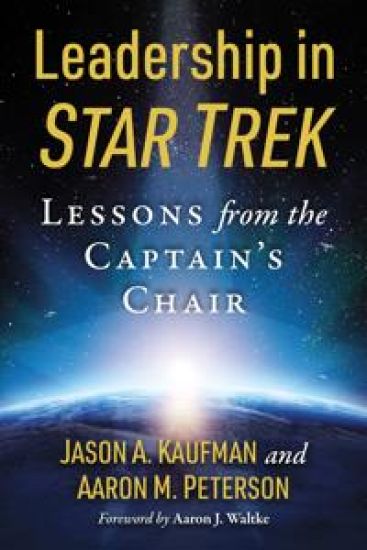
What are the skills necessary for effective leadership? How can we learn to lead toward a better tomorrow? For six decades, the captains of Star Trek have demonstrated the potential for enlightened leaders to leverage reason and compassion in the service of others. Grounded in science yet focused on practical application, this work uses case studies from more than 40 episodes and films to explore how Captains Archer, Burnham, Pike, Kirk, Picard, Sisko, and Janeway relied upon the basic leadership skills of communication, patience, and relationship to navigate the most challenging of events.Written for both professionals and curious readers alike, this work navigates how leaders can leverage reason and compassion to create organizational cultures in which everyone has a place at the table. Whether you are a professional or a student of business, academics, schools or government, Star Trek is more relevant than ever before to the leaders of today to boldly go.

In Art as Information Ecology, Jason A. Hoelscher offers not only an information theory of art but an aesthetic theory of information. Applying close readings of the information theories of Claude Shannon and Gilbert Simondon to 1960s American art, Hoelscher proposes that art is information in its aesthetic or indeterminate mode-information oriented less toward answers and resolvability than toward questions, irresolvability, and sustained difference. These irresolvable differences, Hoelscher demonstrates, fuel the richness of aesthetic experience by which viewers glean new information and insight from each encounter with an artwork. In this way, art constitutes information that remains in formation---a difference that makes a difference that keeps on differencing. Considering the works of Frank Stella, Robert Morris, Adrian Piper, the Drop City commune, Eva Hesse, and others, Hoelscher finds that art exists within an information ecology of complex feedback between artwork and artworld that is driven by the unfolding of difference. By charting how information in its aesthetic mode can exist beyond today's strictly quantifiable and monetizable forms, Hoelscher reconceives our understanding of how artworks work and how information operates.

In Art as Information Ecology, Jason A. Hoelscher offers not only an information theory of art but an aesthetic theory of information. Applying close readings of the information theories of Claude Shannon and Gilbert Simondon to 1960s American art, Hoelscher proposes that art is information in its aesthetic or indeterminate mode-information oriented less toward answers and resolvability than toward questions, irresolvability, and sustained difference. These irresolvable differences, Hoelscher demonstrates, fuel the richness of aesthetic experience by which viewers glean new information and insight from each encounter with an artwork. In this way, art constitutes information that remains in formation---a difference that makes a difference that keeps on differencing. Considering the works of Frank Stella, Robert Morris, Adrian Piper, the Drop City commune, Eva Hesse, and others, Hoelscher finds that art exists within an information ecology of complex feedback between artwork and artworld that is driven by the unfolding of difference. By charting how information in its aesthetic mode can exist beyond today's strictly quantifiable and monetizable forms, Hoelscher reconceives our understanding of how artworks work and how information operates.



Project Based Learning: How to Take the Road Less Traveled
Jason A. Moore Ed D.; Jeffery Proctor M. Ed; Kelli Schiller M. Ed
Createspace Independent Publishing Platform
2012
nidottu
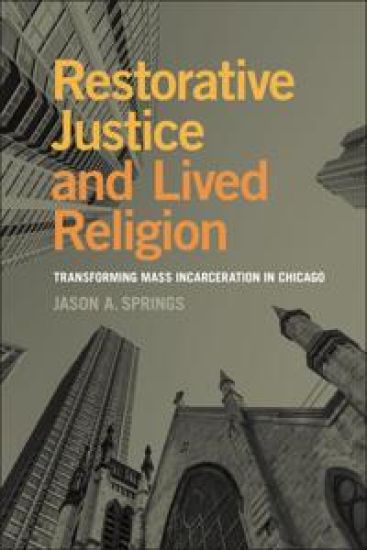
Frames restorative justice as a form of moral and spiritual practice with the capacity to transform injustice In the United States "restorative justice" typically refers to small-scale measures that divert alleged wrongdoers from a standard path through the criminal justice system by funneling them into alternative justice programs. These aim not to punish the offender, but to constructively address the harm that wrongdoing may have caused to individuals or to the community, engaging with the wrongdoer to come to a response that might heal and repair the harm. Yet restorative justice initiatives generally fail to challenge and transform the racist system of mass incarceration. This book argues that these initiatives have the potential to do so, but that we need to better understand what restorative justice is, and how it should be implemented. It claims that restorative justice can achieve its desired effect only insofar as it provides a mode of association between people that is, at its core, moral and spiritual. The book explores the ways in which restorative justice ethics and practices exhibit moral and spiritual dynamics, and what difference such "lived religious" dynamics can make for purposes of transforming structural violence. Looking to Chicago's restorative justice network as a model for developing these transformational and sustainable social changes, the volume showcases real-life examples of the kinds of practices and initiatives needed to shift the entrenched dynamics that fuel the prison-industrial complex across the United States.
Frames restorative justice as a form of moral and spiritual practice with the capacity to transform injustice In the United States "restorative justice" typically refers to small-scale measures that divert alleged wrongdoers from a standard path through the criminal justice system by funneling them into alternative justice programs. These aim not to punish the offender, but to constructively address the harm that wrongdoing may have caused to individuals or to the community, engaging with the wrongdoer to come to a response that might heal and repair the harm. Yet restorative justice initiatives generally fail to challenge and transform the racist system of mass incarceration. This book argues that these initiatives have the potential to do so, but that we need to better understand what restorative justice is, and how it should be implemented. It claims that restorative justice can achieve its desired effect only insofar as it provides a mode of association between people that is, at its core, moral and spiritual. The book explores the ways in which restorative justice ethics and practices exhibit moral and spiritual dynamics, and what difference such "lived religious" dynamics can make for purposes of transforming structural violence. Looking to Chicago's restorative justice network as a model for developing these transformational and sustainable social changes, the volume showcases real-life examples of the kinds of practices and initiatives needed to shift the entrenched dynamics that fuel the prison-industrial complex across the United States.

SoulChaser: The Earthbound Trilogy
Jason A. Anderson
Createspace Independent Publishing Platform
2013
nidottu
Book #1: Earthbound A war is building between the Eternals and the Realm of Lost Souls. On uncounted worlds throughout the galaxies, humans live and die; but death is not the end. In the Afterlife, the souls of those who have passed beyond exist in contentment for eternity. But there are those souls in the Abyss that, if their rage and desperation gain enough strength, can break free and return to Mortality. When this happens, SoulChasers are sent to track the rogue soul down and return him or her to the Afterlife. It happens on uncounted worlds throughout the galaxy, even here...on Earth. In the resort town of Shadow Valley, SoulChaser Kiah has arrived to return his nemesis, Masaal, back to the Abyss. But Kiah has an ulterior motive: to find and rescue his wife, Kenah, who was meant to join him on a retrieval twenty years ago, but never arrived. To achieve both goals, he will enlist the help of several college students trying to run the seasonal haunted house, Nightmare Manor. He will pull them along on a journey bathed in blood. He may accomplish both goals, but the workers at Nightmare Manor may be sacrificed in the process. Shadow Valley will be changed forever.



Advent, Preparing For Christmas
Jason A. Ponzio
Createspace Independent Publishing Platform
2013
nidottu

Jean Archer - The Diamond and the Rough
Jason A. Anderson
Createspace Independent Publishing Platform
2013
nidottu