Kirjojen hintavertailu. Mukana 11 342 296 kirjaa ja 12 kauppaa.

Kirjahaku

Etsi kirjoja tekijän nimen, kirjan nimen tai ISBN:n perusteella.

1000 tulosta hakusanalla Jason W. Freeman

When the Servant Becomes the Master

When the Servant Becomes the Master

Powers Jason Z. W.

Central Recovery Press
2018
nidottu
The updated and revised second edition is a must-read for anyone struggling with addiction, their families and the professionals who want to know more about this baffling disease. Jason Powers approaches addiction from a variety of different angles, clearly and carefully attacking myths and misinformation and bringing the reader up to date with the most current scientific and popular literature on addiction. Dr. Powers illuminates the entire spectrum of addiction-related topics, from neuroscience to treatment options and guides the reader through the extensive material and to a more humane yet medically driven view of the true meaning of the disease of addiction. · Written with empathy and compassion by a physician specialising in addiction medicine who is in long-term recovery. · Updated with contemporary neuroscience and state-of-the-art information that includes the Diagnostic and Statistical Manual of Mental Disorders, Fifth Edition (DSM-5). · Integrates the author's vast clinical experience with a thorough review of related literature into a passionate and compelling guide for patients, loved ones and clinicians.

Understanding Social Statistics

Understanding Social Statistics

Lance W. Roberts; Jason Edgerton; Tracey Peter; Lori Wilkinson

Oxford University Press, Canada
2015
nidottu
Students studying statistics for the first time can often feel confused, disoriented, and lacking direction. Understanding Social Statistics is a text crafted with this reality in mind, that many students feel lost and frustrated when studying statistics-much like being in a maze. USS acts as both a map and toolkit for navigating the maze of social statistics successfully. At every point in each chapter, students will have a clear idea of where they are and in which direction they are headed. A 5-step learning model applied to each theoretical concept ensures that readers have a predictable and reliable method for approaching every statistical situation they encounter-by working their way through the 5 steps, readers are guaranteed a way forward. Along the way they will collect all the tools they need to perform statistical analysis and learn to use them competently. Using maps and tools effectively requires practice, which is another key element of USS. Steps 2 (Learning the Calculations) and 3 (Using Computer Software) in the 5-step learning model provide ample opportunity for students to put learning into practice with sample problems and exercises. In addition, a complement of supportive text pedagogy and ancillary material (including detailed descriptions of the steps involved in arriving at the answers to the text's practice and sample problems) underscore the authors' commitment to providing a practical, easy-to-understand, and effective way to learn social statistics.
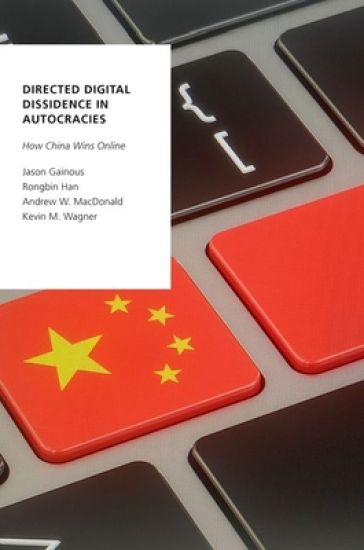
Directed Digital Dissidence in Autocracies

Directed Digital Dissidence in Autocracies

Jason Gainous; Rongbin Han; Andrew W. MacDonald; Kevin M. Wagner

OXFORD UNIVERSITY PRESS INC
2024
sidottu
Does the Internet fundamentally change the flow of politically relevant information, even in authoritarian regimes? If so, does it alter the attitudes and behavior of citizens? While there is a fair amount of research exploring how social media has empowered social actors to challenge authoritarian regimes, there is much less addressing whether and how the state can actively shape the flow of information to its advantage. In China, for instance, citizens often resort to "rightful resistance" to lodge complaints and defend rights. By using the rhetoric of the central government, powerless citizens may exploit the slim political opportunity structure and negotiate with the state for better governance. But this tactic also reinforces the legitimacy of authoritarian states; citizens engage rightful resistance precisely because they trust the state, at least the central government, to some degree. Drawing on original survey data and rich qualitative sources, Directed Digital Dissidence in Autocracies explores how authoritarian regimes employ the Internet in advantageous ways to direct the flow of online information. The authors argue that the central Chinese government successfully directs citizen dissent toward local government through critical information that the central government places online--a strategy that the authors call "directed digital dissidence". In this context, citizens engage in low-level protest toward the local government, and thereby feel empowered, while the central government avoids overthrow. Consequently, the Internet functions to discipline local state agents and to project a benevolent image of the central government and the regime as a whole. With an in-depth look at the COVID-19 and Xinjiang Cotton cases, the authors demonstrate how the Chinese state employs directed digital dissidence and discuss the impact and limitations of China's information strategy.
Directed Digital Dissidence in Autocracies

Directed Digital Dissidence in Autocracies

Jason Gainous; Rongbin Han; Andrew W. MacDonald; Kevin M. Wagner

OXFORD UNIVERSITY PRESS INC
2024
nidottu
Does the Internet fundamentally change the flow of politically relevant information, even in authoritarian regimes? If so, does it alter the attitudes and behavior of citizens? While there is a fair amount of research exploring how social media has empowered social actors to challenge authoritarian regimes, there is much less addressing whether and how the state can actively shape the flow of information to its advantage. In China, for instance, citizens often resort to "rightful resistance" to lodge complaints and defend rights. By using the rhetoric of the central government, powerless citizens may exploit the slim political opportunity structure and negotiate with the state for better governance. But this tactic also reinforces the legitimacy of authoritarian states; citizens engage rightful resistance precisely because they trust the state, at least the central government, to some degree. Drawing on original survey data and rich qualitative sources, Directed Digital Dissidence in Autocracies explores how authoritarian regimes employ the Internet in advantageous ways to direct the flow of online information. The authors argue that the central Chinese government successfully directs citizen dissent toward local government through critical information that the central government places online--a strategy that the authors call "directed digital dissidence". In this context, citizens engage in low-level protest toward the local government, and thereby feel empowered, while the central government avoids overthrow. Consequently, the Internet functions to discipline local state agents and to project a benevolent image of the central government and the regime as a whole. With an in-depth look at the COVID-19 and Xinjiang Cotton cases, the authors demonstrate how the Chinese state employs directed digital dissidence and discuss the impact and limitations of China's information strategy.
Autistic Intelligence

Autistic Intelligence

Douglas W. Maynard; Jason Turowetz

University of Chicago Press
2022
sidottu
Winner 2024 Outstanding Recent Contribution in Social Psychology Award, Social Psychology Section, American Sociological AssociationWinner 2024 Melvin Pollner Prize, Ethnomethodology and Conversation Analysis Section, American Sociological Association As autism has grown in prevalence, so too have our attempts to make sense of it. From placing unfounded blame on vaccines to seeking a genetic cause, Americans have struggled to understand what autism is and where it comes from. Amidst these efforts, however, a key aspect of autism has been largely overlooked: the diagnostic process itself. That process is the central focus of Autistic Intelligence. The authors ask us to question the norms by which we measure autistic behavior, to probe how that behavior can be considered sensible rather than disordered, and to explore how we can better appreciate the individuality of those who receive the diagnosis. Drawing on hundreds of hours of video recordings and ethnographic observations at a clinic where professionals evaluated children for autism, the authors’ analysis of interactions among clinicians, parents, and children demystifies the categories, tools, and practices involved in the diagnostic process. Autistic Intelligence shows that autism is not a stable category; it is the outcome of complex interactional processes involving professionals, children, families, and facets of the social and clinical environments they inhabit. The authors suggest that diagnosis, in addition to carefully classifying children, also can highlight or include unique and particular contributions those with autism potentially can make to the world around us.
Autistic Intelligence

Autistic Intelligence

Douglas W. Maynard; Jason Turowetz

University of Chicago Press
2022
nidottu
Winner 2024 Outstanding Recent Contribution in Social Psychology Award, Social Psychology Section, American Sociological AssociationWinner 2024 Melvin Pollner Prize, Ethnomethodology and Conversation Analysis Section, American Sociological Association As autism has grown in prevalence, so too have our attempts to make sense of it. From placing unfounded blame on vaccines to seeking a genetic cause, Americans have struggled to understand what autism is and where it comes from. Amidst these efforts, however, a key aspect of autism has been largely overlooked: the diagnostic process itself. That process is the central focus of Autistic Intelligence. The authors ask us to question the norms by which we measure autistic behavior, to probe how that behavior can be considered sensible rather than disordered, and to explore how we can better appreciate the individuality of those who receive the diagnosis. Drawing on hundreds of hours of video recordings and ethnographic observations at a clinic where professionals evaluated children for autism, the authors’ analysis of interactions among clinicians, parents, and children demystifies the categories, tools, and practices involved in the diagnostic process. Autistic Intelligence shows that autism is not a stable category; it is the outcome of complex interactional processes involving professionals, children, families, and facets of the social and clinical environments they inhabit. The authors suggest that diagnosis, in addition to carefully classifying children, also can highlight or include unique and particular contributions those with autism potentially can make to the world around us.
Forensic Botany

Forensic Botany

David W. Hall; Jason Byrd

John Wiley Sons Inc
2012
nidottu
FORENSIC BOTANY A PRACTICAL GUIDE Forensic Botany: A Practical Guide is an accessible introduction to the way in which botanical evidence is identified, collected and analysed in criminal cases. This form of evidence is becoming increasingly important in forensic investigation. This book is intended to show how useful simple collection methods and standard plant analysis can be in the course of such investigations. It is written in a clear and accessible manner to enhance the understanding of the subject for the non-specialist. Clearly structured throughout, this book combines well known collection techniques in a field oriented format that can be used for casework. Various methods that allow easy collection, transportation, and preservation of evidence are detailed throughout the book. This book is written for those who have no formal background working with plants. It can be used as a practical guide for students taking forensic science courses, law enforcement training, legal courses, and as a template for plant collection at any scene where plants occur and where rules or laws are involved. Veterinarians, various environmental agencies and anthropologists are examples of disciplines that are more recently in need of plant evidence. The format of the book is designed to present the reader with all the information needed to conduct a botanical analysis of a crime scene; to highlight the forensic significance of the botanical evidence that may be present; how to collect that evidence in the correct manner and preserve and store that evidence appropriately- also shows how to conduct a laboratory analysis of the plants. An accessible practical guide to the collection, analysis and presentation of botanical evidence within forensic investigation.Aimed at the non-specialist looking for an introduction to the field.Written in a clear and logical manner; what is it? Where can you find help? How can you use plant evidence? Why is this kind of plant important? Where to look for evidence; evidence collection made easy; evidence preservation; evidence transportation; chain of custody.Includes evidence collection data sheet and a laboratory analysis data sheet for use in the field.Includes key chapters on microscopy analysis of plant evidence and on DNA collection, use and relative costs.Numerous relevant case studies included to show forensic botany in practice and how to present botanical evidence in court.
Forensic Botany

Forensic Botany

David W. Hall; Jason Byrd

John Wiley Sons Inc
2012
sidottu
FORENSIC BOTANY A PRACTICAL GUIDE Forensic Botany: A Practical Guide is an accessible introduction to the way in which botanical evidence is identified, collected and analysed in criminal cases. This form of evidence is becoming increasingly important in forensic investigation. This book is intended to show how useful simple collection methods and standard plant analysis can be in the course of such investigations. It is written in a clear and accessible manner to enhance the understanding of the subject for the non-specialist. Clearly structured throughout, this book combines well known collection techniques in a field oriented format that can be used for casework. Various methods that allow easy collection, transportation, and preservation of evidence are detailed throughout the book. This book is written for those who have no formal background working with plants. It can be used as a practical guide for students taking forensic science courses, law enforcement training, legal courses, and as a template for plant collection at any scene where plants occur and where rules or laws are involved. Veterinarians, various environmental agencies and anthropologists are examples of disciplines that are more recently in need of plant evidence. The format of the book is designed to present the reader with all the information needed to conduct a botanical analysis of a crime scene; to highlight the forensic significance of the botanical evidence that may be present; how to collect that evidence in the correct manner and preserve and store that evidence appropriately- also shows how to conduct a laboratory analysis of the plants. An accessible practical guide to the collection, analysis and presentation of botanical evidence within forensic investigation.Aimed at the non-specialist looking for an introduction to the field.Written in a clear and logical manner; what is it? Where can you find help? How can you use plant evidence? Why is this kind of plant important? Where to look for evidence; evidence collection made easy; evidence preservation; evidence transportation; chain of custody.Includes evidence collection data sheet and a laboratory analysis data sheet for use in the field.Includes key chapters on microscopy analysis of plant evidence and on DNA collection, use and relative costs.Numerous relevant case studies included to show forensic botany in practice and how to present botanical evidence in court.
Is the Bank Merger Wave of the 1990s Efficient?

Is the Bank Merger Wave of the 1990s Efficient?

Charles W. Calomiris; Jason Karceski

AEI Press
1998
pokkari
This work draws on nine case studies to determine the motivation for bank mergers, to assess the advertised gains in efficiency and services, and to resolve inconsistencies between econometric studies and comparisons of performance in different US states and in different countries.
AKB48

AKB48

Patrick W. Galbraith; Jason G. Karlin

Bloomsbury Academic USA
2019
sidottu
Since its formation as a girl group in 2005, AKB48 has become a phenomenal success and institution in Japan. Having originally recruited fans with photocopied fliers and daily performances in the Akihabara area of Tokyo, AKB48 now saturates Japan. Its members--nearly 800 of them, including five sister groups and four so-called "rival groups" across Japan, as well as six sister groups in other Asian cities--appear in print, broadcast, online, and social media; in advertisements and on products; at home and on the train; on- and off-screen.AKB48's multi-platform omnipresence is characteristic of "idols," whose intimate relationship to fans and appeals to them for support have made the group dominant on the Oricon Yearly Singles Chart in the 2010s; they hold several records, including most consecutive million-selling singles sold in Japan. A unique business model relentlessly monetizes fans' affections through meet-and-greet events and elections, which maximize CD sales, and their saturated presence in the media. At a time when affect is more important than ever in economic, political, and social theory, this book explores the intersection of idols and affect in contemporary Japan and beyond.
AKB48

AKB48

Patrick W. Galbraith; Jason G. Karlin

Bloomsbury Academic USA
2019
nidottu
Since its formation as a girl group in 2005, AKB48 has become a phenomenal success and institution in Japan. Having originally recruited fans with photocopied fliers and daily performances in the Akihabara area of Tokyo, AKB48 now saturates Japan. Its members--nearly 800 of them, including five sister groups and four so-called "rival groups" across Japan, as well as six sister groups in other Asian cities--appear in print, broadcast, online, and social media; in advertisements and on products; at home and on the train; on- and off-screen.AKB48's multi-platform omnipresence is characteristic of "idols," whose intimate relationship to fans and appeals to them for support have made the group dominant on the Oricon Yearly Singles Chart in the 2010s; they hold several records, including most consecutive million-selling singles sold in Japan. A unique business model relentlessly monetizes fans' affections through meet-and-greet events and elections, which maximize CD sales, and their saturated presence in the media. At a time when affect is more important than ever in economic, political, and social theory, this book explores the intersection of idols and affect in contemporary Japan and beyond.
Peace In Music for Flute Solo: A collection of sacred hymn arrangements for Flute Solo with Piano Accompaniment
"Peace in Music for Flute Solo", arranged by Susan W. Henry, is a collection of 11 intermediate hymn arrangements for flute solo with piano accompaniment which include: 1. Nearer, My God, to Thee / 2. Our Savior's Love / 3. I Need Thee Every Hour / 4. I Know That My Redeemer Lives (Variation I) / 5. I Know That My Redeemer Lives (Variation II) / 6. Lord, I Would Follow Thee / 7. Come Follow Me / 8. I Am a Child of God / 9. Where Can I Turn for Peace? / 10. Precious Savior, Dear Redeemer...Come Thou Fount of Every Blessing / 11. Abide With Me...There is a Green Hill Far Away. This collection was thoughtfully chosen to include beloved hymns which are familiar and faith promoting. These hymns have provided comfort and inspiration to me throughout my life. I have played the flute for over 30 years. Combining my love for the hymns and the flute have created a peaceful combination in these hymn arrangements. I hope that you will find peace in your life as you play through through each of these songs.
Institutional Acceleration

Institutional Acceleration

Darcy W. E. Allen; Chris Berg; Jason Potts

Cambridge University Press
2025
pokkari
This Element develops a theory of institutional acceleration to explain the transformation to a digital economy through a cluster of frontier technologies: artificial intelligence, blockchain, quantum computing, cryptography, and low-earth orbit infrastructure. Unlike previous technological revolutions, these technologies transform not how we organise things, but how we coordinate economic activity. The authors' supertransition thesis explains why these digital technologies shouldn't be understood in isolation, but rather should be understood in how they combine to create new institutional possibilities, leading to more open, complex, and global economic systems. Drawing on evolutionary economics and institutional theory, this Element shows how this evolutionary process is reshaping our institutional economic architecture. Ultimately, institutional acceleration drives greater computation and knowledge into our economic systems.
Institutional Acceleration

Institutional Acceleration

Darcy W. E. Allen; Chris Berg; Jason Potts

Cambridge University Press
2025
sidottu
This Element develops a theory of institutional acceleration to explain the transformation to a digital economy through a cluster of frontier technologies: artificial intelligence, blockchain, quantum computing, cryptography, and low-earth orbit infrastructure. Unlike previous technological revolutions, these technologies transform not how we organise things, but how we coordinate economic activity. The authors' supertransition thesis explains why these digital technologies shouldn't be understood in isolation, but rather should be understood in how they combine to create new institutional possibilities, leading to more open, complex, and global economic systems. Drawing on evolutionary economics and institutional theory, this Element shows how this evolutionary process is reshaping our institutional economic architecture. Ultimately, institutional acceleration drives greater computation and knowledge into our economic systems.
Deformation and Fracture Mechanics of Engineering Materials

Deformation and Fracture Mechanics of Engineering Materials

Richard W. Hertzberg; Richard P. Vinci; Jason L. Hertzberg

John Wiley Sons Inc
2021
nidottu
Deformation and Fracture Mechanics of Engineering Materials, Sixth Edition, provides a detailed examination of the mechanical behavior of metals, ceramics, polymers, and their composites. Offering an integrated macroscopic/microscopic approach to the subject, this comprehensive textbook features in-depth explanations, plentiful figures and illustrations, and a full array of student and instructor resources. Divided into two sections, the text first introduces the principles of elastic and plastic deformation, including the plastic deformation response of solids and concepts of stress, strain, and stiffness. The following section demonstrates the application of fracture mechanics and materials science principles in solids, including determining material stiffness, strength, toughness, and time-dependent mechanical response. Now offered as an interactive eBook, this fully-revised edition features a wealth of digital assets. More than three hours of high-quality video footage helps students understand the practical applications of key topics, supported by hundreds of PowerPoint slides highlighting important information while strengthening student comprehension. Numerous real-world examples and case studies of actual service failures illustrate the importance of applying fracture mechanics principles in failure analysis. Ideal for college-level courses in metallurgy and materials, mechanical engineering, and civil engineering, this popular is equally valuable for engineers looking to increase their knowledge of the mechanical properties of solids.
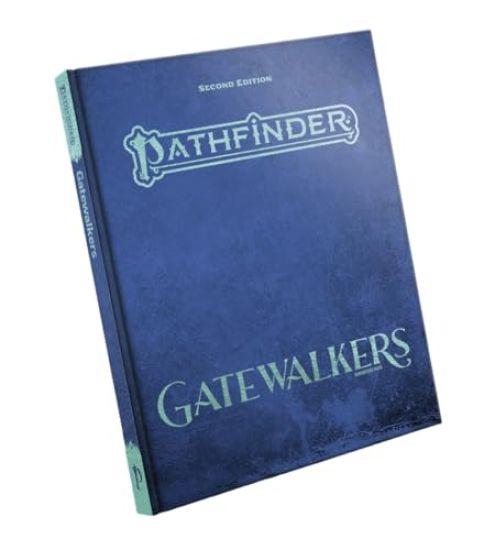
Pathfinder Adventure Path: Gatewalkers (P2)

Pathfinder Adventure Path: Gatewalkers (P2)

Jason Keeley; James Jacobs; James L. Sutter; Jacob W. Michaels; Patrick Renie; Jordan Shiveley; Rodney Sloan

PAIZO PUBLISHING, LLC
2025
sidottu
What lies beyond the gate? On the night of the Missing Moment, thousands stepped through portals across Golarion, seemingly against their will. When they returned, these so-called gatewalkers possessed strange, paranormal powers but no memory of where they had gone. Can the heroes unravel the mystery of the Missing Moment before the source of their new-found power consumes them? This 288-page hardcover compilation includes a complete Pathfinder campaign for characters level 1–10. This updated and remastered edition of the campaign has been adjusted to work perfectly with the latest edition of the Pathfinder Roleplaying Game, and includes updates and improvements based on player feedback. It also presents a meaty rules appendix that offers feats, monsters, and magic items designed to support this world-spanning, mindbending campaign!
Pathfinder Adventure Path: Gatewalkers Special Edition (P2)

Pathfinder Adventure Path: Gatewalkers Special Edition (P2)

Jason Keeley; James Jacobs; James L. Sutter; Jacob W. Michaels; Patrick Renie; Jordan Shiveley; Rodney Sloan

PAIZO PUBLISHING, LLC
2025
sidottu
What lies beyond the gate? On the night of the Missing Moment, thousands stepped through portals across Golarion, seemingly against their will. When they returned, these so-called gatewalkers possessed strange, paranormal powers but no memory of where they had gone. Can the heroes unravel the mystery of the Missing Moment before the source of their new-found power consumes them? This 288-page hardcover compilation includes a complete Pathfinder campaign for characters level 1–10. This updated and remastered edition of the campaign has been adjusted to work perfectly with the latest edition of the Pathfinder Roleplaying Game, and includes updates and improvements based on player feedback. It also presents a meaty rules appendix that offers feats, monsters, and magic items designed to support this world-spanning, mindbending campaign! This deluxe special edition is bound in faux leather with metallic deboss cover elements and a bound-in ribbon bookmark.
The Clinical Cardiac Electrophysiology Handbook, Second Edition

The Clinical Cardiac Electrophysiology Handbook, Second Edition

jason G. Andrade; Matthew T. Bennett; Marc W. Deyell

Cardiotext Publishing
2019
nidottu
The Clinical Cardiac Electrophysiology Handbook, Second Edition, is a concise presentation of the practical information needed to understand the subtleties of cardiac electrophysiology. The Handbook focuses on the "how to" management of arrhythmias, along with an understanding of the "why." . . . a quick source for information in the EP lab or on the wards, as well as a guide to learning—offering the ability to quickly review the essential components before a case or to reinforce new notions and practices encountered during a case. From the Preface. New and updated sections in the Second Edition: Ablation energy and biophysics, including pulsed field ablation AF ablation techniques adjunctive to pulmonary vein isolation Alternatives to cardiac resynchronization therapy His bundle pacing Intracardiac echocardiography ICD discrimination algorithms Left atrial appendage occlusion