Providing a general approach to the understanding and management of all forms of chronic pain, this book offers a clear and reader-friendly format that clarifies procedures in the diagnosis, assessment, and treatment of the most common chronic non-cancer pain entities. Describing various types of intractable non-cancer pain, including neuropathic, somatic, and visceral pain, this source discusses the many available types of treatments, including opioid and adjunctive pain medications, and the safe and proper use of narcotics for treating chronic pain.
The Headache Handbook: Diagnosis and Treatment helps both generalist and specialist clinicians, including family practitioners, chiropractors, and neurologists, to understand headache, possibly the most ubiquitous symptom in medicine. This comprehensive work covers the myriad of differences among headache patients and the need for accurate fact gathering and physical and neurological examinations. Topics include anatomy and physiology of headache; evaluation and treatment of various headache types; interventional procedures; and manual medicine consultations.
In the event of a disaster or public health emergency, individual agencies and hospitals cannot always effectively act alone. In order to provide a collaborative, comprehensive system of planning and response a Healthcare Emergency Response Coalition (HERC) is needed. This book introduces the concept of a HERC and demonstrates why and how a HERC is among the most effective tools for health emergency response and preparedness. Establishing a Healthcare Emergency Response Coalition addresses all matters related to instituting and developing a successful HERC. This Guide is based on Palm Beach County's experiences during the formation and implementation of their tried and tested HERC—now a national model—and can serve to direct your community in establishing its own HERC. It addresses the most fundamental questions of starting a HERC, such as - What is a HERC? - Why do we need a HERC? - How do we start a HERC - How should a HERC be structured? It also provides guidance for developing and sustaining a successful HERC by outlining the steps and activities needed to begin and providing a list of policies and procedures that can be implemented and resources that can be consulted. This information can be applied and customized to any community's specific needs and resources to implement a program that will address any size disaster or healthcare emergency that presents itself. This book provides myriad benefits to everyone invested in emergency preparedness for a community, from health officials and emergency response teams to government officials and fire and police departments, along with anyone else involved with preparing his or her community for disasters and public health emergencies.
The number one issue for financial professionals is capacity. What is the number one way to constantly build capacity in your financial services business? What blind spot is holding you back from achieving more? Does it seem there is never enough time to grow? It’s time for you to implement the missing practice management processes into your financial business so you can build your ideal business. Based on extensive financial industry practice management research, proven marketing strategies from Guerrilla Marketing legend Jay Conrad Levinson and over 27 years of unique financial industry experience, Grant Hicks has created simple yet easy to implement strategies for any financial professional to build and manage capacity in their practice. Research shows that a majority of financial professionals do not have detailed practice management processes including: a unique value proposition clearly articulated, a formal feedback system for clients, a clear definition of an ideal client and a process for attracting ideal clients. Learn strategies to build your ideal capacity, and increase your revenue by up to 33%, through unique practice management processes. Quickly learn how to: Identify and attract better ideal clients to manage your growth effectively Manage your time to achieve consistent double digit growth and manage capacity issues Gather more revenue and get more referrals by implementing proven processes Inspire clients to act quickly through articulating your ideal client experience and case studies Build key practice management processes to build ideal capacity such as feedback and your value proposition Save yourself valuable time. By implementing just one new process, you will be on the path to your ideal capacity and ultimately your ideal practice.
How do we know what we know? What have wisdom, prudence and studiousness to do with justifying our beliefs? Jay Wood begins this introduction to epistemology by taking an extended look at the idea of knowing within the context of the intellectual virtues. He then surveys current views of foundationalism, epistemic justification and reliabilism. Finally he examines the relationship of epistemology to religious belief, and the role of emotions and virtues in proper cognitive functioningProfessors will find this text, with its many examples drawn from everyday student experience, especially useful in introducing students to the formal study of epistemology.
Advanced Antenna Array Engineering for 6G and Beyond Wireless Communications Reviews advances in the design and deployment of antenna arrays for future generations of wireless communication systems, offering new solutions for the telecommunications industry Advanced Antenna Array Engineering for 6G and Beyond Wireless Communications addresses the challenges in designing and deploying antennas and antenna arrays which deliver 6G and beyond performance with high energy efficiency and possess the capability of being immune to interference caused by different systems mounted on the same platforms. This timely and authoritative volume presents innovative solutions for developing integrated communications networks of high-gain, individually-scannable, multi-beam antennas that are reconfigurable and conformable to all platforms, thus enabling the evolving integrated land, air and space communications networks. The text begins with an up-to-date discussion of the engineering issues facing future wireless communications systems, followed by a detailed discussion of different beamforming networks for multi-beam antennas. Subsequent chapters address problems of 4G/5G antenna collocation, discuss differentially-fed antenna arrays, explore conformal transmit arrays for airborne platforms, and present latest results on fixed frequency beam scanning leaky wave antennas as well as various analogue beam synthesizing strategies. Based primarily on the authors’ extensive work in the field, including original research never before published, this important new volume: Reviews multi-beam feed networks, array decoupling and de-scattering methodsProvides a systematic study on differentially fed antenna arrays that are resistant to interference caused by future multifunctional/multi-generation systemsFeatures previously unpublished material on conformal transmit arrays based on Huygen’s metasufaces and reconfigurable leaky wave antennasIncludes novel algorithms for synthesizing and optimizing thinned massive arrays, conformal arrays, frequency invariant arrays, and other future arrays Advanced Antenna Array Engineering for 6G and Beyond Wireless Communications is an invaluable resource for antenna engineers and researchers, as well as graduate and senior undergraduate students in the field.
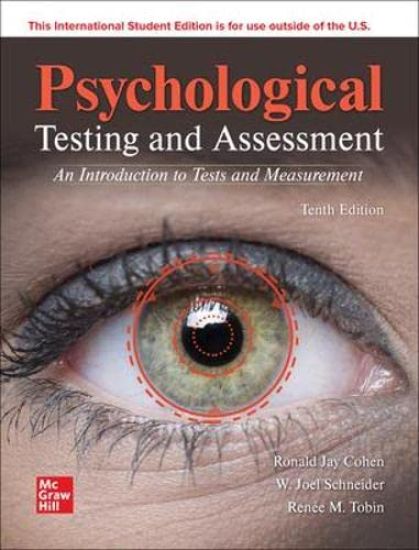
Psychological Testing and Assessment: An Introduction to Tests and Measurements, 10th edition, is a measurement textbook that provides a sound grounding in psychometrics using a logical organization and pedagogical aids. The book is scholarly and authoritative while having a "hands-on" feel due to the authors' experience administering, scoring, and interpreting tests in various contexts. The content brings a human face to testing and assessments while balancing breadth and depth of coverage.
Are American colleges and universities failing their students by refusing to teach the philosophical traditions of China, India, Africa, and other non-Western cultures? This biting and provocative critique of American higher education says yes. Even though we live in an increasingly multicultural world, most philosophy departments stubbornly insist that only Western philosophy is real philosophy and denigrate everything outside the European canon. In Taking Back Philosophy, Bryan W. Van Norden lambastes academic philosophy for its Eurocentrism, insularity, and complicity with nationalism and issues a ringing call to make our educational institutions live up to their cosmopolitan ideals. In a cheeky, agenda-setting, and controversial style, Van Norden, an expert in Chinese philosophy, proposes an inclusive, multicultural approach to philosophical inquiry. He showcases several accessible examples of how Western and Asian thinkers can be brought into productive dialogue, demonstrating that philosophy only becomes deeper as it becomes increasingly diverse and pluralistic. Taking Back Philosophy is at once a manifesto for multicultural education, an accessible introduction to Confucian and Buddhist philosophy, a critique of the ethnocentrism and anti-intellectualism characteristic of much contemporary American politics, a defense of the value of philosophy and a liberal arts education, and a call to return to the search for the good life that defined philosophy for Confucius, Socrates, and the Buddha. Building on a popular New York Times opinion piece that suggested any philosophy department that fails to teach non-Western philosophy should be renamed a "Department of European and American Philosophy," this book will challenge any student or scholar of philosophy to reconsider what constitutes the love of wisdom.
Are American colleges and universities failing their students by refusing to teach the philosophical traditions of China, India, Africa, and other non-Western cultures? This biting and provocative critique of American higher education says yes. Even though we live in an increasingly multicultural world, most philosophy departments stubbornly insist that only Western philosophy is real philosophy and denigrate everything outside the European canon. In Taking Back Philosophy, Bryan W. Van Norden lambastes academic philosophy for its Eurocentrism, insularity, and complicity with nationalism and issues a ringing call to make our educational institutions live up to their cosmopolitan ideals. In a cheeky, agenda-setting, and controversial style, Van Norden, an expert in Chinese philosophy, proposes an inclusive, multicultural approach to philosophical inquiry. He showcases several accessible examples of how Western and Asian thinkers can be brought into productive dialogue, demonstrating that philosophy only becomes deeper as it becomes increasingly diverse and pluralistic. Taking Back Philosophy is at once a manifesto for multicultural education, an accessible introduction to Confucian and Buddhist philosophy, a critique of the ethnocentrism and anti-intellectualism characteristic of much contemporary American politics, a defense of the value of philosophy and a liberal arts education, and a call to return to the search for the good life that defined philosophy for Confucius, Socrates, and the Buddha. Building on a popular New York Times opinion piece that suggested any philosophy department that fails to teach non-Western philosophy should be renamed a "Department of European and American Philosophy," this book will challenge any student or scholar of philosophy to reconsider what constitutes the love of wisdom.