Kirjojen hintavertailu. Mukana 11 699 587 kirjaa ja 12 kauppaa.

Kirjahaku

Etsi kirjoja tekijän nimen, kirjan nimen tai ISBN:n perusteella.

1000 tulosta hakusanalla Jean Rotrou

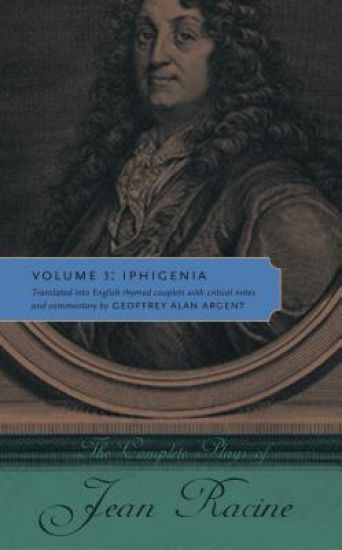
The Complete Plays of Jean Racine

The Complete Plays of Jean Racine

Jean Racine

Pennsylvania State University Press
2015
pokkari
This is the third volume of a projected translation into English of all twelve of Jean Racine’s plays—only the third time such a project has been undertaken. For this new translation, Geoffrey Alan Argent has rendered these plays in the verse form that Racine might well have used had he been English: namely, the “heroic” couplet. Argent has exploited the couplet’s compressed power and flexibility to produce a work of English literature, a verse drama as gripping in English as Racine’s is in French. Complementing the translation are the illuminating Discussion, intended as much to provoke discussion as to provide it, and the extensive Notes and Commentary, which offer their own fresh and thought-provoking insights.In Iphigenia, his ninth play, Racine returns to Greek myth for the first time since Andromache. To Euripides’s version of the tale he adds a love interest between Iphigenia and Achilles. And dissatisfied with the earlier resolutions of the Iphigenia myth (her actual death or her eleventh-hour rescue by a dea ex machina), Racine creates a wholly original character, Eriphyle, who, in addition to providing an intriguing new denouement, serves the dual dramatic purpose of triangulating the love interest and galvanizing the wholesome “family values” of this play by a jolt of supercharged passion.
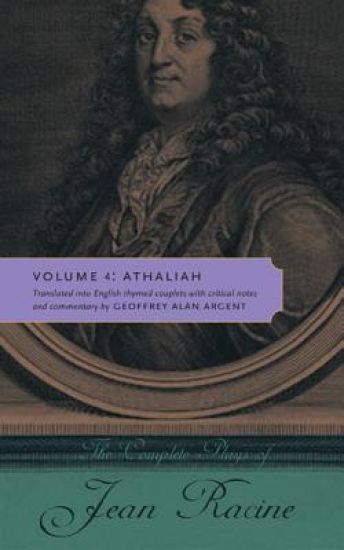
The Complete Plays of Jean Racine

The Complete Plays of Jean Racine

Jean Racine

Pennsylvania State University Press
2012
sidottu
As Voltaire famously opined, Athaliah, Racine's last play, is "perhaps the greatest masterwork of the human spirit." Its formidable antagonists, Athaliah, queen of Judah, and Jehoiada, high priest of the temple of Jerusalem, are engaged in a deadly struggle for dominion: she, fiercely determined to maintain her throne and exterminate the detested race of David; he, no less fiercely determined to overthrow this heathen queen and enthrone the orphan Joash, the scion of the house of David, whom Athaliah believes she slew as an infant ten years earlier. This boy represents the sole hope for the survival of the royal race from which is to spring the Christ. But in this play, even God is more about hate and retribution than about love and mercy.This is the fourth volume of a projected translation into English of all twelve of Jean Racine's plays-only the third time such a project has been undertaken. For this new translation, Geoffrey Alan Argent has rendered these plays in the verse form that Racine might well have used had he been English: namely, the "heroic" couplet. Argent has exploited the couplet's compressed power and flexibility to produce a work of English literature, a verse drama as gripping in English as Racine's is in French. Complementing the translation are the illuminating Discussion, intended as much to provoke discussion as to provide it, and the extensive Notes and Commentary, which offer their own fresh and thought-provoking insights.
The Complete Plays of Jean Racine

The Complete Plays of Jean Racine

Jean Racine

Pennsylvania State University Press
2014
pokkari
As Voltaire famously opined, Athaliah, Racine’s last play, is “perhaps the greatest masterwork of the human spirit.” Its formidable antagonists, Athaliah, queen of Judah, and Jehoiada, high priest of the temple of Jerusalem, are engaged in a deadly struggle for dominion: she, fiercely determined to maintain her throne and exterminate the detested race of David; he, no less fiercely determined to overthrow this heathen queen and enthrone the orphan Joash, the scion of the house of David, whom Athaliah believes she slew as an infant ten years earlier. This boy represents the sole hope for the survival of the royal race from which is to spring the Christ. But in this play, even God is more about hate and retribution than about love and mercy.This is the fourth volume of a projected translation into English of all twelve of Jean Racine’s plays—only the third time such a project has been undertaken. For this new translation, Geoffrey Alan Argent has rendered these plays in the verse form that Racine might well have used had he been English: namely, the “heroic” couplet. Argent has exploited the couplet’s compressed power and flexibility to produce a work of English literature, a verse drama as gripping in English as Racine’s is in French. Complementing the translation are the illuminating Discussion, intended as much to provoke discussion as to provide it, and the extensive Notes and Commentary, which offer their own fresh and thought-provoking insights.
Jean Jaurès

Jean Jaurès

Geoffrey Kurtz

Pennsylvania State University Press
2014
sidottu
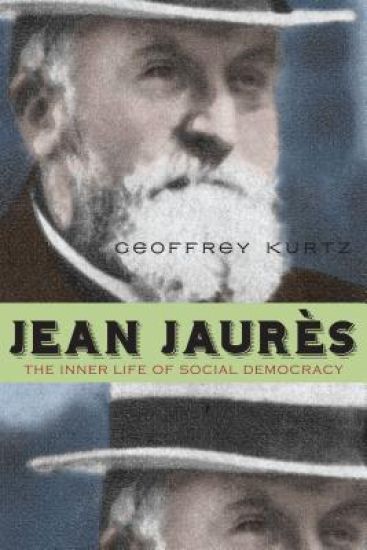
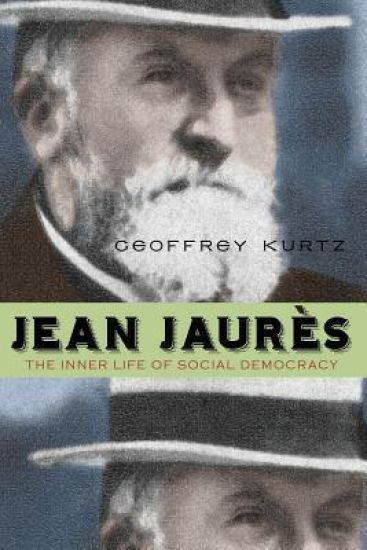
Jean Jaurès was a towering intellectual and political leader of the democratic Left at the turn of the twentieth century, but he is little remembered today outside of France, and his contributions to political thought are little studied anywhere. In Jean Jaurès: The Inner Life of Social Democracy, Geoffrey Kurtz introduces Jaurès to an American audience. The parliamentary and philosophical leader of French socialism from the 1890s until his assassination in 1914, Jaurès was the only major socialist leader of his generation who was educated as a political philosopher. As he championed the reformist method that would come to be called social democracy, he sought to understand the inner life of a political tradition that accepts its own imperfection. Jaurès's call to sustain the tension between the ideal and the real resonates today.In addition to recovering the questions asked by the first generation of social democrats, Kurtz’s aim in this book is to reconstruct Jaurès’s political thought in light of current theoretical and political debates. To achieve this, he gives readings of several of Jaurès’s major writings and speeches, spanning work from his early adulthood to the final years of his life, paying attention to not just what Jaurès is saying, but how he says it.
Jean Jaurès

Jean Jaurès

Geoffrey Kurtz

Pennsylvania State University Press
2016
pokkari
Jean Jaurès was a towering intellectual and political leader of the democratic Left at the turn of the twentieth century, but he is little remembered today outside of France, and his contributions to political thought are little studied anywhere. In Jean Jaurès: The Inner Life of Social Democracy, Geoffrey Kurtz introduces Jaurès to an American audience. The parliamentary and philosophical leader of French socialism from the 1890s until his assassination in 1914, Jaurès was the only major socialist leader of his generation who was educated as a political philosopher. As he championed the reformist method that would come to be called social democracy, he sought to understand the inner life of a political tradition that accepts its own imperfection. Jaurès's call to sustain the tension between the ideal and the real resonates today.In addition to recovering the questions asked by the first generation of social democrats, Kurtz’s aim in this book is to reconstruct Jaurès’s political thought in light of current theoretical and political debates. To achieve this, he gives readings of several of Jaurès’s major writings and speeches, spanning work from his early adulthood to the final years of his life, paying attention to not just what Jaurès is saying, but how he says it.
The Complete Plays of Jean Racine

The Complete Plays of Jean Racine

Jean Racine

Pennsylvania State University Press
2014
sidottu
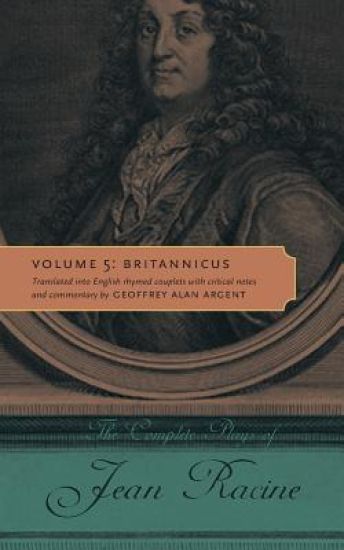
This is the fifth volume of a projected translation into English of all twelve of Jean Racine’s plays. Geoffrey Alan Argent’s translations faithfully convey all the urgency and keen psychological insight of Racine’s dramas, and the coiled strength of his verse, while breathing new vigor into the time-honored form of the “heroic” couplet. Complementing this translation are the Discussion and the Notes and Commentary—particularly detailed and extensive for this volume, Britannicus being by far Racine’s most historically informed play. Also noteworthy is Argent’s reinstatement of an eighty-two-line scene, originally intended to open Act III, that has never before appeared in an English translation of this play. Britannicus, one of Racine’s greatest plays, dramatizes the crucial day when Nero—son of Agrippina and stepson of the late emperor Claudius—overcomes his mother, his wife Octavia, his tutors, and his vaunted “three virtuous years” in order to announce his omnipotence. He callously murders his innocent stepbrother, Britannicus, and effectively destroys Britannicus’s beloved, the virtuous Junia, as well. Racine may claim, in his first preface, that this tragedy “does not concern itself at all with affairs of the world at large,” but nothing could be further from the truth. The tragedy represented in Britannicus is precisely that of the Roman Empire, for in Nero Racine has created a character who embodies the most infamous qualities of that empire — its cruelty, its depravity, and its refined barbarity.
The Complete Plays of Jean Racine

The Complete Plays of Jean Racine

Jean Racine

Pennsylvania State University Press
2014
pokkari
This is the fifth volume of a projected translation into English of all twelve of Jean Racine’s plays. Geoffrey Alan Argent’s translations faithfully convey all the urgency and keen psychological insight of Racine’s dramas, and the coiled strength of his verse, while breathing new vigor into the time-honored form of the “heroic” couplet. Complementing this translation are the Discussion and the Notes and Commentary—particularly detailed and extensive for this volume, Britannicus being by far Racine’s most historically informed play. Also noteworthy is Argent’s reinstatement of an eighty-two-line scene, originally intended to open Act III, that has never before appeared in an English translation of this play. Britannicus, one of Racine’s greatest plays, dramatizes the crucial day when Nero—son of Agrippina and stepson of the late emperor Claudius—overcomes his mother, his wife Octavia, his tutors, and his vaunted “three virtuous years” in order to announce his omnipotence. He callously murders his innocent stepbrother, Britannicus, and effectively destroys Britannicus’s beloved, the virtuous Junia, as well. Racine may claim, in his first preface, that this tragedy “does not concern itself at all with affairs of the world at large,” but nothing could be further from the truth. The tragedy represented in Britannicus is precisely that of the Roman Empire, for in Nero Racine has created a character who embodies the most infamous qualities of that empire — its cruelty, its depravity, and its refined barbarity.