Kirjojen hintavertailu. Mukana 12 016 292 kirjaa ja 12 kauppaa.

Kirjahaku

Etsi kirjoja tekijän nimen, kirjan nimen tai ISBN:n perusteella.

512 tulosta hakusanalla Jed Rowen

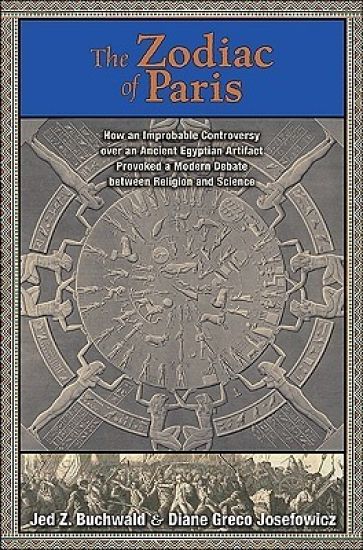
The Zodiac of Paris

The Zodiac of Paris

Jed Z. Buchwald; Diane Greco Josefowicz

Princeton University Press
2010
sidottu
The Dendera zodiac--an ancient bas-relief temple ceiling adorned with mysterious symbols of the stars and planets--was first discovered by the French during Napoleon's campaign in Egypt, and quickly provoked a controversy between scientists and theologians. Brought to Paris in 1821 and ultimately installed in the Louvre, where it can still be seen today, the zodiac appeared to depict the nighttime sky from a time predating the Biblical creation, and therefore cast doubt on religious truth. The Zodiac of Paris tells the story of this incredible archeological find and its unlikely role in the fierce disputes over science and faith in Napoleonic and Restoration France. The book unfolds against the turbulence of the French Revolution, Napoleon's breathtaking rise and fall, and the restoration of the Bourbons to the throne. Drawing on newspapers, journals, diaries, pamphlets, and other documentary evidence, Jed Buchwald and Diane Greco Josefowicz show how scientists and intellectuals seized upon the zodiac to discredit Christianity, and how this drew furious responses from conservatives and sparked debates about the merits of scientific calculation as a source of knowledge about the past. The ideological battles would rage until the thoroughly antireligious Jean-Francois Champollion unlocked the secrets of Egyptian hieroglyphs--and of the zodiac itself. Champollion would prove the religious reactionaries right, but for all the wrong reasons. The Zodiac of Paris brings Napoleonic and Restoration France vividly to life, revealing the lengths to which scientists, intellectuals, theologians, and conservatives went to use the ancient past for modern purposes.
Newton and the Origin of Civilization

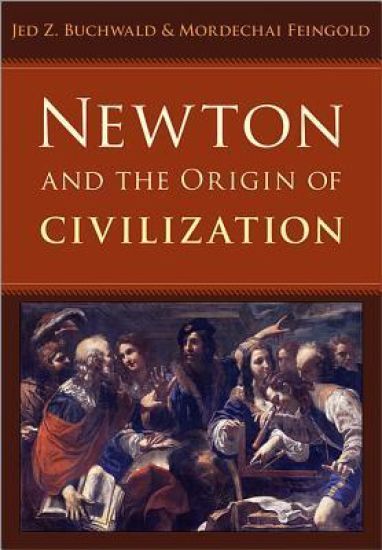
Newton and the Origin of Civilization

Jed Z. Buchwald; Mordechai Feingold

Princeton University Press
2012
sidottu
Isaac Newton's Chronology of Ancient Kingdoms Amended, published in 1728, one year after the great man's death, unleashed a storm of controversy. And for good reason. The book presents a drastically revised timeline for ancient civilizations, contracting Greek history by five hundred years and Egypt's by a millennium. Newton and the Origin of Civilization tells the story of how one of the most celebrated figures in the history of mathematics, optics, and mechanics came to apply his unique ways of thinking to problems of history, theology, and mythology, and of how his radical ideas produced an uproar that reverberated in Europe's learned circles throughout the eighteenth century and beyond. Jed Buchwald and Mordechai Feingold reveal the manner in which Newton strove for nearly half a century to rectify universal history by reading ancient texts through the lens of astronomy, and to create a tight theoretical system for interpreting the evolution of civilization on the basis of population dynamics. It was during Newton's earliest years at Cambridge that he developed the core of his singular method for generating and working with trustworthy knowledge, which he applied to his study of the past with the same rigor he brought to his work in physics and mathematics. Drawing extensively on Newton's unpublished papers and a host of other primary sources, Buchwald and Feingold reconcile Isaac Newton the rational scientist with Newton the natural philosopher, alchemist, theologian, and chronologist of ancient history.
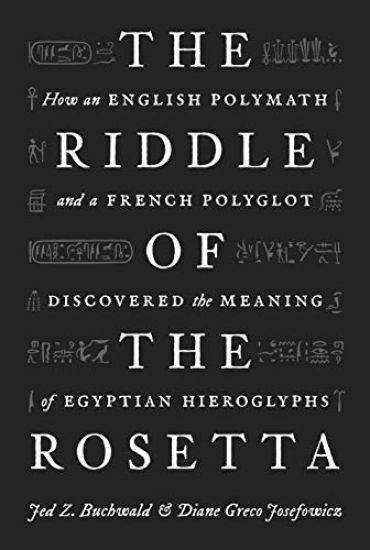
The Riddle of the Rosetta

The Riddle of the Rosetta

Jed Z. Buchwald; Diane Greco Josefowicz

PRINCETON UNIVERSITY PRESS
2020
sidottu
A major new history of the race between two geniuses to decipher ancient Egyptian hieroglyphs, set against the backdrop of nineteenth-century EuropeIn 1799, a French Army officer was rebuilding the defenses of a fort on the banks of the Nile when he discovered an ancient stele fragment bearing a decree inscribed in three different scripts. So begins one of the most familiar tales in Egyptology—that of the Rosetta Stone and the decipherment of Egyptian hieroglyphs. This book draws on fresh archival evidence to provide a major new account of how the English polymath Thomas Young and the French philologist Jean-François Champollion vied to be the first to solve the riddle of the Rosetta.Jed Buchwald and Diane Greco Josefowicz bring to life a bygone age of intellectual adventure. Much more than a decoding exercise centered on a single artifact, the race to decipher the Rosetta Stone reflected broader disputes about language, historical evidence, biblical truth, and the value of classical learning. Buchwald and Josefowicz paint compelling portraits of Young and Champollion, two gifted intellects with altogether different motivations. Young disdained Egyptian culture and saw Egyptian writing as a means to greater knowledge about Greco-Roman antiquity. Champollion, swept up in the political chaos of Restoration France and fiercely opposed to the scholars aligned with throne and altar, admired ancient Egypt and was prepared to upend conventional wisdom to solve the mystery of the hieroglyphs.Taking readers from the hushed lecture rooms of the Institut de France to the windswept monuments of the Valley of the Kings, The Riddle of the Rosetta reveals the untold story behind one of the nineteenth century's most thrilling discoveries.
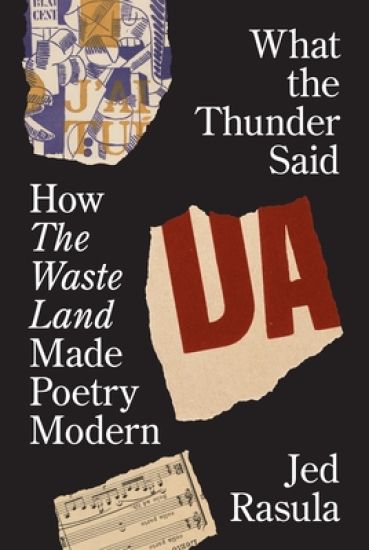
What the Thunder Said

What the Thunder Said

Jed Rasula

PRINCETON UNIVERSITY PRESS
2022
sidottu
A rich cultural history of the creation, explosive impact, and enduring influence of T. S. Eliot’s modernist masterpieceWhen T. S. Eliot published The Waste Land in 1922, it put the thirty-four-year-old author on a path to worldwide fame and the Nobel Prize. “But,” as Jed Rasula writes, “The Waste Land is not only a poem: it names an event, like a tornado or an earthquake. Its publication was a watershed, marking a before and after. It was a poem that unequivocally declared that the ancient art of poetry had become modern.” In What the Thunder Said, Rasula tells the story of how The Waste Land changed poetry forever and how this cultural bombshell served as a harbinger of modernist revolution in all the arts, from abstraction in visual art to atonality in music.From its famous opening, “April is the cruellest month, breeding / Lilacs out of the dead land,” to its closing Sanskrit mantra, “Shantih shantih shantih,” The Waste Land combined singular imagery, experimental technique, and dense allusions, boldly fulfilling Ezra Pound’s injunction to “make it new.” What the Thunder Said traces the origins, reception, and enduring influence of the poem, from its roots in Wagnerism and French Symbolism to the way its strangely beguiling music continues to inspire readers. Along the way, we learn about Eliot’s storied circle, including Wyndham Lewis, Virginia Woolf, and Bertrand Russell, and about poets like Mina Loy and Marianne Moore, whose innovations have proven as consequential as those of the “men of 1914.”Filled with fresh insights and unfamiliar anecdotes, What the Thunder Said recovers the explosive force of the twentieth century’s most influential poem.
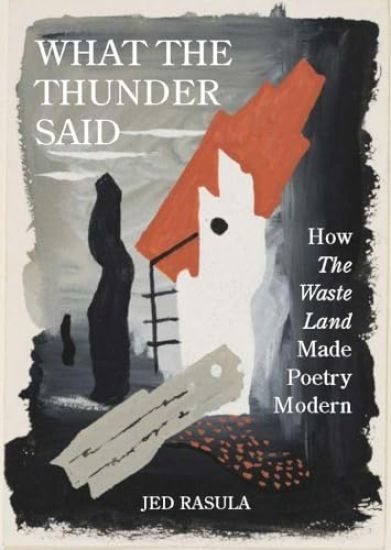
What the Thunder Said

What the Thunder Said

Jed Rasula

PRINCETON UNIVERSITY PRESS
2024
pokkari
A rich cultural history of the creation, explosive impact, and enduring influence of T. S. Eliot’s modernist masterpieceWhen T. S. Eliot published The Waste Land in 1922, it put the thirty-four-year-old author on a path to worldwide fame and the Nobel Prize. “But,” as Jed Rasula writes, “The Waste Land is not only a poem: it names an event, like a tornado or an earthquake. Its publication was a watershed, marking a before and after. It was a poem that unequivocally declared that the ancient art of poetry had become modern.” In What the Thunder Said, Rasula tells the story of how The Waste Land changed poetry forever and how this cultural bombshell served as a harbinger of modernist revolution in all the arts, from abstraction in visual art to atonality in music.From its famous opening, “April is the cruellest month, breeding / Lilacs out of the dead land,” to its closing Sanskrit mantra, “Shantih shantih shantih,” The Waste Land combined singular imagery, experimental technique, and dense allusions, boldly fulfilling Ezra Pound’s injunction to “make it new.” What the Thunder Said traces the origins, reception, and enduring influence of the poem, from its roots in Wagnerism and French Symbolism to the way its strangely beguiling music continues to inspire readers. Along the way, we learn about Eliot’s storied circle, including Wyndham Lewis, Virginia Woolf, and Bertrand Russell, and about poets like Mina Loy and Marianne Moore, whose innovations have proven as consequential as those of the “men of 1914.”Filled with fresh insights and unfamiliar anecdotes, What the Thunder Said recovers the explosive force of the twentieth century’s most influential poem.
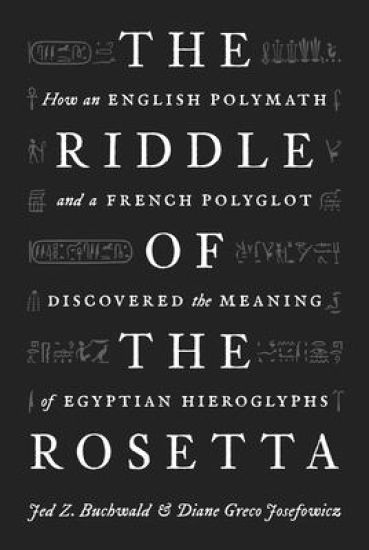
The Riddle of the Rosetta

The Riddle of the Rosetta

Jed Z. Buchwald; Diane Greco Josefowicz

PRINCETON UNIVERSITY PRESS
2022
pokkari
A major new history of the race between two geniuses to decipher ancient Egyptian hieroglyphs, set against the backdrop of nineteenth-century EuropeIn 1799, a French Army officer was rebuilding the defenses of a fort on the banks of the Nile when he discovered an ancient stele fragment bearing a decree inscribed in three different scripts. So begins one of the most familiar tales in Egyptology—that of the Rosetta Stone and the decipherment of Egyptian hieroglyphs. This book draws on fresh archival evidence to provide a major new account of how the English polymath Thomas Young and the French philologist Jean-François Champollion vied to be the first to solve the riddle of the Rosetta.Jed Buchwald and Diane Greco Josefowicz bring to life a bygone age of intellectual adventure. Much more than a decoding exercise centered on a single artifact, the race to decipher the Rosetta Stone reflected broader disputes about language, historical evidence, biblical truth, and the value of classical learning. Buchwald and Josefowicz paint compelling portraits of Young and Champollion, two gifted intellects with altogether different motivations. Young disdained Egyptian culture and saw Egyptian writing as a means to greater knowledge about Greco-Roman antiquity. Champollion, swept up in the political chaos of Restoration France and fiercely opposed to the scholars aligned with throne and altar, admired ancient Egypt and was prepared to upend conventional wisdom to solve the mystery of the hieroglyphs.Taking readers from the hushed lecture rooms of the Institut de France to the windswept monuments of the Valley of the Kings, The Riddle of the Rosetta reveals the untold story behind one of the nineteenth century's most thrilling discoveries.
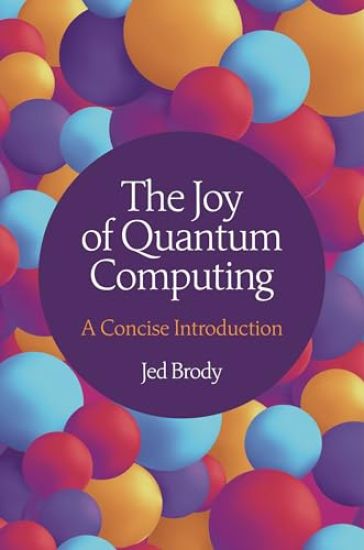
The Joy of Quantum Computing

The Joy of Quantum Computing

Jed Brody

PRINCETON UNIVERSITY PRESS
2025
pokkari
An engaging and accessible presentation of the most famous algorithms and applications of quantum computingThe Joy of Quantum Computing introduces quantum computing succinctly, and with minimal mathematical formalism. Engagingly written—a feast for the reader’s inner nerd—it presents the most famous algorithms and applications of quantum computing and quantum information science, including the “killer apps,” Grover’s search algorithm, and Shor’s factoring algorithm. The only prerequisite is precalculus; readers need no knowledge of quantum physics. Matrices are relegated to the (completely optional) final two chapters. The book shows readers that quantum information science is about more than just high-speed calculations and data security. It is also about the fundamental meaning of quantum mechanics and the ultimate nature of reality.The Joy of Quantum Computing is suitable for classroom use or independent study by questing autodidacts.• Offers detailed explanations of quantum circuits, quantum algorithms, and quantum mysteries• Explains how to apply quantum information science to cryptography (and how Shor’s algorithm menaces classical cryptography)• Introduces the mystifying topics of quantum teleportation and the no-cloning theorem• Discusses Bell inequalities, which permit experimental tests of philosophical assumptions• Presents a simple model of quantum decoherence, shedding light on Schrödinger’s mysterious cat
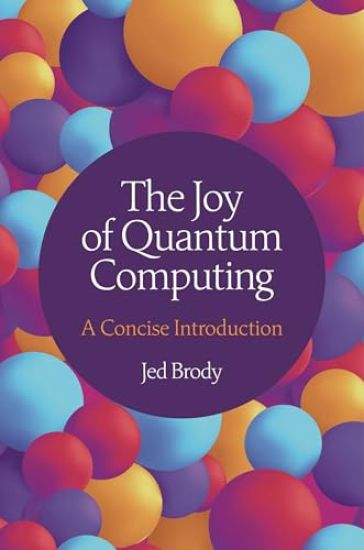
The Joy of Quantum Computing

The Joy of Quantum Computing

Jed Brody

PRINCETON UNIVERSITY PRESS
2025
sidottu
An engaging and accessible presentation of the most famous algorithms and applications of quantum computingThe Joy of Quantum Computing introduces quantum computing succinctly, and with minimal mathematical formalism. Engagingly written—a feast for the reader’s inner nerd—it presents the most famous algorithms and applications of quantum computing and quantum information science, including the “killer apps,” Grover’s search algorithm, and Shor’s factoring algorithm. The only prerequisite is precalculus; readers need no knowledge of quantum physics. Matrices are relegated to the (completely optional) final two chapters. The book shows readers that quantum information science is about more than just high-speed calculations and data security. It is also about the fundamental meaning of quantum mechanics and the ultimate nature of reality.The Joy of Quantum Computing is suitable for classroom use or independent study by questing autodidacts.• Offers detailed explanations of quantum circuits, quantum algorithms, and quantum mysteries• Explains how to apply quantum information science to cryptography (and how Shor’s algorithm menaces classical cryptography)• Introduces the mystifying topics of quantum teleportation and the no-cloning theorem• Discusses Bell inequalities, which permit experimental tests of philosophical assumptions• Presents a simple model of quantum decoherence, shedding light on Schrödinger’s mysterious cat
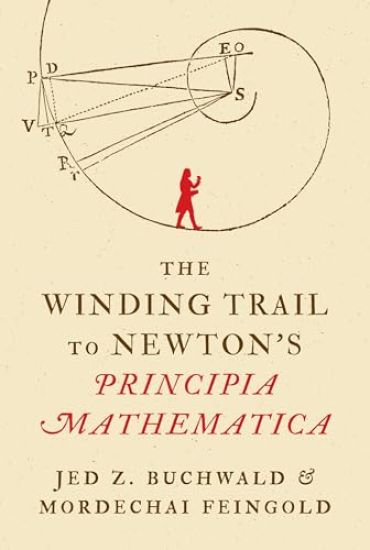
The Winding Trail to Newton's Principia Mathematica

The Winding Trail to Newton's Principia Mathematica

Jed Z. Buchwald; Mordechai Feingold

PRINCETON UNIVERSITY PRESS
2026
sidottu
An intellectual biography of the seventeenth-century masterwork that set down the laws of motion and universal gravitation and ushered in modern physics Long regarded as one of the most important works in the history of science, Isaac Newton’s Principia laid the mathematical foundations of classical mechanics, planetary motion, and the laws of gravity. Jed Buchwald and Mordechai Feingold trace the long, wandering path by which these groundbreaking ideas took shape—beginning with the brilliant insights of a newly minted Cambridge BA and culminating in the publication of Newton’s magnum opus in 1687. Drawing on fresh insights from Newton’s manuscripts and related documents, Buchwald and Feingold situate him firmly within the vibrant scientific milieu of mid-seventeenth-century Cambridge. They explore the interactions with mentors and other contemporaries, emphasizing Newton’s distinctive approach to linking motion with the emerging, new mathematics of the era. What develops is a portrait of a restless young scholar, prone to diving deep into a subject only to lose interest, until a letter, a conversation, or a visit would rekindle his interest. For nearly two decades prior to Edmond Halley’s pivotal visit in 1684, Newton engaged only sporadically with celestial mechanics. In a narrative of fits and starts, Buchwald and Feingold show how, inspired or assisted by figures such as Isaac Barrow, Robert Hooke, John Flamsteed, and Halley, Newton gradually refined his ideas into what would become one of the most revolutionary books ever written.
The Man with Small Hands

The Man with Small Hands

Jed Harris

Man with Small Hands by Jed Harris
2017
nidottu
There once was a man with very small hands and he was SAD. Find out what happens to his tiny hands in this tiny action packed adventure This children's book provides parents a great opportunity to teach their children about the consequences of behaving badly. Follow the journey of the Man with Small Hands as he struggles to manage a big world with tiny hands. Did he always have small hands? Will his hands ever grow back to normal size? Read the book to find out A portion of the proceeds will go towards funding autism research (something that the Man with Small Hands would probably not do). "This is the best book I've read" - Abraham Lincoln
Ascent

Ascent

Jed Mercurio

SIMON SCHUSTER
2009
nidottu
From "a master of precision" (The Observer, London) comes an explosive, provocative novel about John F. Kennedy's years in the White house: his political daring, his brave dedication to human rights, his devotion to his family--and his uncontrollable and unrelenting appetite for sexual adventure. - Taut, magnificent prose: Mercurio's premise--to chronicle Kennedy's exploits, political and sexual, through the President's own anguished but self-centered perspective--is bold to the point of hubris, but he succeeds in spades. The writing is elegant, spare, and wry; the narrative is exquisitely paced. The book's ending is emotionally shattering-- empathetic, redemptive, and shocking. - Startlingly revisionist portrait of JFK: We see Kennedy at his best, as a visionary statesman, a former soldier turned moral pacifist, a loving parent and devoted husband. And we see him at his worst, as a compulsive philanderer whose countless conquests--of movie stars, socialites, secretaries, and interns--ruined hundreds of lives. - Amazing cast of characters: They are all here: Marilyn Monroe, Frank Sinatra, Peter Lawford, Angie Dickinson, Judith Campbell, LBJ, Fiddle and Faddle, Eisenhower, and perhaps most memorably, Jacqueline Kennedy.
The Interpretation of Murder

The Interpretation of Murder

Jed Rubenfeld

Headline Review
2007
pokkari
The 10 year anniversary edition of a dazzling literary thriller including brand new material, THE INTERPRETATION OF MURDER is the story of Sigmund Freud assisting a Manhattan murder investigation. Think SHADOW OF THE WIND meets THE HISTORIAN.THE INTERPRETATION OF MURDER is an inventive tour de force inspired by Sigmund Freud's 1909 visit to America, accompanied by protégé and rival Carl Jung. When a wealthy young debutante is discovered bound, whipped and strangled in a luxurious apartment overlooking the city, and another society beauty narrowly escapes the same fate, the mayor of New York calls upon Freud to use his revolutionary new ideas to help the surviving victim recover her memory of the attack, and solve the crime. But nothing about the attacks - or about the surviving victim, Nora - is quite as it seems. And there are those in very high places determined to stop the truth coming out, and Freud's startling theories taking root on American soil.
The Death Instinct

The Death Instinct

Jed Rubenfeld

Headline Review
2011
pokkari
A spellbinding literary thriller about terror, war, greed, and the darkest secrets of the human soul, by the author of the million-copy bestseller, The Interpretation of Murder.September 16, 1920. Under a clear blue September sky, a quarter ton of explosives is detonated in a deadly attack on Wall Street. Fear comes to the streets of New York.Witnessing the blast are war veteran Stratham Younger, his friend James Littlemore of the NY Police Department, and beautiful French radiochemist Colette Rousseau. A series of inexplicable attacks on Colette, a secret buried in her past, and a mysterious trail of evidence lead Younger, Littlemore, and Rousseau on a thrilling international and psychological journey - from Paris to Prague, from the Vienna home of Freud to the corridors of power in Washington, DC, and ultimately to the hidden depths of our most savage instincts. As the seemingly disjointed pieces of Younger and Littlemore's investigations come together, the two uncover the shocking truth about the bombing - a truth that threatens to shake their world to its foundations.
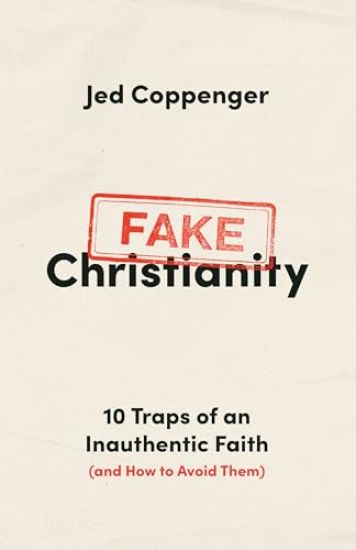
Fake Christianity

Fake Christianity

Jed Coppenger

Moody Publishers
2025
nidottu
We are the problem too. But Jesus can save us from ourselves.Fake Christianity is deceptive and deadly. And, unfortunately, it's very much alive today. We can easily recognize problems and hypocrisy around us. But it takes humility and courage to face the error and deception within us. With a pastoral heart, Jed Coppenger shows us how unnoticed hypocrisy, like prayerlessness, neglect of the Bible, gossip, bitterness, and every form of ungodliness, compromise our heart and weaken our Christian witness.In Fake Christianity, Coppenger looks to the teachings of Jesus that address a culture remarkably like our own. He exposes ten traps of inauthentic faith and provides a gospel-centric response. The best way to tell a fake thing is to look at the real thing. That's true when looking at gems. It's also true of the Christian life. If we want to understand what's true and good, we must look to Jesus. And we must listen to Him.I'm praying that God would use this book to help Christians hear Jesus' words more clearly. I hope every reader will be better equipped to join Jesus as He pushes back the darkness of hypocrisy with the light of the gospel.
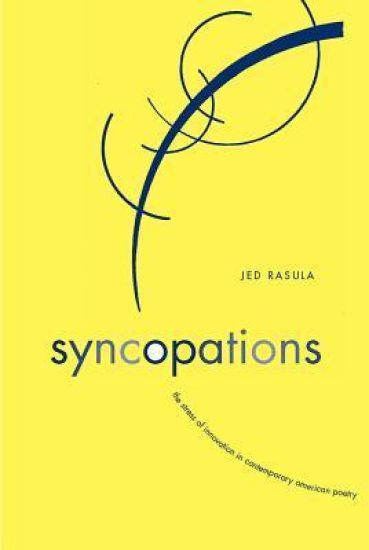
Syncopations

Syncopations

Jed Rasula

The University of Alabama Press
2004
nidottu
An analysis of the sustaining vitality behind contemporary American poetry from 1975 to the 2003, these 12 essays examine both exemplary innovators and the social context in which innovation is resisted, acclaimed, or taken for granted.
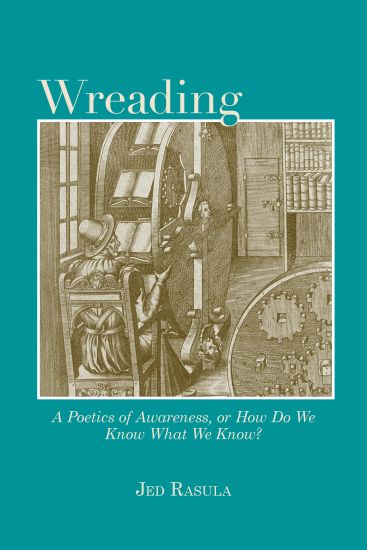
Wreading

Wreading

Jed Rasula

THE UNIVERSITY OF ALABAMA PRESS
2022
nidottu
A diverse collection of essays and interviews on reading, teaching, and writing poetry from a preeminent critic and scholar. Jed Rasula is a distinguished scholar of avant-garde poetics, noted for his erudition, intellectual range, and critical independence. Wreading: A Poetics of Awareness, or How Do We Know What We Know? is a collection of essays and interviews that reflects the breadth and diversity of his curiosity. While this volume presents highlights from Rasula’s criticism, it also serves as a carefully assembled intellectual autobiography. Wreading consists of two parts: an assortment of Rasula’s solo criticism and selected interviews and conversations with other poets and scholars. These detailed conversations are with Evelyn Reilly, Leonard Schwartz, Tony Tost, Mike Chasar, Joel Bettridge, and Ming-Qian Ma. Their exchanges address ecopoetics, the corporate university, the sheer volume of contemporary poetry, and more. This substantial set of dialogues gives readers a glimpse inside a master critic’s deeply informed critical practice, illuminating his intellectual touchstones. The balance between essay and interview achieves a distillation of Rasula’s long-established idea of “wreading.” In his original use, the term denotes how any act of criticism inherently adds to the body of writing that it purports to read. In this latest form, Wreading captures a critical perception that sparks insight and imagination, regardless of what it sees.
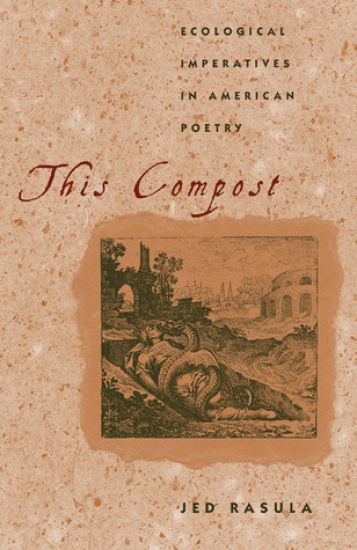
This Compost

This Compost

Jed Rasula

University of Georgia Press
2012
pokkari
Poetry, for Jed Rasula, bears traces of our entanglement with our surroundings, and these traces define a collective voice in modern poetry independent of the more specific influences and backgrounds of the poets themselves. In This Compost Rasula surveys both the convictions asserted by American poets and the poetics they develop in their craft, all with an eye toward an emerging ecological worldview.Rasula begins by examining poets associated with Black Mountain College in the 1950s—Charles Olson, Robert Creeley, and Robert Duncan—and their successors. But This Compost extends to include earlier poets like Robinson Jeffers, Ezra Pound, Louis Zukofsky, Kenneth Rexroth, and Muriel Rukeyser, as well as Clayton Eshleman, Gary Snyder, Michael McClure, and other contemporary poets. Walt Whitman and Emily Dickinson also make appearances. Rasula draws this diverse group of poets together, uncovering how the past is a "compost" fertilizing the present. He looks at the heritage of ancient lore and the legacy of modern history and colonial violence as factors contributing to ecological imperatives in modern poetry.This Compost restores the dialogue between poetic language and the geophysical, biological realm of nature that so much postmodern discourse has sought to silence. It is a fully developed, carefully argued book that deals with an underrepresented element in modern American culture, where the natural world and those who write about it have been greatly neglected in contemporary literary history and theory.
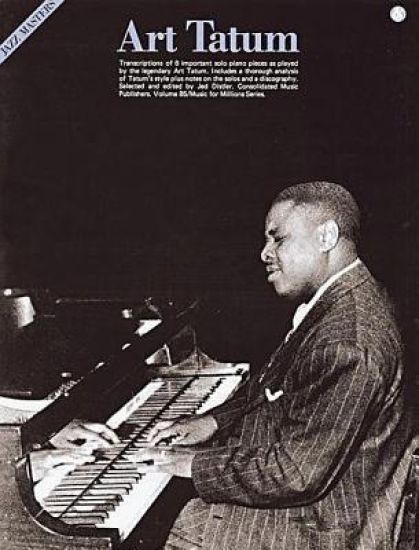
Art Tatum

Art Tatum

Jed Distler

AMSCO Music
1981
nidottu
Transcriptions of six important solo pieces as played by the legendary Art Tatum. Includes a thorough analysis of Tatum's style plus notes on the solos.