Thomas Jefferson's ideas on education evolved over sixty years - from his adolescent years at The College of William and Mary, through the Revolution and election of 1800, to his death in 1826. In 1776, he saw public education as the cornerstone of Virginia's revolution and hoped it would help destroy aristocratic and denominational privilege, create opportunities based on merit, foster humanism and encourage the political awareness necessary for a republican society. Though limited to white males, public education was a progressive idea for its time. All his bills failed. Even though Jefferson's own machinations stymied bills for a statewide system in the 1810s, the -hobby of his old age-, the University of Virginia, opened in 1825." Jefferson's Vision for Education, 1760-1845" examines why Jefferson subverted the democratic spirit of his early plans, and how well other political and religious dimensions of his vision materialized at the University of Virginia during its first twenty years."
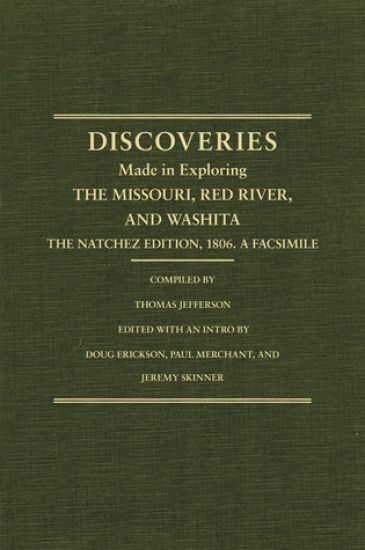
Thomas Jefferson's 1806 Message provided the U.S. Congress, the American people, and interested parties throughout the world with a summary not only of the Lewis and Clark Expedition, but of other expeditions of the time. The value of this "Message from the President, " in addition to its rarity, is in the wealth of information it provided to individuals in the early nineteenth century about the wilderness in the unknown West, and the insights provided to today's reader.It is one of the rarest of printed items in the bibliography of early works on Lewis and Clark.Jefferson's Search for Information. The 1806 Message is an example of the Jeffersonian value of and search for information about the western lands recently acquired from France. The Message brings together the most authoritative accounts of the Louisiana Purchase, combining information from the explorations of Lewis and Clark on the Missouri, William Dunbar and George Hunter on the Ouachita, and Dr. John Sibley's researches on the Red River territory into one report, introduced by Jefferson himself.Editorial Background. The editors place the document in the context of Jefferson's interest in exploration of the West. They offer comparisons between the expeditions included in the Message and discuss the sources that assisted the leaders of these endeavors. A thorough history of the printer and his press is provided, along with an informative assessment of the location and provenance of known copies of the Natchez edition.Additional material included. The Natchez reprint of the Message, appearing after versions published in Washington and New York, also includes extracts from Dunbar's journal, as well as significant botanical observations not printed in those earlier editions. As such, the Natchez reprint is distinctly valuable in providing this unique information--a printed facsimile of this item is long overdue.Two appendices follow the text, including pages from the Washington edition not included in the Natchez edition, and a survey of correspondence of John Sibley available at the Library of Congress. The volume also includes four maps intended to accompany the original 1806 publications.Four folding maps are included in a special envelope at the rear of the book. The facsimile is augmented by an extensive introduction, two appendices, works cited, index, and seven illustrations. Printed on acid-free paper and bound in rich moss-green cloth with gold foil-stamped spine and front cover. Issued in an edition of only 750 copies.
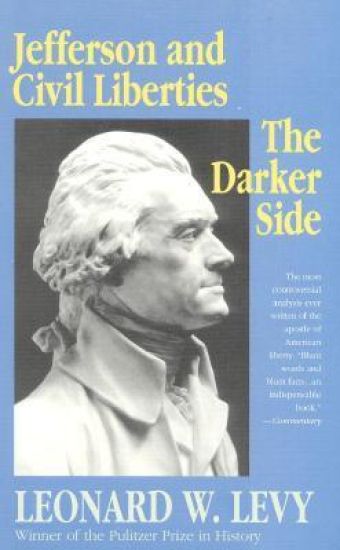
In the most controversial analysis ever written of the apostle of American liberty, the distinguished constitutional historian Leonard W. Levy examines Jefferson’s record on civil liberties and finds it strikingly wanting. Clearing away the saintliness that surrounds the hero, Mr. Levy tries to understand why the “unfamiliar” Jefferson supported loyalty oaths; countenanced internment camps for political suspects; drafted a bill of attainder; urged prosecutions for seditious libel; condoned military despotism; used the Army to enforce laws in time of peace; censored reading; chose professors for their political opinions; and endorsed the doctrine that means, however odious, are justified by ends. "Implicitly," Mr. Levy writes, "this book is a study of libertarian leadership in time of power and time of danger...Jefferson should be seen [by his biographers] as a whole man in the perspective of his times, but my task is to determine the validity of his historical reputation as the apostle of liberty." "Blunt words and blunt facts...an indispensable book."—Commentary.
This book tells the history of the famous Jefferson Islands Club, called the "Playground of Presidents," which was the private island retreat for Presidents including Franklin Roosevelt and Harry Truman as well as many Senators and Congressmen. Stories about events at the Club are told by historian Jefferson Glassie, who grew up spending weekends at the Club on St. Catherine's Island in the Potomac River near Washington, DC, and later worked there as manager and has served on the Board for nearly thirty years. With many humorous anecdotes and comments, Glassie recounts the history of both Poplar Islands where the Club was initially located and St. Catherine's Island, mixing in tales of politicians and watermen, along with the hamr caused by erosion and the gradual degradation of the health of the Bay. With photographs.
This work has been selected by scholars as being culturally important and is part of the knowledge base of civilization as we know it.This work is in the public domain in the United States of America, and possibly other nations. Within the United States, you may freely copy and distribute this work, as no entity (individual or corporate) has a copyright on the body of the work.Scholars believe, and we concur, that this work is important enough to be preserved, reproduced, and made generally available to the public. To ensure a quality reading experience, this work has been proofread and republished using a format that seamlessly blends the original graphical elements with text in an easy-to-read typeface.We appreciate your support of the preservation process, and thank you for being an important part of keeping this knowledge alive and relevant.
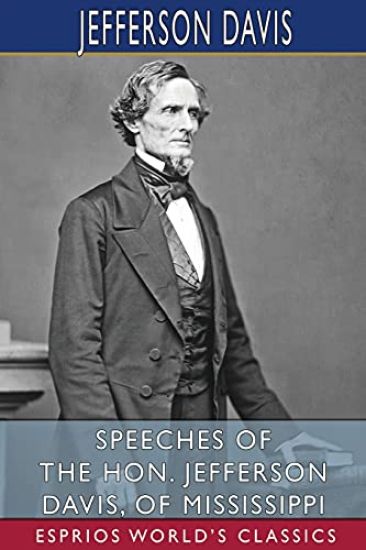
A vital historical document, "Speeches of the Hon. Jefferson Davis, of Mississippi, Delivered During the Summer of 1858" offers unparalleled insight into the political landscape of the United States on the precipice of the Civil War. Penned by Jefferson Davis, later president of the Confederacy, these speeches illuminate the key issues dominating the era, including states' rights and the contentious debate surrounding slavery. This collection provides a firsthand account of the arguments and perspectives shaping the nation's trajectory. Delve into Davis's rhetoric as he articulates his views on governance and the future of the Union. A crucial resource for understanding 19th-century American history, the Confederacy, and the simmering tensions that ultimately led to armed conflict, this volume is essential for anyone seeking a deeper comprehension of this pivotal period. Explore the political theories and historical context that defined a nation divided.This work has been selected by scholars as being culturally important, and is part of the knowledge base of civilization as we know it.This work is in the public domain in the United States of America, and possibly other nations. Within the United States, you may freely copy and distribute this work, as no entity (individual or corporate) has a copyright on the body of the work.Scholars believe, and we concur, that this work is important enough to be preserved, reproduced, and made generally available to the public. We appreciate your support of the preservation process, and thank you for being an important part of keeping this knowledge alive and relevant.