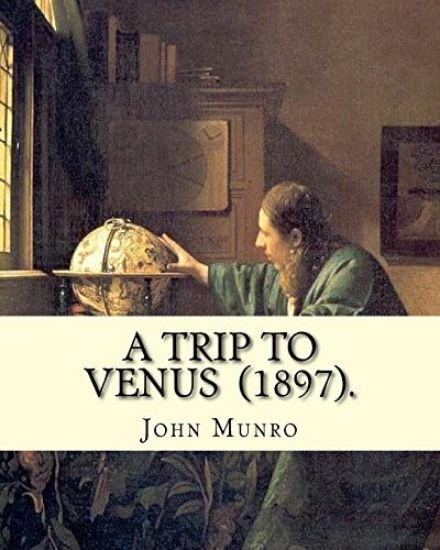
Prof. John Munro (1849-1930) was the author of Heroes of the Telegraph (1891), The Story of Electricity (1896) and A Trip to Venus (1897). "In plain English, at 4 a. m., a ray of light had been observed on the disc of the planet Mars in or near the "terminator"; that is to say, the zone of twilight separating day from night. The news was doubly interesting to me, because a singular dream of "Sunrise in the Moon" had quickened my imagination as to the wonders of the universe beyond our little globe, and because of a never-to-be-forgotten experience of mine with an aged astronomer several years ago. "
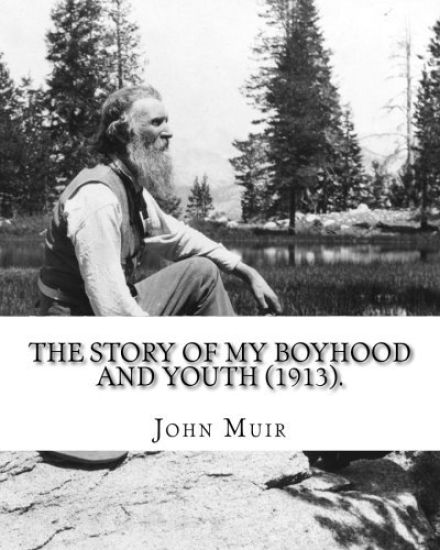
John Muir ( April 21, 1838 - December 24, 1914) also known as "John of the Mountains", was a Scottish-American naturalist, author, environmental philosopher, glaciologist and early advocate for the preservation of wilderness in the United States. His letters, essays, and books describing his adventures in nature, especially in the Sierra Nevada, have been read by millions. His activism has helped to preserve the Yosemite Valley, Sequoia National Park and many other wilderness areas. The Sierra Club, which he co-founded, is a prominent American conservation organization. The 211-mile (340 km) John Muir Trail, a hiking trail in the Sierra Nevada, was named in his honor. Other such places include Muir Woods National Monument, Muir Beach, John Muir College, Mount Muir, Camp Muir, Muir Grove, and Muir Glacier. In Scotland, the John Muir Way, a 130-mile-long route, was named in honor of him. In his later life, Muir devoted most of his time to the preservation of the Western forests. As part of the campaign to make Yosemite a national park, Muir published two landmark articles on wilderness preservation in The Century Magazine, "The Treasures of the Yosemite" and "Features of the Proposed Yosemite National Park"; this helped support the push for U.S. Congress to pass a bill in 1890 establishing Yosemite National Park. The spiritual quality and enthusiasm toward nature expressed in his writings has inspired readers, including presidents and congressmen, to take action to help preserve large nature areas.Today Muir is referred to as the "Father of the National Parks" and the National Park Service has produced a short documentary about his life. John Muir has been considered "an inspiration to both Scots and Americans". Muir's biographer, Steven J. Holmes, believes that Muir has become "one of the patron saints of twentieth-century American environmental activity," both political and recreational. As a result, his writings are commonly discussed in books and journals, and he is often quoted by nature photographers such as Ansel Adams. "Muir has profoundly shaped the very categories through which Americans understand and envision their relationships with the natural world," writes Holmes. Muir was noted for being an ecological thinker, political spokesman, and religious prophet, whose writings became a personal guide into nature for countless individuals, making his name "almost ubiquitous" in the modern environmental consciousness. According to author William Anderson, Muir exemplified "the archetype of our oneness with the earth", while biographer Donald Worster says he believed his mission was "...saving the American soul from total surrender to materialism." On April 21, 2013, the first ever John Muir Day was celebrated in Scotland, which marked the 175th anniversary of his birth, paying homage to the conservationist. Boyhood in Scotland: John Muir's Birthplace is a four-story stone house in Dunbar, East Lothian, Scotland. His parents were Daniel Muir and Ann Gilrye. He was the third of eight children: Margaret, Sarah, David, Daniel, Ann and Mary (twins), and the American-born Joanna. His earliest recollections were of taking short walks with his grandfather when he was three.In his autobiography, he described his boyhood pursuits, which included fighting, either by re-enacting romantic battles from the Wars of Scottish Independence or just scrapping on the playground, and hunting for birds' nests (ostensibly to one-up his fellows as they compared notes on who knew where the most were located).Author Amy Marquis notes that he began his "love affair" with nature while young, and implies that it may have been in reaction to his strict religious upbringing. "His father believed that anything that distracted from Bible studies was frivolous and punishable.".........
Ludwig Van Beethoven for Classical Guitar - Sheet Music Arranged for Guitar by John Trie. 12 classical piano pieces by Ludwig van Beethoven, arranged for guitar. Presto in C minor - WoO 52 Allegretto - WoO 53 Allegretto - WoO 56 Allegretto - WoO 61 Allemande - WoO 81 Clavierstuck - Serie 25 No. 301 Bagatelles, Opus 126, No. 1 - 6
Ludwig Van Beethoven for Classical Guitar - Sheet Music Arranged for Guitar by John Trie. 12 classical piano pieces by Ludwig van Beethoven, arranged for guitar. Presto in C minor - WoO 52 Allegretto - WoO 53 Allegretto - WoO 56 Allegretto - WoO 61 Allemande - WoO 81 Clavierstuck - Serie 25 No. 301 Bagatelles, Opus 126, No. 1 - 6
Elihu Burritt was an American diplomat, philanthropist and social activist, born December 8, 1810, in New Britain, Connecticut. He was a descendant of William and Elizabeth Burritt from Stratford, Connecticut. He first worked as a blacksmith. As an adult he was active as a lecturer in many causes, opposing slavery, working for temperance, and trying to achieve world peace. He was a prolific lecturer, journalist and writer, who traveled widely in the US and Europe.
The 18th century was a wealth of knowledge, exploration and rapidly growing technology and expanding record-keeping made possible by advances in the printing press. In its determination to preserve the century of revolution, Gale initiated a revolution of its own: digitization of epic proportions to preserve these invaluable works in the largest archive of its kind. Now for the first time these high-quality digital copies of original 18th century manuscripts are available in print, making them highly accessible to libraries, undergraduate students, and independent scholars.Western literary study flows out of eighteenth-century works by Alexander Pope, Daniel Defoe, Henry Fielding, Frances Burney, Denis Diderot, Johann Gottfried Herder, Johann Wolfgang von Goethe, and others. Experience the birth of the modern novel, or compare the development of language using dictionaries and grammar discourses. ++++The below data was compiled from various identification fields in the bibliographic record of this title. This data is provided as an additional tool in helping to insure edition identification: ++++British LibraryT090626Verse. English and Latin. With a half-title.Dublin: printed by Joseph Rhames, 1744. 4],25, 1]p.; 8
The 18th century was a wealth of knowledge, exploration and rapidly growing technology and expanding record-keeping made possible by advances in the printing press. In its determination to preserve the century of revolution, Gale initiated a revolution of its own: digitization of epic proportions to preserve these invaluable works in the largest archive of its kind. Now for the first time these high-quality digital copies of original 18th century manuscripts are available in print, making them highly accessible to libraries, undergraduate students, and independent scholars.Western literary study flows out of eighteenth-century works by Alexander Pope, Daniel Defoe, Henry Fielding, Frances Burney, Denis Diderot, Johann Gottfried Herder, Johann Wolfgang von Goethe, and others. Experience the birth of the modern novel, or compare the development of language using dictionaries and grammar discourses. ++++The below data was compiled from various identification fields in the bibliographic record of this title. This data is provided as an additional tool in helping to insure edition identification: ++++Cambridge University LibraryT173002Verse. English and Latin texts. With a half-title and three final advertisement pages.London: printed for J. Rivington and Sons, T. Longman, B. Law, S. Crowder, G. Robinson, and R. Baldwin, 1787. 4],25, 3]p.; 8
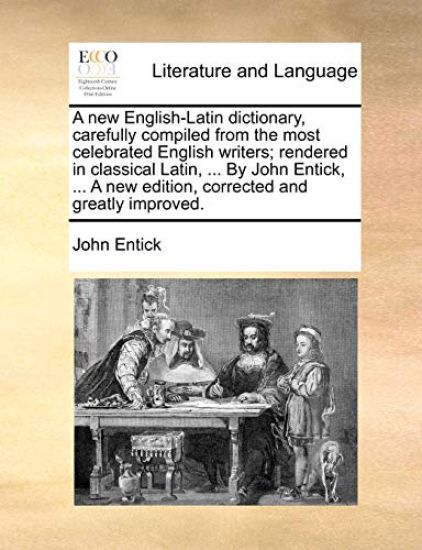
The 18th century was a wealth of knowledge, exploration and rapidly growing technology and expanding record-keeping made possible by advances in the printing press. In its determination to preserve the century of revolution, Gale initiated a revolution of its own: digitization of epic proportions to preserve these invaluable works in the largest archive of its kind. Now for the first time these high-quality digital copies of original 18th century manuscripts are available in print, making them highly accessible to libraries, undergraduate students, and independent scholars.Western literary study flows out of eighteenth-century works by Alexander Pope, Daniel Defoe, Henry Fielding, Frances Burney, Denis Diderot, Johann Gottfried Herder, Johann Wolfgang von Goethe, and others. Experience the birth of the modern novel, or compare the development of language using dictionaries and grammar discourses. ++++The below data was compiled from various identification fields in the bibliographic record of this title. This data is provided as an additional tool in helping to insure edition identification: ++++British LibraryT138201Vertical chain lines. Originally published in 1771 as: 'The new Latin and English dictionary'.London: printed for Charles Dilly, 1783. 2],306p.; 12
The 18th century was a wealth of knowledge, exploration and rapidly growing technology and expanding record-keeping made possible by advances in the printing press. In its determination to preserve the century of revolution, Gale initiated a revolution of its own: digitization of epic proportions to preserve these invaluable works in the largest archive of its kind. Now for the first time these high-quality digital copies of original 18th century manuscripts are available in print, making them highly accessible to libraries, undergraduate students, and independent scholars.Western literary study flows out of eighteenth-century works by Alexander Pope, Daniel Defoe, Henry Fielding, Frances Burney, Denis Diderot, Johann Gottfried Herder, Johann Wolfgang von Goethe, and others. Experience the birth of the modern novel, or compare the development of language using dictionaries and grammar discourses. ++++The below data was compiled from various identification fields in the bibliographic record of this title. This data is provided as an additional tool in helping to insure edition identification: ++++British LibraryT090626Verse. English and Latin. With a half-title.Dublin: printed by Joseph Rhames, 1744. 4],25, 1]p.; 8
The 18th century was a wealth of knowledge, exploration and rapidly growing technology and expanding record-keeping made possible by advances in the printing press. In its determination to preserve the century of revolution, Gale initiated a revolution of its own: digitization of epic proportions to preserve these invaluable works in the largest archive of its kind. Now for the first time these high-quality digital copies of original 18th century manuscripts are available in print, making them highly accessible to libraries, undergraduate students, and independent scholars.Western literary study flows out of eighteenth-century works by Alexander Pope, Daniel Defoe, Henry Fielding, Frances Burney, Denis Diderot, Johann Gottfried Herder, Johann Wolfgang von Goethe, and others. Experience the birth of the modern novel, or compare the development of language using dictionaries and grammar discourses. ++++The below data was compiled from various identification fields in the bibliographic record of this title. This data is provided as an additional tool in helping to insure edition identification: ++++Cambridge University LibraryT173002Verse. English and Latin texts. With a half-title and three final advertisement pages.London: printed for J. Rivington and Sons, T. Longman, B. Law, S. Crowder, G. Robinson, and R. Baldwin, 1787. 4],25, 3]p.; 8