Kirjojen hintavertailu. Mukana 12 016 292 kirjaa ja 12 kauppaa.

Kirjahaku

Etsi kirjoja tekijän nimen, kirjan nimen tai ISBN:n perusteella.

1000 tulosta hakusanalla John R Clarson

MMPI Instruments

MMPI Instruments

John R. Graham; Carlo O. C. Veltri; Tayla T. C. Lee

OXFORD UNIVERSITY PRESS INC
2022
nidottu
MMPI Instruments: Assessing Personality and Psychopathology 6th edition provides a bridge for graduate students and clinicians alike in navigating the changes and updates to the MMPI, including the recently released MMPI-3. The Minnesota Multiphasic Personality Inventory (MMPI) family of instruments are the most widely used tests of personality and psychopathology in the United States and are commonly used in countries around the world. They are used in inpatient and outpatient mental health settings, medical centers, and correctional settings. MMPI instruments are also used in the screening of applicants for jobs that involve public trust and safety. They are frequently admitted as evidence in civil and criminal legal proceedings. Now available as an ebook, in several formats including RedShelf, VitalSource, and Chegg. All major devices are supported.
The Securitarian Personality

The Securitarian Personality

John R. Hibbing

Oxford University Press Inc
2020
sidottu
The Authoritarian Personality, which was published by Theordor Adorno and a set of colleagues in the 1950s, was the first broad-based empirical attempt to explain why certain individuals are attracted to the authoritarian, even fascist, leaders that dominated the political scene in the 1930s and 1940s. Today, the concept has been applied to leaders ranging from Trump to Viktor Orban to Rodrigo Duterte. But is it really accurate to label Trump supporters as authoritarians? In The Securitarian Personality, John R. Hibbing argues that an intense desire for authority is not central to those constituting Trump's base. Drawing from participant observation, focus groups, and especially an original, nationwide survey of the American public that included over 1,000 ardent Trump supporters, Hibbing demonstrates that what Trump's base really craves is actually a specific form of security. Trump supporters do not strive for security in the face of all threats, such as climate change, Covid-19, and economic inequality, but rather only from those threats they perceive to be emanating from human outsiders, defined broadly to include welfare cheats, unpatriotic athletes, norm violators, non-English speakers, religious and racial minorities, and certainly people from other countries. The central objective of these "securitarians" is to strive for protection for themselves, their families, and their dominant cultural group from these embodied outsider threats. A radical reinterpretation of the support for Trumpism, The Securitarian Personality not only provides insight into a political movement that many find baffling and frustrating, but offers a compelling thesis that all observers of American political behavior will have to contend with, even if they disagree with it.
For Better, For Worse

For Better, For Worse

John R. Gillis

Oxford University Press Inc
1986
sidottu
Did you know that...The "contemporary" fashion of living together before marriage is far from new, and was frequently practiced in earlier days...Self-divorce, although never legal, was once a commonplace occurrence...Marriage is more popular today than in the Victorian era...Marriage in church was not compulsory in England and Wales until the mid-18th century. These are just a few of the fascinating, and often surprising, revelations in For Better, For Worse, the most comprehensive treatment to date of the history of marriage in a major Western society. Using fresh evidence from popular courtship and wedding rituals over four centuries, Gillis challenges the widely held belief that marriage has evolved from a cold, impersonal arrangement to a more affectionate, egalitarian form of companionship. The truth, argues Gillis, lies somewhere in between: conjugal love was never wholly absent in preindustrial times, while today's marriages are less companionate than is commonly believed. Gillis also illustrates, in rich detail, the perpetual tension between marital ideals and actual practices. This social history of the behavior and emotions of ordinary men and women radically revises our perspective on love and marriage in the past--and the present.
Pirone's Tree Maintenance

Pirone's Tree Maintenance

John R. Hartman; Thomas P. Pirone; Mary Ann Sall

Oxford University Press Inc
2000
sidottu
The Seventh Edition, now named in honour of Dr. P. P. Pirone, who authored the first five editions and co-authored the sixth, has been revised to reflect the enormous amount of new information available since the last edition, including the latest techniques in selecting, planting, and protecting trees. The authors explain how to evaluate the site (the soil, drainage, and exposure), how to select the right tree for that location, and how to prune, fertilize, and spray for pests. There is an extensive section on the diagnosis and control of tree pests and diseases, and on problems such as construction damage, gas injury, sunscald, leaf scorch, and air pollution. While the general structure of the sixth edition has been retained, there are several topics--notably hazardous trees and coping with tree pests and diseases--that have received greater attention than in previous versions of the book. The second half of the book comprises a systematic listing of the major landscape trees found in North America, describing the specific pests and diseases that attack each species. Well organized, clearly written, and beautifully illustrated with many new photographs, Pirone's Tree Maintenance is an encyclopedic resource, the first place to turn for information on dogwoods and elms, magnolias and redwoods, or any other tree growing in North America. Anyone serious about gardening will want this book on their shelf.
Remote Sensing

Remote Sensing

John R. Schott

Oxford University Press Inc
2007
sidottu
Remote Sensing deals with the fundamental ideas underlying the rapidly growing field of remote sensing. John Schott explores energy-matter interaction, radiation propagation, data dissemination, and described the tools and procedures required to extract information from remotely sensed data using the image chain approach. Organizations and individuals often focus on one aspect of the remote sensing process before considering it as a whole, thus investigating unjustified effort, time, and expense to get minimal improvement. Unlike other books on the subject, Remote Sensing treats the process as a continuous flow. Schott examines the limitations obstructing the flow of information to the user, employing numerous applications of remote sensing to earth observation disciplines. For this second edition, in addition to a thorough update, there are major changes and additions, such as a much more complete treatment of spectroscopic imaging, which has matured dramatically in the last ten years, and a more rigorous treatment of image processing with an emphasis on spectral image processing algorithms. Remote Sensing is an ideal first text in remote sensing for advanced undergraduate and graduate students in the physical or engineering sciences, and will also serve as a valuable reference for practitioners.
Old Schofield Study Bible KJV

Old Schofield Study Bible KJV

John R Kohlenberger

Oxford University Press
1996
sidottu
Dr. C. I. Scofield's classic study system and 1917 notes form the core of this definitive resource. A crisp red- letter typeface enhances this Bible's usefulness. Large, 10-point print makes this edition particularly attractive for preacher and people with vision difficulties. Features include a protective two-piece box, book introductions, chronologies, concordance, subject-chain references, comprehensive and subject indexes and full-color Oxford Bible Maps, with index. * Clear, readable 10-point typeface. * 16 pages of full color. * Complete Scofield(R) Study Bible features. * Oxford Bible Maps, with index. * Red letter text.
Measuring Metabolic Rates

Measuring Metabolic Rates

John R. B. Lighton

Oxford University Press Inc
2008
sidottu
Measuring metabolic rates is central to important questions in many areas of scientific research. Unfortunately these measurements are anything but straightforward, and numerous pitfalls await the novice and even the experienced investigator. Measuring Metabolic Rates de-mystifies the field, explaining every common variation of metabolic rate measurement, from century-old manometric methods through ingenious syringe-based techniques, direct calorimetry, aquatic respirometry, stable-isotope metabolic measurement and every type of flow-through respirometry. Each variation is described in enough detail to allow it to be applied in practice. Background information on different analyzer and equipment types allows users to choose the best instruments for their application. Respirometry equations - normally a topic of terror and confusion to researchers - are derived and described in enough detail to make their selection and use effortless. Vital topics such as manual and automated baselining, implementing multi-animal systems, and the correct analysis and presentation of metabolic data are covered in enough detail to turn a respirometry neophyte into a hardened metabolic warrior, ready to take on the task of publication in peer-reviewed journals.
How Can the Human Mind Occur in the Physical Universe?

How Can the Human Mind Occur in the Physical Universe?

John R. Anderson

Oxford University Press Inc
2007
sidottu
"The question for me is how can the human mind occur in the physical universe? We now know that the world is governed by physics. We now understand the way biology nestles comfortably within that. The issue is how will the mind do that as well?" Alan Newell, 4 December 1991, Carnegie Mellon University The argument John Anderson gives in this book was inspired by the passage above, from the last lecture by one of the pioneers of cognitive science. Alan Newell describes what, for him, is the pivotal question of scientific inquiry, and Anderson gives an answer that is emerging from the study of brain and behaviour. Humans share the same basic cognitive architecture with all primates, but they have evolved abilities to exercise abstract control over cognition and process more complex relational patterns. The human cognitive architecture consists of a set of largely independent modules associated with different brain regions. This book discusses in detail how these various modules can combine to produce behaviors as varied as driving a car and solving an algebraic equation, but focuses principally on two of the modules: the declarative and procedural. The declarative module involves a memory system that, moment by moment, attempts to give each person the most appropriate possible window into his or her past. The procedural module involves a central system that strives to develop a set of productions that will enable the most adaptive response from any state of the modules. Newell argued that the answer to his question must take the form of a cognitive architecture, and Anderson organizes his answer around the ACT-R architecture, but broadens it by bringing in research from all areas of cognitive science, including how recent work in brain imaging maps onto the cognitive architecture.
MMPI-2

MMPI-2

John R. Graham

Oxford University Press Inc
2011
sidottu
The MMPI-2 is the most widely used personality test in the U.S. and around the world. It is employed in mental health settings, medical centers, and correctional programs, and is frequently admitted as evidence in legal proceedings. In addition, the MMPI-2 is widely used in screening applicants for jobs that involve public trust and safety. The fifth edition of MMPI-2: Assessing Personality and Psychopathology describes effective uses of all aspects of the MMPI-2 and explains how to accurately interpret test results. Current and comprehensive, it presents detailed instructions for administering and scoring the MMPI-2 and discusses using the MMPI-2 with such diverse population groups as older adults, ethnic minorities, medical patients, and prisoners. It provides guidelines for interpreting the test's Validity, Clinical Content, and Supplementary scales, illustrating points with case studies and examples. The book also covers the Restructured Clinical (RC) scales, which help focus the interpretation of the original Clinical scales, and the Personality Psychopathology 5 (PSY-5) scales, which assess major dimensions of normal and abnormal personality. NEW TO THIS EDITION BL A chapter detailing the development and use of the newest form of the test, the MMPI-2 Restructured Form (MMPI-2-RF) BL A reintroduction of a chapter covering the adolescent version of the test, the MMPI-A, including updated research findings and recommendations for interpretation MMPI-2: Assessing Personality and Psychopathology, Fifth Edition, is ideal for graduate courses in psychological assessment and is an indispensable guide for researchers and clinicians working in the personality assessment area.
How Can the Human Mind Occur in the Physical Universe?

How Can the Human Mind Occur in the Physical Universe?

John R. Anderson

Oxford University Press Inc
2009
nidottu
'The question for me is how can the human mind occur in the physical universe. We now know that the world is governed by physics. We now understand the way biology nestles comfortably within that. The issue is how will the mind do that as well.' --Alan Newell, December 4, 1991, Carnegie Mellon University The argument John Anderson gives in this book was inspired by the passage above, from the last lecture by one of the pioneers of cognitive science. Newell describes what, for him, is the pivotal question of scientific inquiry, and Anderson gives an answer that is emerging from the study of brain and behavior. Humans share the same basic cognitive architecture with all primates, but they have evolved abilities to exercise abstract control over cognition and process more complex relational patterns. The human cognitive architecture consists of a set of largely independent modules associated with different brain regions. In this book, Anderson discusses in detail how these various modules can combine to produce behaviors as varied as driving a car and solving an algebraic equation, but focuses principally on two of the modules: the declarative and procedural. The declarative module involves a memory system that, moment by moment, attempts to give each person the most appropriate possible window into his or her past. The procedural module involves a central system that strives to develop a set of productions that will enable the most adaptive response from any state of the modules. Newell argued that the answer to his question must take the form of a cognitive architecture, and Anderson organizes his answer around the ACT-R architecture, but broadens it by bringing in research from all areas of cognitive science, including how recent work in brain imaging maps onto the cogntive architecture.
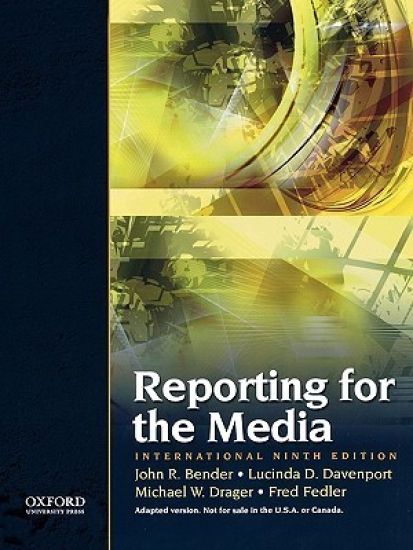
Reporting the Media

Reporting the Media

John R. Bender; Lucinda D. Davenport; Michael W. Drager; Fred Fedler

Oxford University Press Inc
2009
nidottu
Now in its international ninth edition, Reporting for the Media continues to be an essential resource for journalism students and instructors. A comprehensive introduction to newswriting and reporting, this classic text offers a straightforward guide to crafting effective journalism. Moreover, it grounds students firmly in the basics of reporting--how to become more curious about the world, generate provocative ideas, gather vital information and write incisive stories. The authors provide students with the skills they need to produce engaging journalism by focusing on such central topics as grammar basics, newswriting style, traditional story structures and styles, interviewing techniques, reporting on speeches and meetings and common ethical dilemmas. The text also explores a variety of advanced topics including broadcast writing, law, ethics and public relations. In every chapter, students encounter vital tools for the creation of versatile journalism; these tools enable them to apply their knowledge to any type of journalism in any medium. The international ninth edition features a new introductory chapter, "Journalism Today," which discusses recent developments in the field, from technology and newsroom convergence to the proliferation of blogs. In addition, all chapters and examples have been updated throughout. The text's lively end-of-chapter exercises have also been updated and continue to encourage students to "learn by doing" through the practical application of skills. An updated list of Common Writing Errors is now featured on the inside back cover; along with a condensed version of the AP stylebook, this resource offers helpful grammar and style assistance to students as they interact with the material. As in previous editions, the book also integrates advice from professional journalists, discussion questions, suggested projects, four useful appendices and end-of-chapter checklists. The leading text for newswriting and reporting courses, Reporting for the Media, International Ninth Edition, offers outstanding and unparalleled training for dynamic journalists.
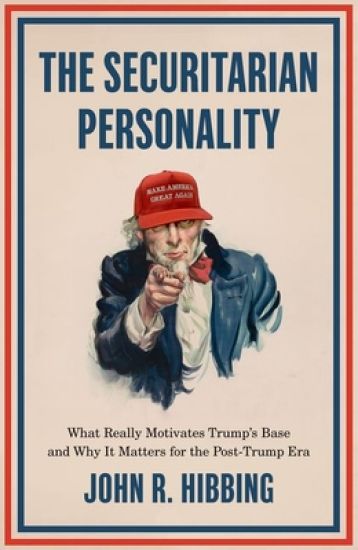
The Securitarian Personality

The Securitarian Personality

John R. Hibbing

OXFORD UNIVERSITY PRESS INC
2023
nidottu
A unique analysis that looks at the true motivation of Trump supporters. The Authoritarian Personality, which was published by Theordor Adorno and a set of colleagues in the 1950s, was the first broad-based empirical attempt to explain why certain individuals are attracted to the authoritarian, even fascist, leaders that dominated the political scene in the 1930s and 1940s. Today, the concept has been applied to leaders ranging from Trump to Viktor Orban to Rodrigo Duterte. But is it really accurate to label Trump supporters as authoritarians? In The Securitarian Personality, John R. Hibbing argues that an intense desire for authority is not central to those constituting Trump's base. Drawing from participant observation, focus groups, and especially an original, nationwide survey of the American public that included over 1,000 ardent Trump supporters, Hibbing demonstrates that what Trump's base really craves is actually a specific form of security. Trump supporters do not strive for security in the face of all threats, such as climate change, Covid-19, and economic inequality, but rather only from those threats they perceive to be emanating from human outsiders, defined broadly to include welfare cheats, unpatriotic athletes, norm violators, non-English speakers, religious and racial minorities, and certainly people from other countries. The central objective of these "securitarians" is to strive for protection for themselves, their families, and their dominant cultural group from these embodied outsider threats. A radical reinterpretation of the support for Trumpism, The Securitarian Personality not only provides insight into a political movement that many find baffling and frustrating, but offers a compelling thesis that all observers of American political behavior will have to contend with, even if they disagree with it.
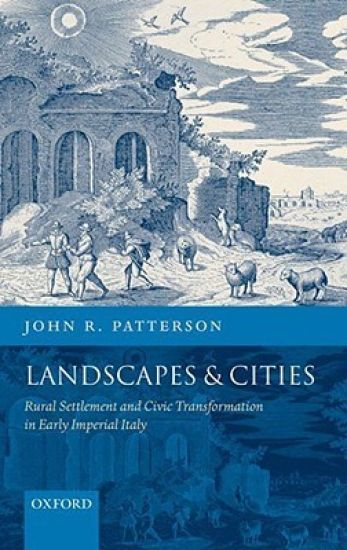
Landscapes and Cities

Landscapes and Cities

John R. Patterson

Oxford University Press
2006
sidottu
The first two centuries AD are conventionally thought of as the 'golden age' of the Roman Empire, yet Italy in this period has often been seen as being in a state of decline and even crisis. This book investigates the relationships between city and countryside in Italy in the early Empire, using evidence from literary texts and inscriptions, and the wealth of data derived from archaeological field surveys over recent years. Looking at individual towns and regions as well as at the broader picture, and stressing the diversity of situations across Italy, John R. Patterson examines how changing patterns of building and benefaction in the cities were related to developments in the country, and underlines the resourcefulness of the cities, both large and small, in seeking to maintain and develop their civic traditions.
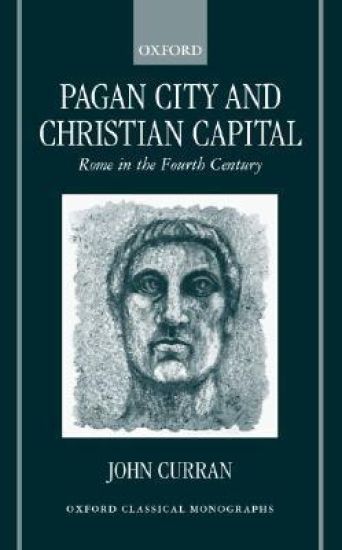
Pagan City and Christian Capital

Pagan City and Christian Capital

John R Curran

Clarendon Press
2000
sidottu
The critical century between the arrival of Constantine and the advance of Alaric in the early fifth century witnessed dramatic changes in the city of Rome. In this book Dr Curran has broken away from the usual notions of religious conflict between Christians and pagans, to focus on a number of approaches to the Christianization of Rome. He surveys the laws and political considerations which governed the building policy of Constantine and his successors, the effect of papal building and commemorative constructions on Roman topography, the continuing ambivalence of the Roman festal calendar, and the conflict between Christians over asceticism and 'real' Christianity. Thus using analytical, literary, and legal evidence Dr Curran explains the way in which the landscape, civic life, and moral values of Rome were transformed by complex and sometimes paradoxical forces, laying the foundation for the capital of medieval Christendom. Through a study of Rome as a city Dr Curran explores the rise of Christianity and the decline of paganism in the later Roman empire.
Possessives in English

Possessives in English

John R. Taylor

Clarendon Press
1996
sidottu
This book is about a single morpheme - the possessive morpheme - in English. Often realized as 's, it occurs in a variety of constructions (the man's hat, a friend of mine, without my saying so, a girls' school). What does the morpheme actually mean? What category does it belong to? What is its contribution to the meaning of the expression in which it occurs? And how can we account for the various restrictions on its use? Dr Taylor proposes a unitary account of the morpheme, within the theoretical framework of Cognitive Grammar. In the earlier chapters he introduces and explains the conceptual apparatus of the theory, and in the later chapters he develops a coherent account of the full range of possessive constructions. A special feature of this book is that it also provides a wide-ranging critique of alternative, and especially Government and Binding accounts of possessive expression, highlighting the profound conceptual differences between the contrasting approaches as well as some of the points of convergence.
Zoroastrians in Britain

Zoroastrians in Britain

John R. Hinnells

Clarendon Press
1996
sidottu
Zoroastrianism is the religion of ancient Iran, dating back over a thousand years before the time of Christ. It is also the religion of Britain's oldest South Asian minority, with a history going back to 1724, From the contribution to the Zoroastrian MPs Naoroji and Bhownagree in the nineteenth century to the transmission of their heritage and concerns in the 1990s, this is the first complete study of the community. With the largest Zoroastrian population outside the `old countries' living in London, the British community has played an important part in the modern history of Zoroastrianism. They furnish a unique opportunity to trace the history and experience of an Asian community in the West for well over a hundred years, with a wide variety of members from rural and urban India, Pakistan, East Africa, as well as the original homeland, Iran, and a substantial proportion of Zoroastrians who are British-born. The book is based on an extensive study of archival sources, a large survey questionnaire, a programme of structured interviews, and over twenty years of the author's personal contact with the community. The book includes discussion of many important contemporary issues, such as racial prejudice, gender issues, generational differences, attitudes towards British society and to the `old country'--and argues that religion is an increasingly important concern among British South Asian minorities.
The Zoroastrian Diaspora

The Zoroastrian Diaspora

John R. Hinnells

Oxford University Press
2005
sidottu
What is the distinctive Zoroastrian experience, and what is the common diasporic experience? The Zoroastrian Diaspora is the outcome of twenty years of research and of archival and fieldwork in eleven countries, involving approximately 250,000 miles of travel. It has also involved a survey questionnaire in eight countries, yielding over 1,840 responses. This is the first book to attempt a global comparison of Diaspora groups in six continents. Little has been written about Zoroastrian communities as far apart as China, East Africa, Europe, America, and Australia or on Parsis in Mumbai post-Independence. Each chapter is based on unused original sources ranging from nineteenth century archives to contemporary newsletters. The book also includes studies of Zoroastrians on the Internet, audio-visual resources, and the modern development of Parsi novels in English. As well as studying the Zoroastrians for their own inherent importance, this book contextualizes the Zoroastrian migrations within contemporary debates on Diaspora studies. John R. Hinnells examines what it is like to be a religious Asian in Los Angeles or London, Sydney or Hong Kong. Moreover, he explores not only how experience differs from one country to another, but also the differences between cities in the same country, for example, Chicago and Houston. The survey data is used firstly to consider the distinguishing demographic features of the Zoroastrian communities in various countries; and secondly to analyse different patterns of assimilation between different groups: men and women and according to the level and type of education. Comparisons are also drawn between people from rural and urban backgrounds; and between generations in religious beliefs and practices, including the preservation of secular culture.
Possessives in English

Possessives in English

John R. Taylor

Oxford University Press
2001
nidottu
The possessive morpheme in English occurs in a variety of constructions - prenominal possessives (the man's hat, the plane's arrival), postnominal possessives (a friend of mine), -ing nominalizations (without my saying so), and possessive compounds (a girls' school). What does this morpheme actually mean, what is its syntactic category, what is its semantic contribution to the expressions in which it occurs, and how can various restrictions on its use be accounted for? Dr Taylor proposes a unitary account of the possessive morpheme. He takes as his theoretical framework Cognitive Grammar, as developed over the past 15 years by Ronald Langacker and others. In the earlier chapters of the book he introduces and motivates the conceptual apparatus of the theory, and in later chapters he develops a coherent account of the full range of possessive constructions in English. A special feature of the book is that it offers a wide-ranging critique of both traditional and more recent accounts of possessive expressions. Focusing particularly on Government and Binding theory, the author highlights the profound conceptual differences underlying the two theoretical approaches represented by GB and Cognitive Grammar, while also observing some points of convergence between them.
Non-Aqueous Solvents

Non-Aqueous Solvents

John R. Chipperfield

Oxford University Press
1999
nidottu
Solvents other than water are used in chemical analysis, chemical manufacturing, and in specialist syntheses. This book covers the principles and uses of non-aqueous solvents at a level suitable for first or second-year undergraduates. The book first discusses the general properties of solvents, and introduces the necessary concepts for making rational choices of solvents for different applications. There is a discussion of the various chemical interactions between solvents and the substances dissolved in them, and how solvents change the course of reactions. The chemistry of 16 common solvents is discussed, emphasising the advantages and disadvantages of each. The book concludes with an account of the chemistry of molten salts and discusses the use of low melting temperature compounds as synthetic media. The book expands on the brief treatment of non-aqueous solvents given in many textbooks, but avoids the complexities introduced in research treatises. There is no such book currently available to help students.
Geometry Ancient and Modern

Geometry Ancient and Modern

John R. Silvester

Oxford University Press
2001
sidottu
This book is a guided tour of geometry, from Euclid through to algebraic geometry. It shows how mathematicians use a variety of techniques to tackle problems, and it links geometry to other branches of mathematic.s It is a teaching text, with a large number of exercises woven into the exposition. Topics covered: ruler and compasses constructions, transformations, triangle and circle theorems, classification of isometries and groups of isometries in dimensions 2 and 3, Platonic solids, conics, similarities, affine, projective and Mobius transformations, non-Euclidean geometry, projective geometry, the beginnings of algebraic geometry.