
Kirjahaku
Etsi kirjoja tekijän nimen, kirjan nimen tai ISBN:n perusteella.
1000 tulosta hakusanalla John Stuart Mill

John Stuart Mill. Sind rechtsextreme Meinungsäußerungen legitim?
Manuel Kröger
Grin Publishing
2013
pokkari
Studienarbeit aus dem Jahr 2013 im Fachbereich Philosophie - Praktische (Ethik, sthetik, Kultur, Natur, Recht, ...), Note: 2,0, Ludwig-Maximilians-Universit t M nchen (Philosophische Fakult t), Veranstaltung: John Stuart Mill: Schriften zur Ethik und politischen Philosophie, Sprache: Deutsch, Abstract: Die meisten Menschen w rden einem Rechtsextremisten sofort den Mund verbieten, wenn sie es k nnten. Doch dass dies im Rechtsstaat nicht so leicht ist und dass es allgemein und im Gro en und Ganzen eher unw nschenswert w re, wenn Rechtsextreme nicht offen ihre Meinung sagen w rden und k nnten, versucht dieses Werk zu veranschaulichen, anhand von John Stuart Mills Theorie der Meinungsfreiheit und dem Grundgesetz der BRD.
John Stuart Mill's Political Theory and Africa's Development
Ejiofor Promise Frank
LAP Lambert Academic Publishing
2015
pokkari

John Stuart Mill. Aufgaben und Grenzen der politischen Macht des Staates
Anonym
GRIN Verlag
2019
nidottu
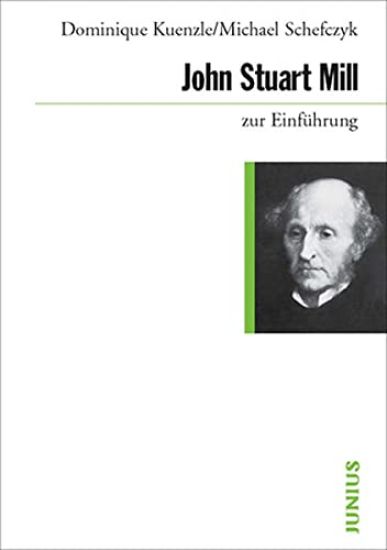
John Stuart Mill zur Einführung
Dominique Kuenzle; Michael Schefczyk
JUNIUS VERLAG GMBH
2009
nidottu

Ziel der Untersuchung ist es, die Gerechtigkeitskonzeptionen von Mill und Rawls zu vergleichen. Sie ist in drei Teile gegliedert: (i) Mills Theorie der Gerechtigkeit, (ii) Rawls' Theorie der Gerechtigkeit, (iii) Vergleich: Mill und Rawls. Das erste Kapitel zeigt, dass Mills Theorie als nicht-teleologischer Regel-Utilitarismus charakterisiert wird und eine metaphysische Konzeption der Person ablehnt. Die Idee der Person und die moralische Psychologie sind die Grundlage, auf der sein im weitesten Sinne verstandenes N tzlichkeitsprinzip verankert ist. Millianischer Sozialliberalismus, d. h. die vorrangige Verteidigung der individuellen Grundfreiheiten in Verbindung mit sozialer und wirtschaftlicher Gerechtigkeit. Im zweiten Kapitel, das Rawls gewidmet ist, wird das Gedankenexperiment, die so genannte urspr ngliche Position, analysiert und die Rolle der konsequentialistischen Elemente in seiner Theorie berpr ft. Es folgen die beiden Grunds tze der Gerechtigkeit: gleiche Freiheit und gleiche Chancen. Der H hepunkt des Werkes liegt im dritten Teil, wo wir feststellen, dass es mehr Konvergenzen als Divergenzen zwischen den Autoren gibt. Die abschlie enden berlegungen w gen die hnlichen und unterschiedlichen Aspekte der Theorien ab und kommen zu dem Schluss, dass Gerechtigkeit als Fairness Vorteile hat.
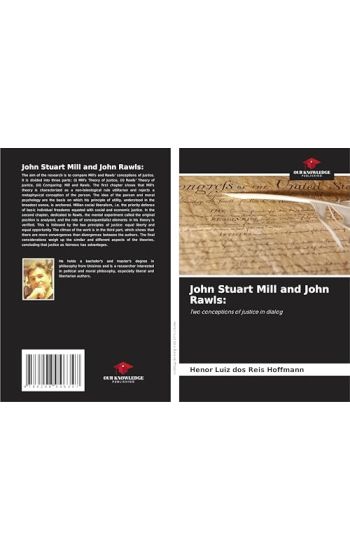
The aim of the research is to compare Mill's and Rawls' conceptions of justice. It is divided into three parts: (i) Mill's Theory of Justice, (ii) Rawls' Theory of Justice, (iii) Comparing: Mill and Rawls. The first chapter shows that Mill's theory is characterized as a non-teleological rule utilitarian and rejects a metaphysical conception of the person. The idea of the person and moral psychology are the basis on which his principle of utility, understood in the broadest sense, is anchored. Millian social liberalism, i.e. the priority defense of basic individual freedoms equated with social and economic justice. In the second chapter, dedicated to Rawls, the mental experiment called the original position is analyzed, and the role of consequentialist elements in his theory is verified. This is followed by the two principles of justice: equal liberty and equal opportunity. The climax of the work is in the third part, which shows that there are more convergences than divergences between the authors. The final considerations weigh up the similar and different aspects of the theories, concluding that justice as fairness has advantages.
L'objectif de cette recherche est de comparer les conceptions de la justice de Mill et de Rawls. Elle est divis e en trois parties: (i) la th orie de la justice de Mill, (ii) la th orie de la justice de Rawls, (iii) Comparaison: Mill et Rawls. Le premier chapitre montre que la th orie de Mill se caract rise par une r gle utilitariste non t l ologique et rejette une conception m taphysique de la personne. L'id e de la personne et la psychologie morale constituent la base sur laquelle son principe d'utilit , entendu au sens large, est ancr . Le social-lib ralisme millien, c'est- -dire la d fense prioritaire des libert s individuelles fondamentales combin e la justice sociale et conomique. Dans le deuxi me chapitre, consacr Rawls, l'exp rience mentale appel e position originelle est analys e et le r le des l ments cons quentialistes dans sa th orie est v rifi . Viennent ensuite les deux principes de justice: l' galit des libert s et l' galit des chances. Le point culminant de l'ouvrage se situe dans la troisi me partie, o l'on se rend compte qu'il y a plus de convergences que de divergences entre les auteurs. Les consid rations finales mettent en balance les aspects similaires et diff rents des th ories et concluent que la justice en tant qu' quit pr sente des avantages.
La ricerca si propone di confrontare le concezioni di giustizia di Mill e Rawls ed suddivisa in tre parti: (i) Teoria della giustizia di Mill, (ii) Teoria della giustizia di Rawls, (iii) Confronto tra Mill e Rawls. Il primo capitolo mostra che la teoria di Mill si caratterizza come una regola utilitaristica non teleologica e rifiuta una concezione metafisica della persona. L'idea di persona e la psicologia morale sono le basi su cui poggia il suo principio di utilit , inteso in senso lato. Il liberalismo sociale milliano, cio la difesa prioritaria delle libert individuali di base combinate con la giustizia sociale ed economica. Nel secondo capitolo, dedicato a Rawls, si analizza l'esperimento mentale chiamato posizione originaria e si verifica il ruolo degli elementi consequenzialisti nella sua teoria. Seguono i due principi di giustizia: l'uguaglianza di libert e l'uguaglianza di opportunit . Il culmine dell'opera nella terza parte, dove ci si rende conto che tra gli autori ci sono pi convergenze che divergenze. Le considerazioni finali soppesano gli aspetti simili e diversi delle teorie, concludendo che la giustizia come equit presenta dei vantaggi.

In this well-researched, comprehensive study of J.S. Mill, Professor Habibi argues that the persistent, dominant theme of Mill's life and work was his passionate belief in human improvement and progress. Several Mill scholars recognize this; however, numerous writers overlook his 'growth ethic', and this has led to misunderstandings about his value system. This study defines and establishes the importance of Mill's growth ethic and clears up misinterpretations surrounding his notions of higher and lower pleasures, positive and negative freedom, the status of children, the legitimacy of authority, and support for British colonialism. Drawing from the entire corpus of Mill's writings, as well as the extensive secondary literature, Habibi has written the most focused, sustained analysis of Mill's grand, leading principle. This book will be useful to college students in philosophy and intellectual history as well as specialists in these fields.


John Stuart Mill: Political Economist
Samuel Hollander
World Scientific Publishing Co Pte Ltd
2015
sidottu
John Stuart Mill: Political Economist is a revised version of the part of Samuel Hollander's The Economics of John Stuart Mill (1985) treating the theory of economic policy. In this book, Professor Hollander offers a critical yet sympathetic analysis of Mill's quest to accomplish thorough reform of capitalism in the interest of distributive justice while protecting the security of property and contemplating the potential evolution of capitalism into cooperative organization. Part I of the book serves as an introduction to the investigation of Mill's theory of economic policy; Parts II and III include Mill's primary policy recommendations; while Part IV adds a substantial 'Overview and Evaluation' reviewing the author's main conclusions. A major concern is Mill's perception of the composition of the 'greatest number' whose interests are to be considered by policy-makers; here arises his attitude towards British Imperialism. The author then undertakes thematic comparisons between the positions of Mill and those of Smith, Ricardo, Malthus, Marx and Bernstein; and closes with a rejection of the celebrated criticism of Mill's 'liberalism' by Friedrich Hayek.
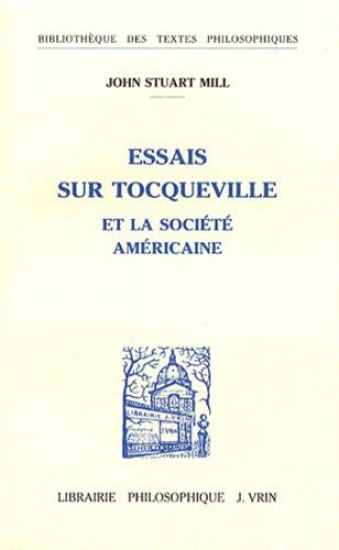
John Stuart Mill: Essais Sur Tocqueville Et La Societe Americaine
P. Thierry
Librarie Philosophique J. Vrin
1994
nidottu

John Stuart Mills "On Liberty". Ist Hate Speech nach dem Begriff der Meinungsfreiheit von J. S. Mill legitim?
Inken Bräger
GRIN Verlag
2019
nidottu


John Stuart Mills Methoden der experimentalen Forschung und Peter Liptons Schluss auf die beste Erklärung
Jeremias Düring
GRIN Verlag
2021
nidottu



John Stuart Mills Rechtfertigungsgrunde einer Besetzung Indiens durch England
Christopher Reichow
Grin Verlag
2011
nidottu