All hauntings happen for a reason. Sometimes the dead just can't sleep easy. That's where Jonathan Patrick, codename "Poltergeist", comes in. He's a fast-talking school boy with telekinetic powers, and he know how to handle the most dangerous ghost, or so he thinks.
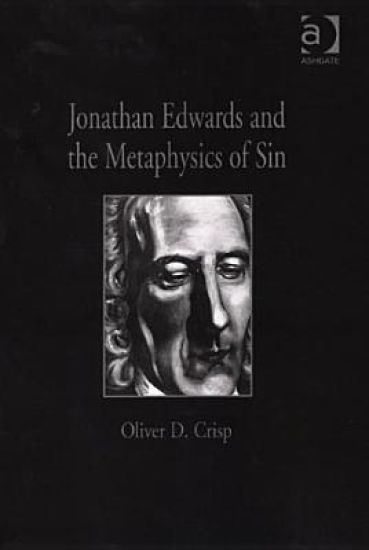
Jonathan Edwards (1703-1758) is widely regarded as America's greatest philosopher-theologian. In the last half century there has been a resurgence of interest in Edwards' work from historians, theologians and philosophers, aided by the publication of the Yale edition of Edwards' Works. Edwards' thinking on sin has long been a mystery to scholars trying to fit his thought into the traditional categories of Reformed theology. What this study shows is that Edwards' theory of sin was an original contribution to philosophical theology, which can only be understood when read on its own terms as a philosophical theory about the nature of sin, its origin and transmission. This constitutes a substantial contribution to the literature on Edwards and, more broadly, to philosophical theology in general.
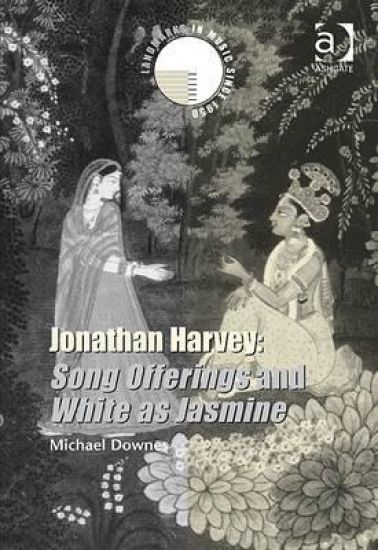
Jonathan Harvey (1939-2012) was one of Britain's leading composers: his music is frequently performed throughout Europe, the United States (where he lived and worked) and Japan. He is particularly renowned for his electro-acoustic music, an aspect on which most previous writing on his work has focused. The present volume is the first detailed study of music from Harvey's considerable body of work for conventional forces. It focuses on two pieces that span one of the most fertile periods in Harvey's output: Song Offerings (1985; awarded the prestigious Britten Award), and White as Jasmine (1999). The book explores the links between the two works - both set texts by Hindu writers, employ a solo soprano, and adumbrate a spiritual journey - as well as showing how Harvey's musical language has evolved in the period between them. It examines Harvey's techniques of writing for the voice, for small ensemble (Song Offerings), and for large orchestra, subtly and characteristically enhanced with electronic sound (White as Jasmine). It shows how Harvey's music is informed by his profound understanding of Eastern religion, as well as offering a clear and accessible account of his distinctive musical language. Both works use musical processes to dramatic and clearly audible effect, as the book demonstrates with close reference to the accompanying downloadable resources. The book draws on interviews with the composer, and benefits from the author's exclusive access to sketches of the two works. It contextualises the works, showing how they are the product of a diverse series of musical influences and an engagement with ideas from both Eastern and Western religions. It also explores how Harvey continued to develop the musical and spiritual preoccupations revealed in these pieces in his later work, up to and including his third opera, Wagner Dream (2007).
The Bible was at the center of Jonathan Edwards' intellectual and ministerial life. As an eighteenth century theologian-pastor, the Scriptures were the focus of his work and the perspective through which he viewed his world. Edwards had a particular interest in the interpretation of the Apocalypse, devoting a notebook to the collection of observations and thoughts from his reading and reflection. This book examines Edwards' interpretation of Revelation 4-8 as seen in his working notebooks and theological treatises and sermons and then compares his views with some of his major contemporary biblical interpreters. Edwards employs a typological hermeneutical method, arguing that typology is the language God uses to communicate and this language can be learned both from explicit typology in Scripture as well as from the biblical author's implicit use of types. In the application of this typological hermeneutics, Edwards not only interprets all of Scripture Christologically, but also views the natural world and secular history as types of Christ.
The year 2003 marked the tercentenary of the birth of Jonathan Edwards (1703-1758), the man perpetually hailed as "America's most original religious thinker." Edwards's impact, both on colonial religious life and on the Anglo-American world of his day, was internationally acknowledged, and his legacy for the century and a half and more after his death in 1758 has been profound. Even to this day, Edwards's life is studied and his writings consulted on a global basis more than any other American theologian. The most significant scholarly conference marking the Edwards tercentenary took place in October 2003 at the Library of Congress in Washington, D.C. The papers from that gathering are presented in this volume. They represent much of the best and most recent work being done on Edwards and reflect the wide diversity of approaches to his life, thought, and legacy.
Jonathan Edwards (1703–1758) was a preacher, theologian, and missionary to the Native Americans. This book deals with Jonathan Edwards’ doctrine of justification and its continuity with Reformed tradition. In his Reformed Theology, Edwards interprets the doctrine with scholastic as well as forensic terms such as “disposition,” “habit,” and “fitness.” Due to his use of these concepts, some scholars suspect that he had a quasi-Roman Catholic view of salvation. According to them, Edwards’ use of the terms indicates the intrinsic renovation or inherent righteousness of a saint. Contrary to this suspicion, Jonathan Edwards on Justification demonstrates that Edwards stands firmly on the Reformed tradition in the doctrine of justification. In this book, Hyun-Jin Cho presents a historical study on the theological connection between Edwards and his Reformed forebears. Based on Edwards’ dispositional ontology, the concept of “dispositional transformation” with the Holy Spirit becomes an important theoretical foundation of his doctrine of justification. Cho discusses Edwards’ attempts to explain his doctrine of justification in terms of disposition and its effects.
A fresh, comparative study of the innovative thought of America's greatest theologianThough Jonathan Edwards (1703-1758) is widely regarded as America's most important theologian, very few people are actually familiar with his theology. In Jonathan Edwards among the Theologians Oliver Crisp helpfully elucidates key themes in Edwards's thought.Treating Edwards as a constructive theologian with serious philosophical interests, Crisp explains Edwards's thinking on such matters as the Trinity, creation, original sin, free will, and preaching. Crisp underscores the innovative nature of Edwards's work by bringing his thought into dialogue with other creative and important Christian theologians such as Anselm and Arminius.What emerges from Crisp's study is a complex, multifaceted picture of Edwards as a highly original, significant thinker who sometimes pressed at the very limits of orthodoxy and whose theological thought remains strikingly relevant today.
Student-friendly intro to one of America's most fascinating theological minds Jonathan Edwards (1703-1758) has long been recognized as one of the preeminent thinkers in the early Enlightenment and a major figure in the history of American Christianity. In this accessible one-volume text, leading Edwards experts Oliver Crisp and Kyle Strobel introduce readers to the fascinating and formidable mind of Jonathan Edwards as they survey key theological and philosophical themes in his thought, including his doctrine of the Trinity, his philosophical theology of God and creation, and his understanding of the atonement and salvation. More than two centuries after his death, theologians and historians alike are finding the larger-than-life Edwards more interesting than ever. Crisp and Strobel's concise yet comprehensive guide will help students of this influential eighteenth-century revivalist preacher to understand why.
As the charismatic leader of the wave of religious revivals known as the Great Awakening, Jonathan Edwards (1703-58) is one of the most important figures in American religious history. However, by the end of the eighteenth century, his writings were generally dismissed as remnants of a moribund Puritan tradition. Focusing on the publishing history and appropriation of Edwards's works by succeeding generations, Joseph Conforti explores the construction and manipulation of the Edwards legacy and demonstrates its central place in American cultural and religious history. Most of Edwards's writings were not regularly republished or widely read until the early nineteenth century, when he emerged as a prominent thinker both in academic circles and in the new popular religious culture of the Second Great Awakening. Even after the Civil War, Edwards remained a popular figure from the Puritan past for colonial revivalists. But by the early twentieth century, scholars had again reinvented Edwards, this time deemphasizing his influence. These contrasting constructions of the one man, Conforti says, reveal the dynamic process of cultural change.
In Jonathan Swift and the Vested Word, Deborah Wyrick argues that modern Continental and American literary theory is ""tantalizingly applicable to Swiftian texts."" Its applicability, she writes, ""stems from Swift's interest in and exploration of what are now though of as phenomenological, structuralist, poststructuralist, and new historicist concerns: how a life in language comes into being, how semiotic systems determine meaning, how texts open up their own systems to other texts and to multiple interpretations.""Wyrick investigates Swift's confrontations with three theories of language current in his day, theories that locate meaning in the thing named, in the idea behind the word, or in the response of the audience. She concludes that Swift fashioned a fourth theory of meaning, one that locates meaning in and among words themselves. Because of his fear of the anarchic potential of language, Swift attempted to invest his words with extratextual authority; yet a powerful counterforce was his desire to exploit the possibilities of language divested of stable significance. These divestitures, particularly the word-play and language games, ultimately served serious personal and social purposes.A crucial personal purpose was Swift's ability to create a textual self, which he did, Wyrick maintains, by constructing defensive transvestitures centered on clothes and money. These parallel sign systems produced Swift's greatest achievement in using the resources of language and history to effect political action. By using the entire Swift canon -- poems and prose narratives, letters and essays, sermons and satires -- Wyrick presents Swift's struggle with the inadequacies of language and its inability to answer the tremendous demands he made upon it.A UNC Press Enduring Edition -- UNC Press Enduring Editions use the latest in digital technology to make available again books from our distinguished backlist that were previously out of print. These editions are published unaltered from the original, and are presented in affordable paperback formats, bringing readers both historical and cultural value.
Jonathan Worth, lawyer, businessman, public financier, and finally governor of North Carolina, typified the Union advocate of the antebellum South. This skillful biography explores in detail Worth's efforts to avoid secession in 1861, his lack of enthusiasm for the Civil War, and his rejection of the reconstruction proposals.A UNC Press Enduring Edition -- UNC Press Enduring Editions use the latest in digital technology to make available again books from our distinguished backlist that were previously out of print. These editions are published unaltered from the original, and are presented in affordable paperback formats, bringing readers both historical and cultural value.
An important new biography of America's founding religious father. Jonathan Edwards was America's most influential evangelical, whose revivals of the 1730s became those against which all subsequent ones have been judged.The marvelous accomplishment of Philip Gura's" Jonathan Edwards "is to place the rich intellectual landscape of America's most formidable evangelical within the upheaval of his times. Gura not only captures Edwards' brilliance but respectfully explains the enduring appeal of his theology: in a world of profound uncertainty, it held out hope of an authentic conversion---the quickening of the indwelling spirit of God in one's heart and the consequent certitude of Godly behavior and everlasting grace. Tracing Jonathan Edwards' life from his birth in 1703 to his untimely death in 1758, Gura magnificently reasserts Edwards rightful claim as the father of America's evangelical tradition.
Jonathan Edwards - American Writers 97 was first published in 1971. Minnesota Archive Editions uses digital technology to make long-unavailable books once again accessible, and are published unaltered from the original University of Minnesota Press editions.