
Kirjahaku
Etsi kirjoja tekijän nimen, kirjan nimen tai ISBN:n perusteella.
1000 tulosta hakusanalla Jonathan Edwards

Selections From The Unpublished Writings Of Jonathan Edwards Of America
Jonathan Edwards; Alexander Balloch (EDT) Grosart
Kessinger Pub
2007
pokkari
Jonathan Edwards and Justification
Crossway Books
2012
pokkari
Josh Moody has assembled a team of internationally reputed Edwards scholars to ask and answer the question: What is Jonathan Edwards's doctrine of justification? The contributors also examine the extent to which Edwards's view was Reformational while addressing some of the contemporary discussions on justification. This volume helps us look at justification through the eyes of one of America's greatest theologians, and speaks credibly and winsomely to the needs of the church and the academy today.
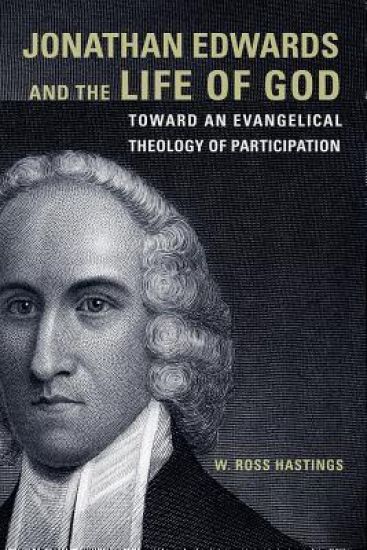
Jonathan Edwards and the Life of God aims to offer a retrieval of Edwards' theology of participation for contemporary evangelical theology. It critically expounds and elucidates the concept of participation in God, or theosis, in Edwards' Trinitarian theology as it relates to around three unions: the three persons of the Trinity, the hypostatic union of the divine and human in Christ, and that of believers with Christ. This volume brings Edwards' rich theological work into conversation with the patristic (Augustine and the Cappadocians) and Reformed traditions (Calvin and, especially, Barth), in order to construct with Edwards a more hopeful, liberating, and truly human version of Christian life. Consideration of the life of God in Edwards thus moves "beyond" in two senses: first, perspectives on participation beyond those of Edwards from Barth, Volf, the Cappadocian Fathers, and others in the tradition, are engaged in order to locate and critique and enhance it; and secondly, in the sense that, as Hastings argues, participation leads, for Edwards and others, into the "beyond" of the beatific vision-the glory of God.

Jonathan Edwards, Samuel Taylor Coleridge, and the Supernatural Will in American Literature
Brad Bannon
Routledge
2018
sidottu
In a work that will be of interest to students and scholars of American Literature, Romanticism, Transcendentalism, the History of Ideas,and Religious Studies, Brad Bannon examines Samuel Taylor Coleridge’s engagement with the philosophical theology of Jonathan Edwards. A closer look at Coleridge’s response to Edwards clarifies the important influence that both thinkers had on seminal works of the nineteenth century, ranging from the antebellum period to the aftermath of the American Civil War—from Poe’s fiction and Emerson’s essays to Melville’s Billy Budd and Crane’s The Red Badge of Courage. Similarly, Coleridge’s early espousal of an abolitionist theology that had evolved from Edwards and been shaped by John Woolman and Olaudah Equiano sheds light on the way that American Romantics later worked to affirm a philosophy of supernatural self-determination. Ultimately, what Coleridge offered the American Romantics was a supernatural modification of Edwards’ theological determinism, a compromise that provided Emerson and other nineteenth-century thinkers with an acceptable extension of an essentially Calvinist theology. Indeed, a thoroughgoing skepticism with respect to salvation, as well as a faith in the absolute inscrutability of Providence, led both the Transcendentalists and the Dark Romantics to speculate freely on the possibility of supernatural self-determination while doubting that anything other than God, or nature, could harness the power of causation.
Since the publication of Sang Hyun Lee's revolutionary commentary, The Philosophical Theology of Jonathan Edwards, scholars have considered the possibilities of understanding Jonathan Edwards's thought in terms of dispositional laws, forces, and habits. While some scholars reject the notion of a dispositional ontology in Edwards, others have taken the concept of disposition in his thought beyond the usage the Northampton minister ever indicated, especially with respect to soteriological considerations. The preacher of "Sinners in the Hands of an Angry God" is made to be an inclusivist, if not a crypto-universalist. Jonathan Edwards's Vision of Reality substantiates that Edwards, in an effort to combat deistic and materialistic Enlightenment paradigms, employs dispositions in his philosophy, but that his radical theocentrism and Calvinistic particularism established its boundaries within his apologetical reconsideration of spatiotemporal and metaphysical reality. Within his "spiritual vision" of reality, Edwards leaves no stone unturned: history and even the reprobate find inherent value and a positive functional role not only in God's program of self-glorification but as manifestations of divine being--the damned are "deformities" in God. The logic of Edwards's theocentric vision of reality pushes his ideas to the limits of acceptable Reformed orthodoxy, and sometimes beyond those limits.
Jonathan Edwards and Deification – Reconciling Theosis and the Reformed Tradition
James R. Salladin
IVP Academic
2022
nidottu
The doctrine of deification or theosis is typically associated with the Eastern Orthodox tradition. Indeed, the language of participation in the divine nature as a way to understand salvation often sounds like strange music in the ears of Western Christians despite passages like 2 Peter 1:4 where it appears. However, recent scholarship has argued that the theologies of some of the most prominent figures in the history of the Western church, including Martin Luther, John Calvin, and John Wesley, share more in common with deification than has been acknowledged. In this New Explorations in Theology volume, theologian James Salladin considers the role of deification in the theology of another well-known Western theologian: Jonathan Edwards. In addition, he reflects upon the question of how Edwards's soteriology compares with the rest of the broader Reformed tradition. Here, we discover how Edwards's theology affirms what it means for sinners to be brought into the hands of a loving God. Featuring new monographs with cutting-edge research, New Explorations in Theology provides a platform for constructive, creative work in the areas of systematic, historical, philosophical, biblical, and practical theology.

Jonathan Edwards and the Christian Pilgrim
Deborah Howard
CHRISTIAN FOCUS PUBLICATIONS LTD
2023
sidottu
Wisdom from Jonathan Edwards on the journey towards death, with application for modern life. Death is inevitable. Whether we’re facing the death of a loved one, or our own passing from this world to the next, we cannot avoid it. Death is something we never get used to. But it is something that we can get ready for. Deborah Howard has taken Jonathan Edwards’ intensely encouraging sermon on the Christian Pilgrim and, drawing on her own experiences as a hospice nurse, has written this book to encourage us to live with our final destination in mind. Focussing on scripture truth, the reader is encouraged to think about the journey that leads us towards our final destination. How are we spending our lives, as we live in the light of eternity? This combination of classic sermon and modern application makes this book an essential addition to any Christian’s bookshelf.
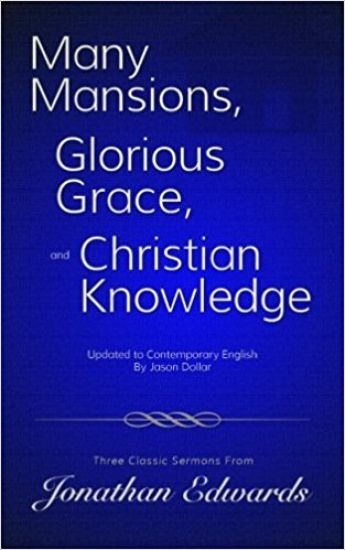
Many Mansions, Glorious Grace, and Christian Knowledge: Three Classic Sermons From Jonathan Edwards Updated to Contemporary English
Jonathan Edwards; Jason Dollar
Createspace Independent Publishing Platform
2016
nidottu


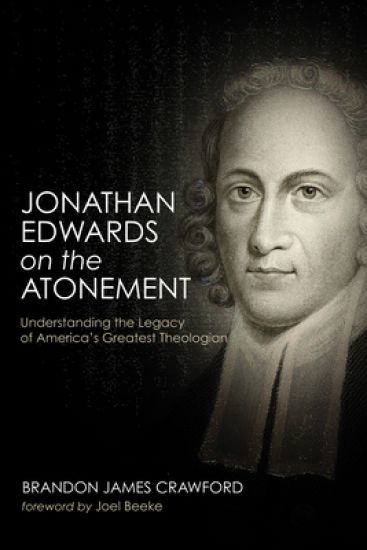
Jonathan Edwards on the Atonement
Brandon James Crawford; Joel Beeke
Wipf Stock Publishers
2017
pokkari
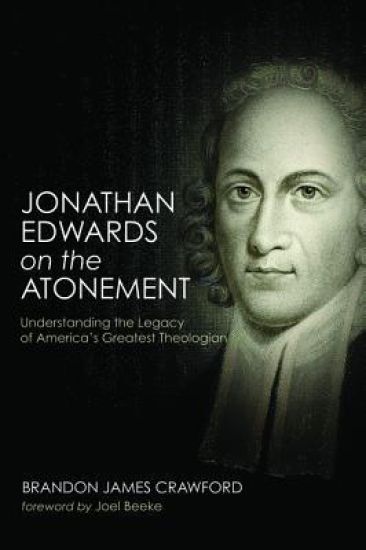
Jonathan Edwards on the Atonement
Brandon James Crawford; Joel Beeke
Wipf Stock Publishers
2017
sidottu
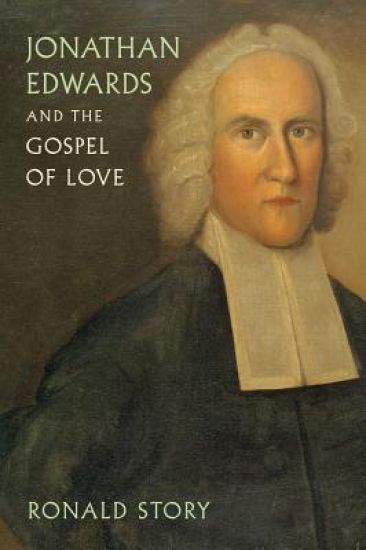
Jonathan Edwards has long epitomised the Puritan preacher as fiery scold, fixated on the inner struggle of the soul and the eternal flames of hell. In this book, Ronald Story offers a fundamentally different view of Edwards, revealing a profoundly social minister who preached a gospel of charity and community bound by love. The first chapters trace Edwards’s life and impact, examine his reputation as an intellectual, Calvinist, and revivalist, and highlight the importance for him of the gentler, more compassionate concepts of light, harmony, beauty, and sweetness. Story then explains what Edwards means by the “Gospel of Love”—a Christian faith that is less individual than interpersonal, and whose central feature is the practice of charity to the poor and the quest for loving community in this world, the chief signs of true salvation. As Edwards preached in his sermon “Heaven Is a World of Love,” the afterlife itself is social in nature because love is social. Drawing on Edwards’s own sermons and notebooks, Story reveals the minister’s belief that divine love expressed in the human family should take us beyond tribalism, sectarianism, provincialism, and nationality. Edwards offers hope, in the manner of Walter Rauschenbusch, Karl Barth, Martin Luther King Jr., and other great “improvers,” for the coming of a world without want and war. Gracefully and compellingly written, this book represents a new departure in Edwards studies, revising the long-standing yet misleading stereotype of a man whose lessons of charity, community, and love we need now more than ever.
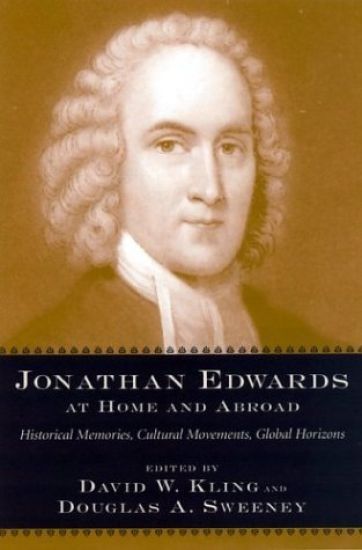
Jonathan Edwards at Home and Abroad
University of South Carolina Press
2004
sidottu
In this contribution to the study of one of America's best-known and most-imposing religious figures, 15 scholars offer a sustained analysis of Jonathan Edward's historical legacy throughout the world. The volume looks at Edward's lasting influence and enduring effects worldwide.

Jonathan Edwards's Moral Thought and Its British Context
Norman Fiering; Oliver D Crisp
Wipf Stock Publishers
2006
pokkari
The problems of moral philosophy were a central preoccupation of literate people in eighteenth-century America and Britain. It is not surprising, then, that Jonathan Edwards was drawn into a colloquy with some of the major ethicists of the age. Moral philosophy in this era was so all-encompassing in its claims that it encroached seriously on traditional religion. In response, Edwards presented a detailed analysis and criticism of secular moral philosophy in order to demonstrate its inadequacy, and he formulated a system that he believed was demonstrably superior to the existing secular systems. In this comprehensive study, Norman Fiering skillfully integrates Edwards's work on ethics into seventeenth- and eighteenth-century British and Continental philosophy and isolates Edwards's particular contributions to the ethical thought of his time. In addition, Fiering traces the chronological development of Edwards's thought, showing the relationship between his wide reading and his writing.