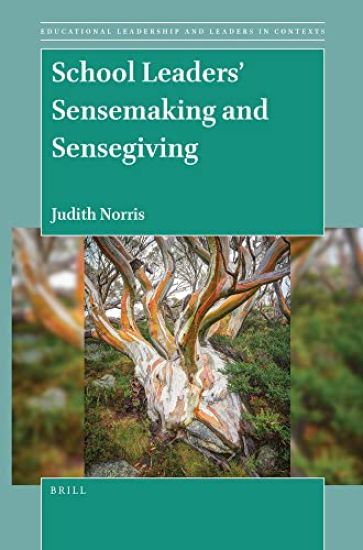
In this book, Judith Norris presents a theoretical model that demonstrates a new approach to understanding how school leaders respond to conflicting expectations and demands. The idea of sensemaking and sensegiving is theoretically interesting and allows the reader to focus on how school leaders make sense, but also how they give sense to others in the complex conditions that educators now must negotiate. Like the Eucalyptus tree, educational leaders must adapt to their contradictory environments. Written in the most accessible way, the theory and its application will likely appeal not only to researchers, but also to teachers and school administrators. Norris has created a real applicability to school leadership in various international contexts.
As allegiance to Jesus Christ spread across the Roman Empire in the second century, writings, practices, and ideas erupted in a creative maelstrom. Many of the patterns of practice and belief that later become normative emerged, in the midst of debate and argument with neighbours who shared or who rejected that allegiance. Authoritative texts, principles of argument, attitudes to received authority, the demands of allegiance in the face of opposition, identifying who belonged and who did not, all demanded attention. These essays explore those divergent voices, and the no-less diverse and lively debates they have inspired in recent scholarship.
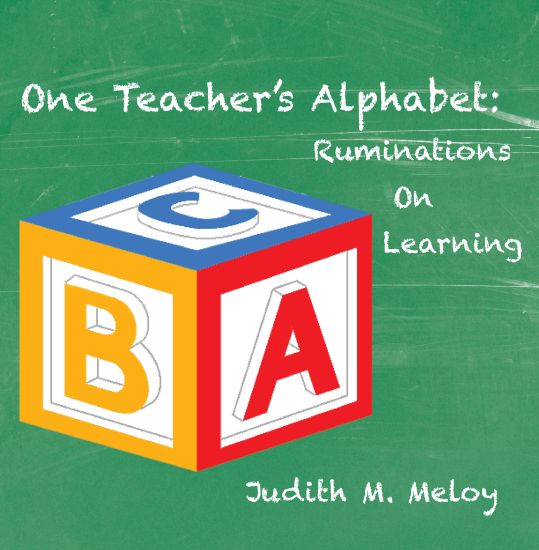
With this book, Meloy reflects upon incidents and examples of thinking and learning across her career as a middle and high school teacher and as a college professor. Her ABCs are the focal point of concepts and ideas that teachers will most likely recognize even as they begin to consider their own.
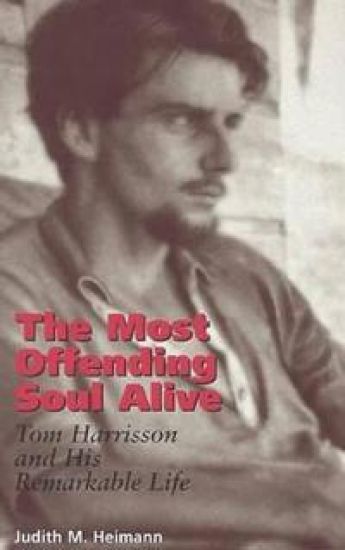
An English eccentric and adventurer, Tom Harrisson sought knowledge and renown in a dizzying number of fields, breaking most of the rules of ""civilized"" society. This story of his controversial life offers a sympathetic look at a charismatic figure who offended as much as he impressed at the twilight of colonialism on the fringes of the British Empire.
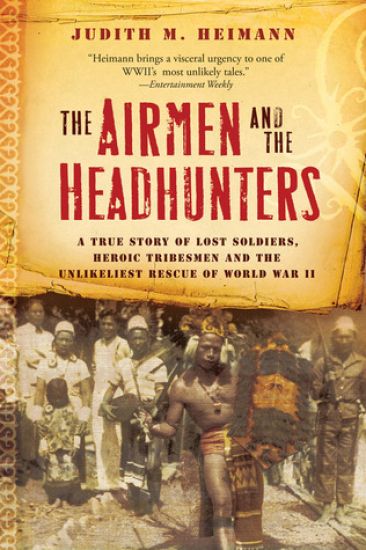
November 1944: Army airmen set out in a B-24 bomber on what should have been an easy mission off the Borneo coast. Instead they found themselves unexpectedly facing a Japanese fleet - and were shot down. When they cut themselves loose from their parachutes, they were scattered across the island's mountainous interior. Then a group of loincloth-wearing natives silently materialized out of the jungle. Would these Dayak tribesmen turn the starving airmen over to the hostile Japanese occupiers? Or would the Dayaks risk vicious reprisals to get the airmen safely home? The tribal leaders' unprecedented decision led to a desperate game of hide-and-seek, and, ultimately, the return of a long-renounced ritual: head-hunting.A cinematic survival story that features a bamboo airstrip built on a rice paddy, a mad British major, and a blowpipe-wielding army that helped destroy one of the last Japanese strongholds, "The Airmen and the Headhunters" is a gripping, you-are-there journey into the remote world and forgotten heroism of the Dayaks.
This richly illustrated, four-colour textbook introduces the art and archaeology of ancient Greece, from the Bronze Age through to the Roman conquest. Suitable for students with no prior knowledge of ancient art, this textbook reviews the main objects and monuments of the ancient Greek world, emphasizing the context and function of these artefacts in their particular place and time. Students are led to a rich understanding of how objects were meant to be perceived, what 'messages' they transmitted and how the surrounding environment shaped their meaning. The book contains nearly five hundred illustrations (with over four hundred in colour), including specially commissioned photographs, maps, floorplans and reconstructions. Judith M. Barringer examines a variety of media, including marble and bronze sculpture, public and domestic architecture, painted vases, coins, mosaics, terracotta figurines, reliefs, jewellery and wall paintings. Numerous text boxes, chapter summaries and timelines, complemented by a detailed glossary, support student learning.
Recent archaeological discoveries have encouraged scholars to reinvestigate the Israelite religion. In this book, Judith Hadley uses these discoveries, alongside biblical material and non-biblical inscriptions, to examine the evidence for the worship of Asherah as the partner of God in the Bible. By investigating the Khirbet al-Qom and Kuntillet ‘Ajrud inscriptions, for example, where the phrase ‘Yahweh and his Asherah’ is frequently in evidence, the author asks what the ancient Israelites meant by this, how they construed the relationship between Yahweh and Asherah, and whether in fact the term actually referred to an object of worship rather than to a goddess. The author also evaluates more recent scholarship to substantiate her conclusions. This is a detailed and brilliant study which promises to make a significant contribution to the ongoing debate about the exact nature of Asherah and her significance in pre-exilic Israel and Judah.
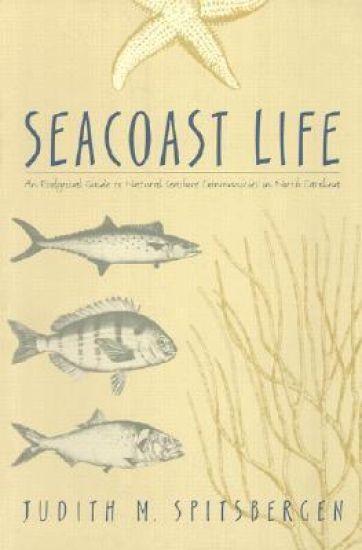
Designed primarily for field study, this book introduces the variety of species living in our diverse coastal setting, from sand dunes to salt marshes. Among the organisms identified are salt meadow hay, comb jellies, pipe fish, ghost crabs, sea cucumbers, and black skimmers. For each habitat, this study explains how organisms adapt to specific surroundings, describing how the various communities develop there, and aids in the identification of the most common species.
An English eccentric and adventurer, Tom Harrisson (1911-1976) sought knowledge and renown in a dizzying number of fields, while breaking most of the rules of civilized society. He was a precursor in the field of modern market research; he won the DSO for his World War II service in Borneo; he led efforts to save the orangutan, the green sea turtle, and other endangered species; he discovered the oldest modern human skull known at the time. This hugely enjoyable story of Harrisson's extravagant, controversial life offers a sympathetic and insightful look at a charismatic figure who offended as many people as he impressed at the twilight of colonialism on the fringes of the British empire.
Although studies have been made of individual aspects of the problem, this volume is the first to provide a comprehensive overview of both the theoretical issues and the scope and variety of present-day migratory movements in Europe, together with their historical antecedents. In his introduction, Hans Buechler reviews significant previous research and outlines the theoretical framework of the present volume. The primary focus of the chapters that follow is the experience of migrants and of household members who remain at home, analyzed within the total context of migration in both host and sender countries. The effects of migration on family economy and kin relationships are examined in detail. Among the issues explored are economic decision-making processes in migrant households, the implications of migration for family landholding, ties between migrants and family left behind, and kin, friendship, and neighborhood networks. Other topics considered are the working and social environment experienced by migrants; labor policies and restrictions relating to employment, work permits, and workers' families; and the problems connected with returning home. The final section, a bibliographic essay by Judith-Maria Buechler, helps to put the various individual contributions in a wider perspective.
The Doctor of Nursing Practice Essentials: A New Model for Advanced Practice Nursing, continues to be the only complete textbook for all eight American Association of Colleges of Nursing (AACN) Essentials of Doctoral Education for Advanced Practice Nursing. With DNP programs now found in every state, climbing from 25 to over 3 in the past 3 years, having a textbook dedicated to the DNP Essentials is imperative as faculty and students will use it as a template for future and existing programs. The newly revised Fourth Edition features updates and revisions to all chapters and expands on information relating to the current and future changes in today's complex healthcare environment. The text features the addition of new DNP project resources, with supplemental case studies highlighting DNP projects and the impact of this work.Every print copy of the text will include Navigate 2 Premier Access. This Access includes interactive lectures, competency mapping for DNP Essentials, case studies, assessment quizzes, a syllabus, discussion questions, assignments, and PowerPoint presentations.
The Fourth Edition of Examples & Explanations: Legal Writing explains what many professors consider to be effective writing, following the organization of typical first-year legal writing courses, and provides concrete examples for students to test their understanding of key legal writing concepts. Each chapter includes a checklist that can be easily transformed into a grading grid as well as chapter-by-chapter vocabulary that integrates your classroom instruction with these examples. This book--whether the entire book, selected chapters, or subsets of chapters--can accompany any legal writing textbook or materials you provide for your students. A favorite classroom prep tool of successful students that is often recommended by professors, the Examples& Explanations series has been ranked the most popular study aid among law students because it is equally as helpful from the first day of class through the final exam. New to the Fourth Edition: New chapters on common law and on writing conclusion sections in persuasive documents Revised and updated with legal writing professors in mind, including revisions that work whether assigning single chapters or the entire book New common law assignments with many added examples and explanations throughout the book Professors and students will benefit from: Understanding how the writing students do in law school (and law practice) differs from what they did in college Professors knowing the right way to use examples, although they may hesitate to give examples Learning how to practice revising and rewriting--skills that are necessary to all good writing Demonstrations of how to self-evaluate, self-explain, and self-test Having the tools to continue to learn about legal writing after formal instruction ends
Coping With Loss describes the many ways in which people cope with the death of someone they love. Most earlier books on bereavement have fallen into two categories: distillations of the clinical experience of individual therapists or collections of chapters reporting the results of empirical studies. Each category is valuable but has tended to serve a narrow group of readers--practitioners with particular theoretical orientations or researchers in quest of the latest findings. Coauthored by a leading research psychologist and an experienced therapist who specializes in bereavement education and intervention, this book is different. The authors weave together the strands of theory, research, and clinical wisdom into a seamless and readable narrative. While they discuss previous work, they also present new data, never before published, from one of the largest studies of bereaved people ever conducted, the Bereavement Coping Project. Unlike most studies to date, which focused on only one type of bereaved group (usually widows or widowers), the Bereavement Coping Project examined the experiences of several different groups during the first l8 months after the death. The groups included those who had lost a spouse, a parent, an adult sibling, or a child; and those who had lost their significant other to cancer or cardiovascular disease on one hand as opposed to the stigmatized disease of AIDS on the other. The book begins with a critical overview of theories of bereavement; succeeding chapters explore in depth the impact of specific types of loss, the impact of particular coping strategies on recovery; the impact of social supports and religion, and the special cases of children and of people who seem to grow and change for the better after a loss. A final chapter considers implications for intervention with bereaved people. Each chapter is richly illuminated with real-life examples throughout and ends with a section called "Voices" in which bereaved people describe their various attempts to cope in their own words. Insightful and informative.
Coping With Loss describes the many ways in which people cope with the death of someone they love. Most earlier books on bereavement have fallen into two categories: distillations of the clinical experience of individual therapists or collections of chapters reporting the results of empirical studies. Each category is valuable but has tended to serve a narrow group of readers--practitioners with particular theoretical orientations or researchers in quest of the latest findings. Coauthored by a leading research psychologist and an experienced therapist who specializes in bereavement education and intervention, this book is different. The authors weave together the strands of theory, research, and clinical wisdom into a seamless and readable narrative. While they discuss previous work, they also present new data, never before published, from one of the largest studies of bereaved people ever conducted, the Bereavement Coping Project. Unlike most studies to date, which focused on only one type of bereaved group (usually widows or widowers), the Bereavement Coping Project examined the experiences of several different groups during the first l8 months after the death. The groups included those who had lost a spouse, a parent, an adult sibling, or a child; and those who had lost their significant other to cancer or cardiovascular disease on one hand as opposed to the stigmatized disease of AIDS on the other. The book begins with a critical overview of theories of bereavement; succeeding chapters explore in depth the impact of specific types of loss, the impact of particular coping strategies on recovery; the impact of social supports and religion, and the special cases of children and of people who seem to grow and change for the better after a loss. A final chapter considers implications for intervention with bereaved people. Each chapter is richly illuminated with real-life examples throughout and ends with a section called "Voices" in which bereaved people describe their various attempts to cope in their own words. Insightful and informative.
Kaqchikel is one of approximately thirty Mayan languages spoken in Belize, Guatemala, Mexico, and, increasingly, the United States. Of the twenty-two Mayan languages spoken in Guatemala, Kaqchikel is one of the four "mayoritarios," those with the largest number of speakers. About half a million people living in the central highlands between Guatemala City and Lake Atitlán speak Kaqchikel. And because native Kaqchikel speakers are prominent in the field of Mayan linguistics, as well as in Mayan cultural activism generally, Kaqchikel has been adopted as a Mayan lingua franca in some circles.This innovative language-learning guide is designed to help students, scholars, and professionals in many fields who work with Kaqchikel speakers, in both Guatemala and the United States, quickly develop basic communication skills. The book will familiarize learners with the words, phrases, and structures used in daily communications, presented in as natural a way as possible, and in a logical sequence. Six chapters introduce the language in context (greetings, the classroom, people, the family, food, and life) followed by exercises and short essays on aspects of Kaqchikel life. A grammar summary provides in-depth linguistic analysis of Kaqchikel, and a glossary supports vocabulary learning from both Kaqchikel to English and English to Kaqchikel. These resources, along with sound files and other media on the Internet at ekaq.stonecenter.tulane.edu, will allow learners to develop proficiency in all five major language skills-listening comprehension, speaking, reading, writing, and sociocultural understanding.
Comparing and contrasting the reality of subjectivity in the work of historys great scientists and the modern Bayesian approach to statistical analysis Scientists and researchers are taught to analyze their data from an objective point of view, allowing the data to speak for themselves rather than assigning them meaning based on expectations or opinions. But scientists have never behaved fully objectively. Throughout history, some of our greatest scientific minds have relied on intuition, hunches, and personal beliefs to make sense of empirical dataand these subjective influences have often aided in humanitys greatest scientific achievements. The authors argue that subjectivity has not only played a significant role in the advancement of science, but that science will advance more rapidly if the modern methods of Bayesian statistical analysis replace some of the classical twentieth-century methods that have traditionally been taught. To accomplish this goal, the authors examine the lives and work of historys great scientists and show that even the most successful have sometimes misrepresented findings or been influenced by their own preconceived notions of religion, metaphysics, and the occult, or the personal beliefs of their mentors. Contrary to popular belief, our greatest scientific thinkers approached their data with a combination of subjectivity and empiricism, and thus informally achieved what is more formally accomplished by the modern Bayesian approach to data analysis. Yet we are still taught that science is purely objective. This innovative book dispels that myth using historical accounts and biographical sketches of more than a dozen great scientists, including Aristotle, Galileo Galilei, Johannes Kepler, William Harvey, Sir Isaac Newton, Antoine Levoisier, Alexander von Humboldt, Michael Faraday, Charles Darwin, Louis Pasteur, Gregor Mendel, Sigmund Freud, Marie Curie, Robert Millikan, Albert Einstein, Sir Cyril Burt, and Margaret Mead. Also included is a detailed treatment of the modern Bayesian approach to data analysis. Up-to-date references to the Bayesian theoretical and applied literature, as well as reference lists of the primary sources of the principal works of all the scientists discussed, round out this comprehensive treatment of the subject. Readers will benefit from this cogent and enlightening view of the history of subjectivity in science and the authors alternative vision of how the Bayesian approach should be used to further the cause of science and learning well into the twenty-first century.
The purpose of this dictionary is to provide a convenient and affordable personal desk reference resource. The authors, who have many years experience in pharmacological research, teaching and editing, recognized a need for a single up-to-date volume encompassing material that hitherto could be gathered only from a well-stocked library. This book comprises two main sections: an A-Z listing of drugs and their properties; and a descriptive glossary of technical terms. The level and scope of this reference material will make it essential for pharmacologists and medicinal chemists, from the graduate student to established worker. It should also be valuable to workers in allied biomedical diSCiplines, such as biochemistry and physiology, medical students and science writers and editors. Scope The dictionary is centred on pharmacologically active agents. Workers in drug-related diSCiplines need to correctly identify individual agents from an arsenal of pharmacologically active compounds, each with a number of alternative drug names according to the country or naming convention.
Integrates the science of self-care with other nursing and multidisciplinary perspectives This is the first text for the Professional Nursing Practice course in RN to BSN curriculum to present a conceptual framework for contemporary nursingpractice based on the science of self-care that also incorporates other nursing and multidisciplinary perspectives. Built upon the premise that nursing isboth a caring and a knowledge-based profession, this cutting-edge text illustrates how to attain and integrate knowledge from nursing theory and theoriesof related disciplines to achieve optimal evidence-based nursing practice. Using case studies to demonstrate the relationship between nursing theory andpractice, the text underscores the importance of having a deep understanding and conceptual model of the unique role of nursing in society and its practicedomain. The text instills a foundational understanding of the science of self-care and its contribution to contemporary nursing. It describes how this paradigm isgaining recognition as an effective anti-burnout strategy and demonstrates how it can be applied. Case examples from a variety of clinical situationsintegrated with nursing theory demonstrate the variables needed to achieve optimal nursing practice. The book illustrates what data to collect, how toanalyze that data, how to design and implement intervention strategies, and how to determine their effectiveness. Key concept boxes, measurable objectiveswith critical thinking questions, and learning activities reinforce content. Additionally, more complex cases included at the end of the text and frequentlinks to nursing literature provide fodder for more in-depth analysis. Key Features: Provides an integrative model for nursing practice based on self-care that is useful in all clinical settings Illustrates how to attain and integrate knowledge from the science of self-care with other nursing theories Demonstrates the relationship between theory and practice through case studies Introduces students to the importance of recording and analyzing data to achieve evidence-based practice Includes measurable objectives with review questions at the end of chapters and many other pedagogical features