Kirjojen hintavertailu. Mukana 12 085 501 kirjaa ja 12 kauppaa.

Kirjahaku

Etsi kirjoja tekijän nimen, kirjan nimen tai ISBN:n perusteella.

1000 tulosta hakusanalla Just Bendix Justesen

Just Responsibility

Just Responsibility

Brooke A. Ackerly

Oxford University Press Inc
2018
sidottu
It has been well-established that many of the injustices that people around the world experience every day, from food insecurity to unsafe labor conditions and natural disasters, are the result of wide-scale structural problems of politics and economics. These are not merely random personal problems or consequences of bad luck or bad planning. Confronted by this fact, it is natural to ask what should or can we do to mitigate everyday injustices? In one sense, we answer this question when we buy the local homeless street newspaper, decide where to buy our clothes, remember our reusable bags when we shop, donate to disaster relief, or send letters to corporations about labor rights. But given the global scale of injustices related to poverty, environmental change, gender, and labor, can these individual acts really impact the seemingly intractable global social, political, and economic structures that perpetuate and exacerbate them? Moreover, can we respond to injustices in the world in ways that do more than just address their consequences? In this book, Brooke A. Ackerly both answers the question of what should we do, and shows that it's the wrong question to ask. To ask the right question, we need to ground our normative theory of global justice in the lived experience of injustice. Using a feminist critical methodology, she argues that what to do about injustice is not just an ethical or moral question, but a political question about assuming responsibility for injustice, regardless of our causal responsibility and extent of our knowledge of the injustice. Furthermore, it is a matter that needs to be guided by principles of human rights. As she argues, while many understand human rights as political goals or entitlements, they can also guide political strategy. Her aims are twofold: to present a theory of what it means to take responsibility for injustice and for ensuring human rights, as well as to develop a guide for how to take responsibility in ways that support local and global movements for transformative politics. In order to illustrate her theory and guide for action, Ackerly draws on fieldwork on the Rana Plaza collapse in 2013, the food crisis of 2008, and strategies from 125 activist organizations working on women's and labor rights across 26 countries. Just Responsibility integrates these ways of taking political responsibility into a rich theory of political community, accountability, and leadership in which taking responsibility for injustice itself transforms the fabric of political life.
Just Responsibility

Just Responsibility

Brooke A. Ackerly

Oxford University Press Inc
2018
nidottu
It has been well-established that many of the injustices that people around the world experience every day, from food insecurity to unsafe labor conditions and natural disasters, are the result of wide-scale structural problems of politics and economics. These are not merely random personal problems or consequences of bad luck or bad planning. Confronted by this fact, it is natural to ask what should or can we do to mitigate everyday injustices? In one sense, we answer this question when we buy the local homeless street newspaper, decide where to buy our clothes, remember our reusable bags when we shop, donate to disaster relief, or send letters to corporations about labor rights. But given the global scale of injustices related to poverty, environmental change, gender, and labor, can these individual acts really impact the seemingly intractable global social, political, and economic structures that perpetuate and exacerbate them? Moreover, can we respond to injustices in the world in ways that do more than just address their consequences? In this book, Brooke A. Ackerly both answers the question of what should we do, and shows that it's the wrong question to ask. To ask the right question, we need to ground our normative theory of global justice in the lived experience of injustice. Using a feminist critical methodology, she argues that what to do about injustice is not just an ethical or moral question, but a political question about assuming responsibility for injustice, regardless of our causal responsibility and extent of our knowledge of the injustice. Furthermore, it is a matter that needs to be guided by principles of human rights. As she argues, while many understand human rights as political goals or entitlements, they can also guide political strategy. Her aims are twofold: to present a theory of what it means to take responsibility for injustice and for ensuring human rights, as well as to develop a guide for how to take responsibility in ways that support local and global movements for transformative politics. In order to illustrate her theory and guide for action, Ackerly draws on fieldwork on the Rana Plaza collapse in 2013, the food crisis of 2008, and strategies from 125 activist organizations working on women's and labor rights across 26 countries. Just Responsibility integrates these ways of taking political responsibility into a rich theory of political community, accountability, and leadership in which taking responsibility for injustice itself transforms the fabric of political life.
Just Add Water

Just Add Water

Rhett B. Larson

Oxford University Press Inc
2020
sidottu
Scientists have long been searching for a unified field theory--one answer to all of the questions about the physical universe. In this book, Rhett Larson takes a similar approach to social policy questions. What if we could find a unified social policy theory--the answer to every question from how to prevent war to how to promote gender equality? Most of our most serious global challenges are complex, multi-faceted "wicked problems." But perhaps the first step in solving wicked problems as seemingly distinct as racism and disease epidemics is the same: reform our laws, policies, and priorities to achieve global water security. Global water security means reasonable access for all people to water of acceptable quantity and quality with acceptable costs and risks. Just as the essential element to all life is water, so water is the essential element to solving life's challenges. Virtually every major social challenge--including gender inequality, racial discrimination, terrorism, space exploration, global disease epidemics, mass migrations, and climate change--has a significant and underappreciated water component. Each chapter of this book takes up one of these wicked problems, illustrates the role water plays in that problem, and proposes reforms to address the water aspect of that problem, with the aim of achieving global water security. The goal of this this book is to convince the reader that the answer, or at least one part of the answer, to our most serious problems is the oft-repeated catchphrase: "Just add water."
Just Shelter

Just Shelter

Ronald R. Sundstrom

OXFORD UNIVERSITY PRESS INC
2024
sidottu
The United States of America is experiencing a housing crisis, which, by some estimates, started in the early 2000s and was made worse by the financial crisis of the 2007-2008 recession. Hundreds of thousands of Americans lack decent and affordable housing or everyday shelter. Instead, they must live in tent encampments stowed in the niches of neighborhoods and under the freeway overpasses of many major U.S. cities, often in unsafe conditions. Signs of this crisis are all around: in the spikes of evictions, in nationwide problems with over- and under-development, and in the growing concerns about the sustainability of this nation's towns and cities in the face of global climate change. This crisis didn't arise from the specific circumstances of the housing market or shortfalls in the construction of new homes or increased labor and material costs. The current housing crisis is the result of state-sponsored discrimination in housing and land-use policy and the enforcement of racial and class-based discrimination by neighborhoods and cities. All of these phenomena have had long-lasting effects on access to housing and educational and economic opportunity. Just Shelter is a work of political philosophy that examines the core injustices of the contemporary U.S. housing crisis and its relation to enduring racial injustices. It examines the harms of segregation, and asks: are desegregation or integration morally required of our communities and societies? Are the concerns that are expressed about gentrification related to the moral and political concerns that we have with segregation? Is there a moral imperative, and would it be politically legitimate, for our communities and society to mitigate or stop gentrification? Just Shelter investigates gentrification, segregation, desegregation, integration, and homelessness. To achieve justice in social-spatial arrangements, federal, state, and local governments must prioritize the crafting and enforcement of housing policy that corrects the injustices of the past. If we do not address the history of racism in housing policy, we will never solve today's housing crisis.
Just and Unjust Uses of Limited Force

Just and Unjust Uses of Limited Force

Daniel R. Brunstetter

Oxford University Press
2021
sidottu
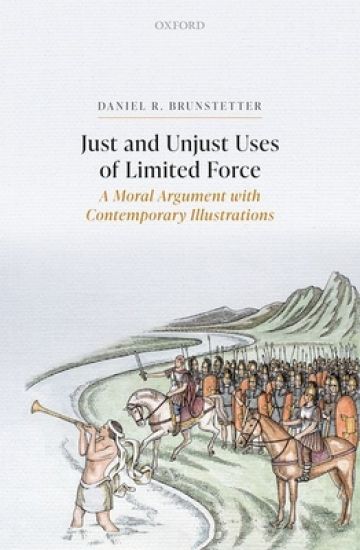
Limited force is different than war: different in scope, strategic purpose, and ethical permissions and restraints. No-fly zones, limited strikes, Special Forces raids, and drone strikes outside 'hot' battlefield have been at the nexus of the moral and strategic debates about just war since the fall of the Berlin Wall but, with the exception of drones, these aspects of the modern arsenal have remained largely undertheorized. Just and Unjust Uses of Limited Force fills that gap by revisiting the major wars animating contemporary just war scholarship (Kosovo, Afghanistan, Iraq, the drone 'wars', and Libya) through the lens of limited force and drawing insights from the just war tradition. Looking at these contemporary examples, the book teases out an ethical account of force-short-of-war. It covers the deliberation about whether to use limited force (jus ad vim), restraints that govern its use (jus in vi), when to stop (jus ex vi), and the after-use context (jus post vim). While these moral categories parallel to some extent their just war counterparts of jus ad bellum, jus in bello, jus post bellum, and jus ex bello, the book illustrates how they can be reimagined and recalibrated in a limited force context, while also introducing new principles specific to the dilemmas associated with escalation and risk. As the argument unfolds, the reader will be presented with a view of limited force as a moral alternative to war, exposed to a series of dilemmas regarding when and how limited force is used, and provided with a more precise and morally enriched vocabulary to talk about limited force and the responsibilities its use entails.
Just Words

Just Words

Mary Kate McGowan

Oxford University Press
2021
nidottu
We all know that speech can be harmful. But what are these harms, and how exactly does the speech in question bring them about? Mary Kate McGowan identifies a previously overlooked mechanism by which speech constitutes, rather than merely causes, harm. She argues that speech constitutes harm when it enacts a norm that prescribes that harm. McGowan illustrates this theory by considering many categories of speech including sexist remarks, racist hate speech, pornography, verbal triggers for stereotype threat, micro-aggressions, political dog whistles, slam poetry, and even the hanging of posters. Just Words explores a variety of harms--such as oppression, subordination, discrimination, domination, harassment, and marginalization--and ways in which these harms can be remedied.
'Just a Housewife'

'Just a Housewife'

Glenna Matthews

Oxford University Press Inc
1989
nidottu
The author shows how the nineteenth century's `cult of domesticity' had invested the home with great importance - as the centre of republican virtue, as the source of religious values and as an area of heady female responsiblities. But this emphasis meant that women were relegated to the domestic sphere, especially when Darwin's `survival of the fittest' doctrine seemed to indicate that women were physically inferior to men. Ironically, the industrialization of the home in the early twentieth century failed to improve women's lot; on the contrary, it helped lose the home its place of centrality in American culture and produced a terrible dilemma for women by urging them to go into the work place but offering them very little social support for doing so.
Just Caring

Just Caring

Leonard M. Fleck

Oxford University Press Inc
2009
sidottu
What does it mean to be a "just" and "caring" society when we have only limited resources to meet unlimited health care needs? Do we believe that all lives are of equal value? Is human life priceless? Should a "just" and "caring" society refuse to put limits on health care spending? In Just Caring, Leonard Fleck reflects on the central moral and political challenges of health reform today. He cites the millions of Americans who go without health insurance, thousands of whom die prematurely, unable to afford the health care needed to save their lives. Fleck considers these deaths as contrary to our deepest social values, and makes a case for the necessity of health care rationing decisions. The core argument of this book is that no one has a moral right to impose rationing decisions on others if they are unwilling to impose those same rationing decisions on themselves in the same medical circumstances. Fleck argues we can make health care rationing fair, in ways that are mutually respectful, if we engage in honest rational democratic deliberation. Such civic engagement is rare in our society, but the alternative is endless destructive social controversy that is neither just nor caring.
Just Marriage

Just Marriage

Mary Lyndon Shanley

Oxford University Press Inc
2004
nidottu
From the ground breaking legal decisions on gay marriage to the promotion of marriage for low-income families, the "sacred institution" of marriage has turned into a public battleground. Who should be allowed to marry and is marriage a public or private act? Should marriage be abandoned completely? Or should marriage be redefined as a civil institution that promotes sexual and racial equality? As the fierce national debate over same-sex marriage and civil unions continues, Mary Lyndon Shanley argues that while the state should continue to play a role in regulating personal relations, the law must be fundamentally reformed if marriage is to become a more just institution. Fourteen prominent writers and thinkers respond, including Nancy F. Cott, William N. Eskridge, Jr., Amitai Etzioni, Martha Albertson Fineman, and Cass R. Sunstein.
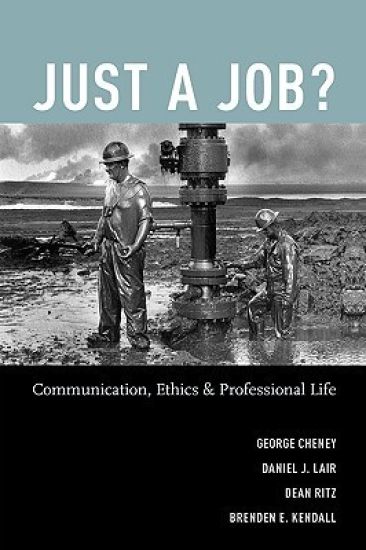
Just a Job?

Just a Job?

George Cheney; Dan Lair; Dean Ritz; Brenden Kendall

Oxford University Press Inc
2009
sidottu
The concept of 'professionalism' has gained everyday resonance in the twenty-first century, especially given recent corporate scandals. However, George Cheney argues, as much as it may be discussed, professionalism has lost much of its broader social and community-related implications, as the trends of careerism, consumerism, and contingent employment have challenged and eroded collective senses of professional responsibility. In addition, professionalism has become depoliticized, even as it has continued to manifest certain racial, class-oriented, and gender biases in many contexts. In Professional Ethics, Cheney will explore everyday practices in contemporary professional ethics. Specifically, he analyzes the broad patterns of our talk about 'being a professional' in contemporary industrialized societies and in global elite networks. Above all, he aims to produce a thematically unified, theoretically informed, and accessibly written account of the ways we understand not only specific ethical issues at work (e.g., advance notification of corporate layoffs, or conflicts of interest in commerce and politics) but also the ways we frame professional ethics today. Throughout, Cheney passionately describes the limited roles and absences of ethics in professional decisions and behavior today, and lays out the groundwork for a resurrection of professional citizenship. This volume should appeal to practicing managers, academics, and upper-division and graduate students in communication and business ethics.
Just a Job?

Just a Job?

George Cheney; Dan Lair; Dean Ritz; Brenden Kendall

Oxford University Press Inc
2009
nidottu
The concept of 'professionalism' has gained everyday resonance in the twenty-first century, especially given recent corporate scandals. However, George Cheney argues, as much as it may be discussed, professionalism has lost much of its broader social and community-related implications, as the trends of careerism, consumerism, and contingent employment have challenged and eroded collective senses of professional responsibility. In addition, professionalism has become depoliticized, even as it has continued to manifest certain racial, class-oriented, and gender biases in many contexts. In Professional Ethics, Cheney will explore everyday practices in contemporary professional ethics. Specifically, he analyzes the broad patterns of our talk about 'being a professional' in contemporary industrialized societies and in global elite networks. Above all, he aims to produce a thematically unified, theoretically informed, and accessibly written account of the ways we understand not only specific ethical issues at work (e.g., advance notification of corporate layoffs, or conflicts of interest in commerce and politics) but also the ways we frame professional ethics today. Throughout, Cheney passionately describes the limited roles and absences of ethics in professional decisions and behavior today, and lays out the groundwork for a resurrection of professional citizenship. This volume should appeal to practicing managers, academics, and upper-division and graduate students in communication and business ethics.
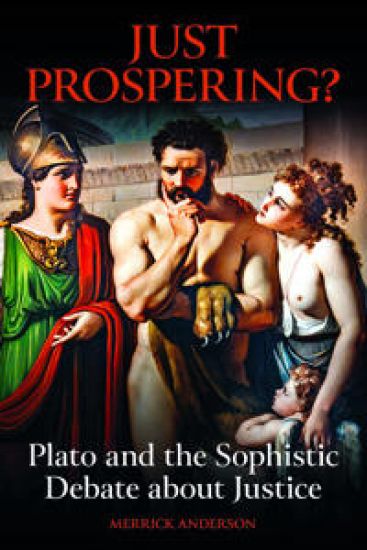
Just Prospering? Plato and the Sophistic Debate about Justice
Just Prospering? Plato and the Sophistic Debate about Justice introduces new research about the first secular discussions concerning the value of justice from the Western Tradition. In Part I, Anderson addresses the debates of the sophists, a group of politically minded intellectuals from the 5th Century BCE, considering relevant extant texts to produce the following conclusion: some of the sophists argued that being just was bad for the just individual, and that an individual would do well to be unjust instead, whereas others took it upon themselves to defend justice by arguing that the just life was best. Anderson continues in Part II to demonstrate that Plato, writing in the 4th Century, was aware of this debate and wanted to settle the matter himself. In his Republic, one of the great philosophical treatises of all time, he revives the earlier dialogue of the sophists to argue that the just life is the best life for human beings.
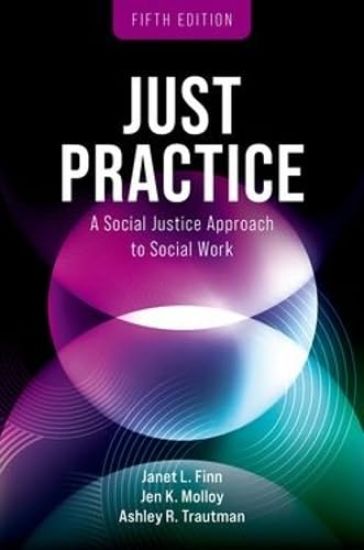
Just Practice

Just Practice

Janet L. Finn

Oxford University Press Inc
2021
nidottu
Just Practice: A Social Justice Approach to Social Work provides a foundation for critical and creative social work that integrates theory, history, ethics, skills, and rights to respond to the complex terrain of 21st century social work. Just Practice puts the field of social work's expressed commitment to social justice at center stage with a framework that builds upon five key concepts: meaning, context, power, history, and possibility. How do we give meaning to the experiences and conditions that shape our lives? What are the contexts in which those experiences and conditions occur? How do structures and relations of power shape people's lives and the practice of social work? How might a historical perspective help us to grasp the ways in which struggles over meaning and power have played out and to better appreciate the human consequences of those struggles? Taken together, these concepts provide a guide for integrative social work that bridges direct practice and community building. The text prepares readers with the theoretical knowledge and practice skills to address the complex challenges of contemporary social work from direct practice with individuals and families, to group work, organizational and community change, and policy analysis and advocacy. Each chapter includes learning activities, reflection moments, practice examples, and the stories and voices of practitioners and service users to engage students as critical thinkers and practitioners. The author encourages teachers and students alike to take risks, move from safe, familiar, pedagogical spaces and practices, challenge assumptions, and embrace uncertainty.
Just Policing

Just Policing

Jake Monaghan

OXFORD UNIVERSITY PRESS INC
2023
sidottu
Policing is a source of perennial conflict and philosophical disagreement. Though the injustices of our world seemingly require some kind of policing, the police are often sources of injustice themselves. But this is not always a result of intentionally or negligently bad policing. Sometimes it is an unavoidable result of the injustices that emerge from interactions with other social systems. This raises an important question of just policing: how should police respond to the injustices built into the system? Just Policing attempts an answer, offering a theory of just policing in non-ideal contexts. Jake Monaghan argues that police discretion is not only unavoidable, but in light of non-ideal circumstances, valuable. This conflicts with a widespread but inchoate view of just policing, the legalist view that finds justice in faithful enforcement of the criminal code. But the criminal code leaves policing seriously underdetermined; full enforcement is neither possible nor desirable. So, police need an alternative normative framework for evaluating and guiding their exercise of power. Just Policing draws on research in political philosophy and the social sciences to engage a number of current controversies, both scholarly and popular, regarding the police. It critiques popular approaches to police abolitionism while defending normative limits on police power. The book offers a defense of police discretion against common objections and evaluates controversial issues in order maintenance, such as the policing of "vice" and homelessness, democratic control over policing, community policing initiatives, police collaborations and alternatives like mental health response teams, and possibilities for structural reform.
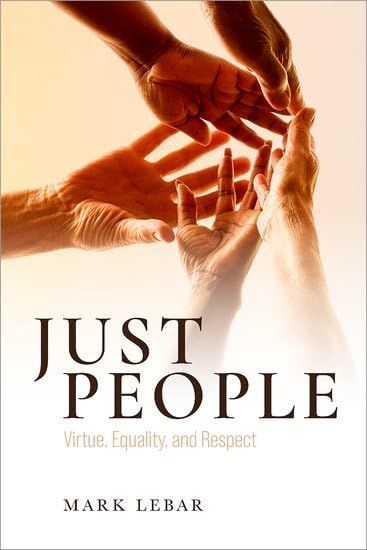
Just People

Just People

Mark LeBar

OXFORD UNIVERSITY PRESS INC
2025
sidottu
We often think of justice as a virtue that belong to states, societies, and institutions. It has not always been that way. Justice began as something between individual people, and only recently has its application to larger groups become predominant. In Just People, Mark LeBar makes a case for recovering the original priority of justice in and between individual people, as a virtue of character. The model for this virtue comes from Aristotle, whose own notion of the virtue of justice has notable shortcomings. Just People argues that we should understand justice in people as a matter of recognition of and respect for equal authority to obligate one another. That is, we should see one another as having equal capacity to obligate others through our persons and choices. This is a form of equality that is usually overlooked in discussions of equality, but here it is the cornerstone of justice, vindicating Aristotle's thought that justice is itself a matter of a kind of equality. LeBar rethinks a number of popular assumptions, including that we can make sense of justice in societies or institutions without thinking of the implications for our aspirations to be just people -- a thought that is long overdue. His book is a reformulation of justice, with the potential to fundamentally change the way we treat one another.
Just Wages for Women

Just Wages for Women

Aileen McColgan

Clarendon Press
1997
sidottu
Aileen McColgan's book makes an important contribution to the study of Labour Law in a number of ways. Firstly, she offers a convincing and authoritative account of the failures of the current approach adopted in the UK (even with the EC reinforcements) for the securing of more equitable arrangements on pay. Secondly, the book provides a valuable insight into the strengths and weaknesses of different approaches adopted in other parts of the world. The author spent a great deal of time in Canada studying the novel approaches there, and her analysis of the approaches adopted in Ontario, and also Australia form a good part of the book. Thirdly, the author addresses the wider issues of different forms of wage regulation and enriches our understanding by indicating that the gender pay gap may be determined to some extent by the way in which pay is regulated. This leads to the conclusion that more emphasis on wage payment structures would be a more helpful way of dealing with the problem of equal pay than the current preoccupation with an individual complaints driven model.
Just Lawyers

Just Lawyers

Christine Parker

Oxford University Press
1999
sidottu
Just Lawyers proposes a model for the regulation and organization of lawyers, guided by an ideal of access to justice. It is grounded in empirical analysis of why people complain about lawyers, the nature of existing legal institutions, and the ethical ideals of the profession. Parker weaves the normative theory of deliberative democracy with the empirical law and society tradition of research on the limits and possibilities of law. She shows that access to justice can only occur in the interaction between courtroom justice, informal everyday justice, and social movement politics. Lawyers' justice should educate people's justice to improve the justice quality of everyday relationships and transactions, while community concerns (including community access to justice concerns) should reshape lawyers' regulation, organization, and practices to improve substantive justice. Just Lawyers shows how legal proffesionalism can only be revitalized through the reform of access to justice beyond lawyers.