A guide to and analysis of a seminal book’s key concepts and methodology.Since its publication in 1935, Kenneth Burke’s Permanence and Change, a text that can serve as an introduction to all his theories, has become a landmark of rhetorical theory. Using new archival sources and contextualizing Burke in the past and present, Ann George offers the first sustained exploration of this work and seeks to clarify the challenging book for both amateurs and scholars of rhetoric.This companion to Permanence and Change explains Burke’s theories through analysis of key concepts and methodology, demonstrating how, for Burke, all language and therefore all culture is persuasive by nature. Positioning Burke’s book as a pioneering volume of New Rhetoric, George presents it as an argument against systemic violence, positivism, and moral relativism. Permanence and Change has become the focus of much current rhetorical study, but George introduces Burke’s previously unavailable outlines and notes, as well as four drafts of the volume, to investigate his work more deeply than ever before. Through further illumination of the book’s development, publication, and reception, George reveals Burke as a public intellectual and critical educator, rather than the eccentric, aloof genius earlier scholars imagined him to be.George argues that Burke was not ahead of his time, but rather deeply engaged with societal issues of the era. She redefines Burke’s mission as one of civic engagement, to convey the ethics and rhetorical practices necessary to build communities interested in democracy and human welfare—lessons that George argues are as needed today as they were in the 1930s.
No matter your size or shape, Kenneth D. King will teach you how to make perfect-fitting garments every time. In this comprehensive resource, Kenneth shows the home sewer how to understand her shape and fitting options, as well as how to identify bad fit by reading the wrinkles in the garment. From there, he explains his Smart Fitting methods - net gain (add fabric), net loss (remove fabric), or no net gain or loss (move fabric around) - to make the necessary corrections to the pattern. Along the way, Kenneth draws on his 30+ years of patternmaking and couturier experience to help the sewer understand proportion, wearing ease, and design ease; learn how to measure correctly; learn about fitting and alteration methods; learn how to make a muslin - the gold standard of test garments; and learn how to alter patterns for 35 upper body part issues. The home sewer will also be privy to garment construction tips picked up during Kenneth's years of couture sewing - things that make complex details a breeze. In Kenneth D. King's Fitting Essentials, Kenneth takes an otherwise confusing process and makes it logical and straightforward. AUTHOR: Kenneth D. King is a contributing editor at Threads Magazine, couture fashion designer, author and popular professor at The Fashion Institute of Technology in New York City. He specializes in custom evening wear and his designs appear in the permanent collections of leading museums, including the Victoria and Albert Museum in London, renowned for its art and design collections.
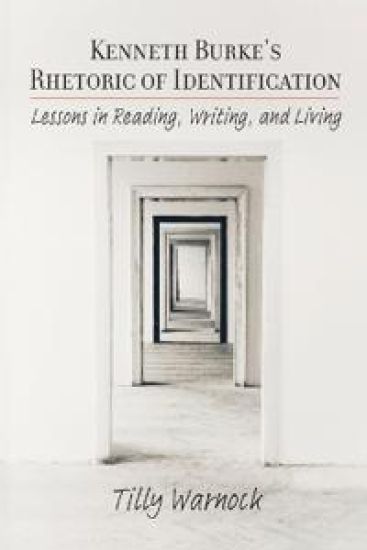
"Tilly Warnock's KENNETH BURKE'S RHETORIC OF IDENTIFICATION: LESSONS IN READING, WRITING, AND LIVING is an exceptionally well-researched and thorough book that offers, especially for new scholars, the terms for understanding and tracing Burke's theory of identification. Warnock's book invites scholars to consider Burke's identification as the theoretical extension and expansion of enthymematic and syllogistic proof that can be traced back to Counter-Statement and Permanence and Change. Kenneth Burke's Rhetoric of Identification outlines in the first half and illustrates in the second Burke's emphasis on personal, narrative, and argumentative writing as an available means of persuasion. The text is inventive, dense, challenging, and rewarding as Warnock explains and illustrates; much like medical training that invites students to see, do, teach, Warnock invites scholars to See Burke, Do Burke, Teach Burke. Warnock offers both a theoretical framework and practical application of Burke's theory of identification that, by the end of the book, with its discussion of A Rhetoric of Religion and Language as Symbolic Action, has moved through the corpus of Burke's works." -Rochelle Gregory, University of North TexasTilly Warnock is Professor Emerita at the University of Arizona, where she taught in the graduate program in Rhetoric, Composition, and the Teaching of English and directed the first-year writing program. She received her PhD from the University of Southern California in Rhetoric, Linguistics, and Literature. At the University of Wyoming in the 1970s and 1980s-the early days of the emergence of the academic field of rhetoric and composition-she published articles on James Joyce and directed the writing center and the Wyoming Conference on English. She hosted Kenneth Burke at the Wyoming Conference in 1985. Her textbook, Writing Is Critical Action (Scott, Forseman & Co.), was published in 1989. She lives with her husband, John Warnock, in Tucson.
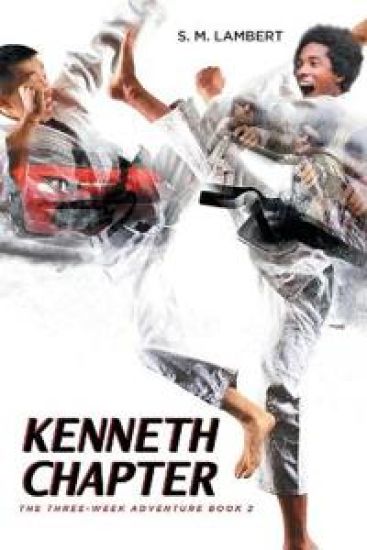
In the quiet, affluent neighborhood of Atherton, California, Charles Gill Jr., a sixteen-year-old teenager lived a comfortable life with his father until his attraction to a beautiful girl from the wrong side of the tracks led to an act of disobedience, which caused his life to spiral out of control.Now, after making one bad decision after another, can his two best friends help to save him from himself, or will his mistakes drag them all down into a set of circumstances that they will all regret for the rest of their lives?
Kenneth Goldsmith's Recent Works on Paper is the first critical book devoted to Kenneth Goldsmith, the acclaimed conceptual poet, pedagogue, and provocateur. The book’s focus is on Capital, Wasting Time on the Internet, Against Translation, and Theory, all published after Goldsmith's controversial reading of a poem based on the Michael Brown autopsy report at Brown University in March 2015. These four books address issues of historiography, translation, pedagogy, authorship, and celebrity culture. Each book serves a retrospective function for an author who is, mid-career, taking stock of his considerable impact on U.S. (and world) poetics at the very moment when critics are challenging the ethics of his aesthetic judgement in the wake of the controversy surrounding “The Body of Michael Brown.” The author focuses on how Goldsmith stages (and, in some cases, transforms) his metamorphic identity as a post-humanist information manager. His performance in these four books contests the current image of him among many critics and fellow poets as one of Hillary Clinton’s “basket of deplorables” who displayed extremely poor judgement while contributing to a culture of racial insensitivity by performing “The Body of Michael Brown."
Kenneth Grahame ( 8 March 1859 - 6 July 1932) was a Scottish writer, most famous for The Wind in the Willows (1908), one of the classics of children's literature. He also wrote The Reluctant Dragon. Both books were later adapted for stage and film, of which A.A. Milne's Toad of Toad Hall was the first. The Disney films, The Adventures of Ichabod and Mr. Toad and The Reluctant Dragon, have become the best known adaptations. Early life: Kenneth Grahame was born on 8 March 1859 in Edinburgh, Scotland. When he was a little more than a year old, his father, an advocate, received an appointment as sheriff-substitute in Argyllshire at Inveraray on Loch Fyne. Kenneth loved the sea and was happy there, but when he was five, his mother died of puerperal fever, 1] and his father, who had a drinking problem, gave over care of Kenneth, his brother Willie, his sister Helen and the new baby Roland to Granny Ingles, the children's grandmother, in Cookham Dean in the village of Cookham in Berkshire. There the children lived in a spacious, if dilapidated, home, The Mount, on spacious grounds in idyllic surroundings, and were introduced to the riverside and boating by their uncle, David Ingles, curate at Cookham Dean church. This ambiance, particularly Quarry Wood and the River Thames, is believed, by Peter Green, his biographer, to have inspired the setting for The Wind in the Willows. He was an outstanding pupil at St Edward's School in Oxford. During his early years at St Edwards, a sports regimen had not been established and the boys had freedom to explore the old city with its quaint shops, historic buildings, and cobblestone streets, St Giles' Fair, the upper reaches of the Thames, and the nearby countryside. Death: Grahame died in Pangbourne, Berkshire, in 1932. He is buried in Holywell Cemetery, Oxford. Grahame's cousin Anthony Hope, also a successful author, wrote his epitaph, which reads: "To the beautiful memory of Kenneth Grahame, husband of Elspeth and father of Alastair, who passed the river on the 6th of July, 1932, leaving childhood and literature through him the more blest for all time.
This biography examines the life of a most unusual twentieth-century evangelical, Kenneth L. ""Ken"" Pike (1912-2000), who served with the Wycliffe Bible Translators and the Summer Institute of Linguistics. Pike began his missionary career as a Bible translator, but he went on to become a world-class linguist who made his mark on the science of linguistics and the study of indigenous languages around the world. Known among linguists and anthropologists for his theoretical contributions, this volume seeks to bring Pike to a wider audience by illuminating his life as a key evangelical figure, one who often broke with conventional evangelical constraints to pursue the life of the mind as a Christian intellectual and scholar. Here is a story of how one evangelical Christian man served the global church, the scientific community, and the world's indigenous peoples with his entire heart, soul, and mind.
This biography examines the life of a most unusual twentieth-century evangelical, Kenneth L. ""Ken"" Pike (1912-2000), who served with the Wycliffe Bible Translators and the Summer Institute of Linguistics. Pike began his missionary career as a Bible translator, but he went on to become a world-class linguist who made his mark on the science of linguistics and the study of indigenous languages around the world. Known among linguists and anthropologists for his theoretical contributions, this volume seeks to bring Pike to a wider audience by illuminating his life as a key evangelical figure, one who often broke with conventional evangelical constraints to pursue the life of the mind as a Christian intellectual and scholar. Here is a story of how one evangelical Christian man served the global church, the scientific community, and the world's indigenous peoples with his entire heart, soul, and mind.
This is the story of the life, professional achievements and personal background, challenges and achievements of Wales’s leading historian. During his long career, Kenneth O. Morgan has been a prolific writer and, through his pioneering work, has become a leading authority on Welsh History, British History and Labour History. This autobiography also details Morgan’s often entertaining and unconventional personal experiences, and the eminent people he has met along the way – from his work in television, radio and the press as election commentator and book reviewer, to his involvement in the Labour Party from the late 1950s onwards and the close relations he developed with such Labour leaders as James Callaghan, Michael Foot, Douglas Jay and Neil Kinnock. In addition to being a respected author, Morgan has held the position of University Vice-Chancellor in Wales, is an active Labour peer, and continues to lecture at universities around the world – all achieved while juggling his life as a husband and father. In this revealing memoir, published in the year of his eightieth birthday, Morgan reflects on marriage and bereavement, on re-marriage, parenthood, friendship, religion and morality, his reactions to the historical changes he has witnessed, from attending a village school in rural Wales and wartime air-raids, through school in Hampstead and study in Oxford University and in Wales, down to entry into the House of Lords. Despite past traumas, this memoir still conveys invigoratingly a senior scholar’s idealism, abiding sense of optimism and belief in progress. Contents. List of Illustrations Foreword Chapter 1 A Divided Consciousness Chapter 2 Education, Education, Education Chapter 3 History-Making: A Welsh Historian Chapter 4 History-Making: A British Historian Chapter 5 History-Making; A Labour Historian Chapter 6 History-Making: A Contemporary Historian Chapter 7: History-Making: A Biographer Chapter 8: Experiences: The House of Lords Chapter 9: Experiences: Travelling Chapter 10: Experiences: Old and New Labour Chapter 11 My History
'Affable, invisible... the man with a brilliant future behind him.' Thus Varsity magazine appraised Kenneth Clarke's term as President of the Cambridge Union in the summer of 1963. Dominated by his opposition to the admission of women students to the Union, Clarke's Presidency had been less than distinguished. But Varsity, like so many commentators throughout Clarke's political career, seriously underestimated a politician who, three decades later, has emerged as a strong man within a weak Conservative administration, often tipped as a possible successor to John Major should the bailiffs be summoned to Number Ten.Clarke, as Andy McSmith explains in this fast-paced and highly readable biography, is above all a survivor who has been a government minister since 1979. Despite his reputation as the 'thinking man's lager lout', Clarke is an old-fashioned 1960s One-Nation Tory who played the tough guy with considerable adroitness in order to survive under Thatcher's hard-line administration. Displaying the same joviality which has seen him sign up for both the Campaign for Social Democracy and the Conservative Club on arrival at Cambridge, Clarke frankly admitted in the 1970s that it was only the arithmetic of Britain's first-past-the-post election system which kept him in the same party as the British nationalists of the Tory right. His pragmatism served him well as he progressed from being the youngest high-flier in the Heath government to the Minister responsible for introducing the highly controversial 'internal market' in the NHS under Thatcher, and now to the happy position of Chancellor of the Exchequer with an economy recovering from recession.Clarke's presence at the heart of the Tory government demonstrates that the mix of free-market liberalism and British nationalism to which Mrs Thatcher gave her name never really took root in the Conservative government. Right-wing Tory rebels who plead that the EC is destroying Britain as a nation-state, or free-market ideologues who want to privitize whatever remains of the welfare state, find Kenneth Clarke an obstacle to their ambitions. From Clarke's point of view, social instability and trade barriers are bad for business. The rise and rise of this most flexible of politicians, according to Andy McSmith's engaging account, may not be enough to stop the cracks in a Tory Party now beyond repair.
Of Kenneth E Hagin, Oral Roberts said‘From my heart I want to say D.R Kenneth Hagin is one of the best friends I have ever known---. A mighty man of God. No one in my estimation surpasses Dr Hagin’s ministry whose anointing has reached deeply into the lives of more young lives and more souls. When I am with him or listening to him on the radio or television or in person, I feel like I am in the presence of a Prophet. His ministry of word of knowledge, discernment and gift of faith….. was unsurpassed in our generation.’AT LAST THE FIRST FULL BOOK LENGTH BIOGRAPHY OF THIS MOUNTAIN MOVING GIANT OF FAITH.The book charts his life journey from the rugged paths of McKinney, Texas, right through the eventful William Branham -led Healing Revival up to his position in the forefront of the Word of Faith Movement.Pastor Nash David lives in Leeds with his wife Jane, and is the founding Pastor of The Household of Faith Church.
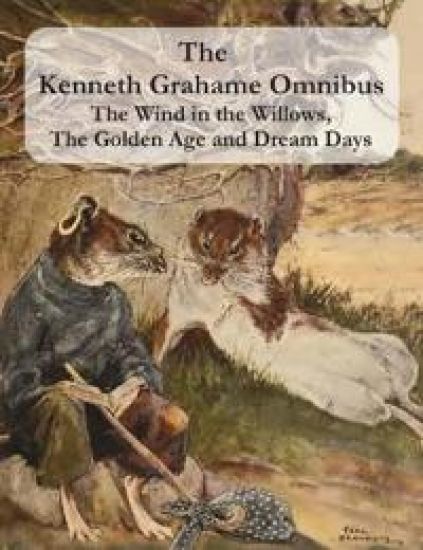
Kenneth Grahame captured the imagination of the English speaking world with his books in the early 1900s. Later "The Wind in the Willows" and "The Reluctant Dragon" were made into Disney movies. This collection contains "The Wind in the Willows", "The Golden Age" and "Dream Days" (including "The Reluctant Dragon"). "If there is a man or woman living who cannot read this book with delight, to him or her we offer our pity and compassion." (The National Observer, of "Dream Days".)