Kirjojen hintavertailu. Mukana 11 474 087 kirjaa ja 12 kauppaa.

Kirjahaku

Etsi kirjoja tekijän nimen, kirjan nimen tai ISBN:n perusteella.

1000 tulosta hakusanalla Kenneth O. Morgan

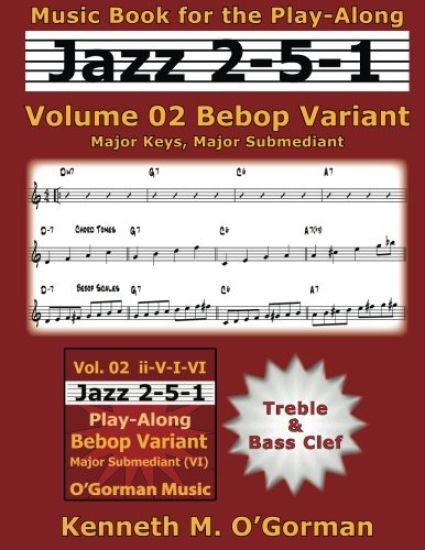
Jazz 2-5-1 Volume 02 Bebop Variant: Major Keys, Major Submediant

Jazz 2-5-1 Volume 02 Bebop Variant: Major Keys, Major Submediant

Kenneth M. O'Gorman

Createspace Independent Publishing Platform
2015
nidottu
The focus of this book and associated practice media is to learn and enhance yourjazz improvisation skills over a standard 2-5-1 in Major keys, followed by a Major submediantin the form of a Dominant 7th. This represents another standard progression you should knowbecause it is used extensively in jazz.We are going to study this progression as you would likely encounter it in songs:: ii7 V7 I VI7: This is a practice tool for musicians who wish to improve their jazz improvisation skills. It isdesigned as a media "set", and you will enjoy maximum benefit if you use both elements of theset:1. Instructional book (this item),2. Corresponding practice tracks, available from your favorite online music store.
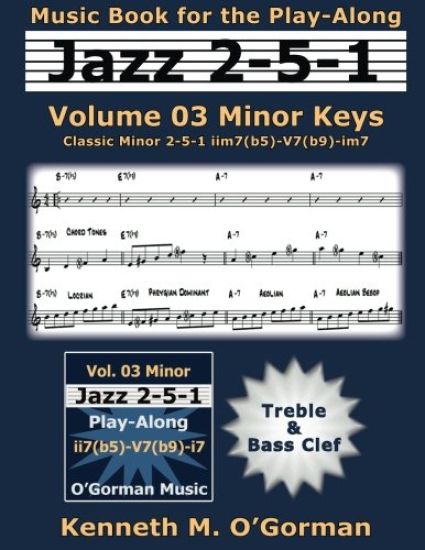
Jazz 2-5-1 Volume 03 Minor Keys: Classic Minor 2-5-1 iim7(b5)-V7(b9)-im7

Jazz 2-5-1 Volume 03 Minor Keys: Classic Minor 2-5-1 iim7(b5)-V7(b9)-im7

Kenneth M. O'Gorman

Createspace Independent Publishing Platform
2015
nidottu
The focus of this book and associated practice media is to learn and enhance yourjazz improvisation skills over a standard minor 2-5-1 in any key. This is important becausemany jazz favorites make heavy use of this chord progression and its variations.We are going to study this progression as you would likely encounter it in songs:: iim7(b5) V7(b9) i7 i7: This is a practice tool for musicians who wish to improve their jazz improvisation skills. It isdesigned as a media "set", and you will enjoy maximum benefit if you use both elements of theset:1. Instructional book (this item),2. Corresponding practice tracks, available from your favorite online music store.
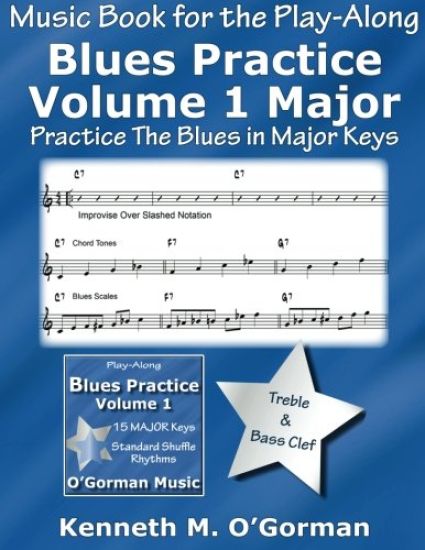
Blues Practice Volume 1 Major: Practice The Blues in Major Keys

Blues Practice Volume 1 Major: Practice The Blues in Major Keys

Kenneth M. O'Gorman

Createspace Independent Publishing Platform
2015
nidottu
If you wish to be proficient at "The Blues", this chord progression is a must know This bookand associated practice media will help you learn and enhance your improvisation skills with"The Blues".There are many variations of this progression, but Major blues almost always means startingthe song and ending the song on the Tonic dominant 7th chord, which has a major base triad.We are going to study this progression as you might encounter it in songs:: I7 I7 I7 I7 IV7 IV7 I7 I7 V7 IV7 I7 VI7: This is a practice tool for musicians who wish to improve their improvisation skills with TheBlues. It is designed as a media "set", and you will enjoy maximum benefit if you use bothelements of the set:1. Instructional book (this item)2. Corresponding practice tracks, available from your favorite online music storeIn this volume (Vol. 01) the focus is on: Blues in Major keys (as opposed to minor keys), Medium Shuffle Beat (as opposed to a straight or swing beat).The Blues usually implies a standard 12-bar, 3-chord blues progression consisting of dominant7th chords. This is also called Major Blues (as opposed to minor blues) because the keysignatures reflect Major
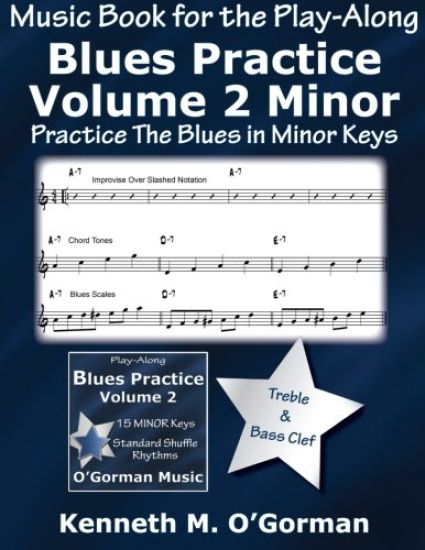
Blues Practice Volume 2 Minor: Practice The Blues in Minor Keys

Blues Practice Volume 2 Minor: Practice The Blues in Minor Keys

Kenneth M. O'Gorman

Createspace Independent Publishing Platform
2015
nidottu
If you wish to be proficient at "The Minor Blues", this chord progression is a must know Thisbook and associated practice media will help you learn and enhance your improvisation skillswith "The Minor Blues".There are many variations of this progression, but Minor blues almost always means startingthe song and ending the song on a minor 7th chord, which has a minor base triad. We aregoing to study this progression as you might encounter it in songs:: i7 i7 i7 i7 iv7 iv7 i7 i7 v7 iv7 i7 v7: This is a practice tool for musicians who wish to improve their improvisation skills with TheBlues. It is designed as a media "set", and you will enjoy maximum benefit if you use bothelements of the set:1. Instructional book (this item)2. Corresponding practice tracks, available from your favorite online music store.In this volume (Vol. 02) the focus is on: Blues in Minor keys (as opposed to Major keys), Medium Shuffle Beat (as opposed to a straight or swing beat).The Blues usually implies a standard 12-bar, 3-chord blues progression consisting of minor 7thchords. This is also called "Minor Blues" (as opposed to Major Blues) because the keysignatures reflect Minor keys, and also because the basic triad of the tonic chord is minor.
Flora of the Four Corners Region: Vascular Plants of the San Juan River Drainage: Arizona, Colorado, New Mexico, and Utah
This massive contribution to floristic knowledge of western North America describes the 2,303 species, subspecies, and varieties of vascular plants currently known to grow spontaneously in the drainage basin of the San Juan River, a major tributary of the Colorado River. It includes parts of four states in the southwestern United States (Arizona, Colorado, New Mexico, and Utah), one of the regions of North America with the highest rate of plant endemicity. While rich in natural beauty and resources, the Four Corners region faces rapid development and population growth resulting in extensive habitat fragmentation and loss, erosion, and overuse. The need for a comprehensive flora of the region has never been more urgent.
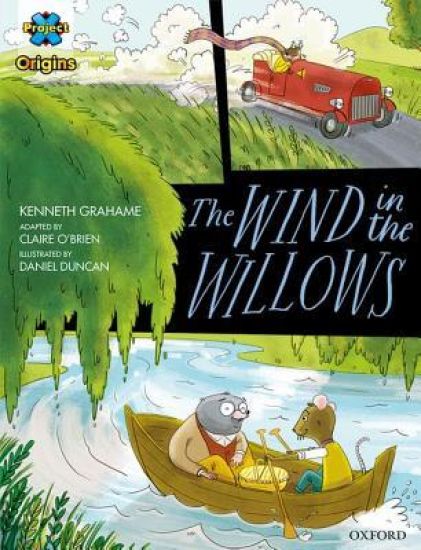
Project X Origins Graphic Texts: Grey Book Band, Oxford Level 14: The Wind in the Willows
Project X Origins Graphic Texts can help children to reach higher standards in comprehension. This graphic retelling of The Wind in the Willows brings a fresh look to a well-loved classic. Life on the river bank is peaceful for Mole, Ratty and Badger until their friend Toad gets a motor car! Can Toad's friends convince him to stay out of trouble? This book also contains notes on the inside front and back covers with advice on supporting older children with their reading, ideas for follow-up activities and higher-level comprehension questions.
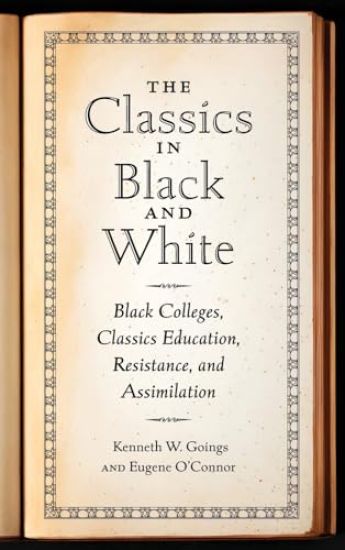
The Classics in Black and White

The Classics in Black and White

Kenneth W. Goings; Eugene O'Connor

UNIVERSITY OF GEORGIA PRESS
2024
sidottu
Following emancipation, African Americans continued their quest for an education by constructing schools and colleges for Black students, mainly in the U.S. South, to acquire the tools of literacy, but beyond this, to enroll in courses in the Greek and Latin classics, then the major curriculum at American liberal arts colleges and universities. Classically trained African Americans from the time of the early U.S. republic had made a link between North Africa and the classical world; therefore, from almost the beginning of their quest for a formal education, many African Americans believed that the classics were their rightful legacy. The Classics in Black and White is based extensively on the study of course catalogs of colleges founded for Black people after the Civil War by Black churches, largely White missionary societies and White philanthropic organizations. Kenneth W. Goings and Eugene O’Connor uncover the full extent of the colleges’ classics curriculums and showcase the careers of prominent African American classicists, male and female, and their ultimately unsuccessful struggle to protect the liberal arts from being replaced by Black conservatives and White power brokers with vocational instruction such as woodworking for men and domestic science for women. This move to eliminate classics was in large part motivated by the very success of the colleges’ classics programs. As Goings and O’Connor’s survey of Black colleges’ curriculums and texts reveals, the lessons they taught were about more than declensions and conjugations—they imparted the tools of self-formation and self-affirmation.
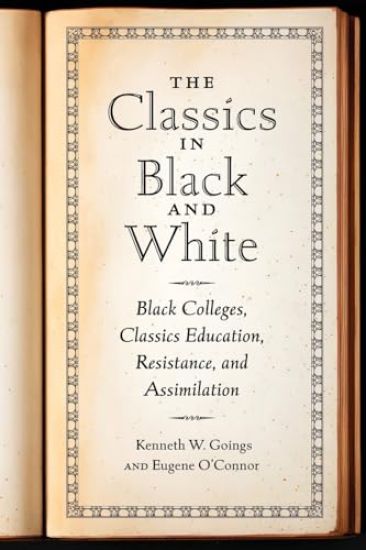
The Classics in Black and White

The Classics in Black and White

Kenneth W. Goings; Eugene O'Connor

UNIVERSITY OF GEORGIA PRESS
2024
pokkari
Following emancipation, African Americans continued their quest for an education by constructing schools and colleges for Black students, mainly in the U.S. South, to acquire the tools of literacy, but beyond this, to enroll in courses in the Greek and Latin classics, then the major curriculum at American liberal arts colleges and universities. Classically trained African Americans from the time of the early U.S. republic had made a link between North Africa and the classical world; therefore, from almost the beginning of their quest for a formal education, many African Americans believed that the classics were their rightful legacy. The Classics in Black and White is based extensively on the study of course catalogs of colleges founded for Black people after the Civil War by Black churches, largely White missionary societies and White philanthropic organizations. Kenneth W. Goings and Eugene O’Connor uncover the full extent of the colleges’ classics curriculums and showcase the careers of prominent African American classicists, male and female, and their ultimately unsuccessful struggle to protect the liberal arts from being replaced by Black conservatives and White power brokers with vocational instruction such as woodworking for men and domestic science for women. This move to eliminate classics was in large part motivated by the very success of the colleges’ classics programs. As Goings and O’Connor’s survey of Black colleges’ curriculums and texts reveals, the lessons they taught were about more than declensions and conjugations—they imparted the tools of self-formation and self-affirmation.