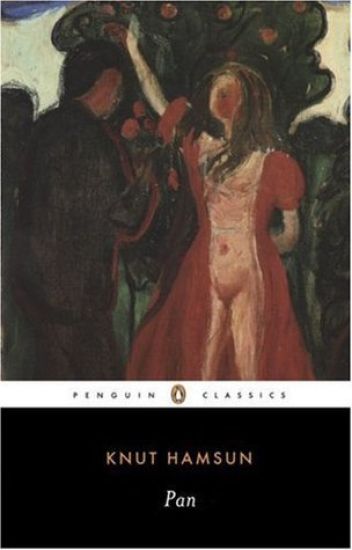
The Nobel Prize winner's lyrical and disturbing portrait of love and the dark recesses of the human psyche A Penguin Classic A lone hunter accompanied only by his faithful dog, Aesop, Thomas Glahn roams Norway's northernmost wilds. Living out of a rude hut at the edge of a vast forest, Glahn pursues his solitary existence, hunting and fishing, until the strange girl Edvarda comes into his life. Sverre Lyngstad's superb translation of Hamsun's 1894 novel restores the power and virtuosity of Hamsun's original and includes an illuminating introduction and explanatory notes. For more than seventy years, Penguin has been the leading publisher of classic literature in the English-speaking world. With more than 1,800 titles, Penguin Classics represents a global bookshelf of the best works throughout history and across genres and disciplines. Readers trust the series to provide authoritative texts enhanced by introductions and notes by distinguished scholars and contemporary authors, as well as up-to-date translations by award-winning translators.
The first complete English translation of the Nobel Prize-winner's literary masterpiece A Penguin Classic Mysteries is the story of Johan Nilsen Nagel, a mysterious stranger who suddenly turns up in a small Norwegian town one summer--and just as suddenly disappears. Nagel is a complete outsider, a sort of modern Christ treated in a spirit of near parody. He condemns the politics and thought of the age, brings comfort to the "insulted and injured," and gains the love of two women suggestive of the biblical Mary and Martha. But there is a sinister side of him: in his vest he carries a vial of prussic acid... The novel creates a powerful sense of Nagel's stream of thought, as he increasingly withdraws into the torture chamber of his own subconscious psyche. For more than seventy years, Penguin has been the leading publisher of classic literature in the English-speaking world. With more than 1,800 titles, Penguin Classics represents a global bookshelf of the best works throughout history and across genres and disciplines. Readers trust the series to provide authoritative texts enhanced by introductions and notes by distinguished scholars and contemporary authors, as well as up-to-date translations by award-winning translators.
The Nobel Prize winner's poetic, psychologically intense portrayal of love's predicament in a class-bound societyA Penguin Classic Set in a coastal village of late nineteenth-century Norway, Victoria follows two lovers whose yearnings are as powerful as the circumstances that conspire to thwart their romance. Johannes, a miller's son turned poet, finds inspiration for his writing in his passionate devotion to Victoria, a daughter of the impoverished lord of the manor, who feels constrained by family loyalty to accept the wealthy young man of her father's choice. Separated by class barriers and social pressure, the fated duo hurt and enthrall each other by turns as they move toward an emotional doom that neither will recognize until it is too late. For more than seventy years, Penguin has been the leading publisher of classic literature in the English-speaking world. With more than 1,800 titles, Penguin Classics represents a global bookshelf of the best works throughout history and across genres and disciplines. Readers trust the series to provide authoritative texts enhanced by introductions and notes by distinguished scholars and contemporary authors, as well as up-to-date translations by award-winning translators.
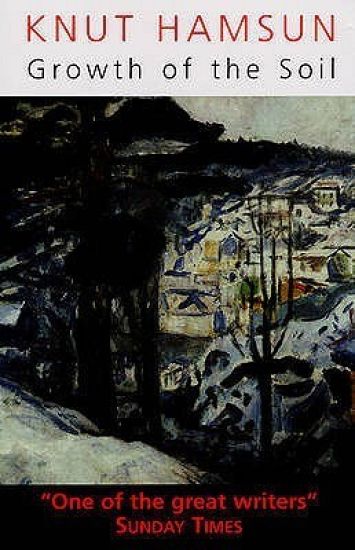
The epic novel of man and nature that won its author the Nobel Prize in Literature, in the first new English translation in more than ninety years A Penguin Classic When it was first published in 1917, Growth of the Soil was immediately recognized as a masterpiece. Ninety years later it remains a transporting literary experience. In the story of Isak, who leaves his village to clear a homestead and raise a family amid the untilled tracts of the Norwegian back country, Knut Hamsun evokes the elemental bond between humans and the land. Newly translated by the acclaimed Hamsun scholar Sverre Lyngstad, Hamsun's novel is a work of preternatural calm, stern beauty, and biblical power--and the crowning achievement of one of the greatest writers of the twentieth century. For more than seventy years, Penguin has been the leading publisher of classic literature in the English-speaking world. With more than 1,800 titles, Penguin Classics represents a global bookshelf of the best works throughout history and across genres and disciplines. Readers trust the series to provide authoritative texts enhanced by introductions and notes by distinguished scholars and contemporary authors, as well as up-to-date translations by award-winning translators.
'It was at the time when I was wandering around hungry in Kristiania, that strange city no one leaves before it has set its mark on them...' Hunger is the first-person story of a young man desperately trying to establish himself in the city as a writer, living in shabby lodgings where he can seldom afford to pay the rent, eating almost nothing, and engaging spasmodically and manically with landladies, eccentric elderly men, policemen, shopkeepers, pawnbrokers, and others on the way. He wanders around the streets, sits on benches trying to write, spends a night locked in a pitch-dark police cell, thinks, slides into remarkably inventive reveries, speculates on his mental health, his ethical comportment, his relation to the divinity, the topics he might write about. The traces of a consistent narrative logic are uncertain and blurred; the voice of the narrator keeps shifting between pragmatic appraisal of his situation, wild fantasies, manic outbursts, anger, and despair. This is a story that lies on the threshold of modernism, anticipating many of the dislocations that narrative will be subject to in the decades to come. This new translation seeks to restore the startling freshness and epidermal unease of Hamsun's breakthrough story of 1890. It remains faithful to the style and voice of the text, the shifts of tense, the indirect free style, and the constant changes of register as the inner monologue moves between poetic sensitivity, wild fantasies, manic outbursts, and hyperbolic emotion. Tore Rem's introduction provides an updated and fresh account of the genesis of Hunger, its book history and its reception. ABOUT THE SERIES: For over 100 years Oxford World's Classics has made available the widest range of literature from around the globe. Each affordable volume reflects Oxford's commitment to scholarship, providing the most accurate text plus a wealth of other valuable features, including expert introductions by leading authorities, helpful notes to clarify the text, up-to-date bibliographies for further study, and much more.
The pharmaceutical revolution that gathered pace in the 1930s delivered a plethora of almost magical new drugs such as penicillin, streptomycin, cortisone, and the birth control pill. This revolution grew from academic-business relationships in five countries: USA, Germany, Great Britain, Switzerland, and France. Many other countries tried and failed to replicate this success, yet a handful of Scandinavia companies made important breakthroughs in a narrow band of specialities. This is the story of how one Norwegian company-- Nyegaard & Co. --achieved international success from the 1970s onwards with a breakthrough product facilitating X-ray pictures of the soft tissues of the body. The company succeeded by harnessing research skills and creating scientific and business alliances abroad, building its own momentum step by step: the corporation as entrepreneur. It thereby broke with the conventional way a national medical ecosystem facilitated the crucial scientific progress. This is a story both of personal initiatives and great organizational transformations in several stages. In the 1950s, Nyegaard & Co. was a small hierarchical home market-oriented generics company. By the end of the 1990s, it had developed into a fairly large and multinational hierarchical company, preoccupied as much with shareholder value as scientific progress. It has also become a company that no longer had the same ability to innovate as before and therefore became merged into another one.
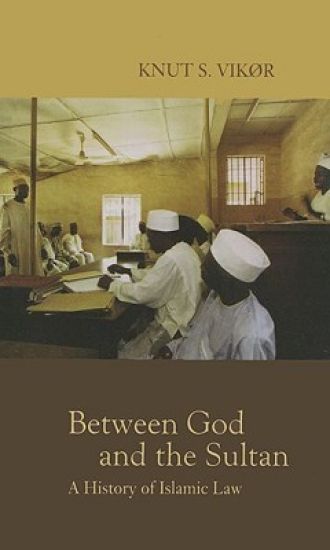
The contrast between religion and law has been continuous throughout Muslim history. Islamic law has always existed in a tension between these two forces: God, who gave the law, and the state--the sultan--representing society and implementing the law. This tension and dynamic have created a very particular history for the law--in how it was formulated and by whom, in its theoretical basis and its actual rules, and in how it was practiced in historical reality from the time of its formation until today. That is the main theme of this book. Knut S. Vikor introduces the development and practice of Islamic law to a wide readership: students, lawyers, and the growing number of those interested in Islamic civilization. He summarizes the main concepts of Islamic jurisprudence; discusses debates concerning the historicity of Islamic sources of dogma and the dating of early Islamic law; describes the classic practice of the law, in the formulation and elaboration of legal rules and practice in the courts; and sets out various substantive legal rules, on such vital matters as the family and economic activity.
This book finds the right balance between mathematics and economic examples, providing a text that is demanding in level and broad ranging in content, whilst remaining accessible and interesting to its target audience.
A miller's son, Johannes, falls in love with the daughter of a wealthy landowner, Victoria. The novel follows them through adolescence, as Johannes struggles with the social hierarchy and becomes a successful author, and Victoria is forced into marrying Otto, a lieutenant, to save the troubled family economy. A lyrical excursion into unconsummated love, love that is described memorably as 'Blood and Blossoms'.
This is the story of Isak, a worker of the land, with its roots in man's deepest myths about the struggle to cultivate the land and make it fertile. Sweeping and panoramic, the story moves at the pace of the passing seasons and with the growth of the crops on which the characters' lives depend. Hamsun's themes of individual freedom, and the fundamental human need to reconcile man with the natural world, speak even more resonantly than when the novel was first published.
Designed for the pastor and Bible teacher, the Zondervan Exegetical Commentary on the Old Testament features today's top Old Testament scholars and brings together commentary features rarely gathered together in one volume. With careful discourse analysis and interpretation of the Hebrew text, the authors trace the flow of argument in each Old Testament book, showing that how a biblical author says something is just as important as what they say.Commentary on each passage follows a clear structure to help readers grasp the flow and meaning of the text:The Main Idea of the Passage: A one- or two-sentence summary of the key ideas the biblical author seeks to communicate.Literary Context: A brief discussion of the relationship of the specific text to the book as a whole and to its place within the broader argument.Translation and Exegetical Outline: Commentators provide their own translations of each text, formatted to highlight its discourse structure and accompanied by a coherent outline that reflects the flow and argument of the text.Structure and Literary Form: An overview of the literary structure and rhetorical style adopted by the biblical author, highlighting how these features contribute to the communication of the main idea of the passage.Explanation of the Text: A detailed commentary on the passage, paying particular attention to how the biblical authors select and arrange their materials and how they work with words, phrases, and syntax to communicate their messages.Canonical and Practical Significance: The commentary on each unit will conclude by building bridges between the world of the biblical author and other biblical authors and with reflections on the contribution made by this unit to the development of broader issues in biblical theology--particularly on how later Old Testament and New Testament authors have adapted and reused the motifs in question. The discussion also includes brief reflections on the significance of the message of the passage for readers today.?The Zondervan Exegetical Commentary on the Old Testament series is the go-to resource for pastors and Bible teachers looking for deep but accessible study that equips them to connect the needs of Christians today with the biblical text.
Norway is by history and culture very much a Scandinavian nation with its own unique profile. This book analyzes the factors that have shaped the sociocultural fabric of Norwegian politics. One of the most important themes Heidar analyzes is the power of the periphery, both in social as well as geographic terms. In the geographic sense, Norway is a small nation, and although it has been able to remain economically and politically stable, it is situated on the European flank. It is therefore dependent upon and vulnerable to external economic and political developments. In critical periods of its history, Norway's size has made it an object rather than an initiator of change. In the social sense, Norway has existed as a ?periphery nation?. It is this multi-dimensional center-periphery situation that has been crucial in shaping institutional structures and practices. Another theme that Heidar explores is Norway's enduring egalitarian culture. This book focuses on the primacy of politics in Norway and the role played by the nineteenth-century peasant movement and the twentieth-century labor movement in shaping modern Norway. Today, political and cultural traditions are challenged by the force of globalization. Norway is defined as a stable, parliamentary, multiparty system with a social democratic tradition. It was named a Choice Outstanding Academic Book of 2001.
Unlike almost most other studies of neoliberal universities and academic capitalism this book ethnographically explores and interprets those transformations and their contradictions empirically in the everyday practices of students, faculty members, and administrators at two public universities: NTNU in Norway and UCLA in California.Differently situated in global political economies, both are ambitious, prosperous campuses. The book refl exively examines their disturbing disputes about quality, competition, and innovation. It argues that some academic, bureaucratic, and corporate university governance practices are both unsustainable and undermining what some university students and faculty already do well: circulate interdisciplinary knowledge and its making globally across the diasporic domains of academia, society, industry, and government while addressing the world’s immediate challenges: power, inequities, and sustainability.It shows the important, strategic work of domesticating, co- morphing, and meshworking at the faultlines of emerging knowledge. This book is for students, faculty, society members, and policy makers who want to engage more effectively with contemporary universities that increasingly serve as busy crossroads for sharing ideas and how to make them. It will be of interest to workers and scholars in the interdisciplinary fi elds of higher education studies, critical university studies, and critical public infrastructure studies, plus science, technology, and society studies.The Open Access version of this book, available at www.taylorfrancis.com, has been made available under a Creative Commons Attribution-Non Commercial-No Derivatives 4.0 license.
The Sa?khyayoga institution of Kapil Ma?h is a religious organisation with a small tradition of followers which emerged in the last decade of the nineteenth century and the first decades of the twentieth century in Bengal in India around the renunciant and yogin Hariharananda Ara?ya. This tradition developed during the same period in which modern yoga was born and forms a chapter in the expansion of yoga traditions in modern Hinduism.The book analyses the yoga teaching of Hariharananda Ara?ya (1869-1947) and the Kapil Ma?h tradition, its origin, history and contemporary manifestations, and this tradition’s connection to the expansion of yoga and the Yogasutra in modern Hinduism. The Sa?khyayoga of the Kapil Ma?h tradition is based on the Patañjalayogasastra, on a number of texts in Sanskrit and Bengali written by their gurus, and on the lifestyle of the renunciant yogin living isolated in a cave. The book investigates Hariharananda Ara?ya’s connection to pre-modern yoga traditions and the impact of modern production and transmission of knowledge on his interpretations of yoga. The book connects the Kapil Ma?h tradition to the nineteenth century transformations of Bengali religious culture of the educated upper class that led to the production of a new type of yogin. The book analyses Sa?khyayoga as a living tradition, its current teachings and practices, and looks at what Sa?khyayogins do and what Sa?khyayoga is as a yoga practice.A valuable contribution to recent and ongoing debates, this book will be of interest to academics in the fields of Religious Studies, Anthropology, Asian Studies, Indology, Indian philosophy, Hindu Studies and Yoga Studies.
In the twenty-first century technology has become global, and firms compete using knowledge and capital. The ‘traditional firm’ has a need for innovation and depends on efficient knowledge management to improve productivity.This book examines five firms that produce the same commodity, white chicken meat, in different parts of the world and under very different conditions. It brings to bear the expertise and international perspectives of the author team, utilizing theoretical discussions and case studies to address the question: How do local firms use knowledge to compete in an increasingly globalized world?This book will be of interest to any postgraduate student, researcher or policymaker hoping to achieve a firmer grasp of innovation and knowledge management: a recurring and highly pertinent theme in contemporary economics.
This book explores Hindu religion from a global perspective and investigates the presence of Hindu religious traditions and some of their diversity worldwide.Hindu traditions are on the move and are established in many new locations around the world, and old and new traditions are continuously changing and being invented and reinvented. The chapters of the book explore these processes and some of the many forms of Hinduism found around the world due to Hindu expansions and suggest different ways of understanding these transformations. The different chapters of the book present new case studies based on historical and ethnographic research that expand on the empirical material typically used to generalize about Hinduism in the world and emphasize diversity.A timely overview and analysis of Hinduism outside India, with a focus on the diversity of Hindu traditions and their contemporary transformation in a number of different geographical settings worldwide, this book will be of interest to students and scholars of Hinduism, South Asian religion and society, Asian religions, and migration and religion in the contemporary world.
This book explores Hindu religion from a global perspective and investigates the presence of Hindu religious traditions and some of their diversity worldwide.Hindu traditions are on the move and are established in many new locations around the world, and old and new traditions are continuously changing and being invented and reinvented. The chapters of the book explore these processes and some of the many forms of Hinduism found around the world due to Hindu expansions and suggest different ways of understanding these transformations. The different chapters of the book present new case studies based on historical and ethnographic research that expand on the empirical material typically used to generalize about Hinduism in the world and emphasize diversity.A timely overview and analysis of Hinduism outside India, with a focus on the diversity of Hindu traditions and their contemporary transformation in a number of different geographical settings worldwide, this book will be of interest to students and scholars of Hinduism, South Asian religion and society, Asian religions, and migration and religion in the contemporary world.
In this Norwegian saga of restlessness, Hamsun presents young Edevart, a headstrong boy ill at ease with books, but fiercely self-determined and eager to escape his poor village of Polden. He becomes a close friend of August, a man-orphan, rootless, who sings fantastic tales of a wondrous world. In their years of seafaring, peddling, and raucous-raising-sometimes together, sometimes separated-Edevart grows in understanding, becoming a cunning businessman, experiencing the exhilaration and devastation of love and learning to enjoy the freedom of his wandering lifestyle. Nobel prize winner Hamsun expertly weaves the clashing ideologies-the draw of a comfortable home and the excitement of adventure and the sea-with Edevart's own picaresque, as it drifts between restlessness and a peaceful happiness.