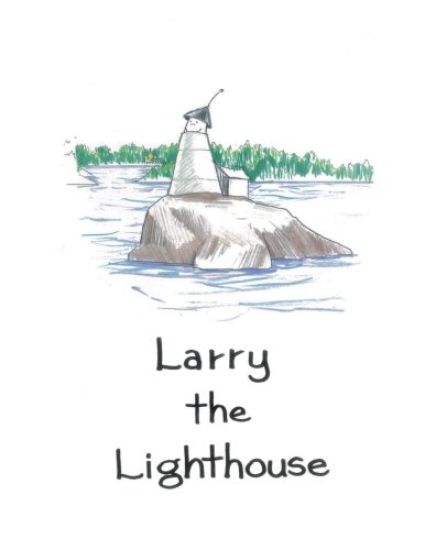
Larry the llama moves to the farm for his first job. There he'll be helping the farmer guard baby animals and frightening away any big bad animals that might show up. Larry is excited about this new job and hopes that the farmer will love him. One day, a loud thunderstorm comes through, and all the animals go into the barn, where it's safe and dry. After the storm, Larry finds that the wind has blown down a part of the fence. He decides to explore the area outside the fence. Then he discovers that Lily the lamb has followed him, and soon both of them are lost. How will the farmer find them? And even if they are found, will the farmer still love Larry? In this children's story, a llama whose job is guarding baby farm animals gets lost along with a little lamb, and together they learn an important lesson about caring for one another.
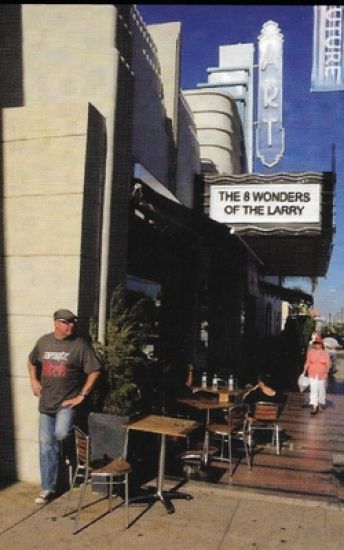
The 8 Wonders of The Larry is the autobiography, musings, and life lessons of an insightful, andunconventional man. From his conservative Lutheran, midwestern upbringing, to the gay barsand of San Antonio, to a trash bag ball gown in Long Beach, Larry experiences the world withcuriosity, exuberance, and honesty. Learning from both the good and the bad, Larryunflinchingly examines his highs an lows, and shares his lessons with the reader along the way.Reading the 8 Wonders of the Larry, one feels as if they are in conversation with an old friendover a cup of coffee...or a martini Larry Rosenwinkel's 8 Wonders of the Larry is both a joyfulromp through the world and a serious reflection on life's most important lessons.
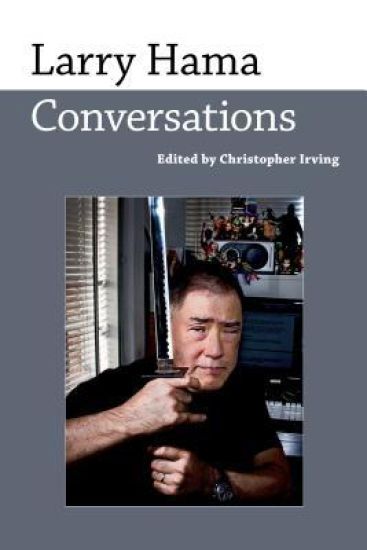
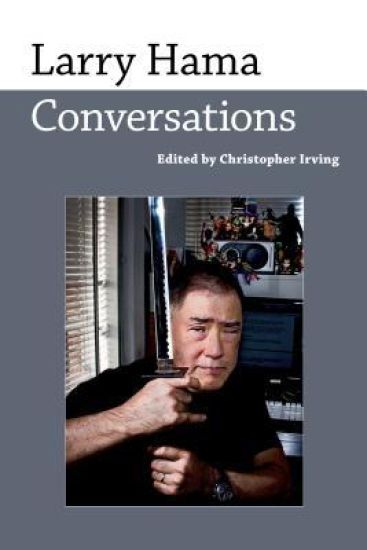
Larry Hama (b. 1949) is the writer and cartoonist who helped develop the 1980s G.I. Joe toyline and created a new generation of comic book fans from the tie-in comic book. Through many interviews with Hama, this volume reveals that G.I. Joe is far from his greatest feat as an artist. At different points in his life and career, Hama was mentored by comics' legends Bernard Krigstein, Wallace Wood, and Neal Adams. Though their impact left an impression on his work, Hama has created a unique brand of storytelling that crosses various media. For example, he devised the character Bucky O'Hare, a green rabbit in outer space that was made into a comic book, toy line, video game, and television cartoon—with each medium in mind.Hama also discusses his varied career, from working at Neal Adams and Dick Giordano's legendary Continuity to editing a humor magazine at Marvel, developing G.I. Joe, and enjoying a long run as writer of Wolverine.This volume also explores Hama's life outside of comics. He is an activist in the Asian American community, a musician, and an actor in film and stage. He has also appeared in minor roles on the television shows M*A*S*H and Saturday Night Live and on Broadway.Editor and historian Christopher Irving compiles six of his own interviews with Hama, some of which are unpublished, and compiled others that range through Hama's illustrious career. The first academic volume on the artist, this collection gives a snapshot of Hama's unique character-driven and visual approach to comics' storytelling.
Larry Hama (b. 1949) is the writer and cartoonist who helped develop the 1980s G.I. Joe toyline and created a new generation of comic book fans from the tie-in comic book. Through many interviews with Hama, this volume reveals that G.I. Joe is far from his greatest feat as an artist. At different points in his life and career, Hama was mentored by comics' legends Bernard Krigstein, Wallace Wood, and Neal Adams. Though their impact left an impression on his work, Hama has created a unique brand of storytelling that crosses various media. For example, he devised the character Bucky O'Hare, a green rabbit in outer space that was made into a comic book, toy line, video game, and television cartoon—with each medium in mind.Hama also discusses his varied career, from working at Neal Adams and Dick Giordano's legendary Continuity to editing a humor magazine at Marvel, developing G.I. Joe, and enjoying a long run as writer of Wolverine.This volume also explores Hama's life outside of comics. He is an activist in the Asian American community, a musician, and an actor in film and stage. He has also appeared in minor roles on the television shows M*A*S*H and Saturday Night Live and on Broadway.Editor and historian Christopher Irving compiles six of his own interviews with Hama, some of which are unpublished, and compiled others that range through Hama's illustrious career. The first academic volume on the artist, this collection gives a snapshot of Hama's unique character-driven and visual approach to comics' storytelling.
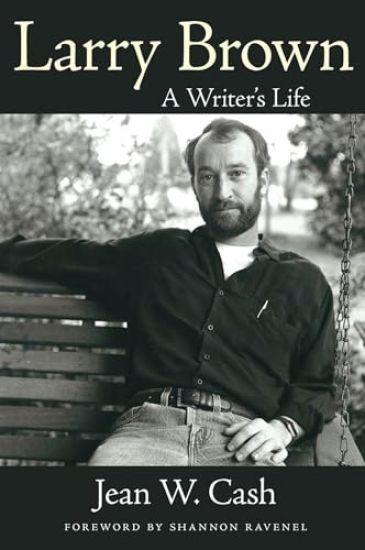
Larry Brown (1951–2004) was unique among writers who started their careers in the late twentieth century. Unlike most of them—his friends Clyde Edgerton, Jill McCorkle, Rick Bass, and Kaye Gibbons, among others—he was neither a product of a writing program, nor did he teach at one. In fact, he did not even attend college. His innate talent, his immersion in the life of north Mississippi, and his determination led him to national success. Drawing on excerpts from numerous letters and material from interviews with family members and friends, Larry Brown: A Writer's Life is the first biography of a landmark southern writer. Jean W. Cash explores the cultural milieu of Oxford, Mississippi, and the writers who influenced Brown, including William Faulkner, Flannery O'Connor, Harry Crews, and Cormac McCarthy. She covers Brown's history in Mississippi, the troubled family in which he grew up, and his boyhood in Tula and Yocona, Mississippi, and in Memphis, Tennessee. She relates stories from Brown's time in the Marines, his early married life—which included sixteen years as an Oxford fireman—and what he called his ""apprenticeship"" period, the eight years during which he was teaching himself to write publishable fiction. The book examines Brown's years as a writer: the stories and novels he wrote, his struggles to acclimate himself to the fame his writing brought him, and his many trips outside Yocona, where he spent the last thirty years of his life. The book concludes with a discussion of his posthumous fame, including the publication of A Miracle of Catfish, the novel he had nearly completed just before his death. Brown's cadre of fans will relish this comprehensive portrait of the man and his work.