Kirjojen hintavertailu. Mukana 11 342 296 kirjaa ja 12 kauppaa.

Kirjahaku

Etsi kirjoja tekijän nimen, kirjan nimen tai ISBN:n perusteella.

1000 tulosta hakusanalla Lee Server

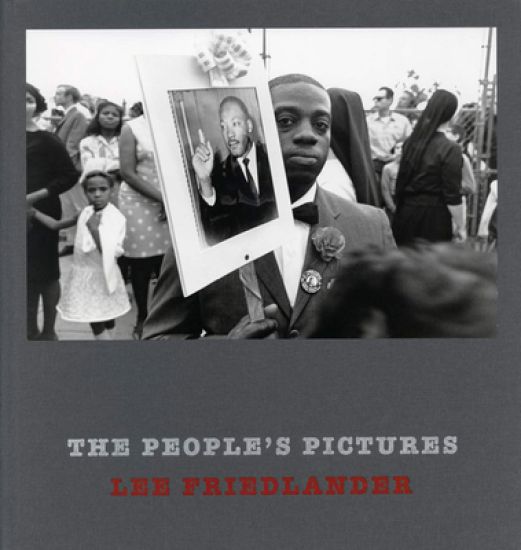
Lee Friedlander: The People's Pictures
The democracy of the image in the social landscape The saturation of our social landscape by photographs and photographers is apparent from any public point of view. Photography is arguably the most democratic of mediums, even more accessible today across culture and class than language. In some regards, this has been Lee Friedlander’s most enduring subject—the way that average citizens interact with the world by making pictures of it, as well as how those pictures and the pictures constructed for advertising or political purposes define the public space. In Lee Friedlander: The People’s Pictures we see photographs spanning six decades, most of the geographic United States and parts of Western Europe and Asia. These pictures are uniquely Friedlander photographs: as much about what’s in front of the camera as they are about the photographer’s lifelong redefining of the medium. Like his exploration of words, letters and numbers in the social landscape, these photographs of photography’s street presence seem inevitable to Friedlander’s vast visual orchestration of what our society looks like. But make no mistake, Friedlander’s photographs are not objective documents; they are intentional, authored, playful, intelligent creations made through his unprecedented collaboration with time and place. Lee Friedlander (born 1934) has published more than 50 monographs since 1969, and has exhibited extensively around the world for the past five decades, including a major retrospective at the Museum of Modern Art, New York, in 2005. Friedlander lives in New York.

Lee Friedlander: Real Estate

Lee Friedlander: Real Estate

Peter Kayafas

Eakins Press,N.Y.
2023
sidottu
A superbly assembled survey of Friedlander’s abiding fascination with the American social landscape across six decades This volume presents 155 photographs spanning 60 years of the artist’s exploration of the built environment in the American social landscape. Collectively these photographs add to one of the broadest and most nuanced visual explorations of America, and, individually, they are filled with the kind of intellectual humor and observation for which Friedlander has become celebrated. Along the way, of course, Friedlander has expanded our ideas of what constitutes real estate, just as he continues to compel us to reconsider how photography reveals essential aspects of our lives over time. The mirror that Lee Friedlander holds up to us is his mirror and everything reflected in it has the common traits of his way of seeing—each picture is definitively a Friedlander picture. Real Estate is an essential collection of one of Friedlander’s lifelong subjects, and takes its place alongside other classic titles of his quest to photograph the ever-changing social landscape: The People’s Pictures (2021), Signs (2019), The American Monument (1976/2017), Letters from the People (1993) and American Musicians (2001).
Lee Friedlander: Christmas

Lee Friedlander: Christmas

Peter Kayafas

Eakins Press,N.Y.
2025
sidottu
With a healthy sprinkle of plastic and tinsel, Friedlander's visions of a commercial, uniquely American Christmas evoke both irony and nostalgia Whether or not you celebrated Christmas at some point during the last 70 years, you have no doubt encountered many of the scenes shown here in Lee Friedlander's eclectic black-and-white documentation of the holiday season across America. From city sidewalks to cookie-cutter suburbs, Friedlander captures it all: main street store window displays; plastic nativities on snow-covered lawns; inflatable snowglobes and Santa Clauses; questionable St. Nicholas–themed lingerie; oversize or underwhelming Christmas trees; and houses so covered in string lights as to demand nothing short of a miracle from the local power grid. As in all of his work, Friedlander's images of Christmas reflect his own version of the holiday. Is Christmas in America a religious celebration? A commercial precept? A misunderstanding? An indulgent blasphemy? Or all of the above? The only certain thing is that December 25 has provided an opportunity for the people's photographer to hold up a mirror to a flawed, inventive, preoccupied and wonderful society. Lee Friedlander (born 1934) has published more than 60 monographs since 1969. He was represented alongside Diane Arbus and Garry Winogrand in the 1967 New Documents exhibition at the Museum of Modern Art, now understood as a landmark event in American documentary photography, and received his own retrospective at the same museum in 2005. He has lived and worked in New York since 1956.
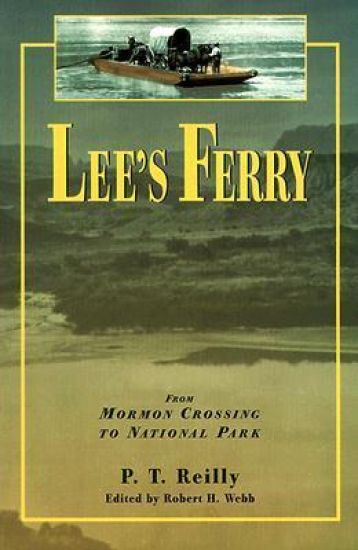
Lee's Ferry

Lee's Ferry

P. T. Reilly

Utah State University Press
1999
pokkari
The Colorado River and its deeply entrenched canyons create a lengthy barrier to travel in the interior West. Here and there, ancient Indian foot trails descend canyon walls and find access to the river, but one of the few places between California and Nevada where wheeled vehicles can approach it is at the mouth of the Pahreah River, between Glen Canyon and the river's steep drop toward Grand Canyon. Here, from the mid-19th until well into the 20th century, Lee's Ferry was a primary link between Utah and Arizona. Mormons trying to reach potential Indian converts and new lands for colonisation to the south first developed the site. John D. Lee and parts of his family, seeking an inconspicuous spot after the Mountain Meadows massacre, first took up residence at what they called Lonely Dell. In subsequent decades, many interesting and important western characters passed through this topographical and historical funnel, from John Wesley Powell to Buffalo Bill. As river exploration and adventure increased, the place became as important to those using the river-surveyors, miners, river runners-as to folks crossing it.In recognition of its importance, Lee's Ferry has been partially restored as a historic site in the national park system. P T Reilly, himself a legend on the river as boatman and chronicler, wrote the detailed and colourful history this place demanded, focusing on stories of the hodgepodge of people it attracted. He died before he finished reworking his massive narrative into book form, but Robert H. Webb, author of Grand Canyon: A Century of Change, completed that job and selected rare historical photos from the Reilly collection at Northern Arizona University to illustrate it. An epilogue by Richard Quartaroli provides a biographical sketch of P. T. Reilly.
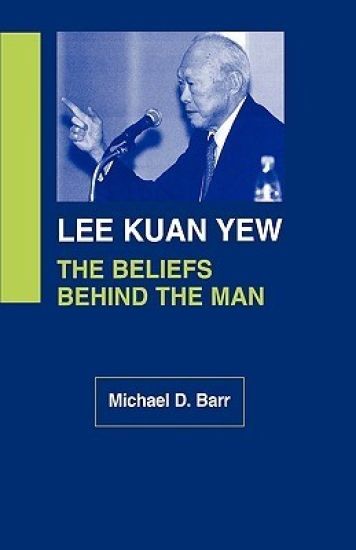
Lee Kuan Yew

Lee Kuan Yew

Michael D. Barr

Georgetown University Press
2000
sidottu
Lee Kuan Yew, Singapore's first prime minister (from 1959 to 1990), has been an international figure not only for establishing Singapore's political and economic stability but also for fostering economic development throughout Asia. He is particularly renowned as a principle architect of the 'Asian values' campaign of the 1990s, which sought to preserve the undemocratic traits of Asian culture while attending to the demands of a capitalist economy operating globally. A critical examination of Lee's life, career, and ideas, this is the first book to analyze the origins and substance of Lee's political thought. Augmenting established primary sources with his own interviews and correspondence with Lee's old associates, Barr shows how Lee has been influenced by British and Chinese racism and elitism, western progressivism, and even the cultural evolutionism of Arnold Toynbee. This reassessment of Lee's achievements and worldview sheds new light on a key figure on the world stage.
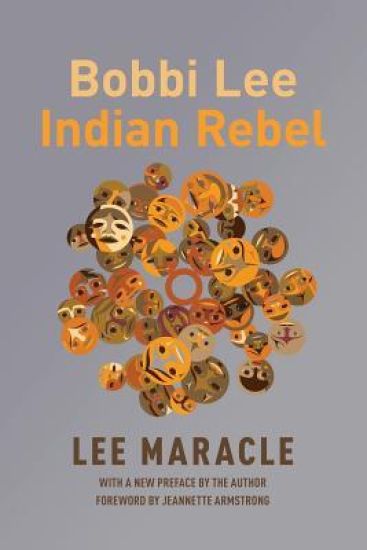
Bobbi Lee Indian Rebel

Bobbi Lee Indian Rebel

Lee Maracle

Canadian Scholars
2017
nidottu
Lee Maracle’s Bobbi Lee Indian Rebel tells the narrative of an Indigenous woman raised in North America who finds her strength despite the forces that challenge and oppress her. Grippingly honest, Lee’s autobiographical exploration of post-colonial tensions in Toronto circa 1960-1980 sheds light on the existing racist and sexist sentiments affecting Indigenous women. Reflective of the struggles Indigenous communities face today, this book continues to hold a place within contemporary Indigenous and women’s studies classrooms.New and updated, this edition features a preface by Lee Maracle.
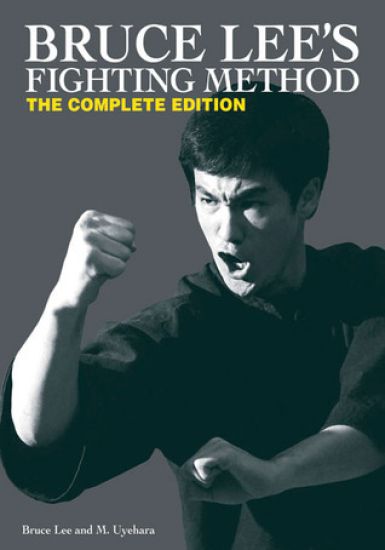
Bruce Lee's Fighting Method Complete Edition

Bruce Lee's Fighting Method Complete Edition

Lee B

Black Belt Communications
2008
sidottu
Vividly illustrating the techniques of a legendary innovator, this definitive examination explains how to survive attacks on the street, increase training awareness, and develop body movements. Originally compiled as a four-volume series, this revised edition breathes new life into a classic work with digitally-enhanced photography of jeet kune do founder Bruce Lee in his prime, a new chapter by former Lee student Ted Wong, and an introduction by Shannon Lee. This renowned compendium once again reclaims its place as an integral part of the Lee canon and a necessary addition for collectors and martial arts enthusiasts alike.
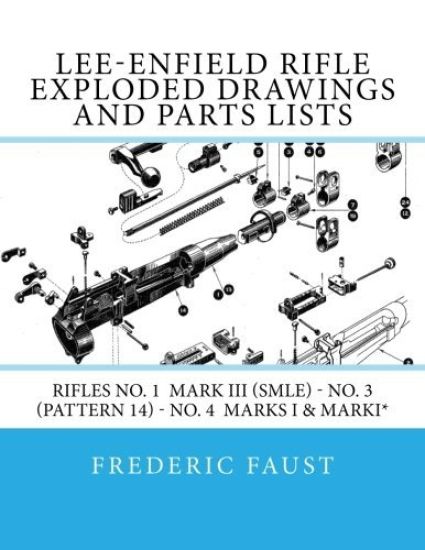
Lee-Enfield Rifle Exploded Drawings and Parts Lists

Lee-Enfield Rifle Exploded Drawings and Parts Lists

Frederic Faust

Middle Coast Publishing, Incorporated
2017
pokkari
Know your Rifle We recommend this book for anyone who has a Lee-Enfield rifle for the way it shows phantom parts drawings, lists each part and gives its Ministry of Defence part number. It is copiously illustrated. More particularly, this book covers the following rifles: Lee-Enfield Rifles No. 1 Mark III (the venerable SMLE)The Enfield No. 3 (Pattern 14)Rifle No. 4 Mark I and Mark I*Use this book to aid in disassembly and re-assembly and learn the proper nomenclature for a particular part.The No. 1 MARK III, affectionately known as the SMLE, was built at Royal Enfield in England and Lithgow in Australia.The Lee-Enfield Rifle Number 4 Mark I was built in England at a number of factories: Namely, the Royal Ordnance Factory, Fazakerley, the Royal Ordnance Factory, Maltby, and finally the Birmingham Small Arms Company an expedient wartime variation, the Lee-Enfield Rifle Number 4 Mark I* was built in Canada at the Long Branch Arsenal and in the United States of America, by Savage at Chicopee Falls, Massachusetts.Many military firearms aficionados consider Rifle No. 4s (all makes and marks) to be the best bolt action rifles fielded during World War II.This guide's diagrams are clear and informative. Copiously illustrated, phantom drawings of the various models of Lee-Enfield SMLE and the Pattern 14 Enfield show in great detail all assemblies and parts. Each part is identified by name and number.Besides the rifles proper, also illustrated are all of the necessary accessories: Bayonets, sling, and issue cleaning components, including the oil bottle, bore pull-through, and wire gauze.This collection of drawings and parts lists is highly recommended for anyone wanting a breakdown of the internal workings of their venerable rifle. It is beneficial for identifying missing parts when rebuilding a sporterized rifle.This book is printed in large format (8 X 10) for easier viewing of the schematic drawings.Click the Buy Now button at the top of this page to add this title to your Lee-Enfield library.Nota bene: This book does not cover the Lee-Enfield 2A rifle (7.62 mm NATO caliber), built at Ishapore, India.
Lee-Enfield Rifle No. 4: Phantom Parts Diagrams and Parts Listing

Lee-Enfield Rifle No. 4: Phantom Parts Diagrams and Parts Listing

Frederic Faust

Middle Coast Publishing, Incorporated
2017
nidottu
Know Your Rifle We recommend this book for anyone who has a Lee-Enfield rifle for the way it shows phantom parts drawings, lists each individual part and gives its Ministry of Defence part number. Copiously illustrated, it is especially helpful for identifying missing parts when rebuilding a sporterized rifle. The Lee-Enfield Rifle Number 4 Mark I* was built in Canada at the Long Branch Arsenal Many military firearms aficionados consider this old warhorse to be the best of all the Lee-Enfield variants fielded during the Second World War. Besides parts identification lists, detailing by illustration, descriptive part name and part number, for all parts of the Rifle, .303 Calibre, Lee -Enfield, No 4, Mark 1 *, this book also lists associated equipment including the bayonet, frog, action cover, wire gauze and pull-through and clearly shows the parts breakdown for each item of kit. Furthermore, parts are listed in top-down breakdown sequence showing major assemblies, sub-assemblies, and component parts. The relationship of each part to the next higher assembly is shown by indentation of the part name in the description column. Restated for emphasis: This book only covers the Canadian and Savage No. 4 Mark I* and not the British manufactured No. 4 Mark I and 2.
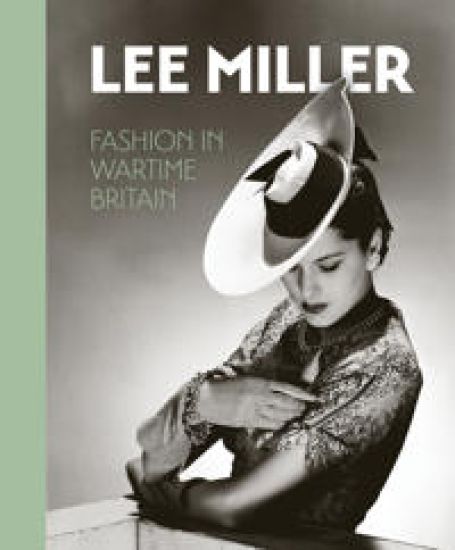
Lee Miller. Fashion in Wartime Britain

Lee Miller. Fashion in Wartime Britain

Lee Miller Archives Publishing
2021
sidottu
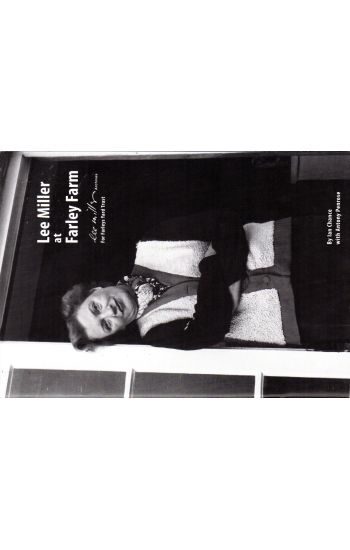
The Vogue Editor Audrey Withers wrote:'she [Lee Miller] has borne the whole weight of our studio production through the most difficult period in Brogue's [British Vogue's] history'.This was written in 1941 to challenge the oversight of the American Vogue 15 June 1941 edition feature on its photographers failing to recognise Lee Miller's contributions. Over 250 Fashion images by Lee appeared in Vogue from 1941 to 1944 and as a shoot can range from 12 to 100 shots the complete collection provides a wealth of material. 2021 is time to publish this beautiful book as the negatives and vintage contacts had remained unarchived until 2020 when the process was completed. Meaning these images have literally not be seen since they were first shot and published in the 1940's. The interest, quality and splendour of the images determined they deserved a high quality publication.
Lee Lawrie's Prairie Deco

Lee Lawrie's Prairie Deco

Gregory Paul Harm

Leelawriedotcom
2018
pokkari
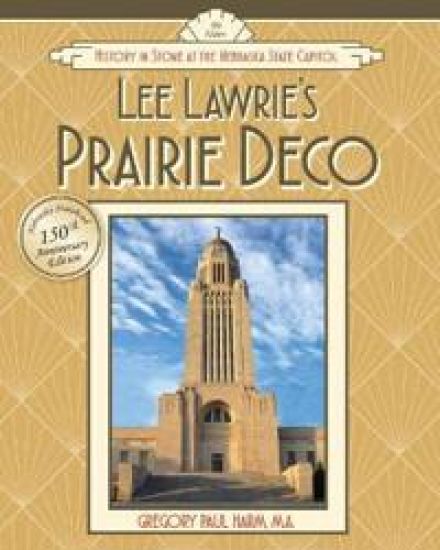
Just as a sculptor chips away each piece of stone to uncover a work of art, author Greg Harm has been chipping away at Lee Lawrie's catalog raisonne for the past two decades, going where no art scholar has gone before. From the Atlas in Rockefeller Center to the WWI Memorial in Pasadena, California, the humble "Dean of American Architectural Sculptors" has created countless unsigned works.This fourth edition, called the Nebraska Statehood's 150th Anniversary edition, of Lee Lawrie's Prairie Deco: History in Stone at the Nebraska State Capitol holds the most recent discoveries of Lawrie's works as well as breathtaking pictures of his largest commission where Art Deco meets the prairie and in which Democracy is illustrated-- the Nebraska State Capitol.