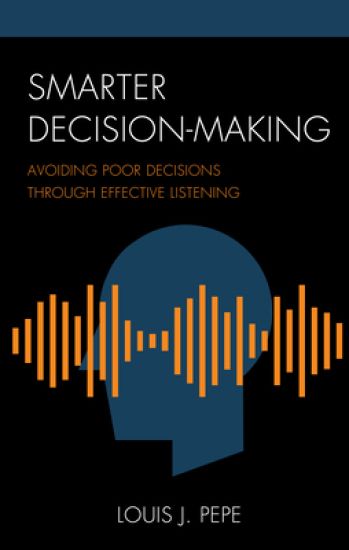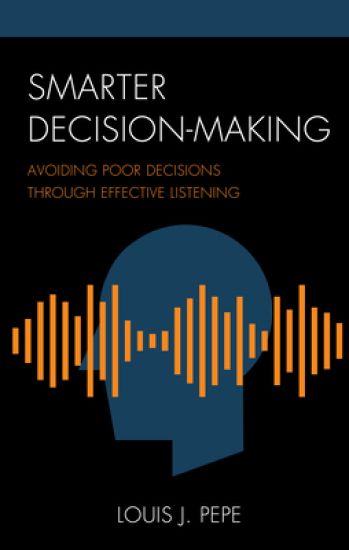
Avoiding poor decisions in any facet of life starts by truly listening for the meaning in the messages we receive. In today’s fast paced business environment: executives, managers and supervisors alike need to master the skill of effective listening to engage in smarter decision making. Smarter Decision-Making demonstrates the power of applied listening through focus, meaning and understanding context. The second part of the book gives depth to the importance of meaning. These practical insights are invaluable to any leader intent on achieving success and growth in their career.
This now revised and updated encyclopedia comprehensively covers abortion from the founding of the nation through 2007. Since the publication of the first edition, the Supreme Court has issued a number of important opinions on abortion, such as the approval of a federal ban on partial-birth abortion in Gonzales v. Carhart. Along with new entries on these events and other topics, the second edition is also enhanced by more than 40 photographs and more than 300 charts and graphs. The roles of the Supreme Court and other judicial and legislative bodies are covered in great detail. Entries focus on the "voting" position taken by every Supreme Court justice who has ever participated in an abortion decision; provide the actual abortion laws of each state; and summarize individual statutes to help nonspecialist readers understand the laws. Many entries focus on the social, religious, or moral arguments surrounding abortion and identify and describe the leading pro-life and pro-choice abortion organizations. There are entries summarizing the major lawful or unlawful activities that have occurred in support or protest of abortion. Medical issues related to abortion are fully covered: modern contraceptive devices, different methods of abortion, the gestational development of the human fetus, embryonic cloning, assisted reproductive technology, surrogacy, and embryonic/fetal stem cell research.
This updated encyclopedia provides ready information on all aspects of capital punishment in America. It details virtually every capital punishment decision rendered by the United States Supreme Court through 2006, including more than 40 cases decided since publication of the first edition. Entries are also provided for each Supreme Court Justice who has ever rendered a capital punishment opinion. Entries on jurisdictions cite present-day death penalty laws and judicial structure state by state, with synopses of common and unique features. Also included are entries on significant U.S. capital prosecutions; legal principles and procedures in capital cases; organizations that support and oppose capital punishment; capital punishment's impact on persons of African, Asian, Hispanic, and Native American descent, on women, and on foreign nationals; and the methods of execution. Essential facts are also provided on capital punishment in more than 200 other nations. A wealth of statistical data is found throughout.
DeFelice presents this intricate subject in an easy-to-follow, stepwise fashion: he reviews the fundamentals of electricity; transfers those principles to a biological context; and expands the discussion to encompass the subject's practical dimensions. Clear definitions and intuitive descriptions characterize the presentation, which is complemented by over 150 drawings and graphs. Mathematics is kept to the minimum necessary. The text covers both excitable and non-excitable membranes and includes the plasma membrane as well as intracellular membranes. A unique, `electronics-made-simple' appendix, designed specifically for biologists, treats the operational amplifiers used in patch clamp, and other appendices offer solutions to equations and examples that illustrate principles.
There is persuasive evidence suggesting we are on the brink of human-induced ecological disaster that could change life on Earth as we know it. There is also a general consensus among scientists about the pace and extent of global ecological decay, including a realisation that humans are central to causing the global socio-ecological crisis. This new epoch has been called the Anthropocene. Considering the many benefits that constitutional environmental protection holds out in domestic legal orders, it is likely that a constitutionalised form of global environmental law and governance would be better able to counter the myriad exigencies of the Anthropocene. This book seeks to answer this central question: from the perspective of the Anthropocene, what is environmental constitutionalism and how could it be extrapolated to formulate a global framework? In answering this question, this book offers the first systematic conceptual framework for global environmental constitutionalism in the epoch of the Anthropocene.