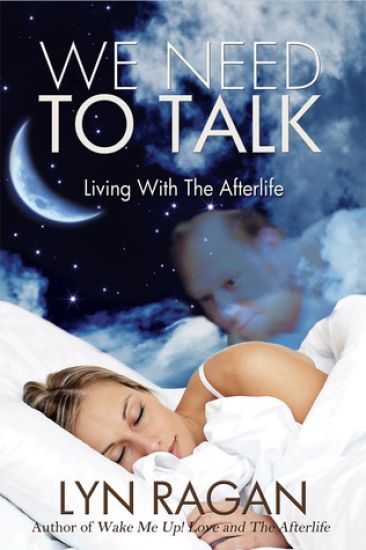
What would you do if someone you lost-- returned from the dead... Chip and Lyn are a very happy couple and deeply in love. As they talk on the phone one morning, Chip encounters a trespasser while preparing his semi for work, and is murdered. He finds himself in the Afterlife, unable to be seen or heard by the living.Needing his fianc to know he's still alive, Chip quickly learns to grab her attention with after-death communications (ADC's). While sharing his new life, divine love, and spectacular adventures, he takes Lyn to visit another world... the Afterlife. "I have never witnessed a closer relationship between two people in two separate dimensions. If you wonder if life goes on after we die, you will be convinced that it does after reading this book." Leslie Dutton, Psychic Medium "Love is a bond that survives even unthinkable tragedy. This story demonstrates how love is the bridge that supports and connects us to those departed." Robert Sharpe, Author of Joy Potential: Where You'd Least Expect It "If you've ever wondered if the Soul continues on after the physical body ceases, wonder no more." Michelle Griffin, Through The Veil Productions As the psychic mediums in this book point out, Chip is a perfect model for "proof of life" in the Afterworld. The evidence of his survival gives the reader hope that eternal love and ever lasting life do exist.Filled with grief, humor, and otherworldly love, We Need To Talk will make you question the nature of life after physical death.
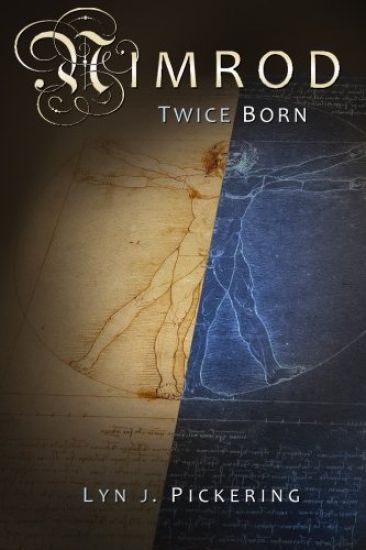
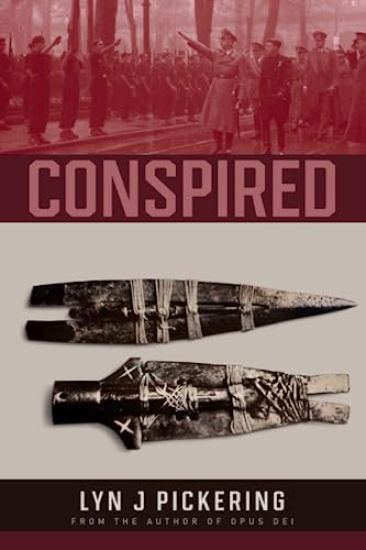
Nimrod Twice Born interweaves the dramatic events of Israel at the time of Jesus Christ with a World War II conspiracy thriller. The skills of a Magician, Simon Magus, win him the favour of the wife of Herod Antipas. The magician initiates a conspiracy so intricate and so far-seeing that it will only reach its climax in our time. Matthias von Ingolstadt leaves the horror of the trenches behind at the close of the World War I and returns to a Germany humiliated by the events that have left the country bankrupt and vulnerable. He meets and falls in love with Anna Lejkin, a Jew. What follows appears to solve their racial differences but ultimately leads to discovery, manipulation and disaster. A Jew in Frankfurt, Germany, Michael Segal is caught up in the events preceding the war. His friendship with Gabriele have far-reaching consequences for them both. Heinrich Himmler, the future SS leader of the Third Reich, forms a relationship with Ernst R hm a battle-hardened veteran of WWI who has a penchant for young men. He promises Himmler the one thing he most desires - power. Nimrod Twice Born is an intricate story of love, romance, witchcraft, power and intrigue. Lyn J Pickering employs history's trail of circumstantial evidence to combine both Christian conspiracy and historical fiction in one bizarre and riveting package.
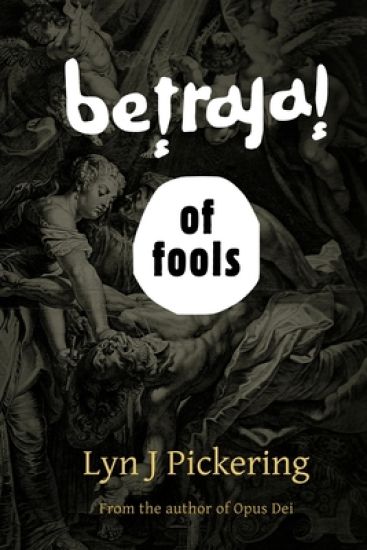
Betrayal of Fools is a drama played out in Spain and against the backdrop of war-torn Syria. Raif Ahmadi joins ISIS to help liberate his homeland, only to find that he is held captive to a terrorist organisation he despises. Into this world of hatred, hostility, and fear comes a single ray of light - the baker's daughter. Betrayal of Fools is much more than a love story. It is a revealer of secrets that lie hidden just beneath the surface of the present. What thread connects the Islamic State to an ancient goddess? What power links New York's One World Trade Centre, the Georgia Guidestones, and the Pyramids of Giza? The world is on the brink of a disturbing new reality. A collaboration of powerful Western figures is at work with Islam to bring every man, woman, and child under enslavement. Fear is already stalking the nations sending tentacles into the malls, sports arenas, nightclubs, and religious gatherings. We are caught in a web that is intended to lead to total control. Betrayal of Fools has the answers, and the answer to your future - the only Answer. But first, the Question - read on
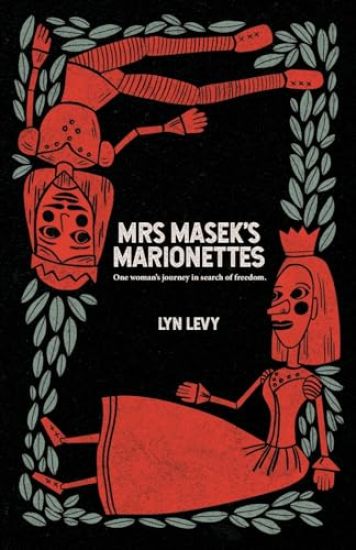
Iva Masek was born in Czechoslovakia in the short but tumultuous period of history between Nazi occupation and Soviet domination. Nurtured by her extended family and a system set on raising strong children, she grew up to become a national representative in gymnastics. While her sheltered upbringing prevented awareness of the corruption and brutality of the Communist regime, when she fell in love with a young man whose family have suffered deeply as a result of opposition to the regime, the truth became apparent. Following the 1968 Soviet invasion of her homeland, the couple were arrested for participating in an anti Communist demonstration, and their life plans were shattered. They made the decision to seek freedom and safety in another country. While determined to emigrate, they could not have realised what they stood to lose by leaving or foreseen the troubles which lay ahead. By sheer chance she lands in Australia, with no English, no money, and pregnant. The letters Iva wrote to her childhood friend in Czechoslovakia reveal a vibrant young woman, homesick and struggling to find her place in a strange new land. Having three children in as many years, the first premature and profoundly deaf, she endures trauma, grief and isolation. It is over a decade before she finally gains the opportunity to carve out an identity for herself and is able to share her skills, wisdom and passion, enriching the lives of thousands of young people. Just as she approached the time in which she might reap the rewards of her decades of dedication, she is confronted with yet another daunting challenge which would overturn her hopes for the future. She would need to summon the strength to adapt to her new circumstances and work to retain the spirit of joy and optimism that has underpinned her life.
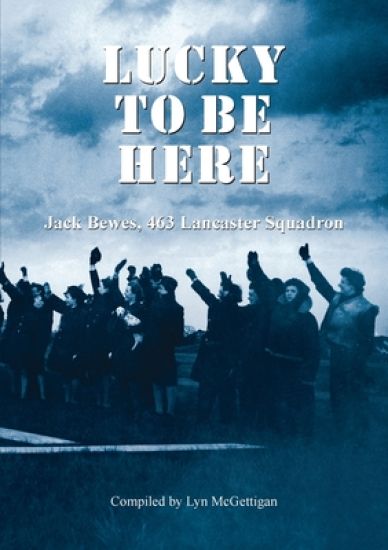
Jack Bewes' story of war is seen through the eyes of the mates who flew Lancasters together from England to Germany and France and saw their best friends killed. There was the mate they celebrated with at the pub or the dance who did not return for breakfast, the uncertainty about the mate who did not reply to the letters written to him.These carefree, fun-loving boys of about 22 used black humour and understatement to see them through their job of dropping bombs during the Second World War. They had to regard it as a job, a necessary one that involved the death of so many - enemies and friends.They came home as men - often misunderstood and labelled "war neurotics".Jack Bewes shows the human face of this war through his diaries, his logbooks and his social anecdotes, his humour, through newspaper clippings and photos.His daughter Lyn McGettigan honours and commemorates his service in this compilation of Jack's war-time papers.
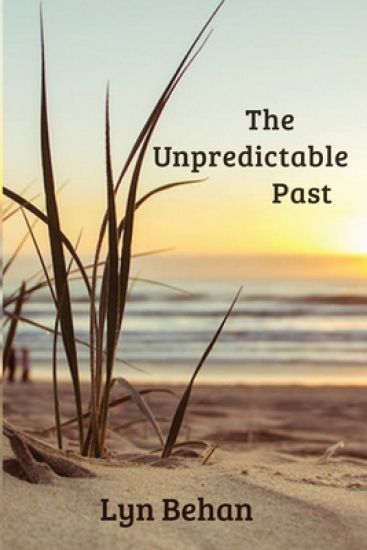
When a mysterious man, Will, moves into the house opposite hers, Elizabeth's quiet village life is turned upside down.Their friendship develops when Will helps with researching the involvement of one of her ancestors, Edward, in the last revolution in England.This friendship sets the neighbours gossiping and infuriates Elizabeth's daughter, who is convinced Will is a con man preying on her mother, thus raising doubts in Elizabeth's mind.Elizabeth and Will delve more into the past and attempt to solve the mystery surrounding the death of Edward's son, Edmund.How can Elizabeth find out the truth about Will? Is he who he seems?Does any of what he has let slip about his unpredictable past make sense?
Unknown to her, Sybilla is the carrier of an incurable, hereditary disease. A chance encounter with an older academic results in an unplanned pregnancy. She gives birth to a daughter, Jessica, who discovers that she is also a carrier of the disease. This results in the break up of her marriage with the loss of her home and job. The chance encounter with an abandoned baby leads Jessica to make decisions which lead to a tangled web of lies and deceptions.
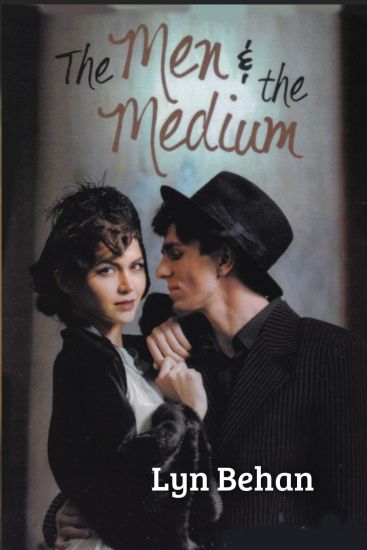
Lily Bancroft did not fit the mould of a conventional woman. She wanted to go to university and study to become a doctor; she also wanted to visit Egypt and pursue her fascination with that ancient civilisation. Sadly, she achieved neither but she did lead an extraordinary life. Born in the 1880's, she was determined to live her life exactly as she wished, though first she needed to escape the confines set by her parents and so married the first eligible man who came along. Endowed with a gift for healing and obsessed with the occult, she found success in healing others and holding seances where grieving Through three marriages and two world wars, she struggled to fulfil her dreams. One man stood by her as each of her marriages failed, hoping she would return his love.Based on a true story
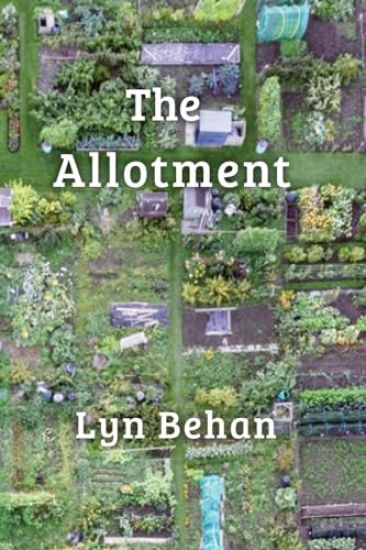
The Allotment' is a heartwarming story of an unlikely group of people brought together by their different circumstances. At the centre of this story is the Allotment itself, a place of healing, solace, and friendship, where even the most unlikely characters can find a sense of belonging. There's Neil, the army veteran battling PTSD, and little Brenda, the unlucky-in-love girl dealing with a cantankerous mother. Then Bill, who finds comfort in his plot after the passing of his wife. Dougie, the sweetly innocent Down Syndrome boy with a secret girlfriend and Amanda, the lonely, middle-aged warden, and finally Mary, the young widow who takes over her late husband's allotment despite having no gardening experience - each character offers a unique perspective to the story. With the help of the soil, they will all, most of them anyway, find healing and happiness in the Allotment.
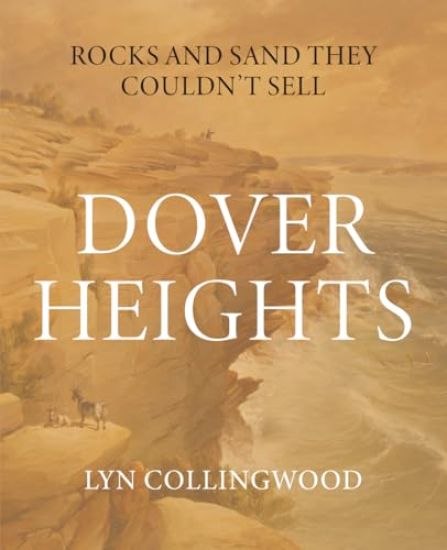
No history has been written of one of Sydney's most affluent suburbs. Bondi had its beach, Watsons Bay its dramatic entry to the harbour through the Heads, and Rose Bay its picturesque shoreline. In contrast, the neighbouring stretch of windswept scrub along the ocean cliffs had plenty of snakes but no natural attractions. It wasn't until the 1880s land boom that speculators switched attention to one of the city's remaining undeveloped areas. But buyers were few when Dover Heights was first subdivided. The biggest problem was getting there. There was no public transport. Real estate agents pushed the myth that the suburb would be serviced by trams running straight through it, but the line was never built. It was only with increased car ownership that settlement grew. Post Second World War immigrants boosted the population. This book traces the transformation of a terra incognita of desolation - its foothills covered by sandstorms in dry weather and stormwater when it rained - to today's patchwork of mansions, manicured lawns and swimming pools.
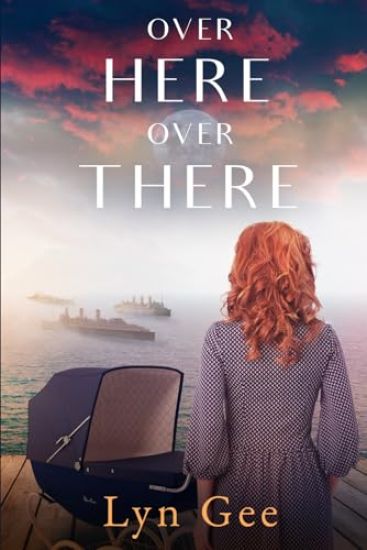
1939. Small town, Western Australia. As the world slides into war, Dorothy and Mick's marriage slides into deeper and deeper trouble. Even the welcome arrival of a child can't save the situation and eventually, with no options left, Dorothy takes her daughter and moves back in with her parents. For Mick, the failed marriage is a catalyst for him to escape a lonely exile by enlisting in the Australian Army. He finds the swell of patriotism sweeping the nation grants him equal plaudits of admiration for his courage and sympathy for his family situation. Dorothy, returned to her domineering Father's abode, is eyed by her neighbours. She is expected to be an exemplary mother, a dutiful daughter and step up to fulfil the requirements and demands of a country at war. She must be seen to be faultless. As Mick is sent overseas and into the hell of the North African Campaign, from the siege of Tobruk to the victory at El Alamein, Dorothy is seconded by the War Effort Manpower act to work within the Western Australian lunatic asylum. From the North African desert to Jungle Warfare training in readiness for the nightmares of New Guinea and Borneo, and from small town attitudes to the living torture of the asylum, the war years will test the resilience of all. For love, courage, despair or happiness have no regard for rank or status, and neither will circumstances grant wish-upon-a-star moments. What matters is your ability to cope with what life brings; be that over here, or over there. An Australian saga of love, war, family, friendships, darkness and lightand one woman's ability to survive it all.
Marcel Duchamp is considered to be the most influential artist of the current century. He said his readymades may be his most important contribution. This booklet explains the strategies he used to create them and shows them to be far more than randomly chosen objects. It explains Duchamp's background and linguistic nuance simply and clearly. A must read for anyone interested in art.
Marcel Duchamp's Fountain has been cited as the most important art 'work' of the Twentieth century. This book gives essential background to any understanding of Duchamp and his art. Duchamp's French language, literary precedents and historical context frame the Fountain and give new insights into it's meaning, or lack thereof...
Marcel Duchamp's older artist brothers Jacques Villon and Raymond Duchamp Villon chose to rename themselves after the cheeky mediaeval poet Francois Villon. They were key in the formation of Marcel's ideas, both in his agreement with them and reaction to their actions. Despite this there are to date no studies of Francois Villon's work and its relation to Marcel Duchamp. This in depth study reveals surprising correlations both in attitude and method. It discusses several readymades and explains Duchamp's use of French linguistic nuance clearly. Above all with his humor in mind.
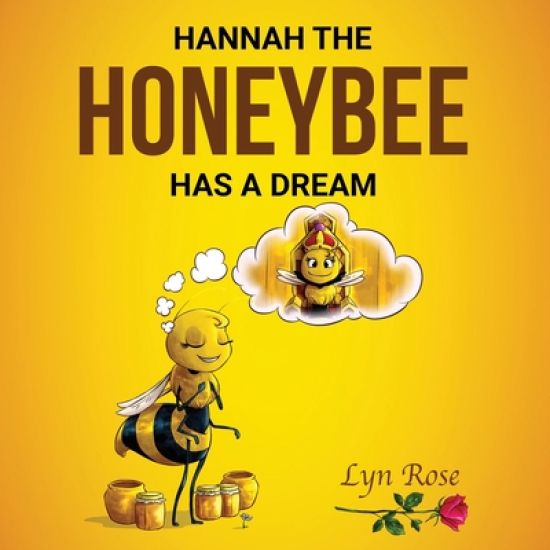
"Hannah the Honeybee Has a Dream" is the first picture book in the series "Hannah the Honeybee and Friends" about the life and adventures of Hannah and her best friend, Collette. Each book has a moral or life lesson within the story. This first book is about 'making a difference, ' with the aim to show my readers that we can all contribute to society in our own way. We don't have to be rich or famous or like anyone else to make a difference. It is more important to be ourselves.Writing about bees is intentional, with the aim of teaching my readers the importance of bees to our planet. The more research I did, the more I fell in love with these tiny, hardworking creatures I hope that the same love will develop in my young readers.Hannah, my main character, is always there if anyone needs a helping hand or an advocate. Her best friend, Collette, is never far from her side. Collette can be absent-minded, easily distracted, and oblivious to much of what goes on around her, but she is kind, loyal and friendly to everyone she meets which is why she is Hannah's closest friend. As worker bees, these two friends are busy from morning to night. They head out at first light to collect pollen and nectar. They build and protect the hive. Life couldn't be better. So what could have happened for Hannah to be so downcast today? Why would she want to eat on her own and head straight to bed? Collette certainly has no idea Thankfully, Hannah dreams again tonight and everything becomes clear to her. What a difference a day can make.
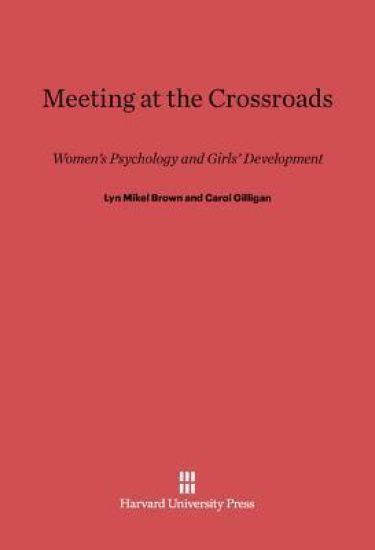
On the way to womanhood, what does a girl give up? For five years, Lyn Mikel Brown and Carol Gilligan, asking this question, listened to one hundred girls who were negotiating the rough terrain of adolescence. This book invites us to listen, too, and to hear in these girls' voices what is rarely spoken, often ignored, and generally misunderstood: how the passage out of girlhood is a journey into silence, disconnection, and dissembling, a troubled crossing that our culture has plotted with dead ends and detours. In the course of their research, Brown and Gilligan developed a Listener's Guide - a method of following the pathways of girls' thoughts and feelings, of distinguishing what girls are saying by the way they say it. We witness the struggle girls undergo as they enter adolescence only to find that what they feel and think and know can no longer be said directly. We see them at a cultural impasse, and listen as they make the painful, necessary adjustments, outspokenness giving way to circumspection, self-knowledge to uncertainty, authority to compliance. These changes mark the edge of adolescence as a watershed in women's psychological development, a time of wrenching disjunctions between body and psyche, voice and desire, self and relationship. Brown and Gilligan open their method to us and share their discoveries as they encourage girls at different ages to speak about themselves in conversation with women. They follow some of these girls over time, listening to changes in their distinct voices from one year to the next, addressing their successes and failures as they confront one barrier after another. This groundbreaking work offers major new insights into girls' development and women's psychology. But perhaps more importantly, it provides women with the means of meeting girls at the critical crossroads of adolescence, of harkening to the voices of girlhood and sustaining their sell-affirming notes.