Kirjojen hintavertailu. Mukana 11 717 486 kirjaa ja 12 kauppaa.

Kirjahaku

Etsi kirjoja tekijän nimen, kirjan nimen tai ISBN:n perusteella.

383 tulosta hakusanalla Manolo Link

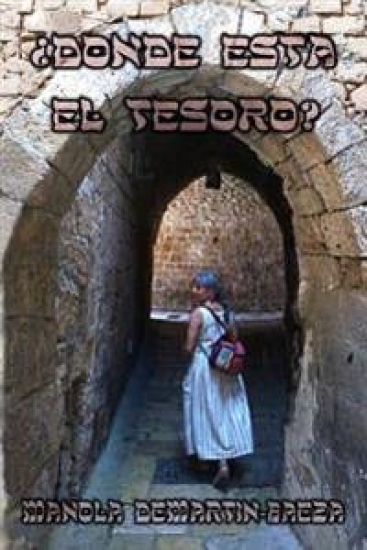
¿ Donde Esta el Tesoro ?

¿ Donde Esta el Tesoro ?

Manola Demartin-Baeza

Camara Chilena del Libro
2016
nidottu
Este libro contiene 52 cuentos, uno para cada semana del a o. Ellos se inspiran en los Evangelios.Una vez, George Matheson dijo: Lo que me gustar a que un d a dijeran de m , es lo siguiente: Era un hombre. No hizo milagros, pero habl con Cristo, y encamin mis pasos a conocerlo por mi mismo.Ese es tambi n mi deseo.Soy mujer, y la sensibilidad de mi g nero es bien manifiesta en lo que escribo, pero no es eso lo que me interesa que perciban. M s bien preferir a que, a trav s de la expresi n de lo que vivo, capten la sensibilidad del amor del Padre, que es padre y madre a la vez; amigo y Se or. Este libro nace de mi relaci n con l.Los textos b blicos los pueden reconocer f cilmente, y mejor ser a que los leyeran, para que no se confunda lo que es ficci n y lo que es historia b blica, bien real. Pero todos los personajes son, por as decirlo, tambi n reales, puesto que vienen de mis encuentros con l, un tanto camuflados, mezclados y confundidos en personajes de mi propia invenci n.Me gusta contar cuentos. Y un d a, despu s de contarle a ni os y menos ni os, todos los cuentos que ten a a mano, que cumpl an con el objetivo que me hab a propuesto, y agotar mi repertorio, por ah alguien me dijo: por qu no escribes t ?Y comenc a escribir mis propios cuentos. Mi objetivo?Tengo dos.-Que el que escuche, VUELVA A SER NI O por el espacio de media hora a la semana, y as su coraz n se abra a los tesoros que Dios le tiene reservados.-Que usted quiera que estos encuentros con l, sean un d a, los suyos tambi n.
A Manifesto for a Rhythm Politics

A Manifesto for a Rhythm Politics

Manola Antonioli; Guillaume Drevon; Luca Pattaroni; Vincent Kaufmann

Presses Polytechniques et Universitaires Romandes
2026
nidottu
A study on how to take control of the demands of modern life through the lens of rhythm. We live in a world increasingly saturated—with signs, norms, objects, and demands—and that overstimulation contributes to our daily sense of alienation. In this manifesto, the authors argue that the path to emancipation lies in our capacity to reclaim political agency over our rhythms, both individual and collective. A Manifesto for a Rhythm Politics explores the fundamentally spatial and territorial dimensions of time, as well as the temporal dynamics of spatial forms, to sketch the contours of a rhythmology. Rather than simply opposing fullness to emptiness, slowness to acceleration, or overwork to boredom, they invite us to reflect on what enables us to breathe and what awakens our desire. By returning to the original meaning of rhythm—a way of flowing—the book offers a dynamic understanding of societies. It allows us to bridge measurement and lived experience, and to recognize the role of spontaneity, randomness, disorganization, and disorder alongside regularity. On a practical level, rhythm provides tools to address diverse issues such as traffic congestion, personal burnout, and the management of crowds. Ultimately, a politics of rhythm advocates for a choreographic approach to emancipation—one that embraces different ways of living while composing a shared world.
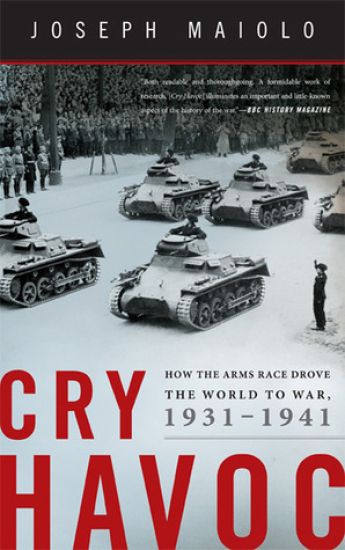
Cry Havoc: How the Arms Race Drove the World to War, 1931-1941
Did the arms race of the 1930s cause the Second World War? In Cry Havoc, historian Joseph Maiolo shows, in rich and fascinating detail, how the deadly game of the arms race was played out in the decade prior to the outbreak of the Second World War. In this exhaustively researched account, he explores how nations reacted to the moves of their rivals, revealing the thinking of those making the key decisions -- Hitler, Mussolini, Chamberlain, Stalin, Roosevelt -- and the dilemmas of democratic leaders who seemed to be faced with a choice between defending their nations and preserving their democratic way of life. An unparalleled account of an era of extreme political tension, Cry Havoc shows how the interwar arms race shaped the outcome of World War II before the shooting even began.
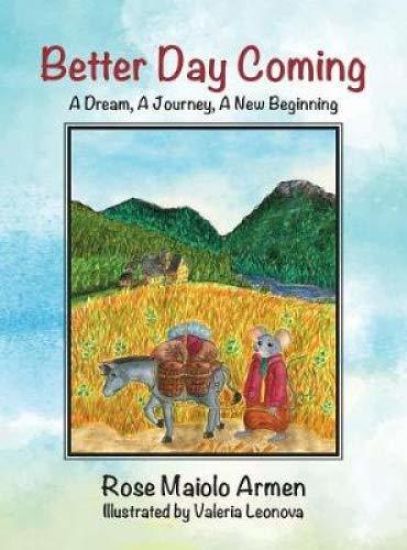
Better Day Coming: A Dream, A Journey, A New Beginning
Embark on my father's immigration story from Nardodipace, Italy to the United States in 1951. This story is depicted by a mouse sharing his dream to leave his hometown in Italy for a better life in a peculiar new country.Join Topolino Garibaldi as he grows from a youngster exploring the hills of Calabria to a mature and responsible Italian immigrant living in the hope filled land of America.
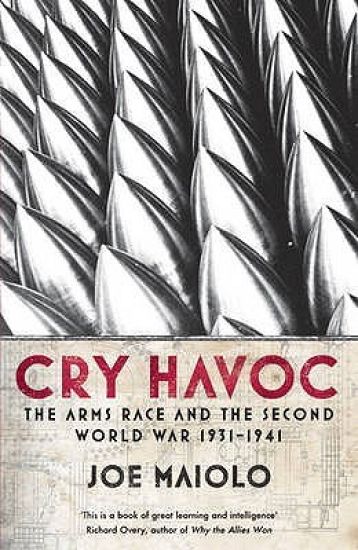
Cry Havoc

Cry Havoc

Joe Maiolo

John Murray Publishers Ltd
2011
pokkari
The arms race, on the run up to the Second World War, followed the faultless logic of paranoia. Before the First World War, the Great Powers measured the strength of their rivals by comparing the size of armies and navies, and the money spent on them. Afterwards, having learned the lessons of 'total war', they looked at the capacity of nations to mobilise their economies and populations for war. Deep planning, they realised, was necessary to prepare for potential conflicts; but with this attitude came a sense that society might need to be in a state of perpetual readiness for conflict, and a potential openness to totalitarian levels of state control in ensuring that readiness. In Cry Havoc Joe Maiolo shows, in rich and fascinating detail, how the arms race between the Great Powers developed. Where previous histories have looked at how individual nations responded to the challenges of the time, Maiolo reveals the full complexity of the arms race by looking at competition between nations, at how nations reacted to the moves of their rivals. Maiolo provides a vivid portrait of the thinking of those making the key decisions - of the thinking of Hitler, Mussolini, Chamberlain, Stalin, Roosevelt - and reveals the full extent of the dilemmas confronted by the leaders of the western democracies, who seemed at times to be faced with a choice between defending their nations and preserving the essential democratic nature of the societies they sought to defend. Cry Havoc is an absorbing account of a time of extreme tensions, showing how the deadly game of the arms race led, ultimately, to an unleashing of the dogs of war.