Kirjojen hintavertailu. Mukana 11 417 157 kirjaa ja 12 kauppaa.

Kirjahaku

Etsi kirjoja tekijän nimen, kirjan nimen tai ISBN:n perusteella.

1000 tulosta hakusanalla Marian Keyes

Marian Devotion in the Late Middle Ages
By the late Middle Ages, manifestations of Marian devotion had become multifaceted and covered all aspects of religious, private and personal life. Mary becomes a universal presence that accompanies the faithful on pilgrimage, in dreams, as holy visions, and as pictorial representations in church space and domestic interiors. The first part of the volume traces the development of Marian iconography in sculpture, panel paintings, and objects, such as seals, with particular emphasis on Italy, Slovenia and the Hungarian Kingdom. The second section traces the use of Marian devotion in relation to space, be that a country or territory, a monastery or church or personal space, and explores the use of space in shaping new liturgical practices, new Marian feasts and performances, and the bodily performance of ritual objects.
Marian Devotion in the Late Middle Ages
By the late Middle Ages, manifestations of Marian devotion had become multifaceted and covered all aspects of religious, private and personal life. Mary becomes a universal presence that accompanies the faithful on pilgrimage, in dreams, as holy visions, and as pictorial representations in church space and domestic interiors. The first part of the volume traces the development of Marian iconography in sculpture, panel paintings, and objects, such as seals, with particular emphasis on Italy, Slovenia and the Hungarian Kingdom. The second section traces the use of Marian devotion in relation to space, be that a country or territory, a monastery or church or personal space, and explores the use of space in shaping new liturgical practices, new Marian feasts and performances, and the bodily performance of ritual objects.
Marian Reflections on War and Peace
This book presents an original Marian approach towards war and peace, dedicated to the suffering of children, women, and men in Mariupol and elsewhere in Ukraine and in the world. Offering new theological perspectives on the contemporary impact of war, the contributions take inspiration from the figure and symbol of Mary – as protector of children and guardian of peace, intermediary of the incarnation, as well as model for ecumenical, interreligious, and intercultural engagements. The chapters explore the role of Mary as a symbol for feminist and activist reflections, for the communication of suffering as the mater dolorosa, for power when appropriated for political ends, and for healing and reconciliation in peace-building efforts. The book provides readers with valuable theological reflections on conflict, global theological ethics, ecofeminist and peace-building thinking in theology, and contemporary political theology.
Marian, Princess Thief

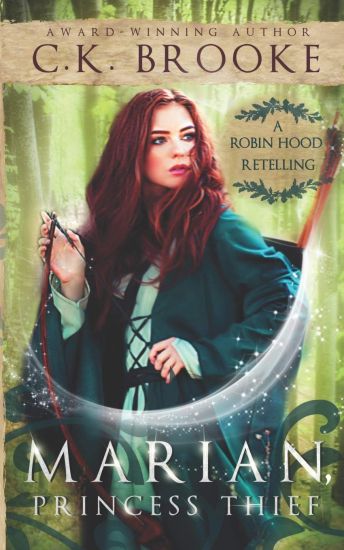
Marian, Princess Thief

C K Brooke

Independently Published
2019
pokkari
WINNER OF THE 2020 BEST INDIE BOOK AWARD - YOUNG ADULT "There was no man called Robin Hood. Because I am no man." Lady Marian, once the beloved Princess of Sherwood, was only sixteen when her father rode off to fight in the Crusades, leaving his kingdom under the despotic rule of his brother, Prince John. The night her uncle sends an assassin upon her, Marian flees to Sherwood Forest, where she meets and forges an unbreakable bond with six other outlawed young women.Now, the nineteen-year-old princess-in-exile and her Merry Maidens gallivant through the greenwood, cloaked under the aliases of Rob-in-Hood and his Merry Men. Together, they uphold their vendetta of mischief, undermining the Prince at every turn, robbing the rich and giving to the poor-all while outrunning their sworn nemesis, the odious Sheriff of Nottingham.After a scheme takes an unexpected turn and Marian's only recourse is to abduct the Sheriff, the lady brigands find themselves in over their heads, stuck with an unrelenting and formidable captive. But, as Marian is about to discover, sometimes people aren't what they seem... After all, she would know. Revisit the legend of Robin Hood like you've never read it in this wildly imaginative, adventurous, and utterly romantic retelling by C.K. Brooke, multi-award-winning author of I, Guinevere and Secrets of Artemis
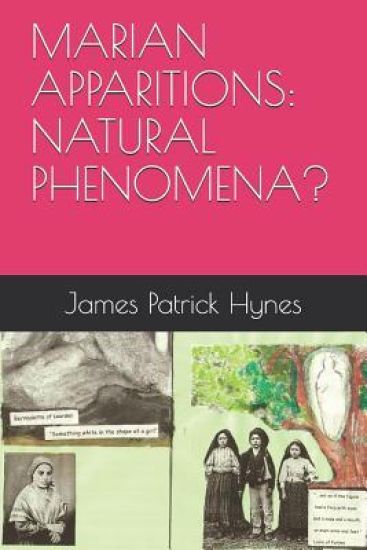
Marian Apparitions: Natural Phenomena?

Marian Apparitions: Natural Phenomena?

James Patrick Hynes

Independently Published
2019
nidottu
All apparitions of the Virgin Mary are classified by the Roman Catholic Church as private revelations. Joseph, Cardinal Ratzinger, when Prefect of the Congregation for the Doctrine of the Faith wrote in 'The message of Fatima, 2000': "The teaching of the Church distinguishes between 'public revelation' and 'private revelations'. The two realities differ not only in degree but also in essence"... "In this context, it now becomes possible to understand rightly the concept of private revelation, which refers to all the visions and revelations which have taken place since the completion of the New Testament. This is the category to which we must assign the message of Fatima. In this respect, let us listen once again to the Catechism of the Catholic Church: Throughout the ages, there have been so-called 'private' revelations, some of which have been recognized by the authority of the Church... It is not their role to complete Christ's definitive Revelation, but to help live more fully by it in a certain period of history" (No. 67). The Catholic Church teaches that public revelation was completed, and therefore was concluded, with the death of the last apostle (Vatican II, Dei Verbum 4), but private revelation has continued. The church holds that approved private revelations, such as visions, voices and apparitions have been judged as coming from God in all probability, but they do not have to be accepted by the faithful whereas teachings within the deposit of faith do have to be believed and accepted. That said, these apparitions of the Virgin Mary, especially the two major ones of Lourdes and Fatima, have assumed an importance equal to biblical revelations and the Gospels themselves. However Marian apparitions really are in the realm of private revelations and thus do not have to be believed as having supernatural origins. This study sets out to show that Marian apparitions actually have their origins in natural not supernatural phenomena.Whilst there have been hundreds, perhaps thousands of Marian apparitions only 16 have been classified as 'Bishop Approved Apparitions with Vatican Recognition' and 7 ' Coptic Approved Apparitions'. This book refers to several of these.Most often, Marian apparitions occur in Roman Catholic countries wherein the seers are usually young children between the ages of 6 and 12. One natural explanation of Marian apparitions was suggested by the American parapsychologist D. Scott Rogo wrote that it is "possible that they are projections of images latent in our minds which literally become temporarily real on rare occasions.....The key to understanding Marian apparitions may be in their tendency to occur at times of social and/or political crisis. At such times of stress, some form of mass telepathic communication may occur in the collective unconscious of the threatened culture. This may lead to the formation of a "group mind", which, in turn, results in the projection of a Marian visitation." Quite how that would result in apparitions such as Lourdes and Fatima is not clear. What were the means?Ruling out the supernatural, here, the author examines natural causes beginning with hallucinations such as: the religious ones hierophany associated with sacred groves; apophenia, seeing patterns within random data and pareidolia when random stimuli, images or sounds are transformed by our minds into familiar patterns where none actually exists. Biological and geological causes are examined such as: marsh gases seepages of abiotic or natural gases causing hallucinations; geomagnetic and natural electrical discharges such as thunderstorms and especially White Ladies, dazzling balls of light.Other possible causes may arise out of the psychological traits of pre-pubescent girls and especially the levels of magnetite in their brains. One of the characteristics of the alleged Marian utterances is the variability of their reading difficulties levels as measured on the Gunning Fog Index.
Marian Moments in Early Modern British Drama
Concerning itself with the complex interplay between iconoclasm against images of the Virgin Mary in post-Reformation England and stage representations that evoke various 'Marian moments' from the medieval, Catholic past, this collection answers the call for further investigation of the complex relationship between the fraught religio-political culture of the early modern period and the theater that it spawned. Joining historians in rejecting the received belief that Catholicism could be turned on and off like a water spigot in response to sixteenth-century religious reform, the early modern British theater scholars in this collection turn their attention to the vestiges of Catholic tradition and culture that leak out in stage imagery, plot devices, and characterization in ways that are not always clearly engaged in the business of Protestant panegyric or polemic. Among the questions they address are: What is the cultural function of dramatic Marian moments? Are Marian moments nostalgic for, or critical of, the 'Old Faith'? How do Marian moments negotiate the cultural trauma of iconoclasm and/or the Reformation in early modern England? Did these stage pictures of Mary provide subversive touchstones for the Old Faith of particular import to crypto-Catholic or recusant members of the audience?
Marian Apparitions in Cultural Contexts

Marian Apparitions in Cultural Contexts

Valeria Céspedes Musso

Routledge
2018
sidottu
Marian Apparitions in Cultural Contexts provides an analysis of collective phenomena, specifically mass visions of the Virgin Mary, from a psychoanalytical perspective. It draws from Jung’s compensation theoretical model with the aim of merging depth-psychology and historical material from the Zeitoun case. Offering an original interpretation of this phenomenon from a Jungian psychological perspective, the book provides stimulating insights to any person interested in these supernatural events, whether general readers with active curiosity or scholars with broad intellectual interests.A review of the literature points to a prevailing socio-political approach to examining visions of the Virgin Mary, while a psychoanalytical approach is generally lacking. Musso draws from Jung’s compensation theoretical model in Flying Saucers with the aim of merging depth-psychology and historical material. Common themes and symbols are extracted and interpreted from the empirical material and analyzed along with Egyptian social and political data. The book concludes with a discussion on how depth psychological principles grounded in empirical and historical material could be applied in order to explicate cases of mass visions.An original interdisciplinary exploration of cultural phenomena, Marian Apparitions in Cultural Contexts will be of value to academics and students in the fields of psychoanalysis, analytical psychology, political science, and religious studies. This book will also be of interest among Jungian scholars and practitioners in applications of depth psychology to cultural phenomena.
Land of Enchantment: Memoirs of Marian Russell Along the Santa Fe Trail

Land of Enchantment: Memoirs of Marian Russell Along the Santa Fe Trail

Marian Russell; Marion Sloan Russell; Hal Russell

Literary Licensing, LLC
2011
nidottu
Land Of Enchantment: Memoirs Of Marian Russell Along The Santa Fe Trail is an autobiographical account of Marian Russell's experiences traveling along the Santa Fe Trail in the late 1800s. Russell was born in 1845 and grew up in Missouri. In 1866, she married a man named Charles Russell and the couple decided to move to New Mexico. They traveled along the Santa Fe Trail, which was a major trade route at the time. Russell's memoirs provide a unique perspective on life in the American West during the late 19th century. She describes the challenges and hardships of traveling long distances by wagon, dealing with harsh weather conditions, and encountering Native American tribes along the way. The book is divided into chapters that focus on different aspects of Russell's journey. She describes the landscape, wildlife, and people she met along the way. Russell also provides insight into the cultural and social norms of the time, including the role of women in society and the treatment of Native Americans by white settlers. Overall, Land Of Enchantment: Memoirs Of Marian Russell Along The Santa Fe Trail is a fascinating historical document that offers a glimpse into the past. Russell's vivid descriptions and personal anecdotes bring the Santa Fe Trail to life, making it a must-read for anyone interested in the history of the American West.Illustrations By David T. Vernon.This scarce antiquarian book is a facsimile reprint of the old original and may contain some imperfections such as library marks and notations. Because we believe this work is culturally important, we have made it available as part of our commitment for protecting, preserving, and promoting the world's literature in affordable, high quality, modern editions, that are true to their original work.